Start with yourself, then build the program
The Anti-Bias Education for Young Children and Ourselves - 2nd Edition is a 224-page resource book that guides you through building a strong anti-bias program. Its first move is learning to know yourself, which makes it a practical starting point for teachers who want to teach diversity to young children without turning the work into a script.
Use the book as a working guide rather than a one-time read. Read a chapter, try one change in your room, and note what happened before moving on.
A four-step routine for using the book
- Read one topic area: The book covers culture and language, racial identity, family structures, gender identity, economic class, different abilities, and holidays. Pick one area that matches a question already in your classroom.
- Look at your own practice first: Because the book includes learning to know yourself, spend time on your own assumptions and reactions before changing materials or lessons.
- Make one small change: Choose a single adjustment, such as a book, a display, or a routine, that connects to the topic you read.
- Review with a colleague: Talk through what you tried and what you noticed. The book is designed as a guide to building a program, so shared reflection keeps the work going.
What this teacher resource book gives you
-
Anti-Bias Education for Young Children and Ourselves - 2nd Edition: This practical resource, now an expanded and updated second edition, is your guide to building a strong anti-bias program, including learning to know yourself. It tells you the book is structured as a program-building guide, not just background reading.
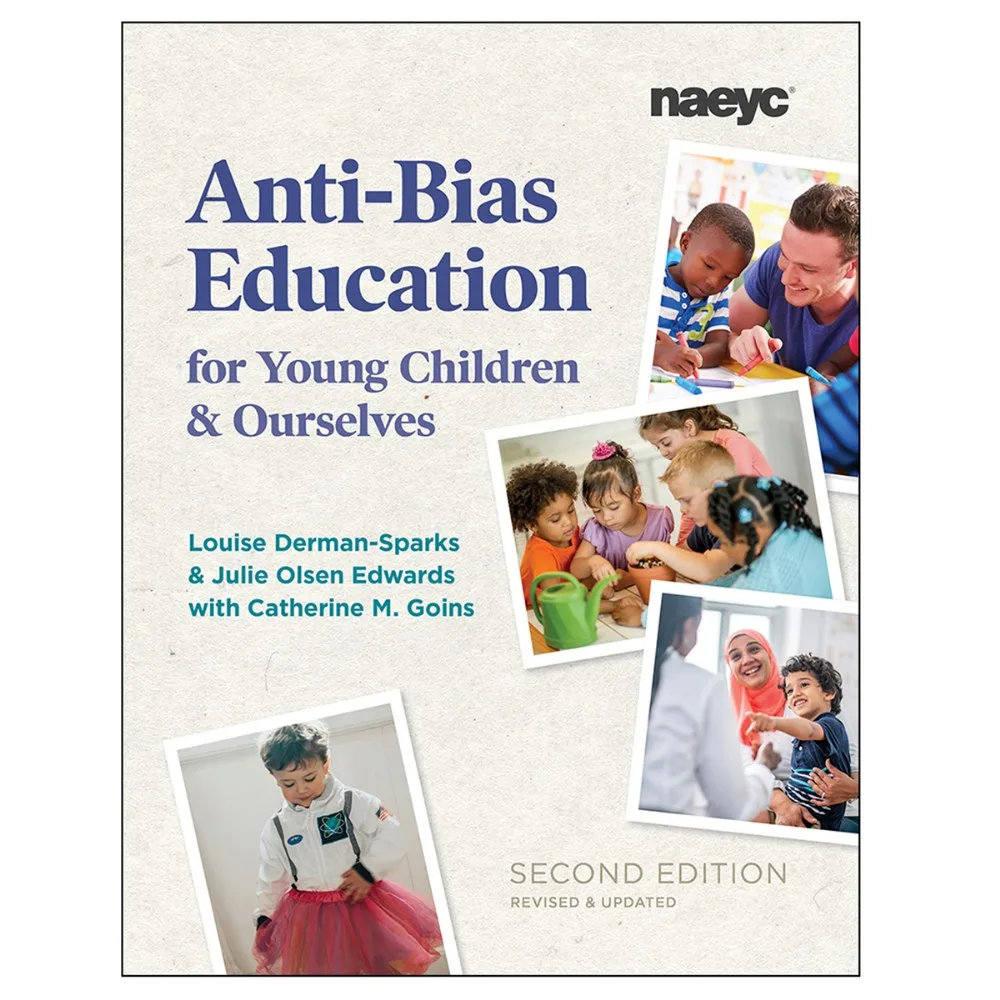
Anti-Bias Education for Young Children and Ourselves - 2nd Edition
-
Anti-Bias Education for Young Children and Ourselves - 2nd Edition: This title offers information on culture and language, racial identity, family structures, gender identity, economic class, different abilities, holidays, and more. These are the topic areas you can use to plan an anti-bias curriculum early childhood sequence.
-
Anti-Bias Education for Young Children and Ourselves - 2nd Edition: 224 pages. The length signals a substantial resource you can work through over a term or year.
Match the book's topics to your classroom
The book's topic list gives you a practical map. If your group is asking about families, start with the family structures chapter. If holidays are coming up, read that section before planning activities. For teaching diversity to young children, the culture and language and racial identity sections help you think through materials and conversations.
The different abilities section pairs well with inclusive classroom strategies you may already use. Read it alongside your current routines to see where a small change would help.
Plan a term of anti-bias curriculum early childhood work
- Choose three topics for the term: Select from the book's areas: culture and language, racial identity, family structures, gender identity, economic class, different abilities, or holidays.
- Assign one topic per month: Give yourself time to read the relevant section and try one change before moving to the next topic.
- Keep a simple log: Note what you read, what you changed, and what you observed. This turns the book into a working record of your program.
What the supplied information does not confirm
The catalog record does not list a specific age range, a set of reproducible forms, or a required training format. Treat those as details to confirm from the book itself or the publisher if they matter for your setting. The supplied details confirm the 224-page length, the second-edition status, and the topic areas listed above.