Quick Answer
To install an appliance lock strap safely, choose a latch with a dual locking mechanism, clean the surface thoroughly, and align the strap so it prevents the door from opening more than a crack.
Why Surface Preparation Matters More Than You Think
A clean, dry surface is the single most important factor for a secure bond. Oven doors and fridge fronts accumulate grease and grime that can prevent adhesive from sticking. Even a small residue can cause the latch to peel off within days.
If your appliance has a textured or uneven surface, consider a latch that uses screws or cable ties instead of adhesive. Not all latches work on every material.
Dual Locking vs. Single Locking: What's the Difference?
A dual locking mechanism requires two separate actions to release the latch, making it harder for curious toddlers to figure out. Single-action latches can sometimes be defeated by persistent little fingers.
The Lindam Dual Locking Secure Appliance Latch is an example of a latch that uses two-step release, giving you extra peace of mind around high-risk appliances like ovens and dishwashers.
How to Install an Appliance Lock Strap – Step by Step
- Step 1: Choose the Right Latch for Your Appliance: Select a latch that fits the door style and material. For smooth metal or plastic doors, adhesive latches work well. For textured or glass doors, look for a latch with screw or strap options. A dual locking latch like the Lindam model adds extra security. Check the appliance surface before buying – adhesive may not stick to textured or greasy surfaces.
- Step 2: Clean and Dry the Surface Thoroughly: Use a degreasing cleaner or rubbing alcohol on a lint-free cloth. Wipe the area where the latch will attach, then wait for it to dry completely. Even a tiny amount of moisture or grease will weaken the adhesive bond. Do not skip this step – a greasy surface is the most common reason latches fall off.
- Step 3: Position the Latch Correctly: Hold the latch against the appliance door and the cabinet or frame. The strap should be taut when the door is closed, but not stretched. Mark the position lightly with a pencil if needed. Make sure the latch does not interfere with the door hinge or seal. Test the door opens and closes fully before peeling off the adhesive backing.
- Step 4: Attach the Latch Firmly: Peel the adhesive backing and press the latch onto the surface. Apply firm, even pressure for 30–60 seconds. For screw-mounted latches, use the provided screws and a screwdriver. Do not overtighten – it can crack the plastic. Wait 24 hours before using the latch at full strength – adhesive needs time to cure.
- Step 5: Test the Lock and Adjust if Needed: Close the appliance door and engage the latch. Try to open the door with moderate force – it should hold securely. If the strap is too loose or too tight, reposition the latch. For dual locking latches, practice the release mechanism yourself so you can operate it quickly. Re-test the latch weekly, especially after cleaning the appliance, as cleaning products can weaken the adhesive over time.
Product Fact
-
Lindam Dual Locking Secure Appliance Latch: The Lindam Dual Locking Secure Appliance Latch is designed to prevent your child from accessing appliances such as ovens, microwaves, dishwashers, fridges, and freezers. This means you can use one latch across multiple appliances in your kitchen, reducing the number of products you need to buy.
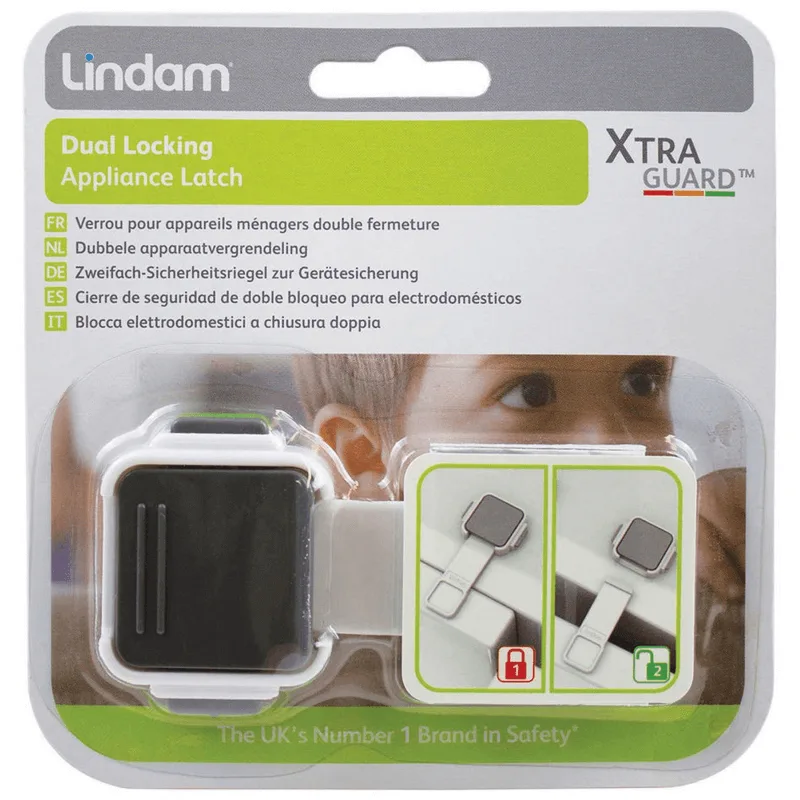
Lindam Dual Locking Secure Appliance Latch