Quick answer
Buy 3-4mm natural colour aquarium gravel when you want a fine, tidy bed that suits small fish, shrimp and most plants without the weight of chunky pebbles. Choose a 2kg sprinkle mix if you are topping up an existing bed, refreshing a nano tank, or adding a natural tone that blends into gravel you already own. If you are filling a large tank from empty, calculate volume first and buy the full quantity rather than layering several small bags.
What 3-4mm gravel actually does in a tank
Grain size changes how a tank behaves more than colour does. At 3-4mm, the pieces are small enough for dwarf cichlids, bettas, guppies and shrimp to move across, and fine enough that food does not vanish into wide gaps. Roots of easy plants such as Anubias, Java fern and Cryptocoryne can settle into it, though heavy root feeders still do better with a nutrient layer underneath. The trade-off is flow: very fine gravel can compact, so keep the bed shallow in high-flow areas and stir it gently during water changes.
How much gravel for an aquarium: a simple calculation
Aim for a bed 4-6cm deep for most community tanks, and 2-3cm if you only want a cosmetic layer over an existing substrate. Multiply tank length by width in centimetres, then by your target depth, and divide by 1000 to get litres of gravel. One litre of 3-4mm gravel weighs roughly 1.4-1.6kg, so a 60 x 30cm tank at 5cm depth needs about 9 litres, or 13-14kg. Buy slightly more than the calculation if you plan to slope the bed toward the back, and slightly less if you are only patching thin spots. A 2kg bag is a top-up size, not a full-tank size.
Natural colour versus bright gravel
Natural colour aquarium gravel in grey, beige and brown tones keeps attention on the fish and plants, and it hides light mulm better than white or black. Bright blue, pink and neon mixes can look sharp in a child's tank, but they reflect light upward and make algae on the glass more obvious. If you already run a natural bed, a sprinkle mix of blended tones settles in without creating an obvious patch. If your tank is a themed display, buy the colour you actually want in one go, because blending two bright colours later rarely matches.
Best gravel for a planted tank: what to check
No inert gravel feeds plants on its own, so the question is whether it supports the root zone and the water chemistry you want. A 3-4mm grain holds root crowns steady while letting some water move through, which suits ferns, mosses and epiphytes tied to wood or stone. For Amazon swords, Vallisneria and other heavy feeders, plan a soil or fertiliser layer beneath the gravel, or use root tabs. Avoid sharp, crushed-glass-style grains if you keep bottom dwellers such as Corydoras or loaches, and rinse any new gravel in a bucket until the water runs clear before adding it.
Matching gravel to the rest of your setup
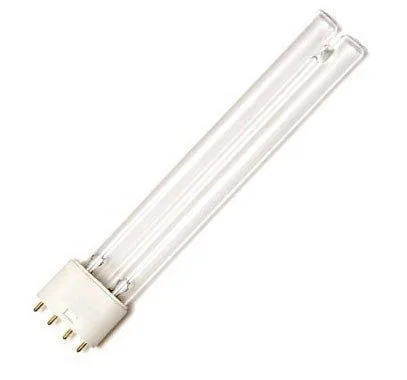
Gravel is one part of a stable tank, and the equipment around it matters. If you are running a UV steriliser, keep a spare lamp on hand so you are not tempted to skip a change; the 36w PLL UV Bulb fits the CUV-136, CUV-172, CUV-236 and CUV-272 sterilisers plus the PFC-25000 and AUTO-PFC-25000 filters, and it fits many other quality manufacturers' units, so check your existing bulb dimensions before ordering. For a small pond or water feature, a fountain pump with a flow adjuster lets you tune movement without blowing gravel around, which is useful when the same pump feeds a spout above a pebbled edge.
Decision rules for buying gravel
- If you are topping up an existing bed: Buy a 2kg sprinkle mix in natural tones and add it in thin layers until the low spots disappear. Stop when the bed looks level, not when the bag is empty.
- If you are filling a tank from empty: Calculate litres from length x width x depth, convert at roughly 1.4-1.6kg per litre, and buy the full amount in one order. Mixing bags bought months apart risks a visible colour seam.
- If you keep heavy root-feeding plants: Use a soil or fertiliser layer under the 3-4mm gravel, or plan on root tabs from the start. Inert gravel alone will not feed Amazon swords or Vallisneria.
- If you keep Corydoras or loaches: Choose rounded grains and rinse thoroughly before adding them to the tank. Sharp edges are the main reason to reject an otherwise suitable gravel.
Products that pair with a 3-4mm gravel bed
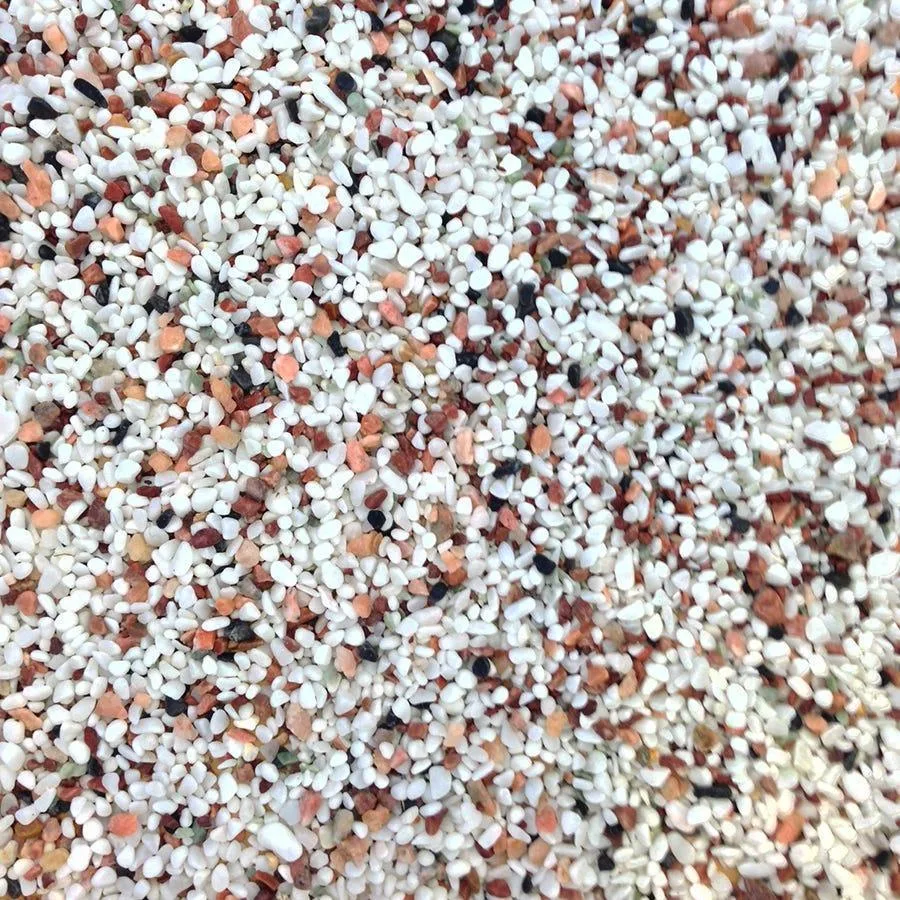
- Natural Color Aquarium Gravel Sprinkle Mix 3-4mm 2kg: A 2kg bag of the 3-4mm sprinkle mix carries a blend of natural tones that settles in among existing gravel without looking like an obvious repair, and it suits aquarium fish tanks and vivariums as well as craft and gardening use. It is the right size for refreshing a nano tank or patching a thin spot, so you avoid buying a full sack for a small job.
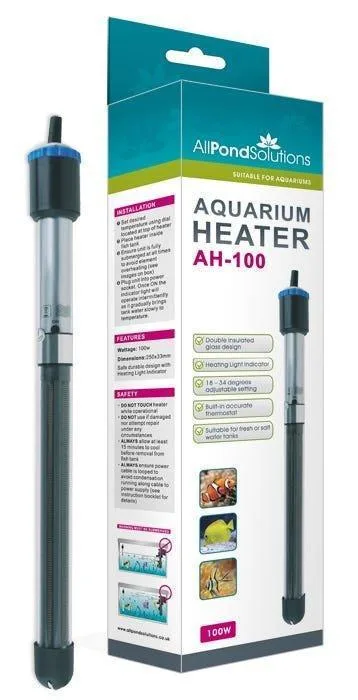
- AllPondSolutions 100w Aquarium Fish Tank Heater: The AllPondSolutions AH-100 aquarium heater uses a chrome nickel helical heating coil built for maximum life and even heating, is fully submersible, and works in fresh and saltwater. Even heat spread matters in a shallow gravel bed, because a heater that pools warmth in one corner gives you a wandering temperature instead of a stable one.
- AllPondSolutions 36w PLL UV Bulb / 4 Pin Lamp - Pond/Aquarium: The 36w PLL UV Bulb is a 4 pin, 410mm / 16in lamp that fits the CUV-136, CUV-172, CUV-236 and CUV-272 sterilisers and the PFC-25000 and AUTO-PFC-25000 filters, and it is suitable for all popular quality manufacturers' products when dimensions match. Keeping a spare means a gravel-cleaning session does not turn into a skipped UV change, and checking dimensions first avoids a return.
Who this gravel suits
Best for
- Nano and small community tanks that need a fine, tidy bed
- Topping up or refreshing an existing natural-colour gravel bed
- Planted tanks using ferns, mosses and epiphytes on wood or stone
- Vivariums and craft or gardening projects that need a small natural aggregate
Not for
- Filling a large tank from empty in one go, where a full-size sack is more economical
- Heavy root-feeding plant displays with no soil or fertiliser layer beneath
- Tanks that need a specific bright colour scheme rather than natural tones