Quick answer
Yes, calming chews can be safe for dogs with sensitive stomachs if you choose a formula with gentle, natural ingredients and introduce it gradually. Look for chews made in the USA with limited, recognizable components, and always start with a lower dose to see how your dog reacts.
What to Look for in Calming Chews for Sensitive Stomachs
When your dog has a sensitive stomach, every new treat or supplement feels like a gamble. The key is to focus on the ingredient list. Calming chews that use hemp and other naturally formulated ingredients tend to be gentler on digestion than those packed with artificial fillers or preservatives. A shorter ingredient list often means fewer potential triggers.
It's also smart to consider the form. Chews are usually easier on the stomach than powders or liquids that need to be mixed into food. And because chews are meant to be given daily, consistency matters—choose a product you can reliably source so you don't have to switch brands and risk digestive upset.
- Check the label for artificial colors, flavors, or preservatives—these are common culprits for stomach issues.
- Look for a single primary active ingredient, like hemp, to minimize the chance of a reaction.
- Start with half the recommended dose for the first few days, then gradually increase.
How to Introduce Calming Chews Without Upsetting Digestion
Even with a gentle formula, sudden changes can unsettle a sensitive stomach. Begin by giving a small piece of the chew as a test, then wait 24 hours to see how your dog responds. If there's no vomiting, diarrhea, or loss of appetite, you can move to the full dose.
Timing also plays a role. Giving the chew right after a meal can buffer the stomach, while giving it on an empty stomach might increase the risk of nausea. Pairing the chew with a little plain pumpkin or rice can help if your dog is especially prone to digestive issues.
When to Avoid Calming Chews and Talk to Your Vet
If your dog has a known allergy to hemp or any ingredient in the chew, skip it entirely. Also, if your dog is on other medications—especially sedatives or anti-anxiety drugs—check with your vet before adding a supplement. Calming chews are not a substitute for veterinary care, and they shouldn't be used if your dog has severe or chronic digestive problems.
Watch for signs of an adverse reaction: persistent vomiting, diarrhea, lethargy, or a rash. These are red flags that the chew isn't right for your dog, and you should stop and consult your vet.
Myth vs. Fact: Calming Chews and Sensitive Stomachs
- Myth: All calming chews cause stomach upset: Not true. Many calming chews use gentle, natural ingredients like hemp that are well-tolerated by most dogs. The risk comes from artificial additives or sudden changes in diet. Choose chews with a short, natural ingredient list.
- Myth: You should start with a full dose right away: Starting with a full dose can overwhelm a sensitive stomach. Gradual introduction—beginning with a small piece—helps you gauge tolerance and reduces the chance of digestive upset. Start low, go slow.
- Myth: If your dog vomits once, the chews are unsafe: A single episode might be due to eating too fast or an empty stomach. Try giving the chew after a meal and at a lower dose. If vomiting persists, stop and consult your vet. Observe patterns before giving up on a product.
Product Facts: What to Consider
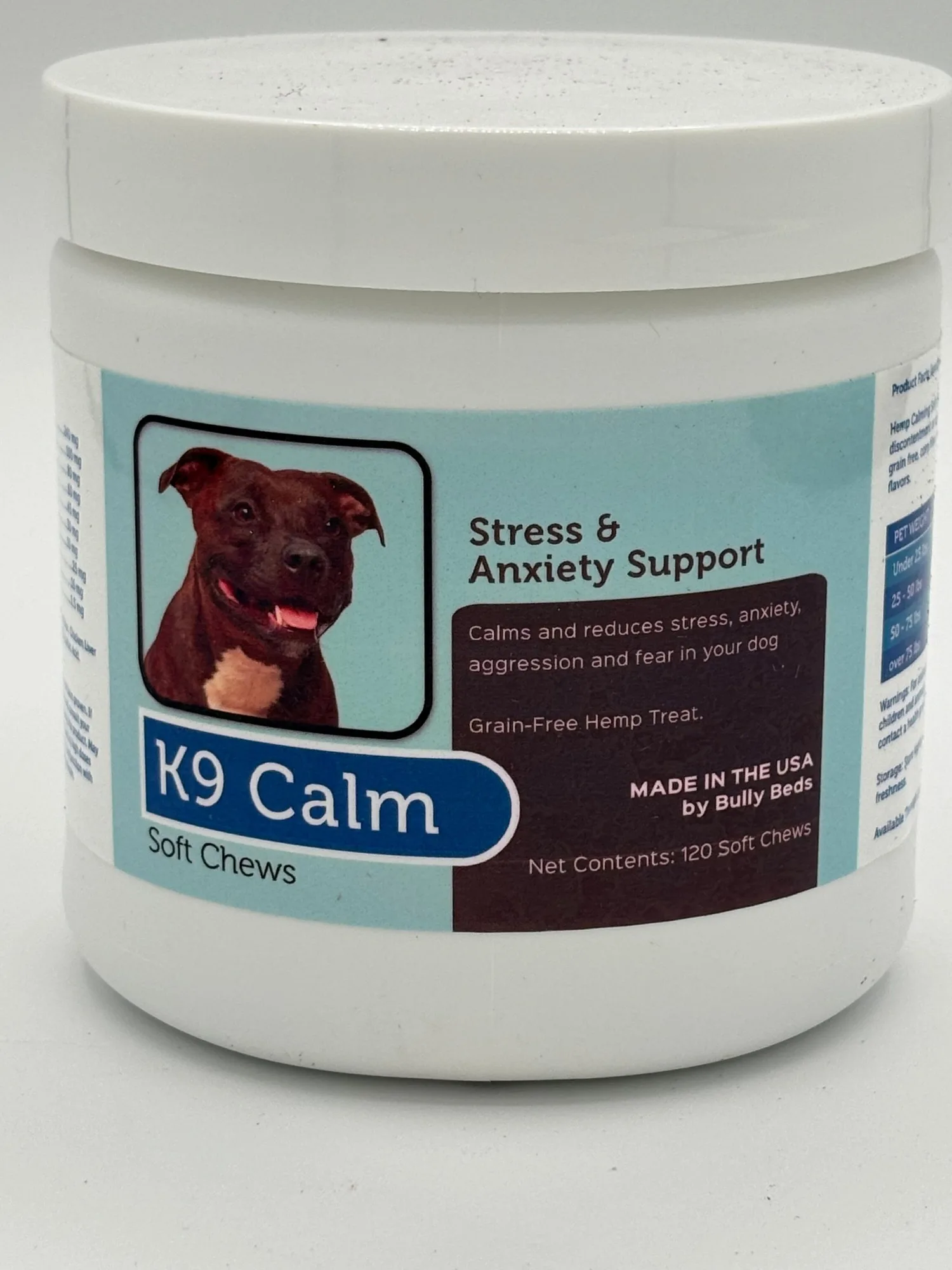
- K9 Calm | Calming Chews For Dogs: K9 Calm calming chews are infused with hemp and other specifically formulated ingredients, designed to help calm and reduce anxiety. They are 100% Made in the USA and come in a tub of 60 chews. For a dog with a sensitive stomach, a USA-made product with a simple, natural formula like hemp can be a safer starting point than chews with artificial additives. The 60-chew tub also lets you maintain a consistent daily routine without switching brands.