Quick Answer
Yes, chenille craft kits can be a good fit for kids, but age alone is a weak guide. Most kids get real value from them around age 8 and up, once they can follow a short sequence of steps and use both hands with some control. Younger children can still join in with heavy adult help, and the deciding factors are finger strength, patience with small pieces, and whether an adult stays nearby.
What Actually Makes a Chenille Kit Kid Friendly
The friendliness of a chenille kit comes down to three practical things: how big the pieces are, how many steps sit between opening the box and a finished object, and whether the kit needs glue, cutting, or drying time. Kits that rely on twisting, wrapping, or pressing pieces together are easier for small hands than kits that demand precise gluing or long drying waits.
A second factor is the shape of the finished project. A flat or chunky result is far more forgiving than a detailed, thin-limbed figure, because small errors stay hidden. If a child gets frustrated when something looks imperfect, choose a kit with fewer, larger components.
Rough Age Bands and What to Expect
Under 5: treat the kit as a together-activity. An adult handles anything small, sharp, or fiddly, and the child does the pressing, sorting, and choosing. The value is the shared time, not independence.
Ages 5-7: many kids can manage simple wrapping and twisting with coaching, but attention spans are short. Pick a kit that finishes in one sitting, and expect to help with the first few steps.
Ages 8-11: this is the sweet spot for most chenille kits. Kids can read or follow picture steps, correct their own mistakes, and finish a small project across one or two sessions.
Ages 12 and up: the kit becomes more about design choices than assembly. Older kids and teens often want kits with more pieces or a display-worthy result.
How to Check Skill Level Before You Buy
Read the kit description for clues about step count and finishing method. A kit described as modular or stackable usually means the pieces connect in a repeatable way, which is easier to learn than a one-off build. Look for words like twist, wrap, press, or snap, and be cautious if the only instruction is glue and wait.
If the listing does not state an age range or a piece count, treat that as a missing detail rather than a green light. Ask the seller, or choose a kit that does publish those facts. A missing age range is a decision limitation, not proof the kit is unsuitable.
Safety Checks That Matter More Than Age
Check for small loose parts, sharp wire ends, and any loose fibers that could be pulled free. Chenille and yarn textures shed a little, so keep kits away from children who still mouth objects. Scissors and glue should be adult-supplied and age-appropriate.
Supervision is the real safety net. Even a kit labeled for older kids is safer when an adult opens the box, checks the pieces, and stays within earshot for the first session.
Budget and Value for Kids' Kits Under $20
Under $20, you are usually buying a smaller project with fewer components, which is often exactly right for a first-timer. The tradeoff is fewer hours of engagement. If your child finishes quickly and wants more, a slightly larger kit or a second small kit in the same style gives better long-term value than one oversized kit that stalls halfway.
Compare the finished size and piece count rather than the box size. A compact kit that actually gets finished beats a large one that ends up in a closet.
How Chenille Kits Compare to Miniature House Kits
Chenille and yarn kits are usually faster and more tactile, which suits younger or more restless makers. Miniature house kits are slower, more detailed, and often better for kids who enjoy precision and long projects. Both can be kid-friendly; the difference is pacing and patience.
If you are unsure, start with a small chenille project and a small miniature kit, then see which one your child returns to without being asked. That observation tells you more than any age label.
Quick Checks Before You Buy
Does the kit list an age range?
If no age range or piece count is published, ask the seller or pick a kit that does. Missing information is a limitation, not a safety guarantee. No age range listed means do more checking, not less.
Can your child finish it in one or two sittings?
Match the kit's expected build time to your child's attention span. A kit that drags on for a week often gets abandoned. Shorter projects build confidence faster.
Are the pieces big enough for your child's hands?
Look for twist, wrap, press, or snap assembly rather than fine gluing. Larger components hide small mistakes. Forgiving assembly beats perfect results.
Will an adult be nearby?
Plan to open the box together, check for small or sharp parts, and stay close for the first session. Supervision is the strongest safety factor.
Related Kits Worth Knowing
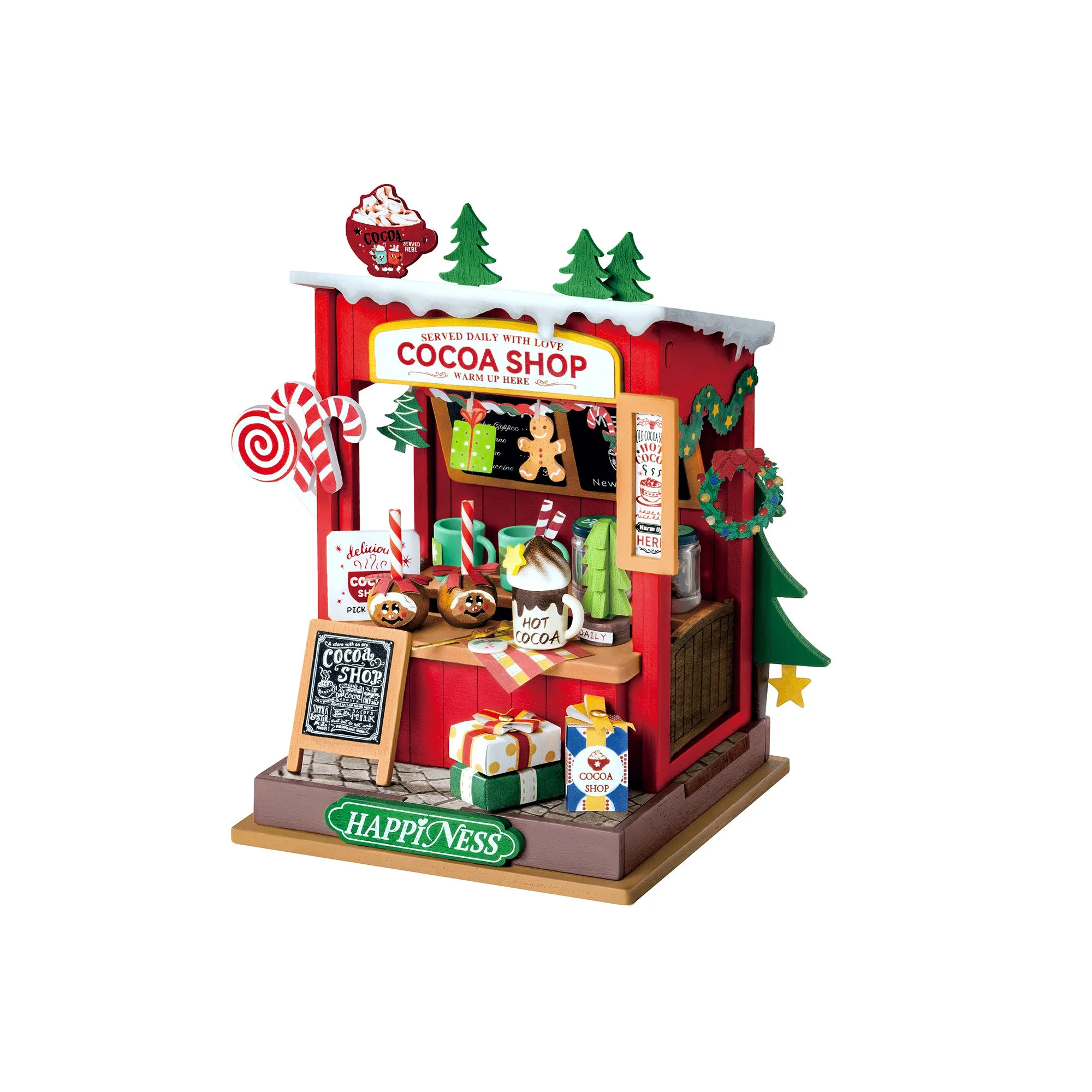
- Hands Craft | Cocoa Shop: Hands Craft | Cocoa Shop is a DIY miniature cocoa stand kit with a rustic wooden stand, steaming cups of cocoa, gingerbread cookies, and caramel apples, and it is priced in the under-$20 range. Useful as a low-commitment first kit for a child who wants a seasonal, shelf-ready project without a long build.
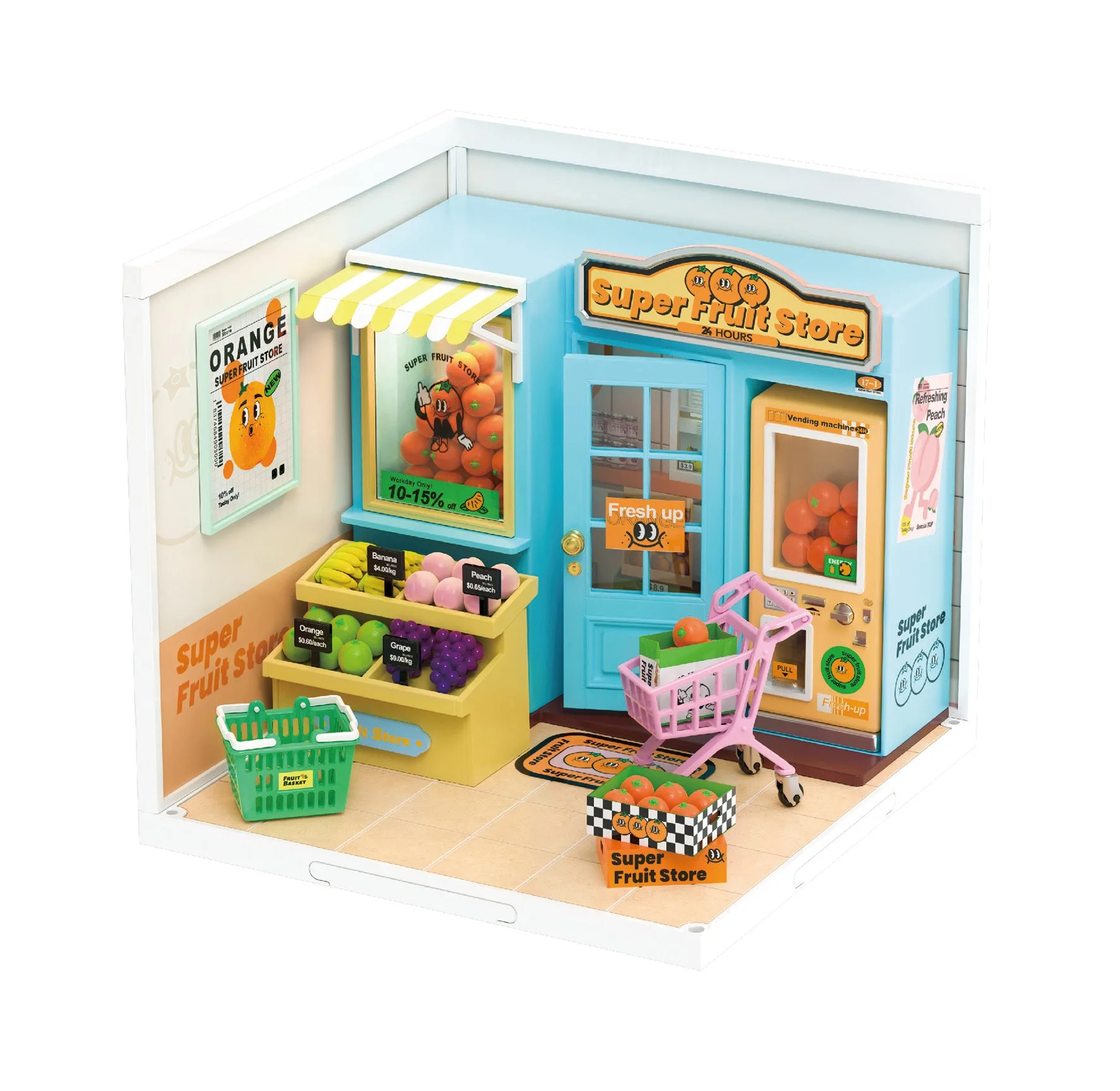
- Hands Craft | Daily VC Fruit Store: Hands Craft | Daily VC Fruit Store is part of the plastic and modular Room series, and the rooms and stores in that series can be mixed and matched into a stackable tower or horizontal street. The modular format rewards repeat building, so it suits kids who finish one kit and immediately want another.
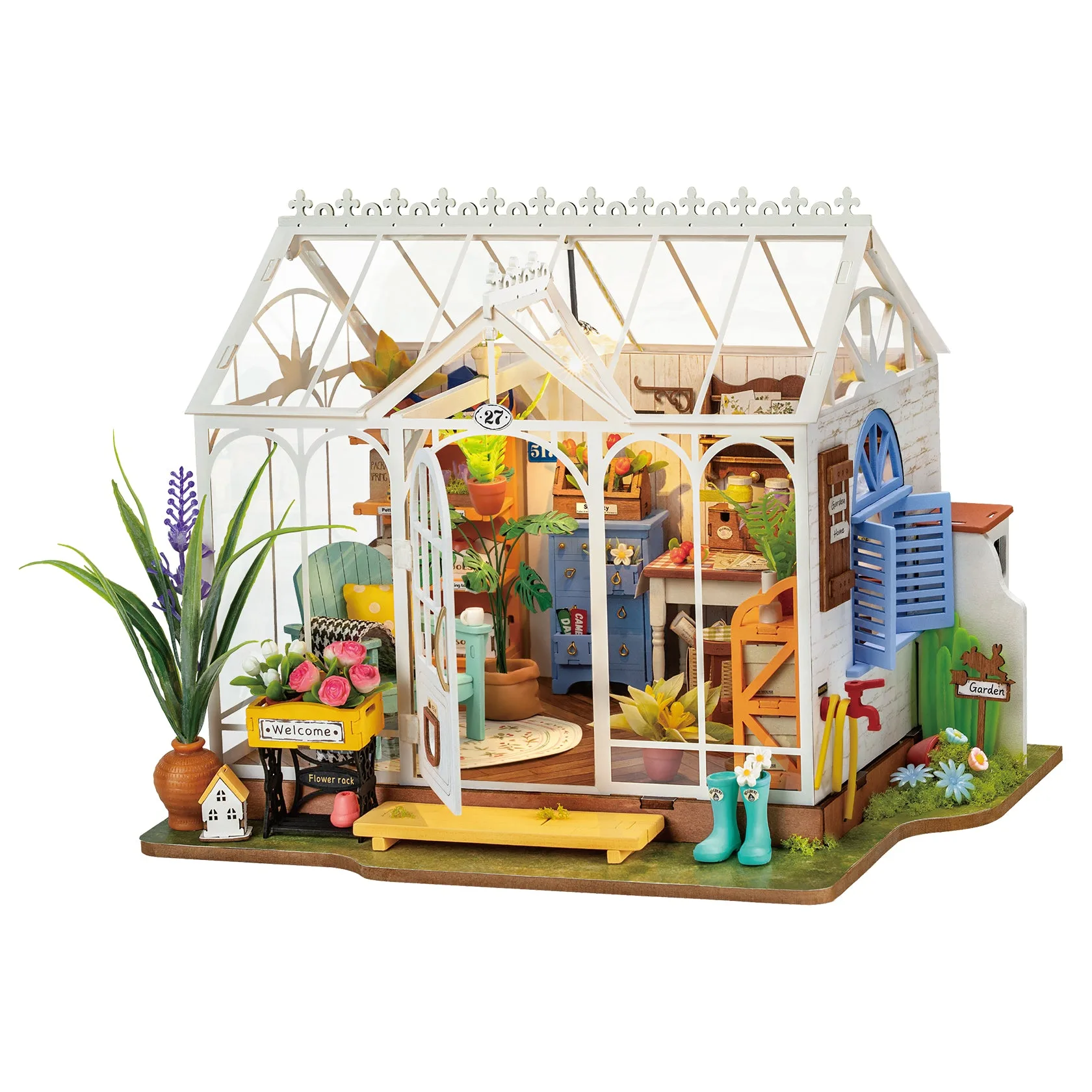
- Hands Craft | Dreamy Garden House: Hands Craft | Dreamy Garden House is a 3D dollhouse-style miniature kit described as suitable for both kids and adults, and it is one of the brand's most popular items. A reasonable step up for an older child ready for a longer, more detailed build with adult support.