Quick Answer
Yes, indoor climbing sets are safe when the equipment is stable, matched to your child's age, and placed on a soft surface with clear rules. Most injuries come from setup and supervision gaps, not the wooden frame itself. Choose a set built for your space, anchor or position it on level ground, and add a mat under the highest points.
If you are considering a climbing set for your home, safety is probably the first thing on your mind. That instinct is right, and it does not mean you should skip the purchase. It means you should ask the same questions most parents ask before buying.
Below are the concerns we hear most often, answered directly. Each answer stands on its own, so you can jump to the one that matches your situation.
Are indoor climbing sets safe for toddlers?
For toddlers, safety depends more on the specific structure than on the category. A low climbing set with wide holds and a short fall height is a different risk profile than a tall wall with small grips. Look for equipment sized for your child's reach and step length, and keep the landing zone soft.
A climbing set for toddlers should let them practice stepping up, reaching, and balancing without a long drop. If the set is taller than your child can comfortably reach, wait or add a mat and close supervision until they grow into it.
- Check that the lowest holds are reachable without jumping.
- Place a mat under the full footprint, not just the center.
Will a wooden climbing set tip over?
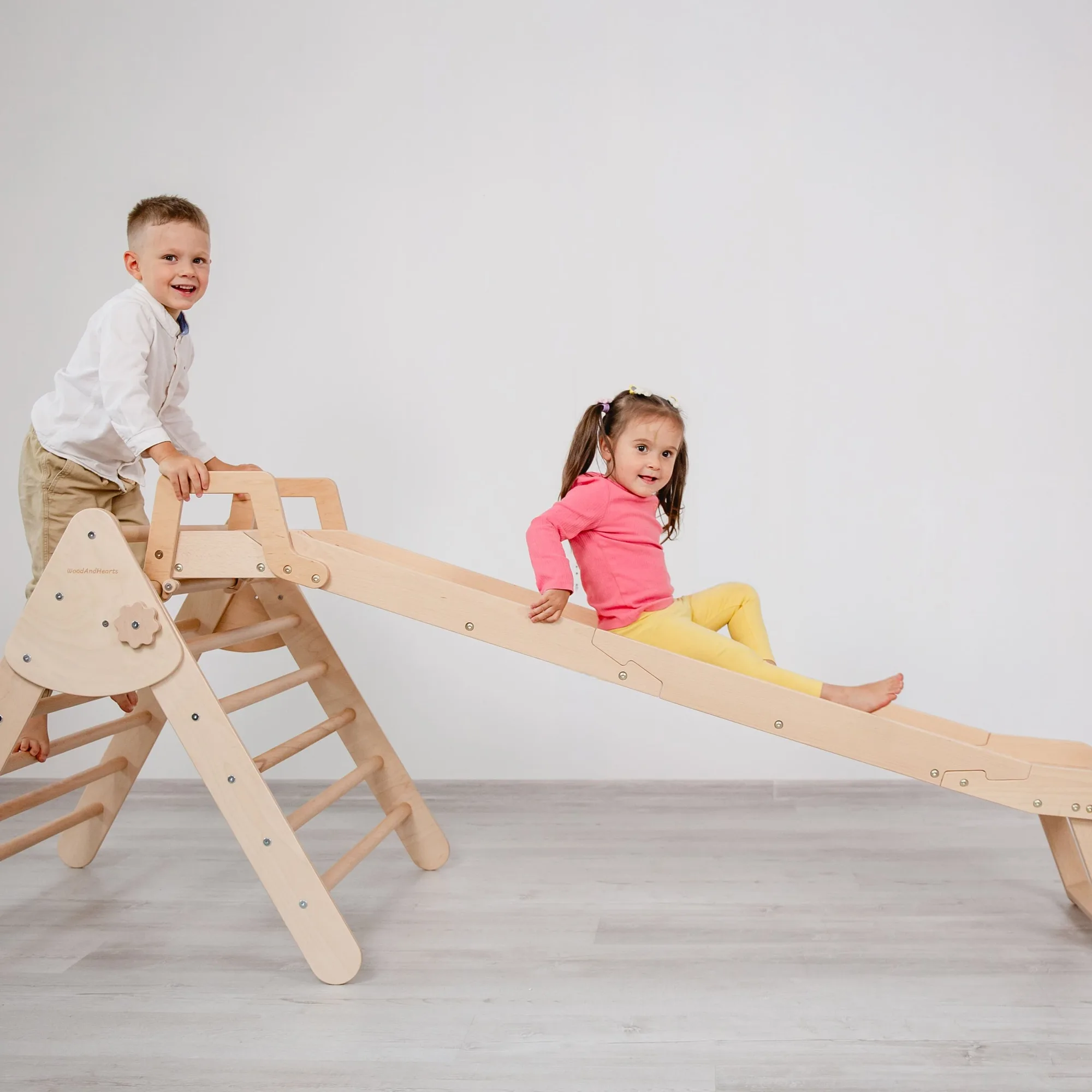
wooden climbing set
A well-built wooden climbing set is heavy and wide enough to stay put during normal play. Tipping usually happens when the set is placed on uneven flooring, pushed against a wall incorrectly, or used by a child much heavier than the intended age range.
Wall-mounted pieces rely on proper anchoring into studs or suitable wall material. Freestanding structures rely on their own footprint. If you rent or cannot drill, choose a freestanding option or use a wall piece only where you can anchor it safely.
- Test the set by pressing on the top rail before your child uses it.
- Recheck anchors and connections monthly, especially in the first weeks.
How do I reduce fall risk on a home climbing frame?
The most effective step is a dedicated landing surface. A gymnastics mat placed under the climbing area absorbs impact and gives your child a defined safe zone. Keep the area around the set clear of hard toys, furniture corners, and loose rugs that can slide.
Set simple rules: one child on the structure at a time, no pushing, and no climbing above the highest intended hold. These rules matter more than any single product feature.
- Use a mat that covers the full fall zone, not just the base.
- Keep hard objects at least an arm's length from the structure.
What age is a climbing set for toddlers appropriate?
Most climbing sets are designed for a range rather than a single age. A toddler may use the lowest parts of a set built for ages 3–8 with close supervision, but the full structure is not intended for them yet. Match the set to your child's current abilities, not their birthday.
If you have children of different ages, choose a set with varied difficulty levels so younger children can use the low sections while older children use the higher ones. Supervise the transition between levels.
- Watch how your child climbs before deciding they are ready for more height.
- Reassess the setup every few months as skills and confidence grow.
Is home climbing equipment as safe as a public playground?
Home equipment is not automatically safer or less safe than a public playground. Public playgrounds follow specific safety standards and have professional maintenance. Your home setup depends on your placement, supervision, and upkeep.
The advantage of home equipment is that you control the environment and can inspect it often. The tradeoff is that you are also responsible for anchoring, mat placement, and checking for wear. Treat those as part of the setup, not optional extras.
- Inspect wooden parts for splinters or loose screws regularly.
- Tighten hardware as part of a monthly routine.
What should I check before buying a wooden climbing set?
Start with your space. Measure the footprint and the fall zone, then compare that to the product dimensions. Check the materials and finish, since smooth surfaces reduce splinter risk. Look at what is included, because a set that comes with a mat or ramp may save you a separate purchase.
Also consider how the set will be used. A compact wall set suits a small room, while a larger playground-style structure supports more activities but needs more floor space. Buy for the room you have, not the room you wish you had.
- Confirm the set fits your space with room for a mat.
- Choose a finish that is smooth to the touch.
Safety Checkpoints for Your Indoor Climbing Setup
Stability check
Press down on the top rail and push gently from the side. The set should not lift or slide. If it moves, reposition or anchor before your child climbs.
Landing zone
Place a mat under the entire footprint and extend it beyond the highest point where a child could fall. A mat that covers only the base leaves the outer fall zone exposed.
Age and ability match
Compare your child's reach and step height to the set's lowest and highest holds. If the top holds require jumping to reach, the set is not yet the right fit.
Routine inspection
Check screws, bolts, and wooden surfaces monthly for looseness, splinters, or wear. Tighten and repair as needed before the next play session.
Clear play rules
One child at a time, no pushing, and no climbing above the intended height. Rules work best when they are simple and repeated before play.
Product Facts That Address Safety Concerns
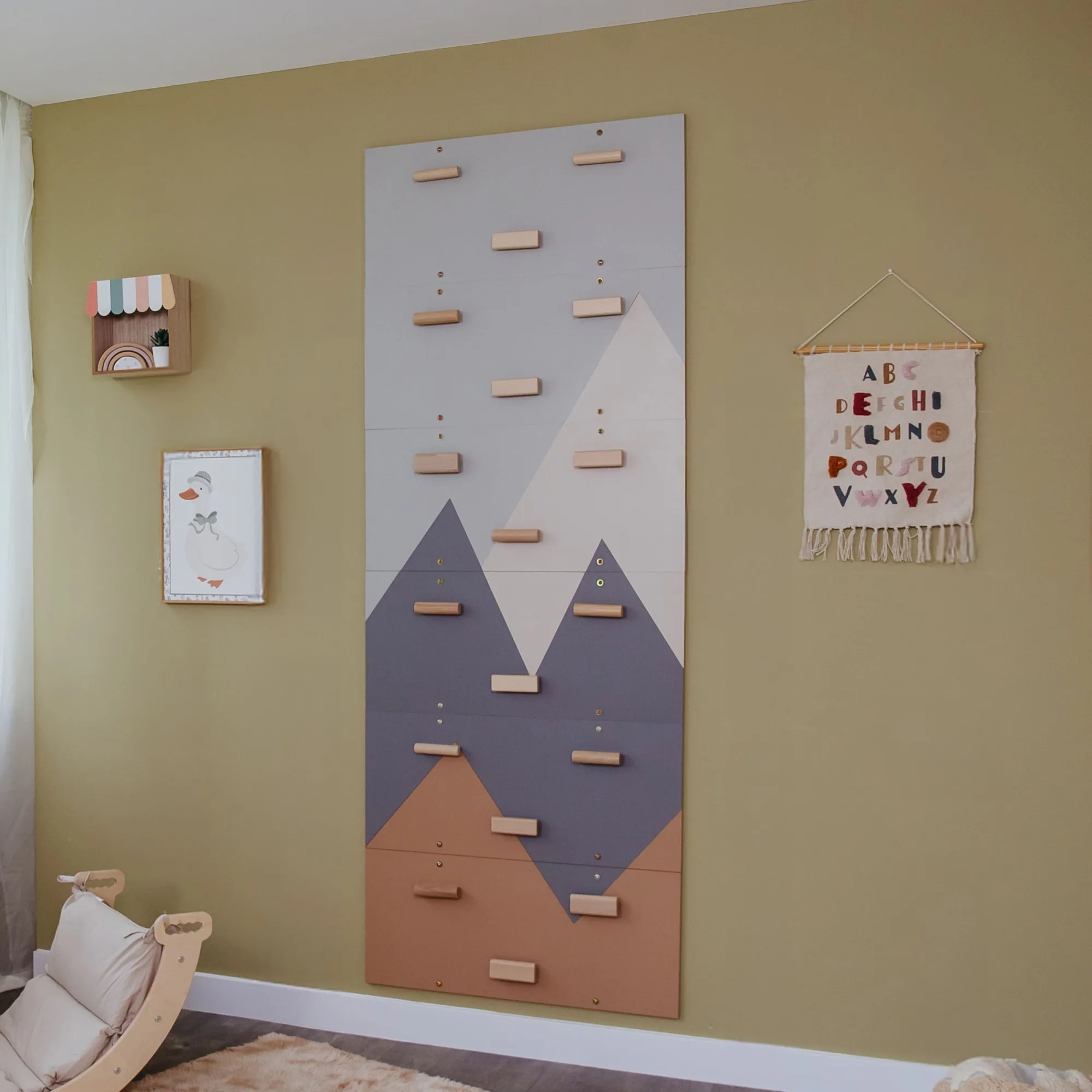
- Kids Indoor Climbing Wall “Mountain”: Compact wall set designed to transform a small room into an active environment, with everything needed for active play in a tight space. A smaller footprint means a smaller fall zone to cover with a mat, which can make safety setup easier in apartments.
- Gymnastics Mat for Home: Soft yet firm base with high-quality filling that retains shape, designed to protect little ones during active play and provide a comfortable training space. A dedicated mat under the climbing area directly addresses the most common fall-risk concern.
- Kid Climbing Structure: Teepee-shaped structure made from smooth, durable beech wood, combining climbing ladders, monkey bars, rope accessories, and a rock ramp, plus a mat for safety. Including a mat with the structure means the landing surface is matched to the set from day one.
- Large Indoor Playground: Multifunctional Montessori-inspired play gym with two wooden towers connected by a monkey bar bridge and integrated climbing wall, for children ages 3–8. The stated age range helps parents decide whether their child is ready for the full structure or should start with lower sections.
Indoor climbing sets can be a safe and valuable part of your child's day when you choose the right size, set up a proper landing zone, and stay consistent with supervision and maintenance. Start with your space and your child's current abilities, then build the safety habits around them.