Quick answer
Organic veggie pouches are generally safe for babies under one once they show readiness signs, usually around 6 months. Always check the pouch label for age recommendations, ingredient texture, and allergen information. Start with simple purees and supervise every feeding.
When can babies eat pouches?
Most babies can start puree pouches around 6 months, when they can sit with support, hold their head steady, and show interest in food. Pouches labeled for stage 1 or 6+ months are typically smooth and thin, which suits early eaters. If your baby was born prematurely or has feeding difficulties, ask your pediatrician before introducing pouches.
What should you look for on a pouch label?
Check the age recommendation first—it reflects texture and ingredient suitability. Look for organic certification, no added sugar or salt, and a short ingredient list. For babies under one, avoid honey (botulism risk) and excessive sodium. If your baby has known allergies, review the allergen statement and introduce new ingredients one at a time.
How do pouches fit with baby-led weaning?
Pouches can complement baby-led weaning, not replace it. Use them for convenient meals or when you're out, but also offer soft finger foods to build chewing skills. Some parents squeeze pouch puree onto a spoon or into a bowl to encourage self-feeding. Never let a baby suck directly from the pouch unsupervised, as it can lead to overeating or choking.
Are there safety concerns with pouch feeding?
The main concerns are choking, overconsumption, and dental health. Always supervise, and avoid letting your baby carry the pouch around. Pouches are not a substitute for varied textures as your baby grows. By 8–10 months, introduce thicker blends and soft lumps to support oral development. Also check pouches for damage before feeding and follow storage instructions after opening.
What about organic claims and ingredient quality?
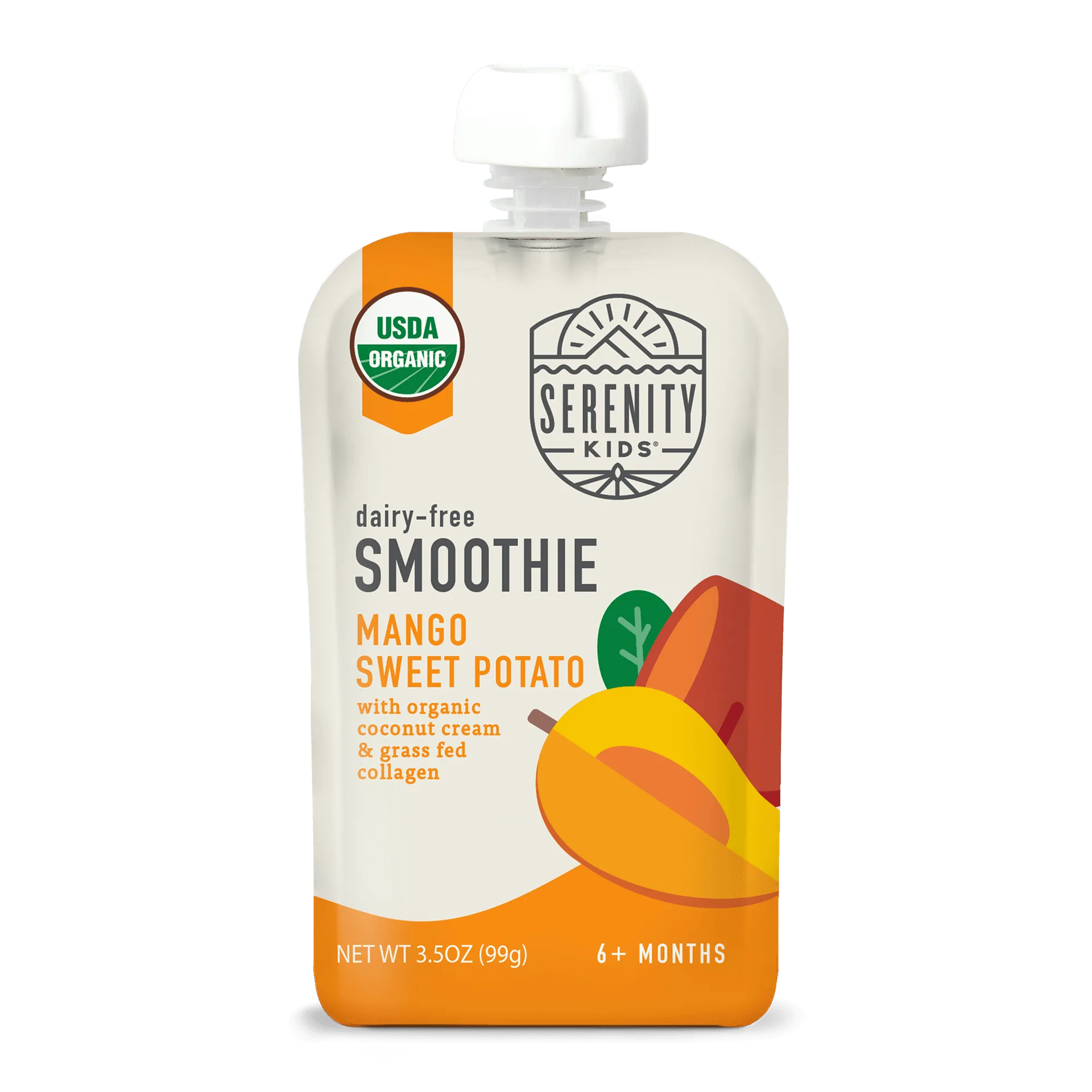
Organic certification means the ingredients were grown without synthetic pesticides, but it doesn't automatically mean the product is age-appropriate or nutritionally complete. Read the full ingredient list and nutrition panel. Some pouches combine fruits and veggies with meats or collagen, which can add protein. For example, Serenity Kids offers options like a chicken stew pouch with organic veggies and a mango sweet potato smoothie with grass-fed collagen, but always verify the age suitability on the label.
Pouch safety checklist for babies under one
Age and readiness
Confirm your baby is at least 6 months, can sit with support, and shows feeding readiness signs. If unsure, ask your pediatrician before starting pouches.
Label check
Look for organic certification, no added sugar or salt, and an age recommendation that matches your baby's stage. Avoid honey and excessive sodium.
Feeding supervision
Always supervise pouch feeding. Never let your baby suck directly from the pouch unattended. Squeeze onto a spoon or bowl to encourage self-feeding.
Product facts to know
- Chicken Mexican Stew With Organic Veggies & Mexican Spices: Chicken Mexican Stew With Organic Veggies & Mexican Spices is a pouch with free-range chicken, organic butternut, red bell pepper, herbs, and spices. This pouch offers a savory option with protein and veggies, but check the label for age recommendations and texture suitability for your baby's stage.
- Organic Mango Sweet Potato Dairy Free Smoothie with Grass Fed Collagen: Organic Mango Sweet Potato Dairy Free Smoothie with Grass Fed Collagen is a smoothie with organic mango, sweet potato, and grass-fed collagen, and is dairy-free, egg-free, and gluten-free. This smoothie can be a convenient way to add collagen and fruit/veg to a baby's diet, but confirm it's appropriate for your baby's age and any dietary restrictions.
- Grass Fed Beef Kebab With Organic Veggies & Mediterranean Herbs: Grass Fed Beef Kebab With Organic Veggies & Mediterranean Herbs is a pouch with grass-fed beef, organic potato, and Mediterranean herbs. This pouch provides a meat-based option with veggies, but always introduce new proteins one at a time and watch for reactions.