Quick answer
Seamless underwear is more comfortable for some people, not all. It genuinely helps under thin or fitted clothing because flat, welded edges lie smooth against the skin, but comfort still comes down to fabric, cut and the right size. A seamed brief in soft cotton can feel better than a seamless one that digs in or rolls. Choose seamless when you want an invisible look under light fabrics; choose seamed when breathability and a classic fit matter more.
Seamless underwear has a reputation for being the most comfortable option you can buy, and it's easy to see why: fewer seams, no raised edges, nothing to press into your skin. But the claim that seamless is always more comfortable doesn't hold up once you look at what actually touches your body.
The real difference between seamless and seamed briefs isn't comfort by default, it's construction. Seamless pieces use flat edges and bonded or welded finishes to stay invisible under clothes. Seamed pieces use stitched panels and often cotton-rich fabrics that breathe well. Which one feels better depends on your day, your outfit and how the piece fits you.
What seamless actually changes
Seamless construction removes the raised seams you'd normally find at the sides or back of a brief. That means less bulk under leggings, dresses and light trousers, and fewer edges that can show through fabric. The trade-off is that seamless pieces are often made from smooth microfibre, which feels soft but doesn't always breathe the way cotton does.
That's the key point: seamless solves a visibility problem, not automatically a comfort problem. If a seamless brief fits well, it can feel like a second skin. If it's slightly too tight or too loose, the flat edges can roll or shift, and you lose the benefit entirely.
- Seamless helps most under thin, light-coloured or close-fitting clothing.
- Seamed cotton still wins for breathability on hot days or long wear.
Seamless vs seamed: where each one wins
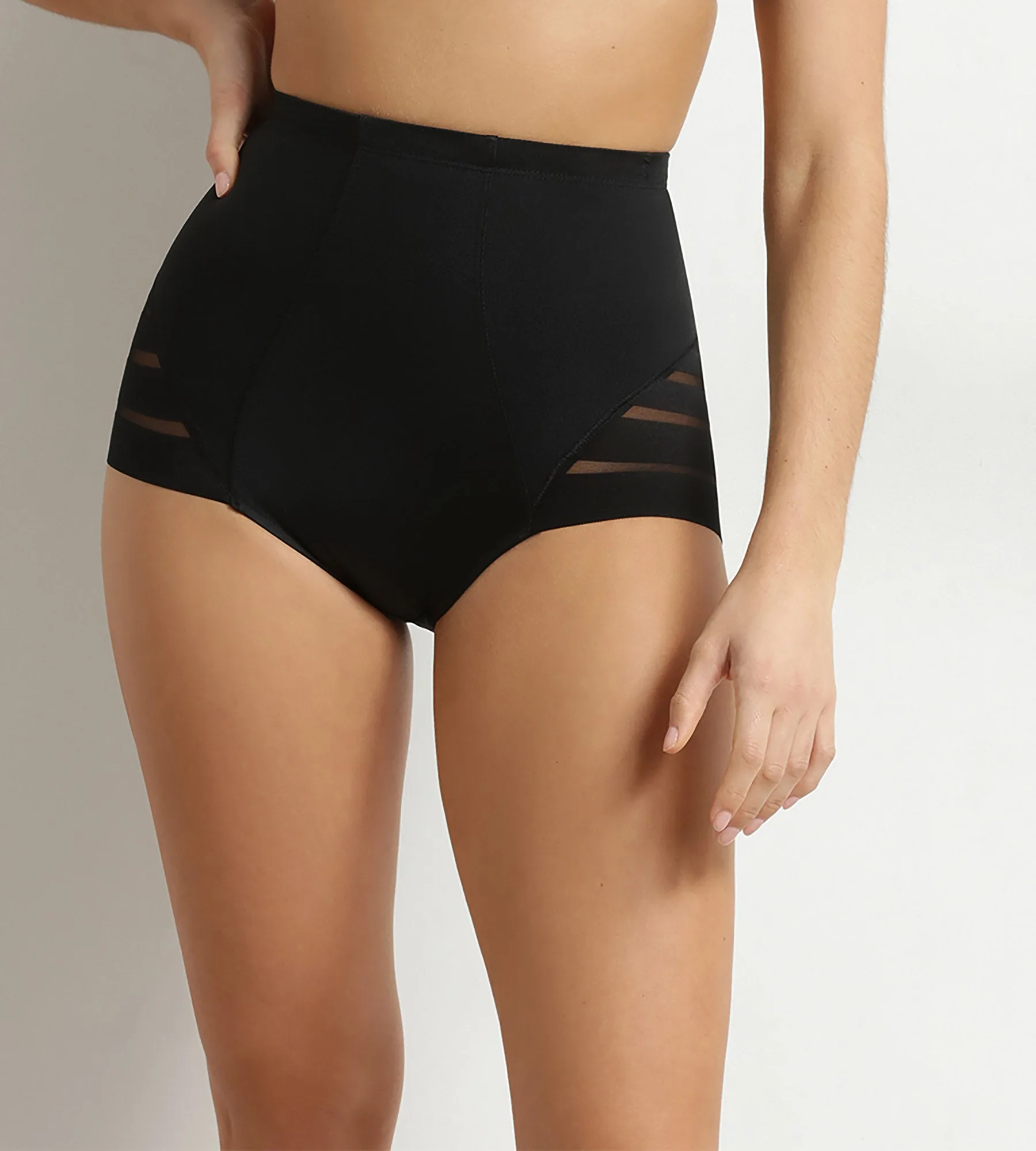
Seamed underwear, especially cotton-rich styles, tends to be more breathable and holds its shape well over time. The stitched construction also allows for more structured cuts, like high-waisted shaping briefs, where panels and tulle inserts do specific work. If you want support or a defined silhouette, seams and panels are often part of how that's achieved.
Seamless styles are better for invisible wear under fitted clothes. A nude or black microfibre brief with flat edges disappears under most fabrics, which is why seamless is the default choice for leggings, bodycon dresses and light trousers. The honest trade-off is that you may give up some airflow and, in very structured styles, some shaping.
- Choose seamless for invisibility under light or fitted clothing.
- Choose seamed for breathability, structure and classic everyday fit.
The fit myth: seamless doesn't fix the wrong size
A common assumption is that seamless underwear can't dig in or leave marks because there are no seams. In practice, flat edges can still press into the skin if the size is wrong, and a brief that's too small will roll or shift no matter how it's made. Seamless construction removes lines from seams, not lines from a poor fit.
This is why checking the size and the cut matters more than the seamless label. A high-waisted brief with a wide, enveloping waistband sits differently from a low-rise string, even if both are seamless. Match the cut to how you want the piece to sit on your body, then choose the construction that suits your outfit.
- Check the waistband height and leg opening before assuming comfort.
- If a seamless brief rolls or digs, the issue is usually size or cut, not the seams.
Myth vs verdict
- Myth: seamless is always more comfortable: Seamless removes raised seams, which helps under fitted clothes, but comfort still depends on fabric, cut and size. Verdict: partly true. Seamless helps with invisibility, not automatically with comfort.
- Myth: seamless briefs can't dig in or leave marks: Flat edges can still press into skin if the size or cut is wrong. A too-small brief rolls or shifts regardless of construction. Verdict: false. Fit matters more than the seamless label.
- Myth: seamed underwear is outdated: Cotton-rich seamed styles breathe well, hold their shape and allow structured cuts like high-waisted shaping briefs with tulle inserts. Verdict: false. Seamed styles still win for breathability and support.
What DIM's seamless and cotton styles actually offer
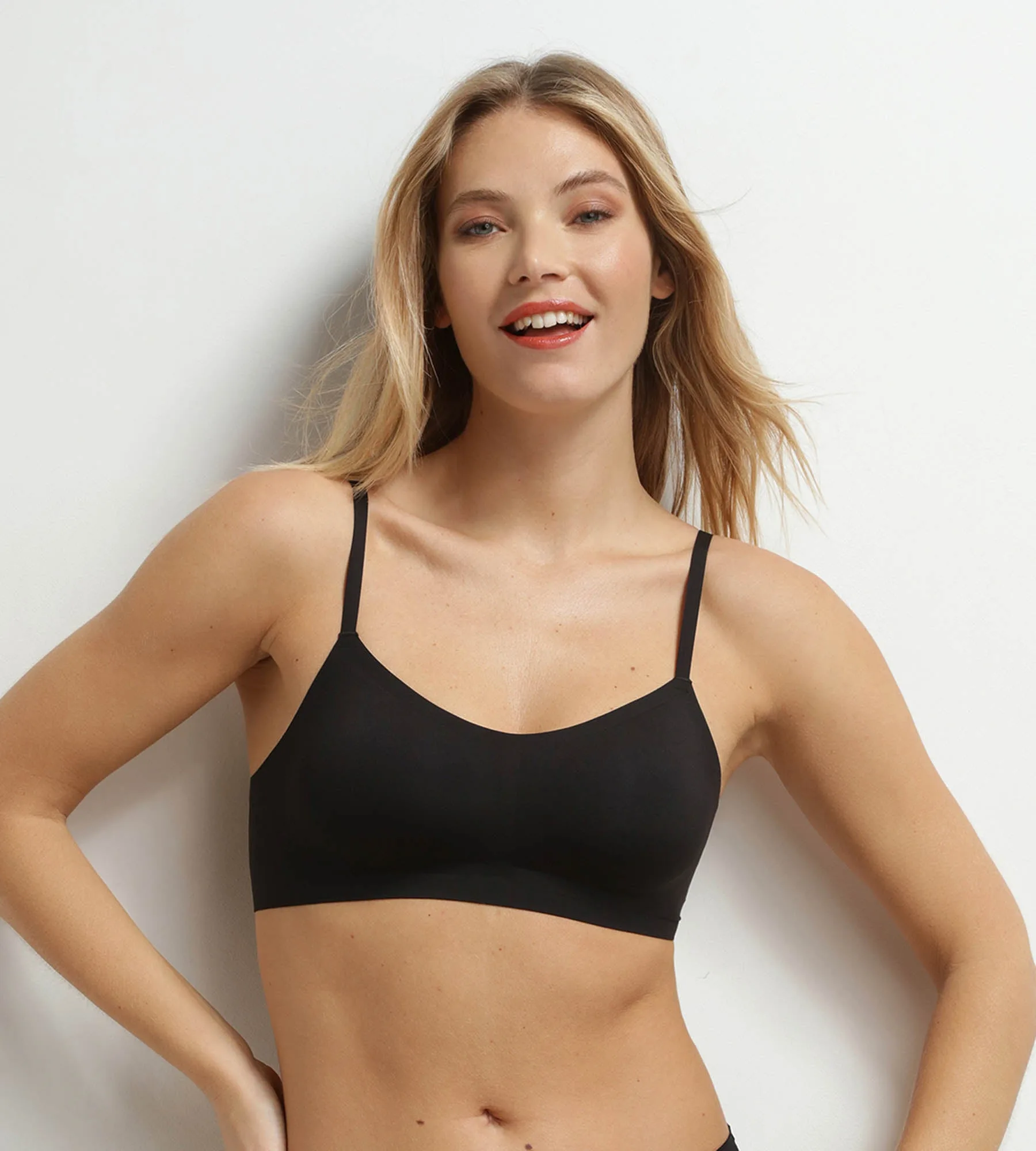
- Soutien-gorge brassière en microfibre Noir Dim Invisible: Microfibre bra with Lycra in the cups for flexible support, a natural V-neckline and smooth, light microfibre against the skin. Shows how microfibre delivers a smooth, invisible feel with soft support, the same logic behind seamless briefs.
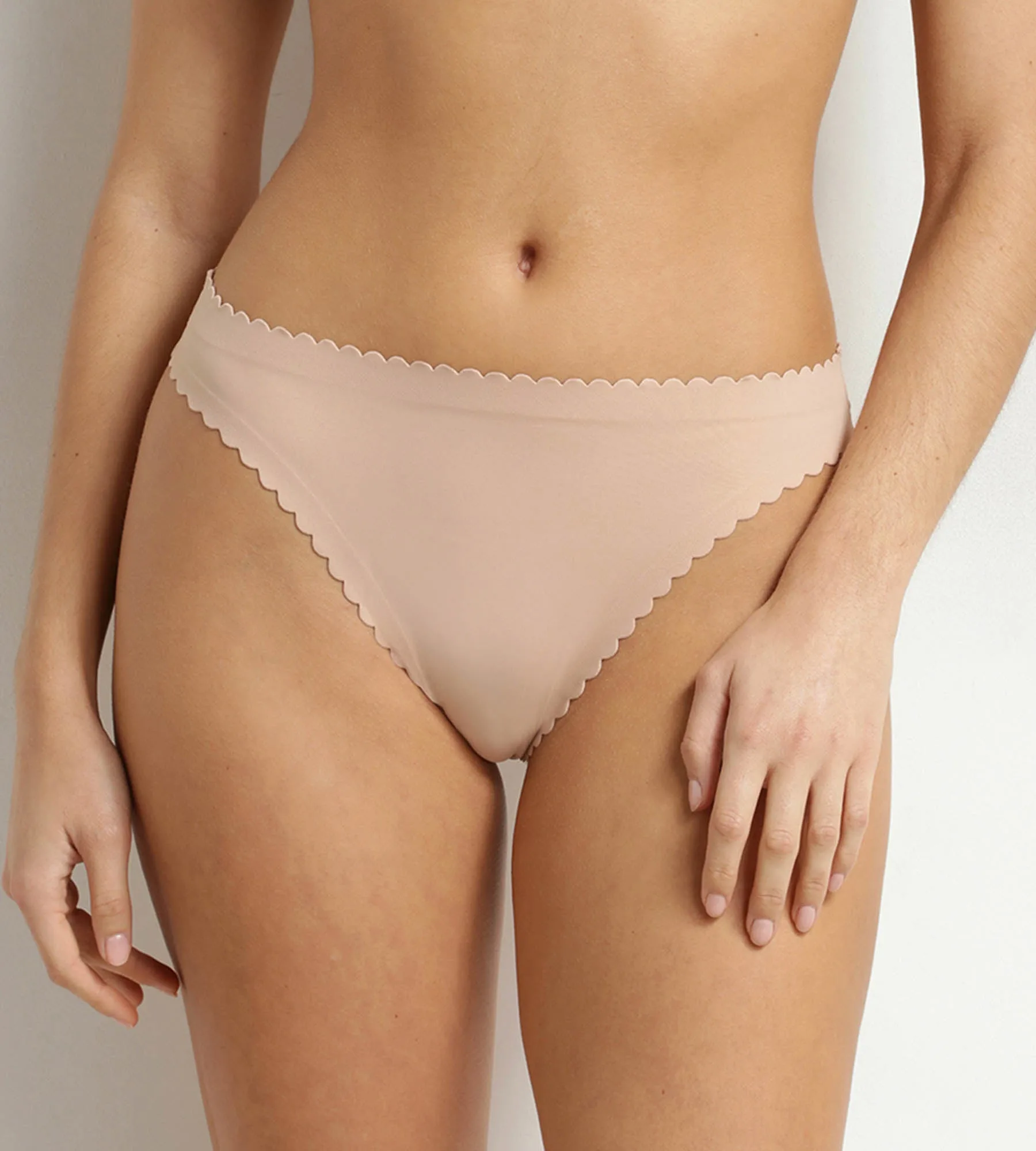
- String femme nude en microfibre Dim Body Touch: Nude microfibre thong with flat, seamless edges and a pronounced cut for a clean finish under clothing. A concrete example of seamless construction: flat edges and a nude tone are what make it disappear under light fabrics.
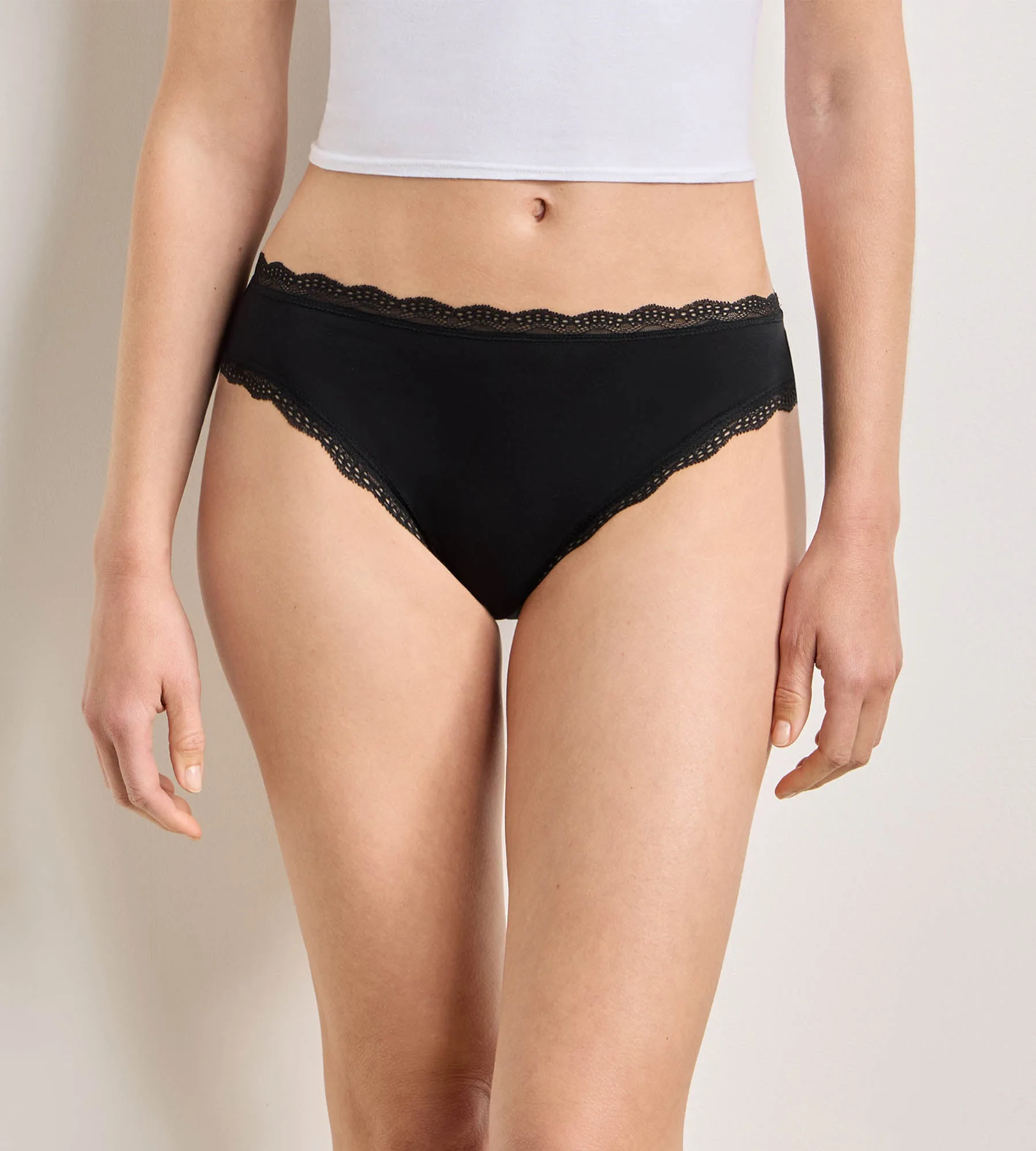
- Lot de 2 culottes noir Daily Coton Dentelle: Cotton-stretch briefs with fine lace that supports without compressing, a classic shape and a cotton gusset. Shows the seamed, cotton-rich alternative that favours breathability and everyday comfort over invisibility.
- Culotte haute ventre plat Noire Femme Dim Silhouette Élégance: High-waisted black microfibre brief with a shaping feel, an enveloping waistband and technical tulle inserts for targeted support. Demonstrates that structured shaping relies on panels and inserts, not seamless construction alone.
Seamless underwear is a genuine upgrade for invisible wear under fitted or light clothing, but it isn't automatically the most comfortable choice. Match the construction to your outfit and your day: seamless microfibre when you want a clean line, cotton-rich seamed styles when you want breathability and structure. Get the size and cut right, and either option can feel comfortable.