Evening tea claims deserve a closer look
A cup of herbal tea before bed sounds simple, but the claims around it often outrun the evidence. Ashwagandha Lemon Ginger Tea is a case in point: it is talked about as a calming evening brew, a sleep aid, and a caffeine-free alternative all at once. Some of that is supported by the product record; some is not.
Here are five common myths about evening herbal teas, checked against the supplied information for Tipson Organic Ashwagandha With Lemon & Ginger. Where the record is silent, that silence is the answer, not a reason to fill the gap with guesswork.
Myth 1: Ashwagandha tea will make you sleepy
This is the most common assumption, and the one the record supports least directly. The Tipson product description says the Ashwagandha Collection features organic, adaptogenic ingredients known to help the body manage stress and restore balance. That is a general statement about adaptogens, not a promise that a cup will make you drowsy.
- What the record says: The blend is described as soothing and inspired by Ayurvedic wisdom, with adaptogenic ingredients linked to stress management and balance.
- What it does not say: There is no supplied claim that the tea causes sleepiness, acts as a sedative, or should be used as a sleep treatment. If you are looking for a brew that reliably makes you sleepy, this record does not confirm that effect.
- A fair expectation: Treat it as a calm, caffeine-free evening drink rather than a sleep switch. The ritual of a warm cup can fit an evening routine without the tea itself being responsible for falling asleep.
Myth 2: All herbal evening teas are caffeine-free
Not every herbal blend is caffeine-free, and the word 'herbal' on a box is not a guarantee. Some blends include green tea, black tea, or other caffeine-containing ingredients alongside herbs. The reliable check is the ingredient list, not the front of the pack.
For this specific product, the record is clear: every cup is described as caffeine-free. The supplied ingredients are organic ashwagandha, natural lemon flavor, and natural ginger flavor. That makes it a reasonable choice if you are avoiding caffeine in the evening, but the confirmation comes from this product's record rather than from the category as a whole.
What the Tipson Ashwagandha Lemon & Ginger record confirms
-
Organic Ashwagandha With Lemon & Ginger - 25 Enveloped Tea Bags: Ingredients: organic ashwagandha, natural lemon flavor, and natural ginger flavor. The ingredient list is short and specific, which is what you need to check caffeine content and flavor sources rather than relying on front-of-pack claims.
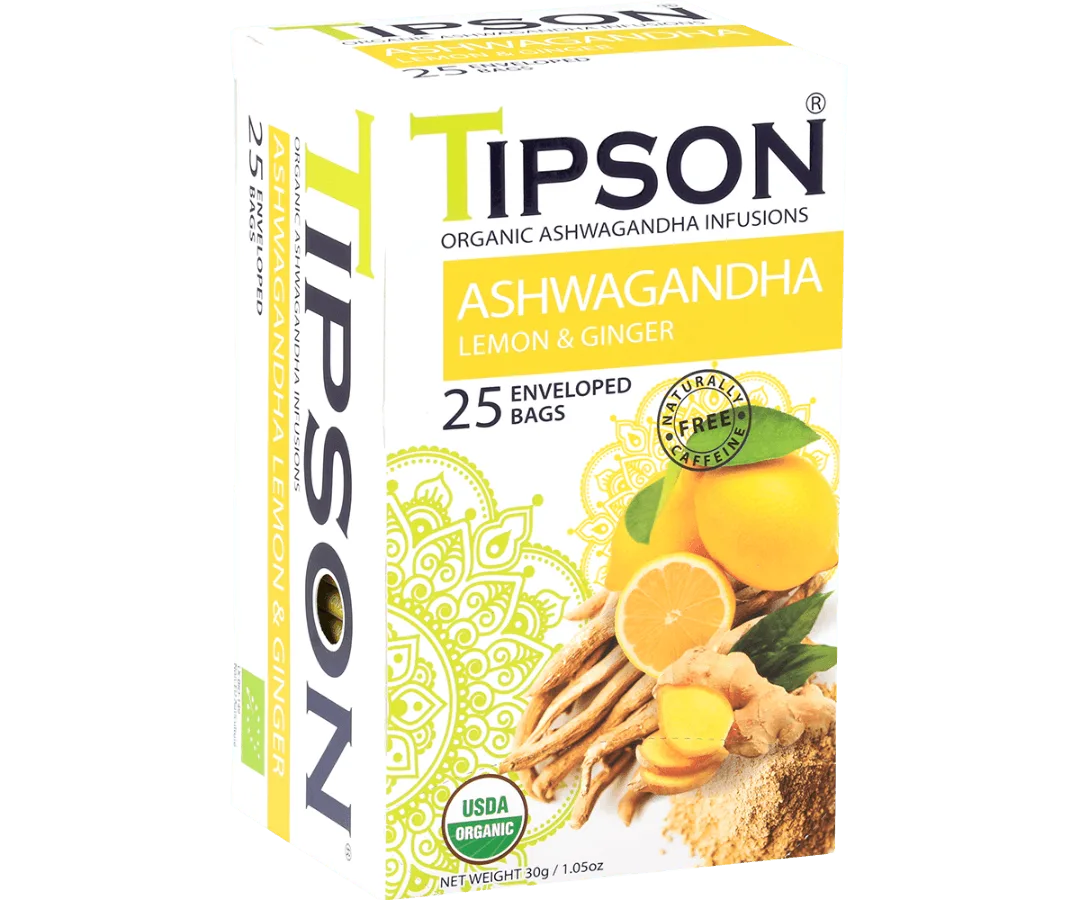
Organic Ashwagandha With Lemon & Ginger - 25 Enveloped Tea Bags
-
Organic Ashwagandha With Lemon & Ginger - 25 Enveloped Tea Bags: The blend is described as caffeine-free, gluten-free, and made with zero additives, preservatives, or artificial flavoring. These are the claims most relevant to an evening cup, and they are stated for this product rather than implied by the herbal tea category.
-
Organic Ashwagandha With Lemon & Ginger - 25 Enveloped Tea Bags: Each box contains 25 individually wrapped tea bags in recyclable foil envelopes. Individually wrapped bags help preserve freshness and flavor between cups, which matters if you brew only occasionally in the evening.
-
Organic Ashwagandha With Lemon & Ginger - 25 Enveloped Tea Bags: Tipson tea bags are described as microplastic-free and fully compostable. Useful if packaging and disposal are part of how you choose an everyday tea.
Myth 3: Lemon and ginger in the name means fruit or root pieces in the bag
A flavor name describes the taste, not necessarily the ingredients. The supplied record lists natural lemon flavor and natural ginger flavor, not pieces of lemon or ginger root. That is a meaningful distinction if you are comparing this blend with a tea that contains visible fruit or spice pieces.
- What you are getting: Organic ashwagandha with natural lemon and ginger flavoring. The lemon and ginger are present as flavors, not as listed fruit or root ingredients.
- Why it matters for evening brewing: Flavored blends can taste consistent from bag to bag, but they will not behave like a tea built on dried fruit or root pieces. Expect a clean, light cup rather than a heavy, spicy infusion.
- What the record does not confirm: The supplied information does not give a brewing time, water temperature, or steeping method. Follow the directions on the pack if they are provided there, and adjust to your taste rather than assuming a standard time.
Myth 4: A stronger cup is always a better evening cup
With many teas, the instinct is to steep longer for more benefit. But the supplied record makes no claims about dosage, strength, or how much ashwagandha you get per cup, so a longer steep is a taste decision, not a wellness upgrade.
- Start with the pack directions: The record does not supply preparation instructions. If the box gives a steeping time, use that as your starting point.
- Adjust for flavor, not for effect: If the cup tastes weak, a slightly longer steep may help the flavor, but the record does not support the idea that a stronger cup delivers more of anything beyond taste.
- Keep the evening cup simple: One bag in hot water, steeped to your preferred strength, is enough to evaluate whether you enjoy the blend. There is no supplied reason to double up bags for an evening cup.
Myth 5: Any herbal tea is fine for everyone before bed
Herbal teas are often treated as universally safe, but the record does not support blanket claims about who should drink this blend. The supplied information does not confirm suitability for pregnancy, breastfeeding, children, or people taking medication, and it does not list allergen information beyond the gluten-free statement.
If you have a medical condition, take regular medication, or are pregnant or breastfeeding, check with a qualified health professional before making ashwagandha tea part of your evening routine. That is a caution about the limits of the record, not a claim that this product is unsafe.
What to take away before your next evening cup
The record supports a modest, useful set of claims: this is a caffeine-free, gluten-free blend of organic ashwagandha with natural lemon and ginger flavors, packed in 25 individually wrapped, compostable tea bags. It does not support the idea that the tea will make you sleepy, that a stronger cup is better, or that it suits every person at every stage of life.
If you want an evening herbal tea with a clear ingredient list and no caffeine, Tipson Organic Ashwagandha With Lemon & Ginger fits that brief. If you are specifically looking for a sleep aid, the supplied information does not confirm that role, so treat the cup as a calming ritual rather than a solution.