Why this blend attracts bad brewing advice
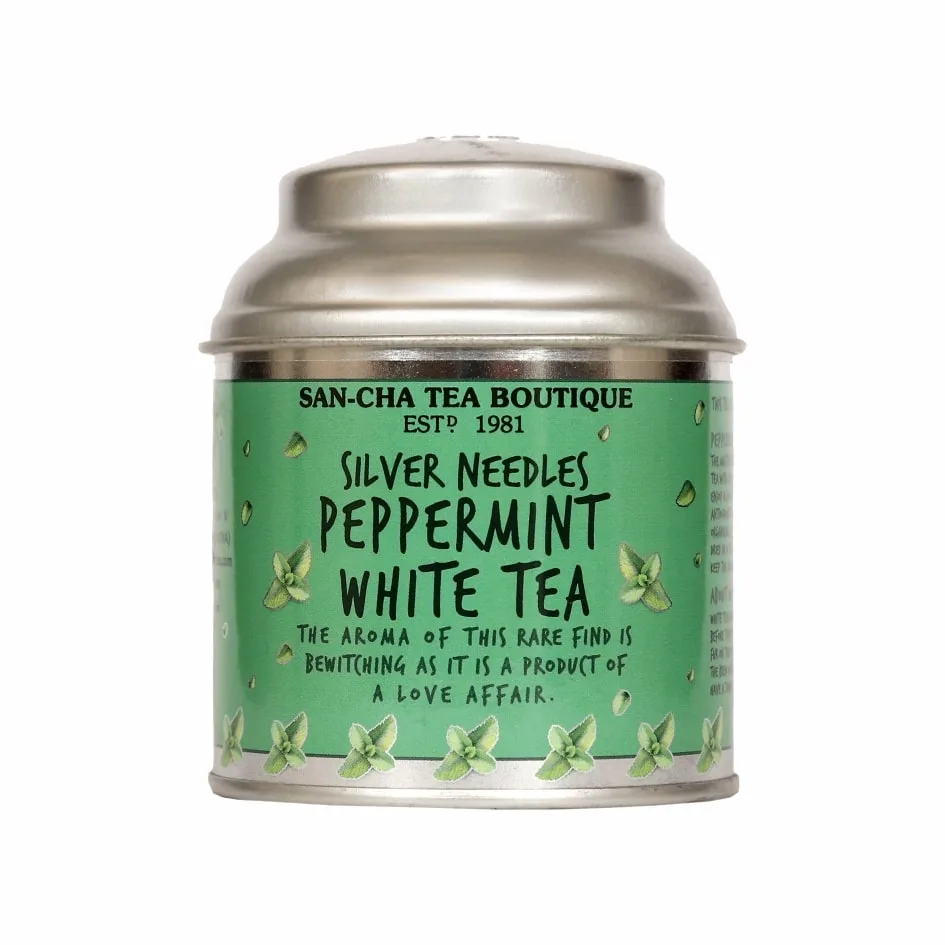
Peppermint Silver Needle White Tea sits in an awkward spot for generic tea advice. Most mint teas are built on black or green tea, where an assertive base can stand up to the mint. This blend does the opposite: it pairs shade-grown, cold-dried peppermint with handpicked Silver Needle buds, a base the catalog describes as whisper-quiet, delicate and vegetal. Advice written for a minty black tea will not transfer cleanly.
The result is a set of claims that sound reasonable but do not match the supplied record. Below, each common claim is checked against what the catalog actually says, and where the evidence stops, that is labeled rather than filled in.
Five steeping claims, checked against the record
- Myth: Use fully boiling water for white tea: The catalog is unusually direct here. It specifies brewing at 75–80°C for 2–3 minutes and states that Silver Needle's delicate buds demand this lower temperature without exception. It also explains why: at this gentler heat the cold-dried peppermint's preserved essential oils release most fully and cleanly. Boiling water is not supported by the record.
- Myth: White tea needs a long steep to develop flavor: The stated window is 2–3 minutes at 75–80°C. The record does not give a longer alternative for hot brewing, so there is no supplied basis for extending the steep. Whether a longer steep suits your palate is a personal experiment, not a catalog instruction.
- Myth: All white tea is caffeine-free: The catalog lists this blend's caffeine level as Low, not caffeine-free. That is a meaningful distinction for anyone choosing an evening cup. Low caffeine is not the same as none, and the record does not quantify it further.
- Myth: Mint dominates any white tea it is blended with: The record frames the blend as a calibration exercise: the menthol's cooling power is balanced so it does not overwhelm the bud's sweetness and vegetal character, while the Silver Needle's refinement is preserved beneath the mint rather than erased. That is a description of intent, not a guarantee for every palate, but it does contradict the idea that the mint simply takes over.
- Myth: Cold brewing is only for green and black tea: The catalog explicitly supports cold brewing this blend: steep overnight at room temperature for a pale, crystalline iced white tea. It notes the cold-drying process makes the cold-brew result particularly spectacular. This is one of the few claims here with a direct method attached.
What the Peppermint Silver Needle record confirms
-
Peppermint Silver Needle White Tea | Refreshing Luxury Blend: Brew at 75–80°C for 2–3 minutes; the catalog states Silver Needle's delicate buds demand this lower temperature without exception. This is the single most important correction to generic white tea advice, and it is stated as a requirement rather than a preference.
Peppermint Silver Needle White Tea | Refreshing Luxury Blend
-
Peppermint Silver Needle White Tea | Refreshing Luxury Blend: Caffeine level: Low. Useful for anyone planning an after-dinner or evening cup, and a reminder that low is not the same as caffeine-free.
-
Peppermint Silver Needle White Tea | Refreshing Luxury Blend: Peppermint is shade-grown and cold-dried in a specially designed chamber to lock in aroma; Silver Needle buds are handpicked. Explains why the mint behaves differently from commodity peppermint and why heat control matters more than usual.
-
Peppermint Silver Needle White Tea | Refreshing Luxury Blend: Cold brew overnight at room temperature for a pale, crystalline iced white tea. A supported alternative method for summer, with the catalog noting the cold-dried peppermint performs particularly well this way.
-
Peppermint Silver Needle White Tea | Refreshing Luxury Blend: Available in 25 g (about 25 cups) and 75 g (about 75 cups) tins. Lets you match quantity to how often you actually brew, rather than committing to a large tin before you know the blend suits you.
What the record does not settle
The catalog gives a clear hot-brew temperature and time, and a cold-brew method, but it does not specify a leaf-to-water ratio for either. That is a real gap, not a hidden instruction. If you are used to weighing tea, start with a ratio you already trust for delicate white tea and adjust to taste; the record will not tell you a number it does not contain.
It also does not quantify the caffeine content beyond Low, does not state a shelf life, and does not confirm allergen or dietary status. If any of those matter to you, treat them as open questions rather than assuming the blend is suitable. The catalog's own framing is about provenance and craft, not health claims, and it should be read that way.
How to brew it without falling back on myths
- Hot cup: Heat water to 75–80°C, steep for 2–3 minutes, and stop there. Do not default to a rolling boil because the base is white tea.
- Cold brew: Steep overnight at room temperature. The catalog presents this as a summer method and ties the result to the cold-drying of the peppermint.
- When to drink it: The record highlights mornings, where the peppermint's clarity meets the white tea's natural sweetness without caffeine weight, and after meals, where the mint's digestive character and the tea's palate-refreshing delicacy make it a purposeful post-meal cup.
- Who it is for: The catalog describes it for the Silver Needle connoisseur who wants a refreshing expression of the tea, and for the peppermint lover who wants the herb on a delicate, antioxidant-rich base rather than a robust one.