What “Ayurvedic tea” means in this catalog
Ayurvedic tea is not a single recipe. In the supplied catalog, the term describes caffeine-free herbal infusions blended around botanicals associated with Ayurveda—such as ashwagandha, tulsi, moringa, brahmi, and shankhpushpi—rather than tea leaves from the Camellia sinensis plant.
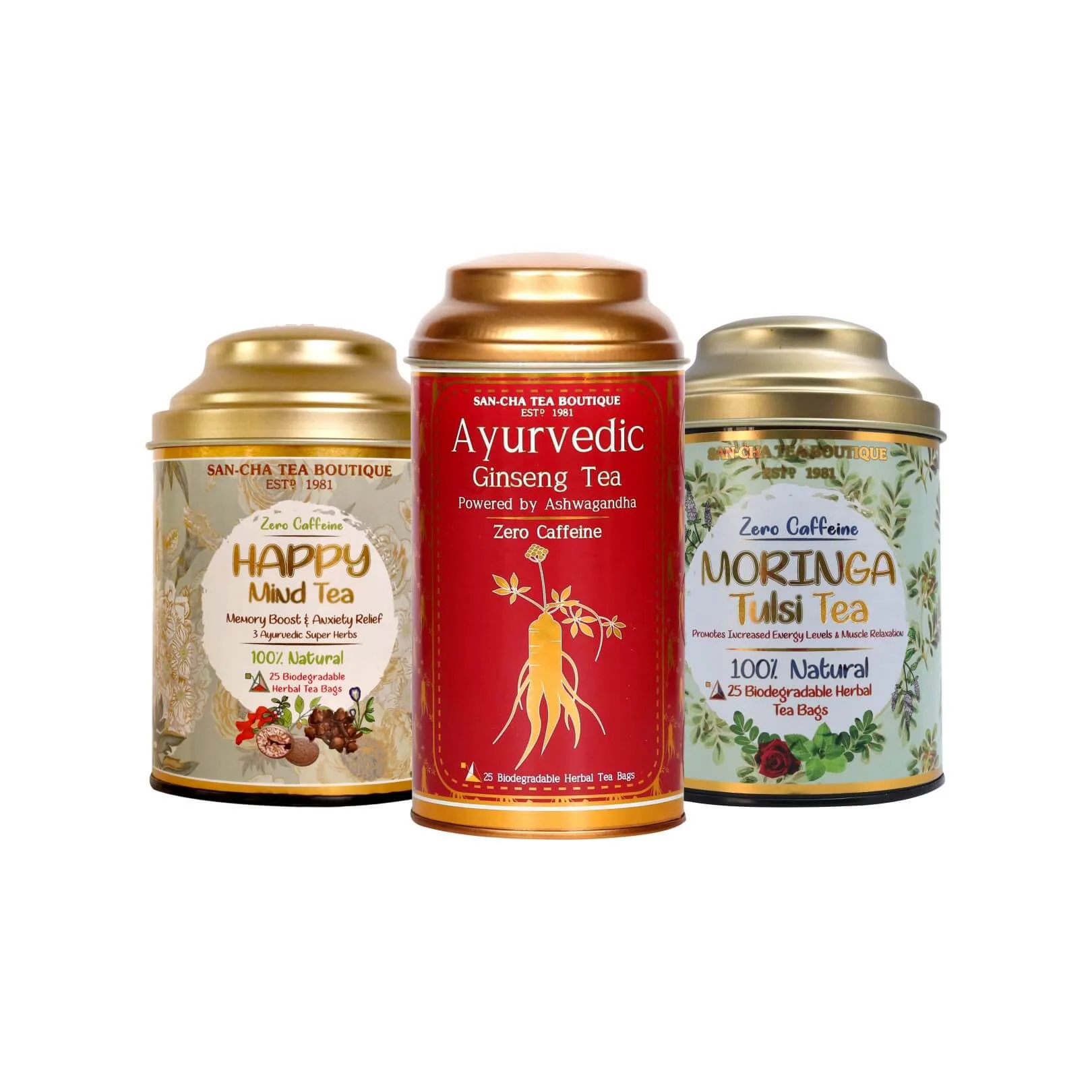
The Mindful Living Teas bundle is the clearest example here: three caffeine-free Ayurvedic herbal infusions blended in small batches by SANCHA's Master Blenders. That is a description of ingredients and blending style, not a medical claim. The listing also says the bundle is built around calm, focus, and balance, and that it is meant to be lived with every day.
Four common Ayurvedic tea myths, checked against the evidence
- Myth: Ayurvedic tea is always a single “dosha” tea: The catalog does not assign doshas to the Mindful Living Teas bundle or its three blends. Instead, it organizes the teas by moment and purpose: a morning grounding ritual, a midday renewal, and a focus cup. If you are looking for a dosha-specific tea, the supplied information does not confirm one here.
- Myth: Caffeine-free means it can’t support focus: The catalog states that the Happy Mind blend is caffeine-free and is intended as a working cup, best drunk 15–20 minutes before a study session, creative project, or task that demands presence and mental precision. That is a positioning claim from the listing, not a clinical result; treat it as a ritual cue rather than a guarantee.
- Myth: Ayurvedic blends are all the same flavor: The bundle deliberately separates three taste directions: the Indian Ginseng Ashwagandha Tea is described as warming and spiced; the Moringa Tulsi Herbal Tea as light, clean, and restorative; the Happy Mind blend as a green, focused cup. The catalog supports difference in flavor and occasion, not an identical herbal base.
- Myth: A wellness bundle is just variety without intention: The listing explicitly argues against that idea, saying most wellness bundles group teas by flavor or occasion rather than purpose. This one is presented as a daily system with a morning, midday, and focus role. That is the brand’s framing; the catalog does not provide independent testing to verify the system’s effects.
What the Mindful Living Teas bundle actually confirms
-
Mindful Living Teas | Ayurvedic Caffeine-Free Herbal Tea Bundle: Three caffeine-free Ayurvedic herbal infusions, blended in small batches by SANCHA's Master Blenders. This is the baseline: caffeine-free is stated directly, and the Ayurvedic identity comes from the botanical blend rather than from tea leaves.
Mindful Living Teas | Ayurvedic Caffeine-Free Herbal Tea Bundle
-
Mindful Living Teas | Ayurvedic Caffeine-Free Herbal Tea Bundle: Packed in 100% biodegradable corn-fibre pyramid tea bags. If packaging material matters to you, this is a confirmed detail; the catalog does not state a brewing temperature or steep time.
-
Mindful Living Teas | Ayurvedic Caffeine-Free Herbal Tea Bundle: Available as 75 Tea Bags | 75 Cups in a Tin Caddy. The size is clear enough to plan daily use, but the catalog does not specify how many cups per day the bundle is intended to cover.
What “caffeine-free” does and doesn’t tell you
The catalog states that all three blends in the Mindful Living Teas bundle are caffeine-free. That is useful if you are avoiding caffeine in the afternoon or evening, or if you want a warm drink without a stimulant.
What the catalog does not provide is a milligram breakdown, a caffeine-test result, or a guarantee that every ingredient is stimulant-free in a clinical sense. It also does not list allergens or nutritional values. If you have a medical condition, are pregnant, or take medication, treat the listing as product information rather than medical advice and check with a qualified professional.
The three blends and the moments they’re sold for
The catalog gives each blend a distinct role. Use this as a buying guide, not a prescription.
- Indian Ginseng Ashwagandha Tea: Described as a warming, spiced morning grounding ritual, ideally before or alongside breakfast. The listing also suggests returning to it in the early evening on high-pressure days.
- Moringa Tulsi Herbal Tea: Positioned as a midday renewal—light, clean, and restorative—when the body needs replenishing and the mind needs stillness.
- Happy Mind – Ayurvedic Herbal Tea: The focus cup, recommended 15–20 minutes before a study session or creative task, and again mid-afternoon when focus drifts. The catalog also notes it works as a post-lunch digestive reset.
Taste expectations: what the catalog says and what it leaves open
The catalog gives flavor direction but not a full tasting note. The Ashwagandha blend is warming and spiced; the Moringa Tulsi blend is light and clean; the Happy Mind blend is described as a “breath of green.” That tells you the trio is not uniformly earthy or uniformly sweet.
It does not tell you which blend is bitter, which is floral, or how strong the spice is. If you are sensitive to bitter herbal notes, the catalog does not confirm which cup is mildest. The safest approach is to try one blend at a time rather than assuming all three taste alike.
Practical checks before you buy
- Confirm the format: The bundle is sold as 75 tea bags in a tin caddy. The catalog does not state whether the three blends are individually wrapped or mixed in the caddy, so check the packaging description if that matters to you.
- Check preparation guidance: The supplied record does not include a brewing temperature or steep time. Follow the package directions when the bundle arrives rather than guessing from general herbal tea advice.
- Match the bundle to your routine: The catalog frames this as a daily system with morning, midday, and focus roles. If you drink one cup a day, a three-blend bundle may be more variety than you need; if you want a structured tea ritual, the roles are clearly mapped.
- Treat wellness language as positioning: The listing uses words like calm, focus, balance, and renewal. Those are brand descriptions, not verified health outcomes. The catalog does not supply clinical studies, dosha assessments, or allergen statements.
The honest bottom line
The Mindful Living Teas bundle is a credible example of a caffeine-free Ayurvedic herbal tea set: three distinct blends, small-batch production, biodegradable pyramid bags, and a clear daily structure. The myths worth discarding are the ones that treat Ayurvedic tea as a single dosha prescription or a guaranteed cognitive enhancer.
The catalog supports what the tea is and when the brand suggests drinking it. It does not support medical claims, allergen-free status, or a specific brewing method. Buy it for the ritual and the botanical blend, not for promises the listing doesn’t make.