Quick answer
Unroll the Atlantic Storm Admirals Edition neoprene mat print-side up on a clean, hard table, let it relax flat for a few hours, wipe it with a barely damp cloth after play, and store it rolled around a wide tube rather than folded. The mat is the play surface for the convoy auction and task-force placement, so a flat, grit-free mat matters more than a perfectly pristine one.
What the mat is actually doing for the game
In Atlantic Storm Admirals Edition, you build task forces from British, American, German and Italian warships, submarines and aircraft, and take them into an auction nobody can see the bottom of. That auction depends on players being able to read positions and reach across the table without the surface shifting. A neoprene mat gives you a soft, slightly tacky surface that holds counters and cards in place, unlike a bare table where a sleeve or a stack of ship cards slides when someone leans in. Treat the mat as part of the game state, not as a poster you happen to play on.
Before the first unroll: clear the table
Neoprene picks up crumbs, pencil graphite, and grit from tables, and once those are pressed into the surface they are hard to remove without abrading the print. Wipe the table first, then unroll. If your table has a rough or splintered edge, put a thin cloth under the mat edge or use a table pad, because repeated dragging over a rough edge is what wears the printed border.
Cleaning without wrecking the print
For routine cleaning, a microfiber cloth and warm water are enough. Dampen the cloth, wring it out until it barely feels wet, and wipe in one direction. Do not soak the mat, do not use alcohol, acetone, or abrasive cleaners, and do not put it in a washing machine. For a spill, blot first, then wipe with the damp cloth, and let the mat air-dry flat before rolling it. If the mat has been stored a long time and smells faintly of rubber, air it out flat for a day rather than trying to wash the smell away.
Rolling and storing between sessions
Roll the mat print-side out around a wide cardboard tube or a foam pool noodle, not a thin dowel. A tight roll around a narrow core creates hard creases that take days to relax, and those creases sit exactly where your task-force cards and convoy markers go. Store the roll horizontally on a shelf, not standing on end, and not under a stack of rulebooks. If the mat will sit for months, keep it out of direct sun and away from hot attics or cold garages, since temperature swings are what make neoprene stiff and reluctant to lie flat.
When the mat will not lie flat
If the mat still curls at the corners after unrolling, roll it in the opposite direction around the same wide tube, leave it for a few hours, then unroll print-side up and let it sit. Do not iron it, do not put heavy books directly on the printed surface, and do not leave it in a hot car to soften. A mat that has been stored rolled for a long time may need a full day flat before it plays well; plan that ahead of game night rather than fighting it during setup.
Setup and care steps
- Clear and wipe the table: Remove crumbs, grit, and pencil shavings, then wipe the table with a damp cloth and let it dry. Common mistake: unrolling onto a table that still has sand or eraser residue, which presses into the neoprene and is nearly impossible to get out. Checkpoint: run a dry hand across the table; if you feel grit, wipe again before the mat goes down.
- Unroll print-side up and let it relax: Lay the mat out with the printed side facing up and give it at least a couple of hours, longer if it has been rolled tightly. Common mistake: flipping it print-side down to flatten faster, which puts the printed surface against the table and invites scuffs and moisture. Checkpoint: corners should sit within a few millimeters of the table before you start placing task forces.
- Play, then wipe before rolling: After the session, wipe the mat with a barely damp microfiber cloth, going with the print direction, and let it air-dry flat. Common mistake: rolling the mat while it is still damp or covered in snack crumbs, which traps moisture and debris against the print. Checkpoint: the surface should feel dry and smooth, with no tacky spots, before you roll.
- Roll around a wide core, print-side out: Use a cardboard tube or foam noodle at least a few inches across, and roll so the printed surface faces outward. Common mistake: rolling around a thin dowel or folding the mat into quarters, which creates hard creases right where your convoy and task-force markers sit. Checkpoint: the roll should feel firm but not compressed; if you can see sharp fold lines, the core is too narrow.
- Store horizontally, away from heat and sun: Lay the roll flat on a shelf rather than standing it on end, and keep it out of direct sunlight, hot cars, and freezing garages. Common mistake: storing the mat under heavy rulebooks or in a hot trunk, which stiffens the neoprene and makes the next unroll a fight. Checkpoint: next game night, the mat should unroll and lie flat within an hour; if it does not, roll it the opposite way for a few hours before play.
Product facts
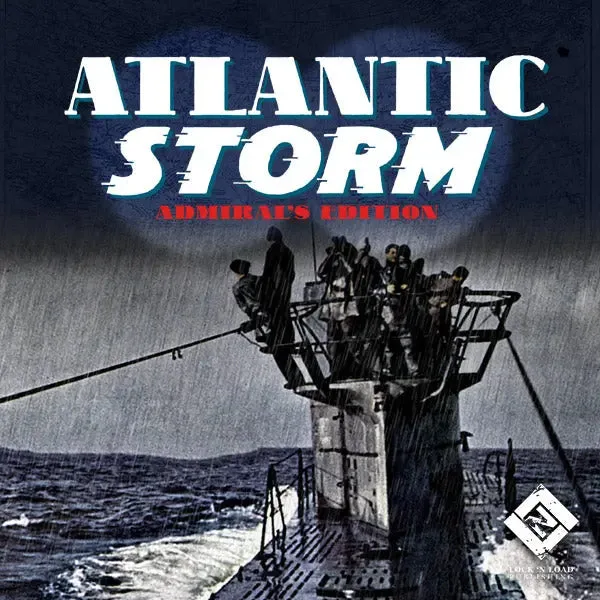
- Atlantic Storm Admirals Edition with Neoprene Mat: Atlantic Storm Admirals Edition with Neoprene Mat covers the Battle for the Atlantic, where after France fell in 1940 the convoys still had to cross and Hitler sent U-boats, bombers and warships to stop them, until by the end of 1943 the wolf packs were the ones being hunted. The game follows a long convoy campaign with many separate battles, so you will set up and break down the mat repeatedly; a consistent roll-and-store routine protects the surface you play on every session.
- Atlantic Storm Admirals Edition with Neoprene Mat: You build task forces from British, American, German and Italian warships, submarines and aircraft, and take them into an auction nobody can see the bottom of. The hidden-auction mechanic means players lean in and reach across the mat constantly; a flat, non-slip neoprene surface keeps cards and ship pieces where you placed them.