Quick answer
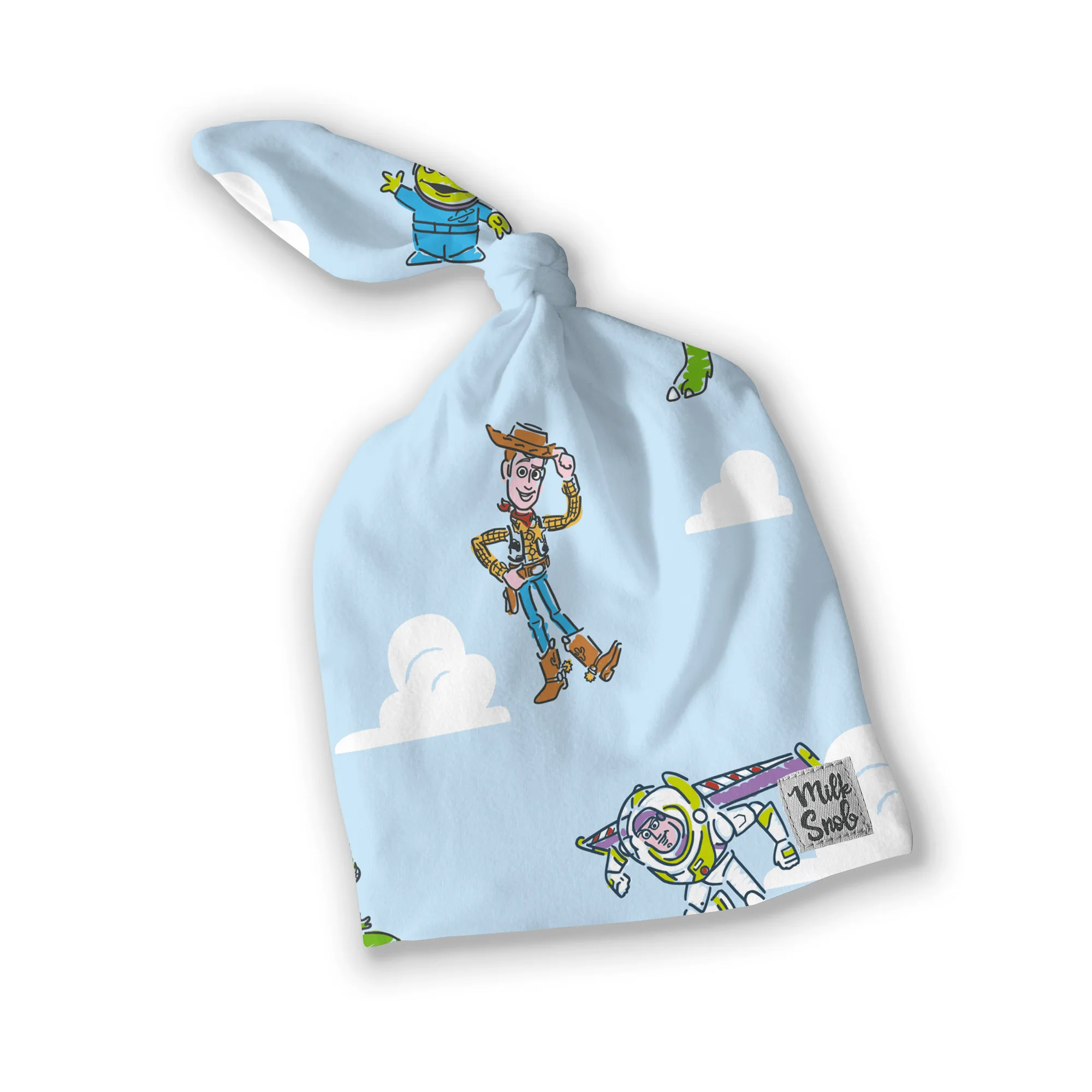
Measure your baby's head circumference at the widest point, just above the ears and eyebrows, then match that number to the hat's size chart. If your baby is between sizes, size up for room to grow and choose a hat with a soft, stretchy band so it stays comfortable. For newborns, a knotted hat like the Disney Pixar Toy Story Hat is a practical first hat because you can adjust the knot to fine-tune the fit.
How to measure your baby's head at home
Use a soft tape measure or a piece of string you can later lay against a ruler. Wrap it around the widest part of the head, about one finger's width above the eyebrows and ears, and keep the tape level all the way around. Snug is fine, but it should not press into the skin. Take the measurement twice to confirm, and write down the number in inches and centimeters so you can compare it with any baby hat size chart.
- Measure while your baby is calm and, if possible, sitting or lying still.
- If you only have a string, mark the overlap point and measure that length.
- Re-measure every 4 to 6 weeks because infant head growth can change the fit quickly.
Reading a baby hat size chart without guessing
Most baby hat size charts list a head circumference range rather than an age range, because two babies the same age can have very different head sizes. Find the row where your measurement falls, then check whether the hat is described as stretchy or structured. A stretchy knit can comfortably cover a slightly wider range, while a woven or structured hat usually needs a closer match. If the chart gives only ages, treat it as a rough starting point and rely on the circumference when the brand provides one.
- Match the measurement, not the age on the label.
- For a winter hat for baby, allow a little extra room if you plan to layer it over a thinner cap.
- When the chart shows a gap between sizes, choose the larger size unless the hat has an adjustable closure.
Newborn hat sizing and what to expect in the first months
Newborn hat sizing is its own challenge because heads grow quickly and many newborns are between the smallest sizes. A knotted or tie-style hat gives you more control than a fixed brim, since you can adjust the knot or fold to change the fit. Check that the hat covers the ears without sliding down over the eyes, and that you can still slip a finger under the edge. If the hat leaves deep marks or your baby keeps trying to pull it off, it is probably too tight or too loose.
- A hat should stay on during gentle movement but lift off without resistance.
- Avoid hats with long ties or loose embellishments around a newborn's neck.
- Expect to replace the first hat within a few months as the head grows.
Fit checks for different hat styles
Knotted hats, beanies, and brimmed hats all fit differently even when the size chart matches. A knotted hat, like the Disney Pixar Toy Story Hat, lets you adjust the top knot so the band sits where you want it. A beanie relies on stretch, so the band should hug the head without pinching. A brimmed or structured hat needs a more exact circumference because there is less give. In every style, the priority is the same: the hat should stay in place, cover the head comfortably, and never cover the eyes or press on the ears.
Decision rules for buying a baby hat
- Measure before you buy: Use a soft tape around the widest part of the head, just above the ears and eyebrows, and write down the number. If you cannot measure, choose a knotted or stretchy style that tolerates a wider range.
- Size up between sizes: When the measurement falls between two chart sizes, pick the larger one unless the hat has an adjustable closure. A slightly loose hat can be adjusted or worn over a thin layer; a tight hat can cause discomfort and pressure marks.
- Match the style to the season: Choose a lightweight, breathable hat for mild weather and a closer-fitting, warmer hat for winter, layering only if the hat still fits well. A winter hat for baby should cover the ears but still allow you to slip a finger under the edge.
- Recheck the fit every month: Infant heads grow quickly, so measure again every 4 to 6 weeks and watch for redness, slipping, or your baby tugging at the hat. Replace the hat when it leaves marks or no longer stays on during gentle movement.
Product facts that affect hat fit
- DISNEY PIXAR TOY STORY HAT: The Disney Pixar Toy Story Hat is a knotted hat and an official licensed partner of Disney; character placement on the product will vary. The knot lets you adjust the fit as your newborn's head grows, and the varying character placement means each hat looks a little different.
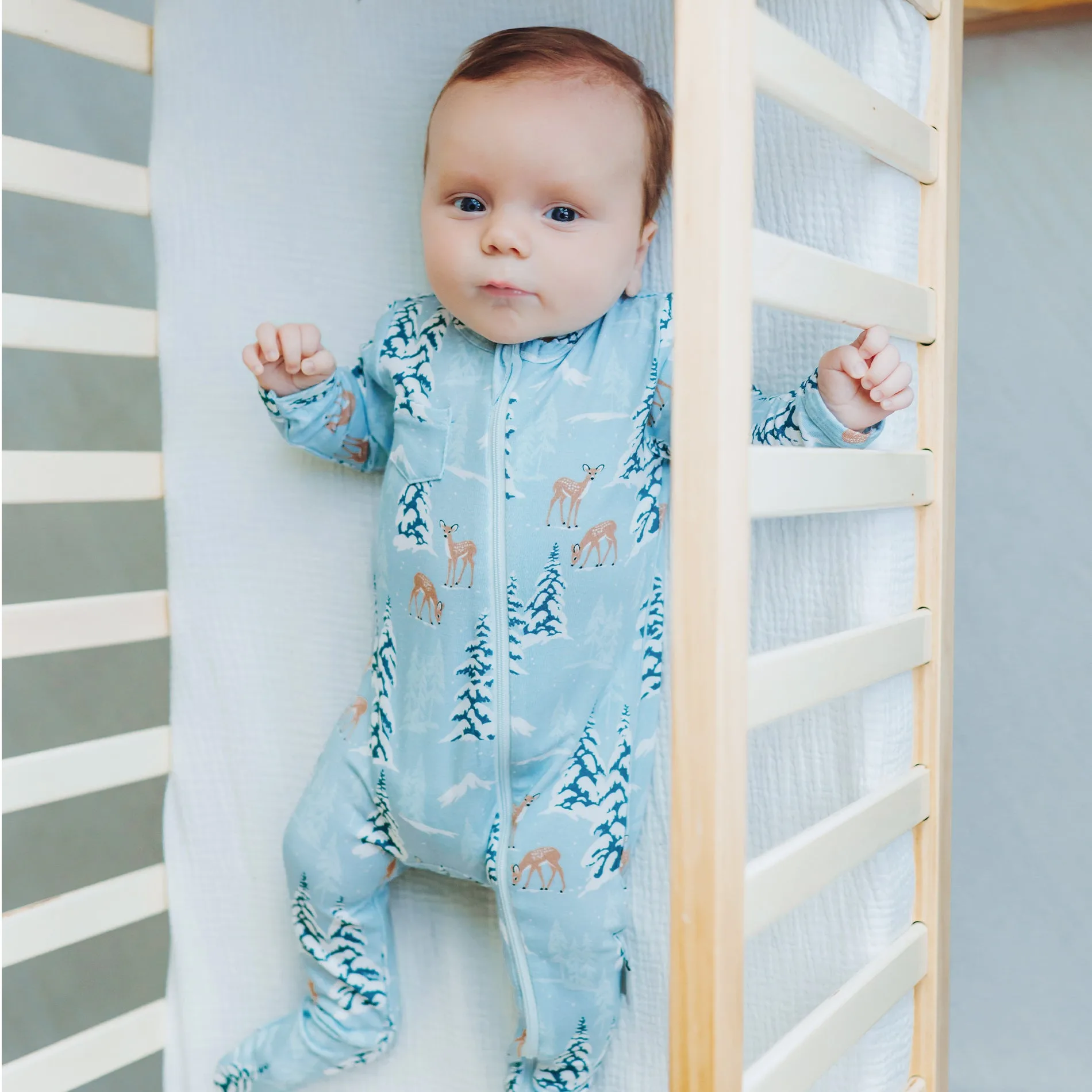
- ALPINE FOOTED JAMMIES: The Alpine footed jammies are slightly stretchy, lightweight, and breathable, with a winter trees and deer design on a soft blue background. If you are building a cold-weather sleep set, pairing a well-fitted hat with stretchy footed jammies keeps the whole outfit comfortable without overheating.
Who this hat sizing advice is for
Best for
- Parents buying a first hat for a newborn or infant
- Caregivers who need a hat that stays on during stroller walks and naps
- Anyone choosing between two sizes on a baby hat size chart
Not for
- Older children or adults, who need a different size range
- Babies who need a medically prescribed head covering
- Parents looking for a hat with a fixed, non-adjustable fit for a very specific head shape