Quick Answer
Install baby safety gates at the top and bottom of stairs, in doorways leading to off-limits rooms, and between living areas and kitchens. For stairs, always use a hardware-mounted gate at the top; pressure-mounted gates work for doorways and bottom-of-stair use only if the frame is sturdy.
Understanding Baby Gate Types for Different Locations
Hardware-mounted gates screw into the wall or banister, making them the only safe choice for the top of stairs where a fall could be serious. Pressure-mounted gates use tension against door frames and are best for doorways or the bottom of stairs, but they can be dislodged by a determined toddler. Always check the manufacturer's weight and height limits before installation.
Frequently Asked Questions
Where should I install a baby gate at the top of stairs?
Install a hardware-mounted gate directly at the top step, not one step down. The gate should swing away from the stairs so it doesn't create a tripping hazard. Measure the width of your stair opening and choose a gate that fits securely. Always use a hardware-mounted gate at the top of stairs for maximum safety.
Can I use a pressure-mounted gate at the bottom of stairs?
Yes, but only if the bottom of the stairs opens into a hallway or room with a solid door frame. Pressure-mounted gates are not recommended if the bottom of the stairs is open on one side. For uneven surfaces or wide openings, a hardware-mounted gate is safer. Pressure-mounted gates are acceptable at the bottom of stairs only when the frame is sturdy and the opening is even.
How do I install a baby gate in a doorway without damaging the frame?
Use a pressure-mounted gate designed for doorways. Adjust the tension knobs until the gate is snug against the frame. To avoid scratches, place the rubber pads that come with the gate between the frame and the gate. Check the tension monthly as the frame may settle over time. Pressure-mounted gates are ideal for doorways and leave no permanent marks when installed correctly.
What is the best height for a baby gate?
Most baby gates are 28 to 32 inches tall. The gate should be at least three-quarters of your child's height. For toddlers who can climb, choose a gate with no horizontal bars or footholds. Measure the height of your child before purchasing. A gate that is too short can be climbed; choose a height that exceeds your child's reach.
Do I need a gate for every doorway in my home?
No. Focus on high-risk areas: stairs, the kitchen, the bathroom, and any room with hazards like cleaning supplies or sharp corners. Use gates to block off entire zones rather than individual doors to reduce the number of gates you need. Prioritize gates for stairs, kitchens, and bathrooms; other doorways can be managed with door locks or supervision.
Product Facts
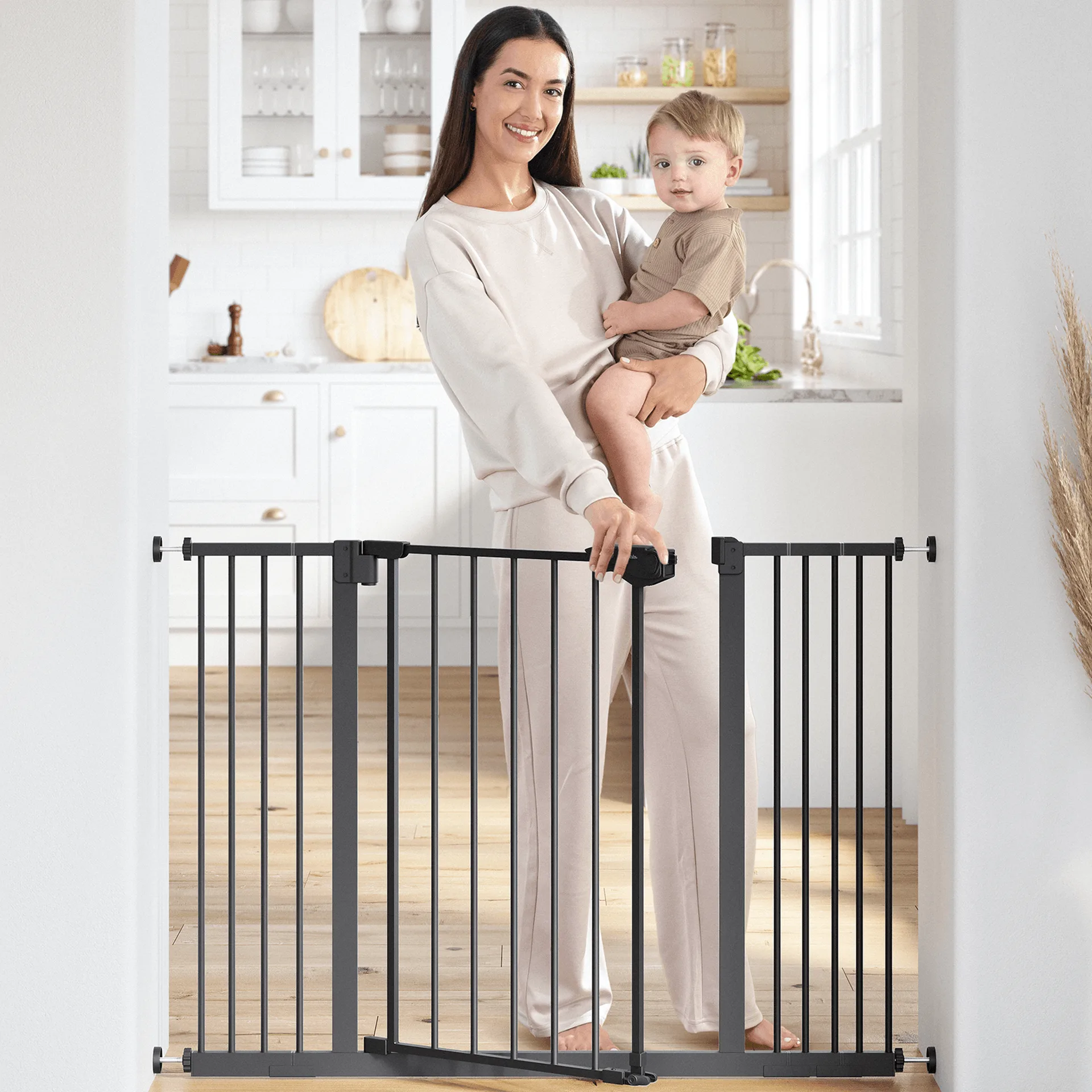
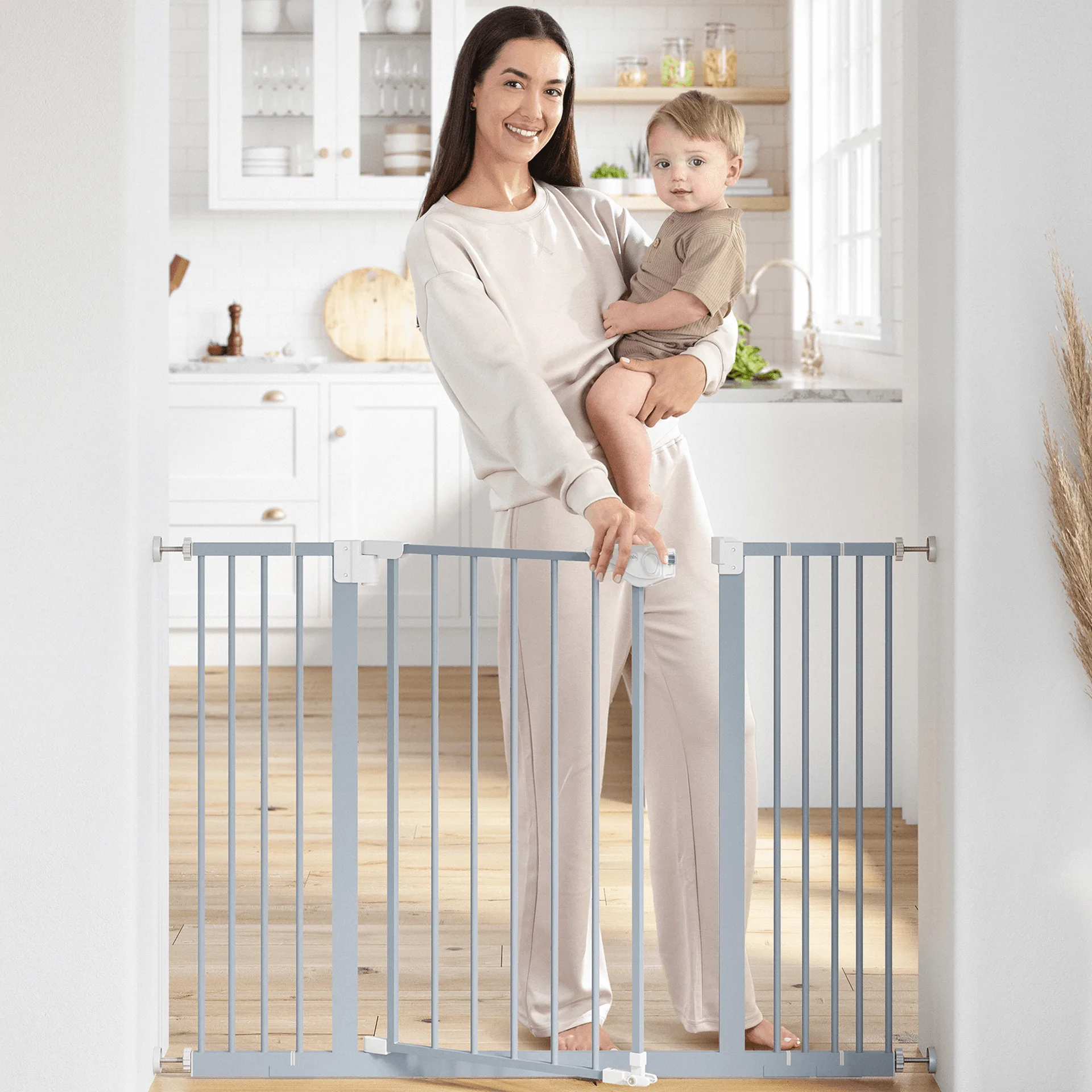
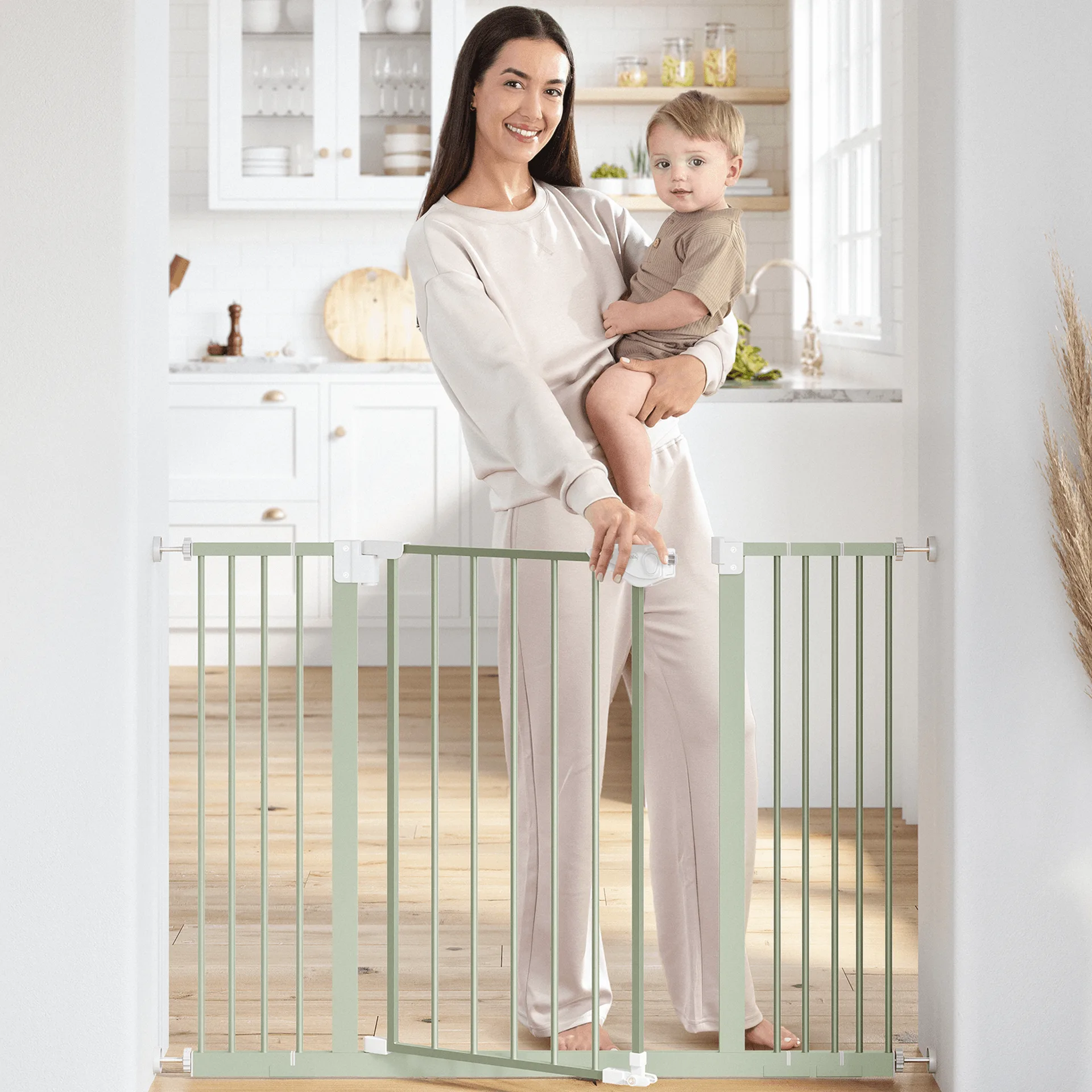
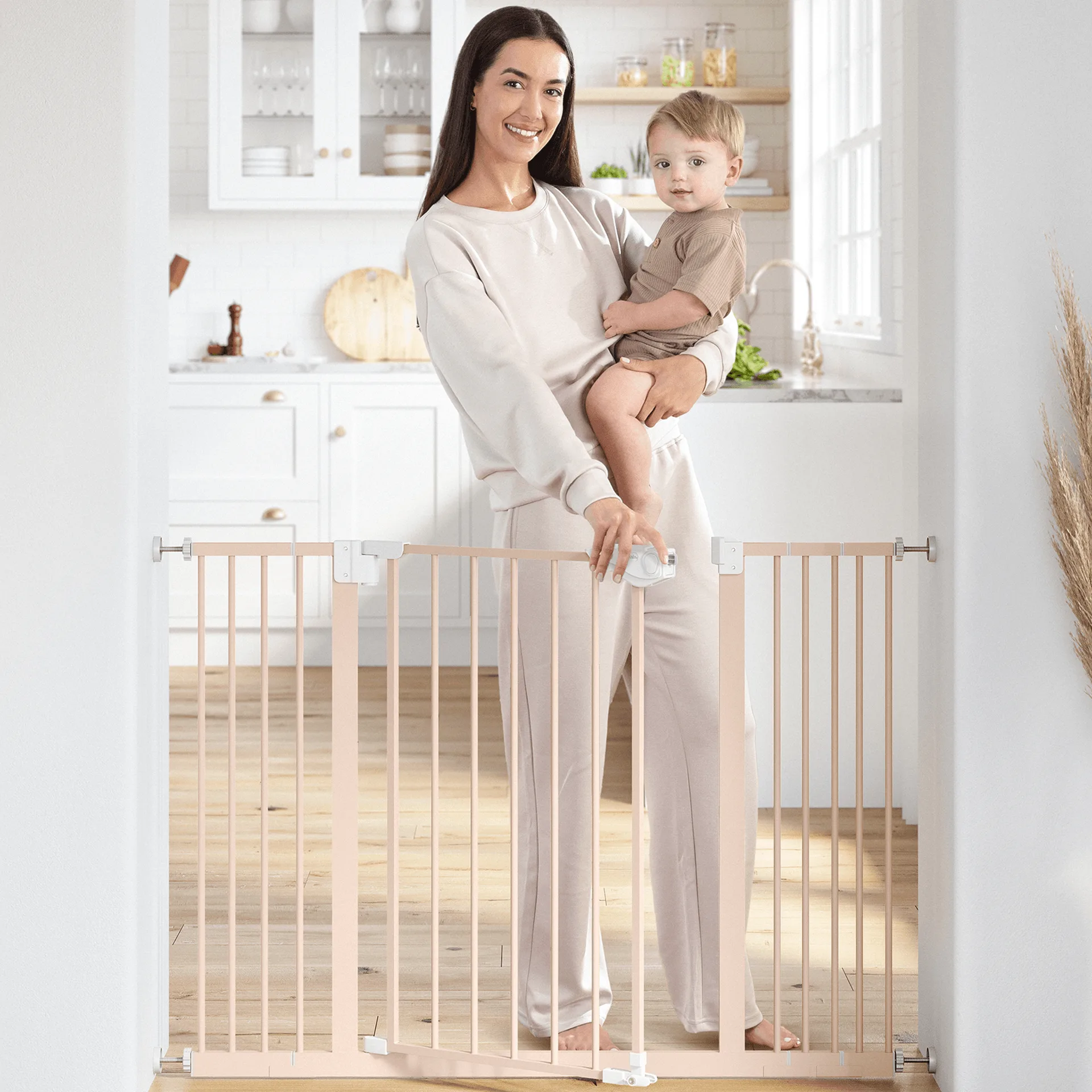
- Baby Safety Gate in Blush: Our kids gate for stairs provides an essential safety barrier for homes, crafted from Q195 steel with a robust powder-coated finish. Designed with parents and pet owners in mind, the Comfy Cubs toddler gates are both child and pet friendly, ensuring a safe environment for your little ones and furry friends. With its adjustable fit and three convenient extensions, it easily adapts to various spaces around the home. This gate's steel construction and adjustable fit make it a reliable hardware-mountable option for top-of-stair installations, and its pet-friendly design means it won't block your furry family members from moving freely.