Quick answer
Buy the play mat first. A play mat or activity gym supports tummy time, rolling, and sitting from the newborn weeks onward, while a baby walker is only useful once your baby is pulling to stand and cruising. Most families get months of daily use from a mat and a much shorter, more supervised window from a walker.
What each one actually trains
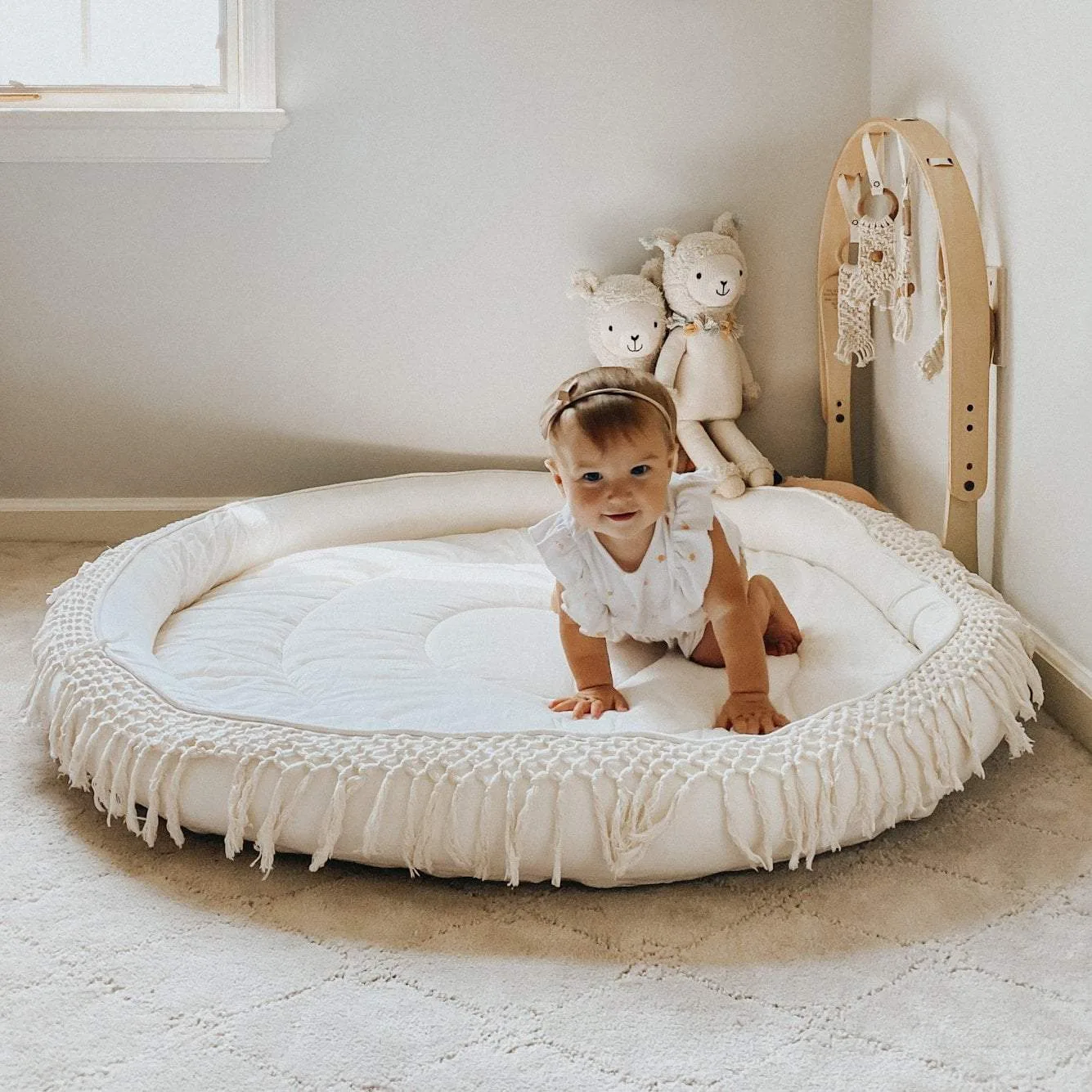
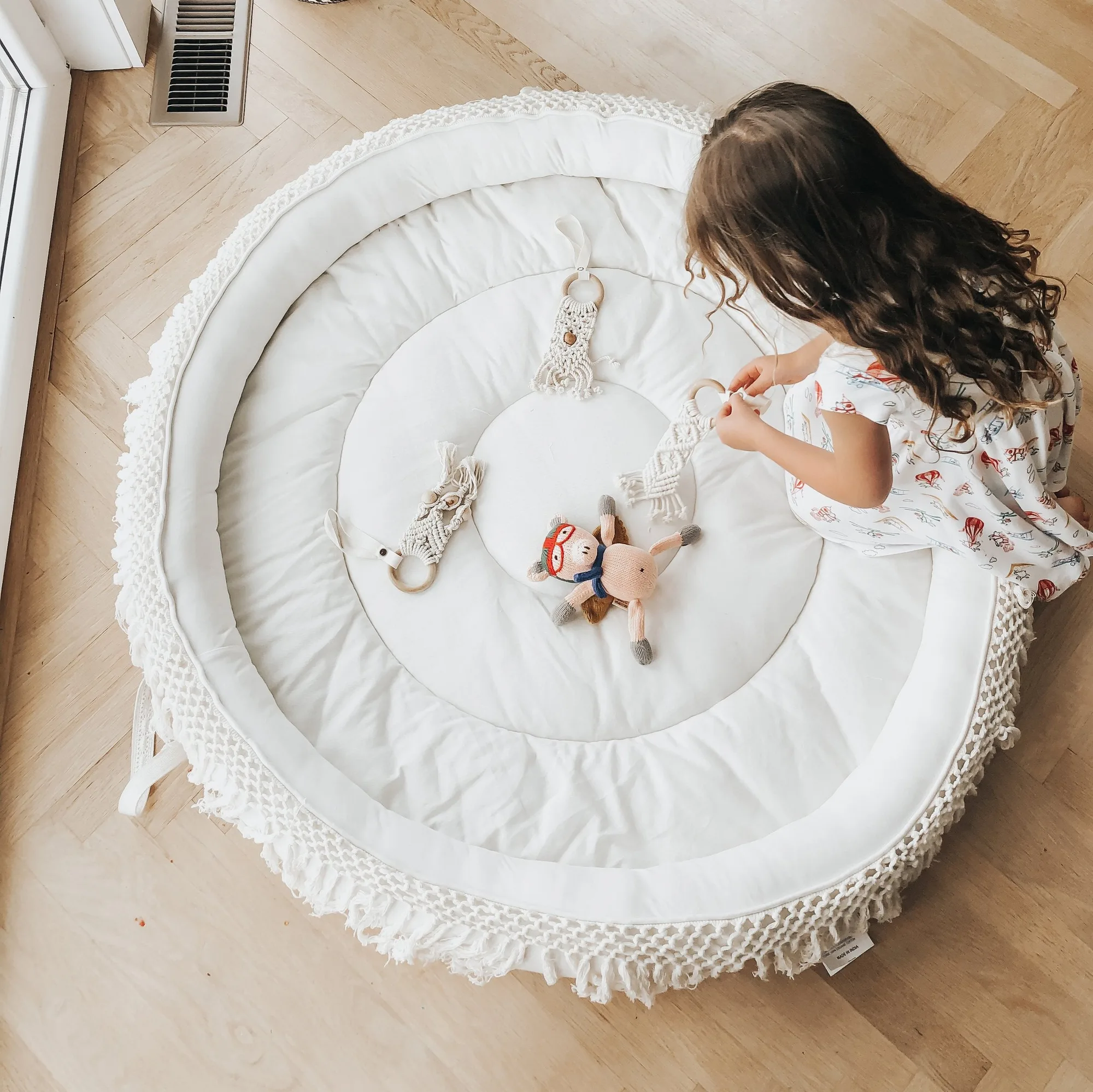
A play mat gives your baby a defined, padded surface to practice the sequence that comes before walking: lifting the head, pushing up on forearms, rolling, pivoting, and eventually sitting. An activity gym adds hanging toys that encourage reaching and batting, which is why a play gym for tummy time is usually the first piece of gear parents buy.
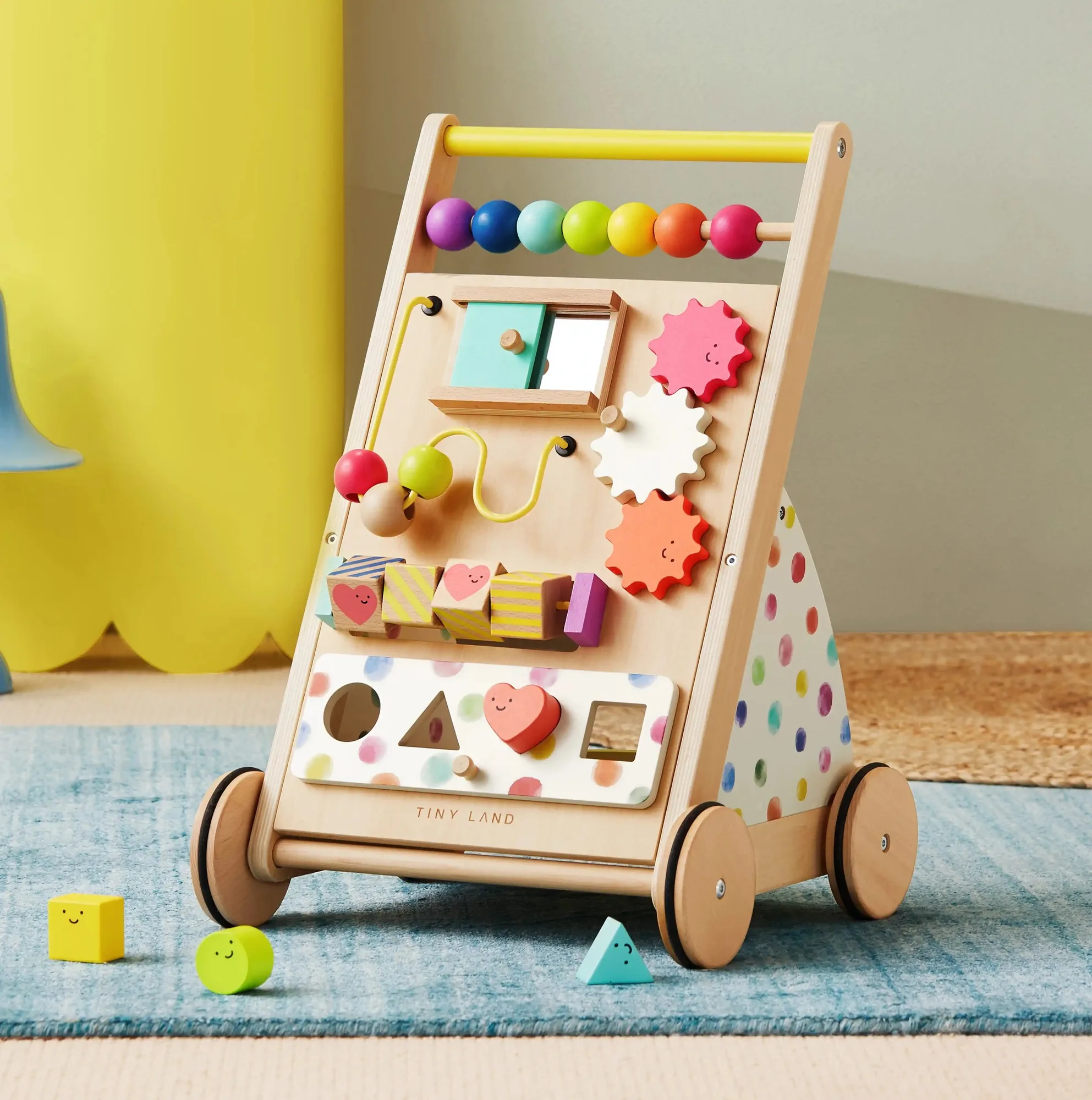
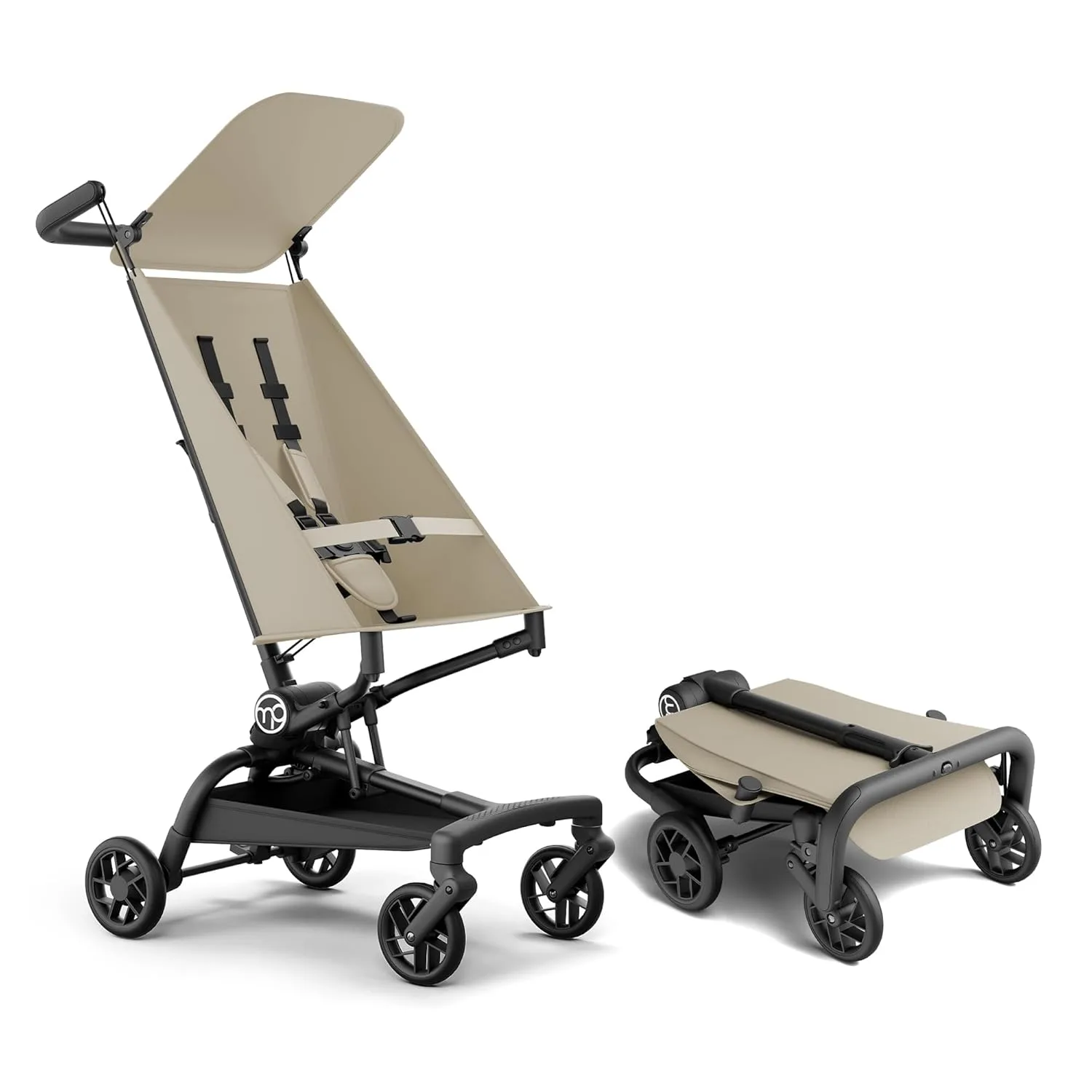
A baby walker is a mobility tool. It lets a baby who can already bear weight on their legs move around before they can walk independently. It does not teach balance or the falling-and-catching skills that come with free floor time, so it works best as a short, supervised novelty rather than a replacement for the floor.
When to use a baby walker
Wait until your baby can sit steadily, pull up on furniture, and take weight on their legs with support. That is typically the same window when they start cruising along the couch. Before that, a walker mostly props a baby into a position they cannot get into or out of themselves.
Keep sessions short and always in the same room as an adult. Skip walkers near stairs, thresholds, pools, and hot surfaces, and avoid using one as a container for long stretches, since floor time is what builds the strength walking actually requires.
How to set up your first floor space
You do not need much. A firm, washable mat, a few hanging or graspable toys, and a clear zone away from furniture edges covers the first six months. Add a mirror or a second toy bar later to keep the same mat interesting as your baby's reach improves.
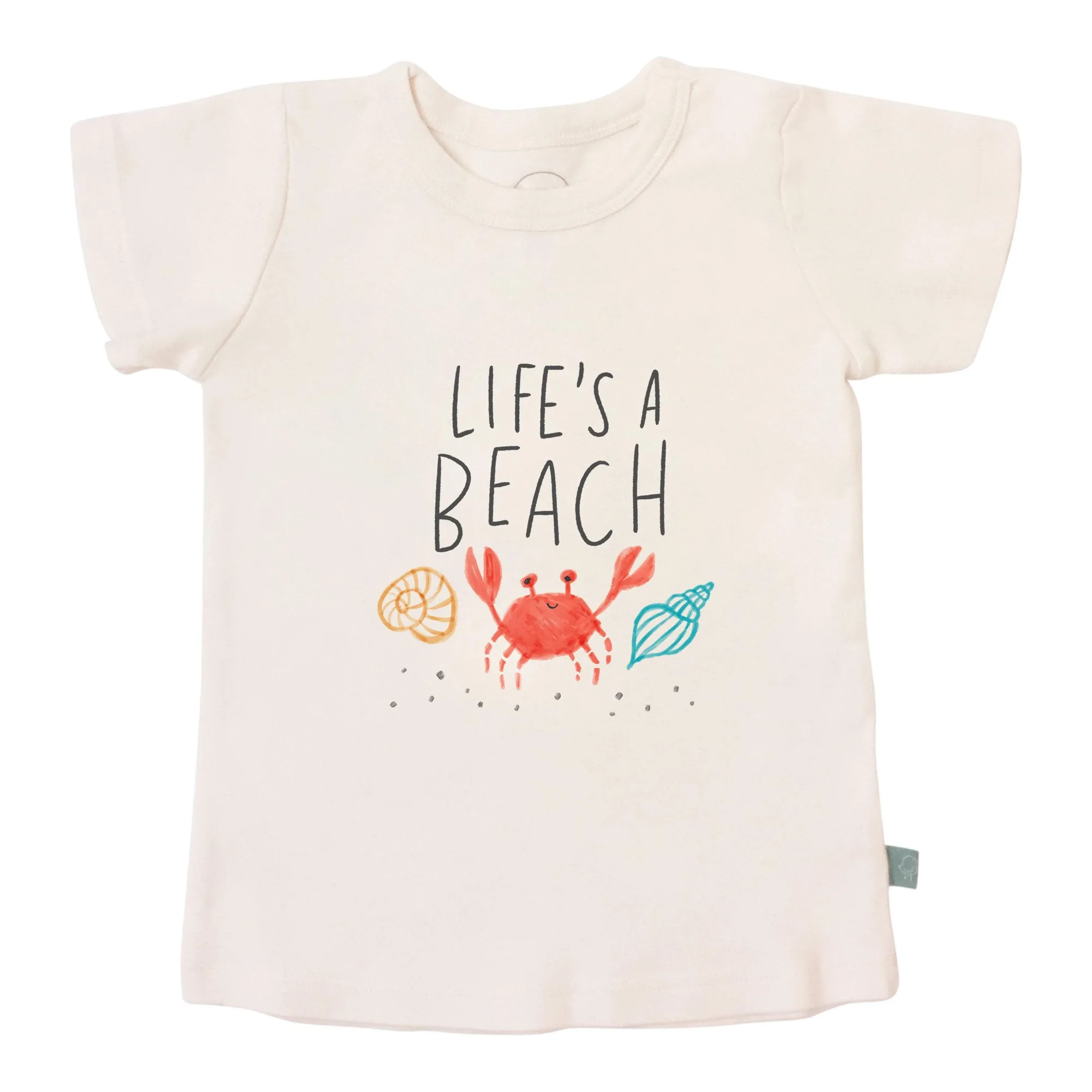
Dress your baby for unrestricted movement. Soft, stretchy pieces matter more than any gadget here, because a baby who is comfortable on their stomach will stay there longer.
The trade-offs, side by side
- Play mat or activity gym: Useful from the first weeks through sitting and crawling. Takes up floor space and needs washing, but it is the surface where most early motor skills are practiced. Buy this first; it has the longest useful life.
- Baby walker: Only helpful once your baby pulls to stand and cruises. Requires constant supervision and a safe, stair-free room, and it does not build balance on its own. Add it later, and treat it as a short supervised activity.
- Diaper-friendly clothing: Whichever setup you choose, a generous fit and quick snaps keep your baby comfortable enough to stay in the position longer. Check that legs and hips move freely before floor time.
Clothes that work with floor play
- graphic bodysuit | love mom: Made from buttery-soft organic cotton with easy-snap fasteners for quick access when changing or bathing. Snaps mean you can check or change a diaper mid-tummy-time without fully undressing your baby, so floor sessions are less likely to end in a meltdown.
- graphic bodysuit | dude: Designed for all sizes and activity levels, from a newborn's first days to a first birthday, with non-toxic, eco-friendly dyes and lead/nickel free snaps. One bodysuit that fits the whole first year is practical when most of your baby's day happens on a mat rather than in outfits.
- lounge pants | scarlet red: Easy to pull on and off, with a generous fit to accommodate both cloth and disposable diapers. A roomier cut keeps legs free to kick, roll, and push up, which is exactly the movement a play mat is meant to encourage.
Which should you get?
Choose a play mat first if
- Your baby is newborn to sitting age and still working on tummy time
- You want one piece of gear that stays useful for months
- You have a small, contained space where a mat can live on the floor
Skip the walker for now if
- Your baby cannot yet sit steadily or pull to stand
- Your home has stairs, thresholds, or hard flooring without a safe enclosed area
- You are looking for something to occupy your baby unsupervised