Quick answer
Start with how you will actually use the bag, then work backward. For most people, an everyday backpack should hold a 13 to 16 inch laptop, a water bottle, and a light layer without bulging. Choose the smallest size that fits your daily load, and only size up for travel or gear-heavy days. Fit matters more than features: measure your torso and try the bag on with weight inside before you commit.
Most backpack advice starts with fabric and brand names. That is backwards. The right everyday backpack is the one that matches your real daily load, your torso length, and how often you carry it. Get those three right and almost any well-made bag will feel good.
This guide walks through size, fit, and the features worth paying for, plus the trade-offs that are easy to miss in a product photo. It is written for commuters, students, and travelers who want one bag that works most days, not a specialty pack for a single trip.
Start with your daily load, not the bag
Before comparing backpacks, empty your current bag onto a table. Sort everything into three piles: what you carry every day, what you carry most days, and what you only carry occasionally. The everyday pile sets your minimum size. The occasional pile should not drive the purchase, because a bag sized for rare gear will feel heavy and sloppy on normal days.
A realistic everyday load is a laptop, charger, water bottle, notebook, pens, keys, wallet, and a light layer. That fits comfortably in a 20 to 25 liter bag. If you also carry gym clothes, lunch, or a camera, move to 25 to 30 liters. Above 30 liters, the bag starts to feel like luggage and is harder to carry on a crowded train or through a store.
- Lay out your daily items and measure the tallest and widest one, usually the laptop.
- If your load changes by season, size for the heavier season, not the lightest one.
- A bag that is 80 percent full carries better than one that is half empty.
Backpack size guide: match liters to your routine
Liters describe volume, not shape. Two 25 liter bags can feel very different depending on how the space is divided. A tall, slim bag suits a laptop and folders. A wider, shallower bag suits a lunch bag, shoes, or a change of clothes. Check the internal depth and the laptop sleeve dimensions rather than trusting the liter number alone.
For work, 18 to 24 liters is the sweet spot for most people. For campus, 22 to 28 liters gives room for books and a water bottle. For one-bag travel, 28 to 40 liters is common, but only if the bag has a real hip belt or load lifters. Without those, a heavy travel bag pulls on your shoulders after an hour.
- Work or commute: 18 to 24 liters.
- Campus or mixed use: 22 to 28 liters.
- One-bag travel: 28 to 40 liters with proper load transfer.
Fit guidance: torso length beats height
Your height does not determine your backpack size. Torso length does. Measure from the bony bump at the base of your neck, the C7 vertebra, down to the top of your hip bones. That number, usually 15 to 22 inches for adults, tells you which torso range to look for. A bag with an adjustable harness covers more range than a fixed one.
The shoulder straps should curve over your shoulders without digging into your neck, and the bag should sit high enough that the base rests near your lower back, not on it. If the bag sags below your waist, the weight is hanging rather than resting, which causes shoulder fatigue. Load the bag with about 10 pounds and walk for a few minutes before deciding.
- Measure torso length, not overall height, before choosing a size.
- Straps should sit flush on your shoulders with no gap at the collarbone.
- The bag base should rest at or above your hip bones, not below them.
Features worth paying for, and features that are not
A padded laptop sleeve that keeps the computer off the floor is the single most useful feature for everyday use. Next is a water bottle pocket you can reach without taking the bag off. After that, a quick-access top pocket for keys and a transit card saves real time. These three features earn their cost every day.
Features that sound good but often go unused include multiple hidden pockets, a built-in USB port, and a rain cover on a bag that is already water-resistant. Each adds weight and complexity. If you carry a camera or fragile gear, padding matters more than pocket count. If you carry a lunch bag, look for a wide main compartment rather than a tall one.
- Prioritize a suspended laptop sleeve, a reachable bottle pocket, and a top quick-access pocket.
- Skip built-in charging ports unless you will genuinely use them.
- Check the zipper quality; a bag fails at the zipper more often than the fabric.
Materials and weather: what actually holds up
For daily commuting, a coated polyester or nylon with a water-resistant finish handles rain and abrasion well. Heavier denier fabrics last longer but add weight. If you walk or cycle in wet weather often, a bag with taped seams or a roll-top closure keeps water out better than a standard zipper.
Wipe-clean linings matter more than most shoppers expect, especially if you carry food, a damp towel, or a spilled water bottle. A light-colored interior also helps you find small items. If the product page does not list the fabric or lining, treat that as a gap and ask before buying rather than assuming.
- Choose water-resistant coated fabric for commuting.
- Roll-top or taped seams for regular rain exposure.
- A light interior lining makes small items easier to find.
Decision rules for choosing your everyday backpack
- If you carry a laptop every day: Choose a bag with a suspended, padded sleeve sized to your laptop, and keep the total volume at 18 to 24 liters. Checkpoint: the laptop should not touch the bottom of the bag.
- If you walk or cycle in rain: Prioritize a roll-top or taped-seam design over a standard zipper, and confirm the fabric has a water-resistant coating. Checkpoint: a rain cover is a backup, not a substitute for a water-resistant shell.
- If you pack for one-bag travel: Move to 28 to 40 liters only with a real hip belt or load lifters, and test the bag loaded before you buy. Checkpoint: if the weight sits on your shoulders after 20 minutes, size down.
- If your load changes often: Choose compression straps or a roll-top so the bag stays tight when half full. Checkpoint: a loose bag shifts weight and causes shoulder fatigue.
How Fox & Fallow products show these principles
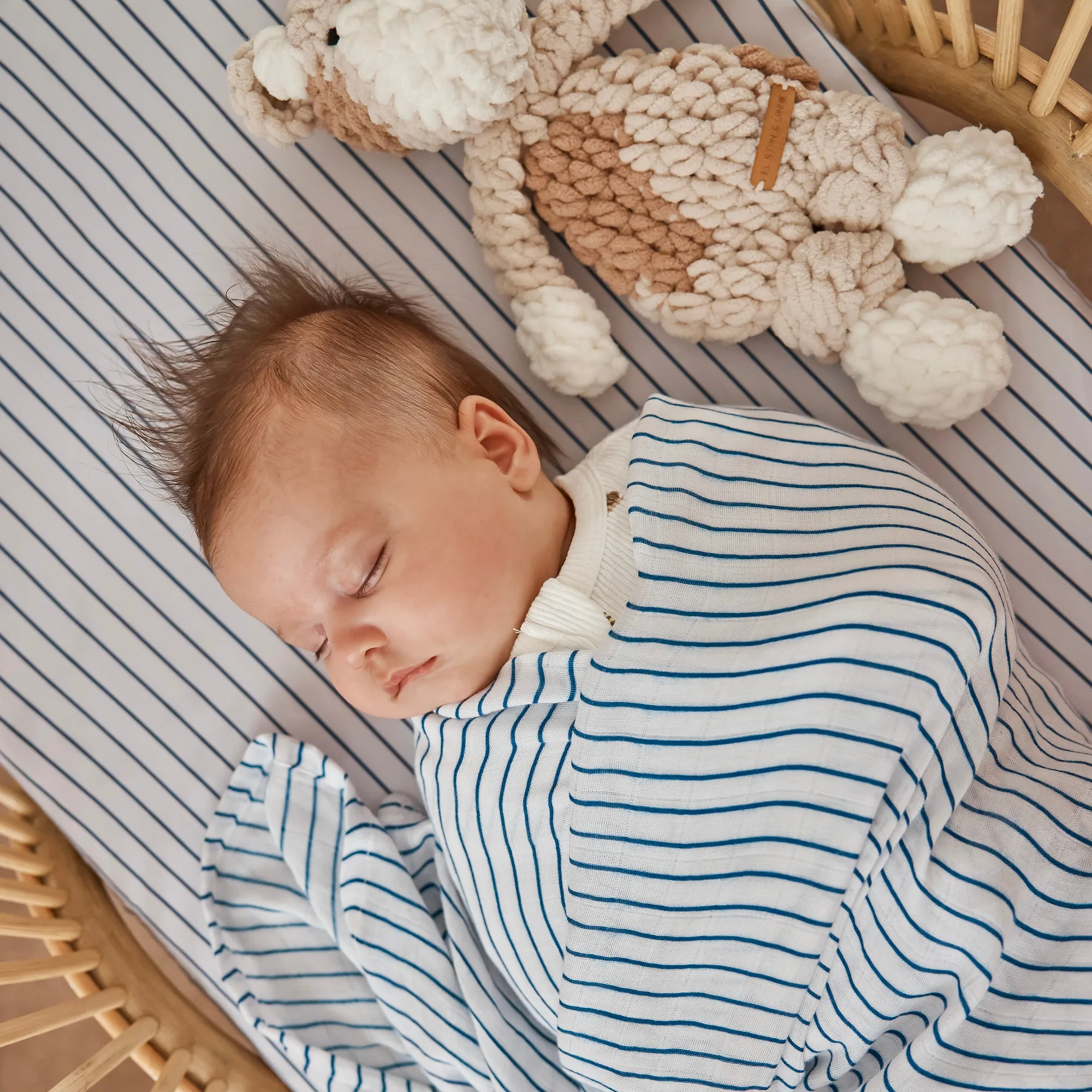
- Navy Stripe Muslin Wrap Swaddle: Made from an Oeko-Tex Standard 100 and GOTS certified organic bamboo and cotton blend, extra large, lightweight, and machine washable. Shows how a lightweight, certified fabric can be both soft and easy to care for, the same balance you want in a backpack lining and shell.
- Breton Stripe Organic Fitted Bassinet Sheet/Change Pad Cover: Made from a super soft and stretchy organic cotton jersey blend that is GOTS and Oeko-Tex Standard 100 certified. Illustrates that certified materials and a stretchy fit matter for comfort, a useful reminder to check material certifications when comparing everyday gear.
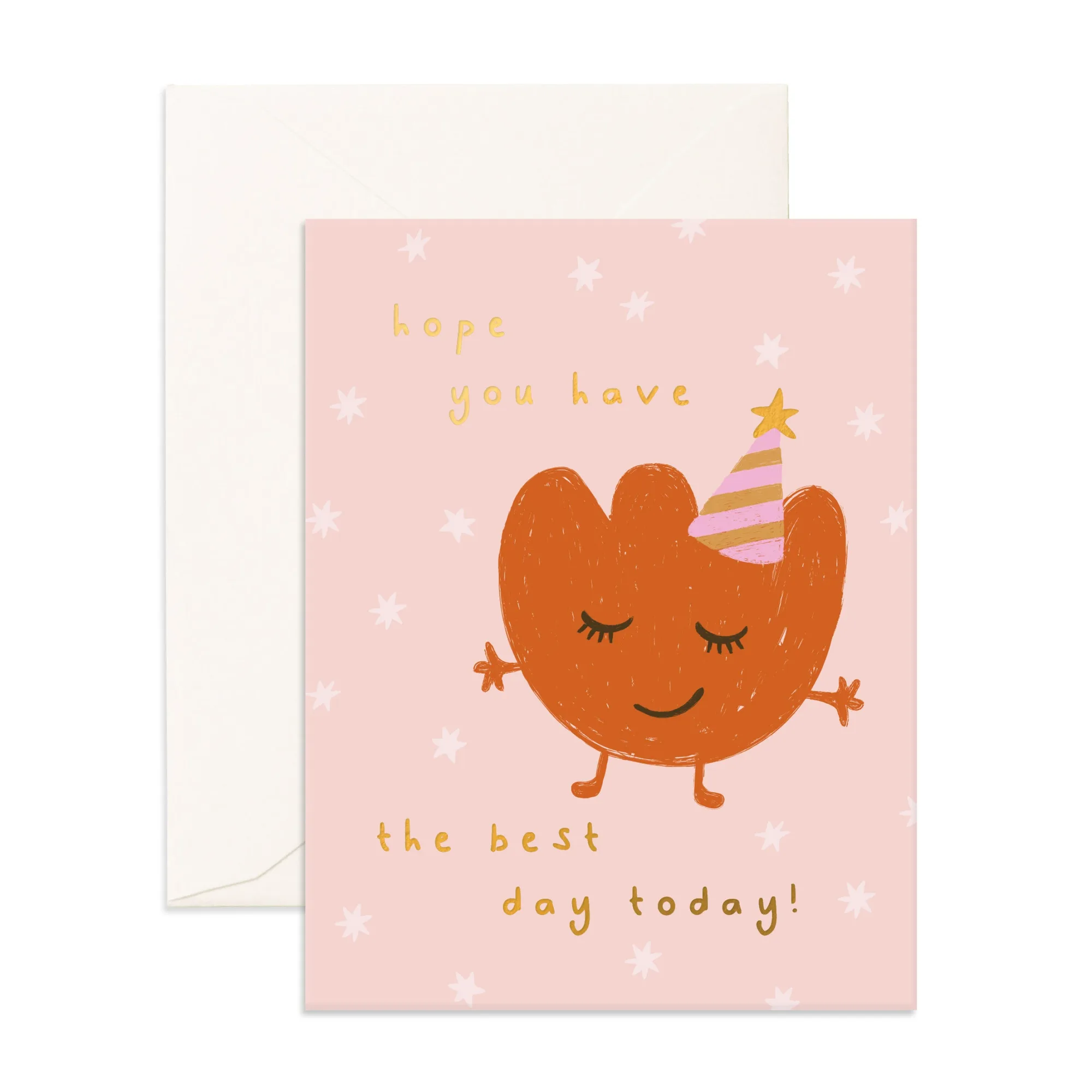
- Best Day Little Monster Red Greeting Card: A foil birthday card made in Australia on uncoated card stock with a blank interior. A small, flat item like this is exactly what a quick-access top pocket or flat front pocket should hold without bending.
Who this everyday backpack approach is for
Best for
- Commuters and students who carry a laptop, water bottle, and light layer daily
- Travelers who want one bag that works for both workdays and short trips
- Anyone willing to measure torso length and test a loaded bag before buying
Not for
- Hikers or climbers who need a technical pack with a frame and hip belt
- Photographers carrying heavy, fragile gear who need dedicated camera padding
- Shoppers who want a single bag for every possible use and will not compromise on size
Pick the smallest backpack that fits your real daily load, measure your torso before choosing a size, and pay for the three features you will use every day: a suspended laptop sleeve, a reachable bottle pocket, and a quick-access top pocket. Everything else is optional. If you are unsure between two sizes, load both with about 10 pounds and walk for a few minutes; your shoulders will make the decision for you.