Quick answer
For most commuters and uni students, 20-30 litres covers a laptop, lunch, water bottle and a light layer without becoming a burden. Choose 20-25L if you carry a slim load and want easy movement; choose 30L or more if you regularly carry textbooks, gym gear or bulkier items. Capacity matters, but how the bag distributes weight matters just as much.
Backpack shopping gets confusing fast because litres tell you volume, not comfort. A 25L bag can feel heavier than a 30L bag if the straps, back panel and load placement are wrong. This guide gives you decision rules for matching capacity to what you actually carry, so you stop guessing and start with a size that works.
You will see how litres translate into real items, when to step up or down a size, and how to judge load comfort before you buy. The goal is simple: a backpack that holds your daily essentials without digging into your shoulders or throwing off your balance.
What backpack capacity litres actually mean
A litre is a measure of internal volume, roughly the space inside the main compartment plus any pockets. A 20L backpack is about the size of a small carry-on cube; a 30L bag is noticeably deeper and taller. Manufacturers measure capacity differently, so treat the number as a starting point, not a guarantee. A bag with a clamshell opening may feel larger than a top-loader with the same litres because you can pack it more efficiently.
The practical question is not how many litres the bag holds, but how many litres you will use on a typical day. Most people overestimate their daily load. If you carry a laptop, charger, notebook, water bottle and lunch, 18-22L is often enough. Add a change of clothes, gym shoes or several textbooks and you are in the 25-35L range.
- Measure your largest daily item first, usually a laptop or a folder, then add 5-8L for everything else.
- A bag that is 80-90% full carries better than one that is half empty because items shift less.
20L vs 30L backpack: what fits in each
A 20L backpack typically fits a 13-15 inch laptop, a charger, a notebook, a small lunch bag and a water bottle. It is the sweet spot for commuting, short day trips and anyone who wants a streamlined profile. The trade-off is limited room for bulky layers, gym kit or groceries on the way home.
A 30L backpack adds roughly 50% more space. That extra room swallows a 15-16 inch laptop, a couple of textbooks, a lunch bag, a water bottle, a light jacket and still has room for a pair of shoes or a small grocery run. The trade-off is bulk: a 30L bag can feel large on a crowded train or in a lecture hall, and it may encourage you to carry more than you need.
- If you commute with a laptop and lunch, start at 20-25L.
- If you are a uni student carrying textbooks plus a laptop, start at 28-32L.
- If you need one bag for work, gym and errands, 30-35L is a realistic minimum.
How load comfort changes with capacity and design
Bigger capacity does not automatically mean more comfort. A heavy load in a bag with thin straps and no back padding will dig into your shoulders, no matter the litre count. Look for padded shoulder straps, a padded back panel and, for loads over about 7kg, a sternum strap or hip belt to transfer weight. These features matter more as capacity increases because you are more likely to fill the space.
Pack heavier items close to your back and centred between your shoulder blades. Keep frequently used items in outer pockets so you are not rummaging. If the bag sags or the straps slide, adjust them so the bag sits high on your back, not low near your hips. A well-packed 25L bag can feel lighter than a poorly packed 20L bag.
- Test a loaded bag for 10 minutes before committing if you can.
- For loads above 8kg, prioritize a hip belt over extra pockets.
Fit guidance: torso length, strap adjustability and frame
Capacity is only half the fit equation. Torso length, the distance from the base of your neck to your hip bones, determines where the bag sits. A bag that is too long will ride low and pull on your shoulders; too short and it will ride high and feel unstable. Most everyday backpacks are one-size, so adjust the shoulder straps and any load-lifter straps to keep the bag centred on your upper back.
If you are between sizes or share the bag with someone else, look for adjustable sternum straps and a range of strap lengths. A padded back panel helps with breathability, and a lightweight internal frame or stiff back panel keeps the bag from collapsing when it is not full. These details matter more for commuting and uni than for occasional use.
- Wear the bag with the bottom sitting at or just above your hip bones.
- If the bag pulls backward when you lean forward, tighten the shoulder straps and sternum strap.
Matching capacity to commuting, uni and school
Commuters usually need 18-25L: a laptop, charger, lunch, water bottle and a compact umbrella. A slim profile helps on crowded transport, and quick-access pockets reduce fuss. Uni students often need 25-32L because textbooks, a laptop and a change of clothes add up. If you carry a laptop plus two or three large textbooks, aim for 30L or more and check that the laptop sleeve is padded and elevated.
School students, especially tweens and teens, need room for books, a device and lunch, but they also need a bag that is not so large it becomes a dumping ground. A 25-30L bag with a dedicated laptop sleeve and a separate lunch pocket works well. For younger children, 15-20L is usually plenty, and lighter weight matters more than maximum capacity.
- Commuting: 18-25L, prioritize quick access and a slim shape.
- Uni: 25-32L, prioritize a padded laptop sleeve and load stability.
- School: 20-30L depending on age and device size; avoid oversized bags for younger kids.
Decision rules for choosing backpack capacity
- If your daily load fits in a tote: Choose 15-20L. You carry a laptop, a notebook and a water bottle, and you rarely add bulky items. Do not size up for occasional use; borrow or use a second bag for those days.
- If you carry a laptop plus lunch and a layer: Choose 20-25L. This is the commuting sweet spot and keeps the bag slim on public transport. Check that the laptop sleeve is padded and the bag stands up when empty.
- If you carry textbooks, a laptop and gym gear: Choose 28-35L. You need depth for books and shoes, plus a hip belt or sternum strap for heavier loads. Pack heavy items closest to your back to reduce strain.
- If you are buying for a tween or teen: Choose 25-32L with a dedicated laptop sleeve and a separate lunch pocket. Avoid 40L+ unless they regularly carry sports equipment. A bag that is too large often ends up disorganized and heavier than needed.
Product facts to ground your choice
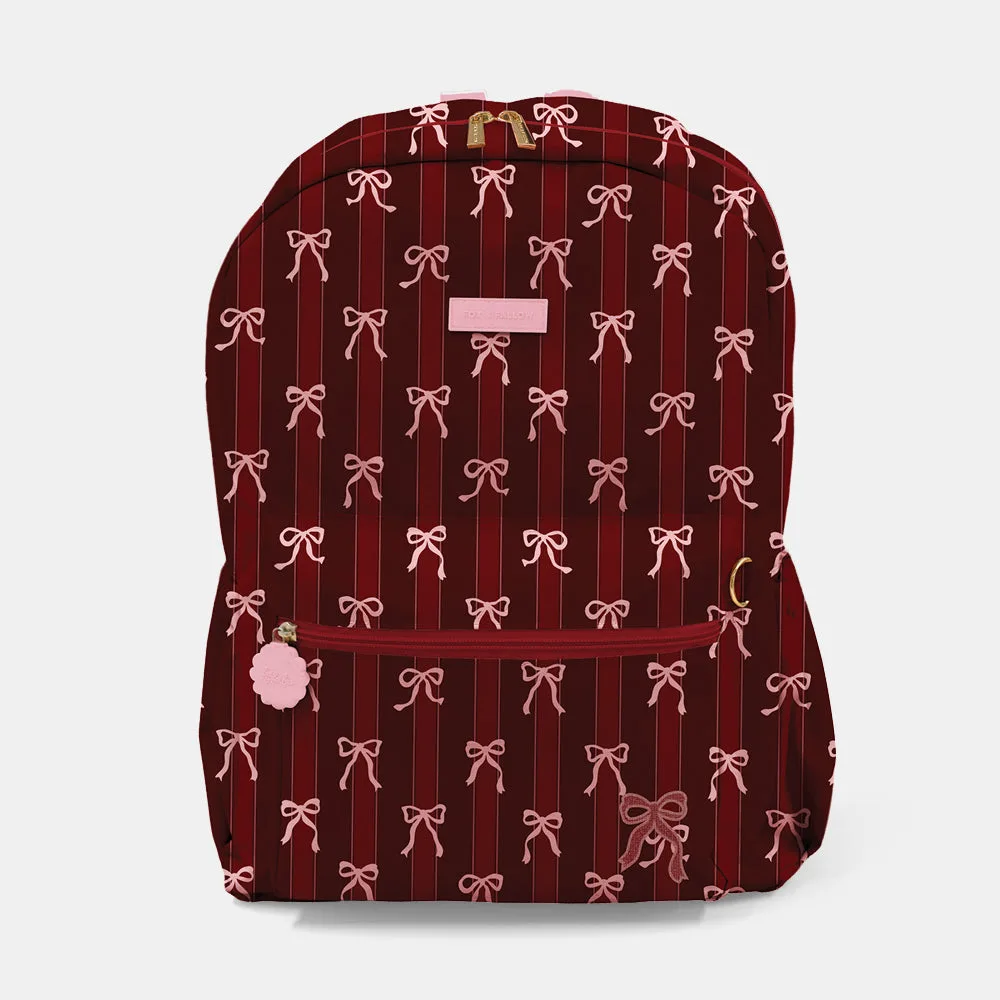
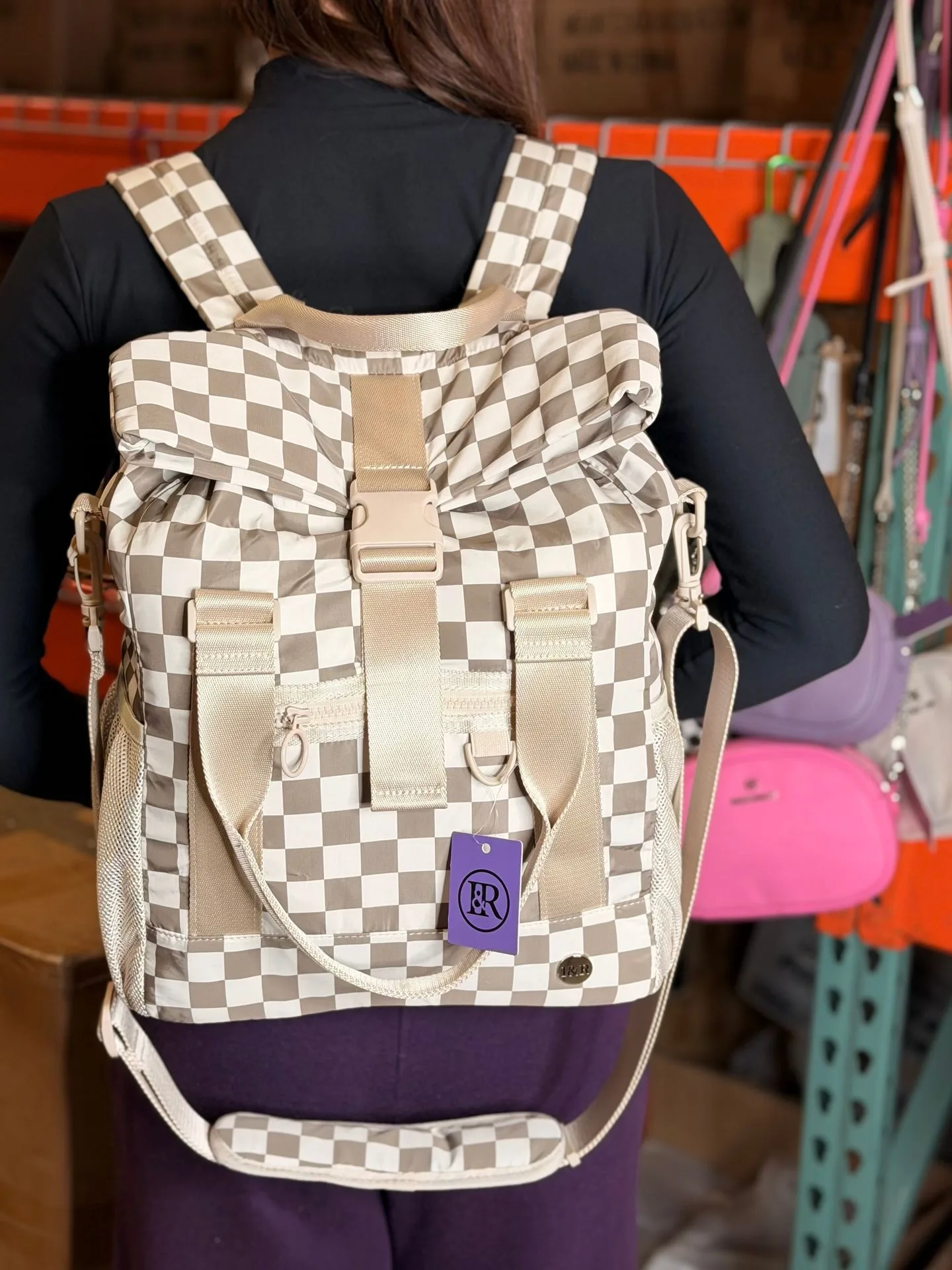
- Ruby Ribbon Stripe Campus Backpack - Large 36L - https://foxandfallows.com/products/blue-ducks-blanket-7028c9775fa813e64626e933-2620095PRE-ORDER (OCTOBER): 36L capacity, described as perfect for tweens and teens needing more space, and built to fit iPads, book bags, textbooks and laptops. A concrete example of a large-capacity option for school or uni loads that include a device plus books.
- F&F Aesthetic Club 'Form Over Function' Tee - Pine - Unisex: Relaxed fit, heavy weight 220 GSM, 100% combed cotton, unisex and true to size. Useful context if you are building a commute or campus outfit and want a top that layers comfortably under a backpack strap.
Who this capacity guidance is for
Best for
- Commuters who carry a laptop, lunch and a water bottle and want a streamlined bag.
- Uni students juggling a laptop, textbooks and a change of clothes.
- Parents choosing a school backpack for a tween or teen who carries a device and books.
Not for
- Hikers or travelers carrying camping gear, who need framed packs with suspension systems.
- Anyone who regularly carries more than 12kg, who should look for a dedicated load-carrying pack with a hip belt.
- People who want a single bag for occasional bulky errands and daily slim carry; two bags often work better.
Pick capacity based on your typical load, not your biggest possible load. Start with 20-25L for commuting, 25-32L for uni or school with a device and books, and only go larger if you routinely carry bulky gear. Then check the fit: padded straps, an adjustable sternum strap and a back panel that keeps the bag close to your body will do more for comfort than an extra five litres.