Quick answer
A baking sheet has a raised rim on all four sides; a cookie sheet is flat, usually with one or two bent edges you can grip. Buy a rimmed baking sheet if you want one pan for roasting vegetables, sheet-pan dinners, and cookies. Buy a rimless cookie sheet only if you bake cookies constantly and want the easiest possible slide-off. For most home kitchens, the rimmed sheet is the better first purchase.
Walk down any bakeware aisle and you'll see the two pans stacked side by side, often labeled almost interchangeably. They aren't. The difference comes down to one physical feature, and that feature quietly decides what you can cook on each pan.
This comparison covers what actually separates a baking sheet from a cookie sheet, how size and material change the way they bake, and which one to put on your list first if you're only buying one.
The one difference that matters: the rim
A baking sheet is a shallow rectangular pan with a raised lip running around all four sides. That lip is typically a half inch to an inch tall. It keeps juices, oil, and small pieces of food from sliding off the pan and onto your oven floor. A cookie sheet has no raised wall around the edge, or at most a slight turned edge on one or two sides so you have something to grab with a towel.
That's the whole distinction. Everything else, including material, finish, and size, varies within both categories. So when you see the phrase rimmed vs rimless baking sheet, it's really describing a baking sheet versus a cookie sheet, just with different words.
- If the pan has a wall you can pour against, it's a baking sheet.
- If the surface is flat edge to edge, it's a cookie sheet.
- A pan with only one raised side is usually sold as a cookie sheet, not a baking sheet.
How the rim changes what you can bake
The rim isn't just a container. It blocks airflow along the edge of the pan, which slightly slows browning on the outermost cookies or pastry pieces. On a flat cookie sheet, air moves freely across the whole surface, so edges set and brown more evenly from corner to corner. That's why serious cookie bakers reach for a flat pan.
The trade-off runs the other way for almost everything else. Try roasting chickpeas, broiling vegetables, or making a sheet-pan dinner on a rimless pan and you'll be chasing food toward the oven door. The rim also gives you a place to rest a cooling rack without it sliding. If you bake a mix of sweet and savory items, the rimmed pan wins on versatility.
Sizes and what fits in a home oven
Cookie sheets and baking sheets come in a handful of standard footprints. A half sheet, roughly 18 by 13 inches, is the workhorse size for most home ovens and fits a standard rack with room to spare. A quarter sheet, about 13 by 9 inches, is handy for small batches and toaster-oven use. Full sheets are commercial size and generally won't fit a residential oven.
Measure your oven rack's usable depth before buying, especially if your oven is compact or has a protruding heating element. Also check whether the pan has a rolled edge or a wire-reinforced rim, since a thick rim can make a pan that measures correctly still feel tight against the oven wall.
- Half sheet (about 18 x 13 in) is the default for cookies, roasting, and sheet-pan meals.
- Quarter sheet (about 13 x 9 in) suits small batches and countertop ovens.
- Measure your rack before ordering any pan larger than a half sheet.
Material and finish: what to expect
Most baking sheets and cookie sheets are aluminum, aluminized steel, or nonstick-coated steel. Bare aluminum heats quickly and evenly but can react with acidic foods and may discolor over time. Nonstick coatings release cookies easily but have a shorter lifespan and shouldn't be used under a broiler. Darker finishes brown faster, so you may need to drop your oven temperature slightly or pull the pan early.
Whatever you choose, line the pan. Parchment paper keeps cookies from sticking, catches drips on a rimmed sheet, and makes cleanup a thirty-second job. Silicone mats work too, though they can slightly insulate the bottom of cookies and slow browning.
Which one to buy first
If you're building a kitchen from scratch, start with a rimmed half sheet. It bakes cookies, roasts vegetables, catches overflow from a pie, and doubles as a tray for resting a roast. A rimless cookie sheet is a specialist tool: excellent at its one job, awkward at nearly every other.
If you bake cookies weekly and already own a rimmed pan, adding a flat cookie sheet is a genuine upgrade for even browning and easy release. If you rarely bake cookies but cook dinner most nights, skip the cookie sheet entirely and put the money toward a second rimmed pan.
- One-pan kitchen: buy the rimmed half sheet.
- Frequent cookie baker with a rimmed pan already: add a flat cookie sheet.
- Tight storage: rimmed sheets stack more securely than flat ones.
Small tools that make either pan work harder
A rolling pin and a bench-friendly work surface matter more than the pan when you're rolling cookie dough or pastry to an even thickness. The Kneads Bakers Rolling Pin is made from bamboo wood and engraved with the Kneads name, part of the bakery, café, and mill merchandise line. Bamboo is light in the hand, which helps on long rolling sessions, though it needs hand washing and occasional oiling to stay smooth.
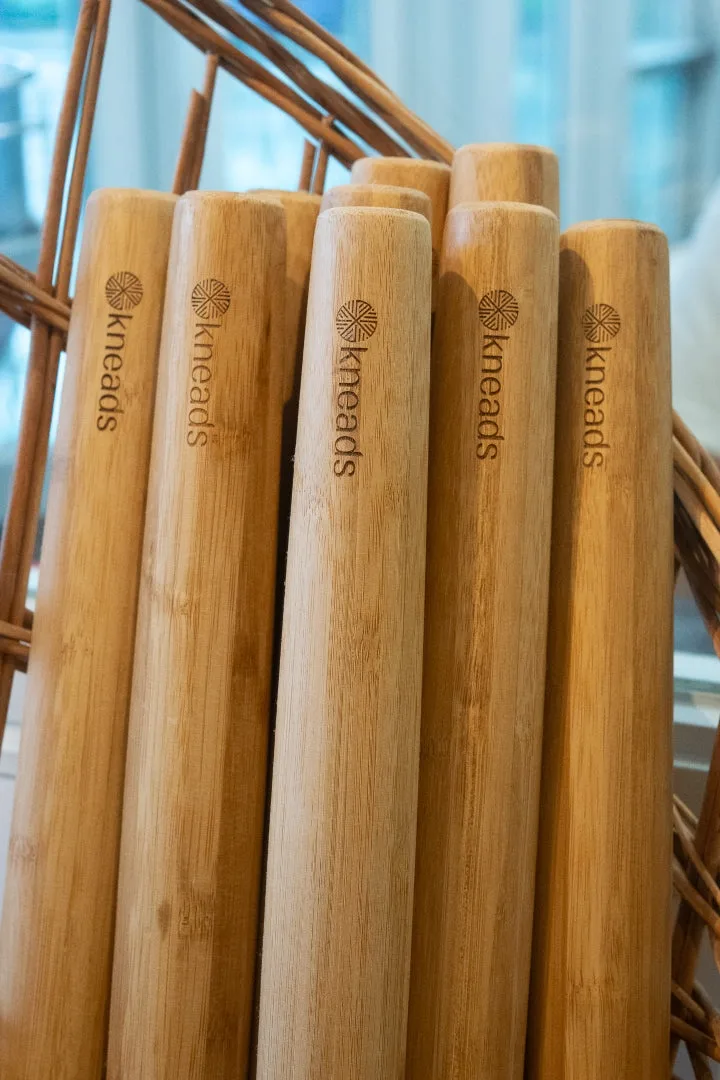
Bakers Rolling Pin
For serving whatever comes off the pan, the Kneads Tumbler is an Orion insulated tumbler with a changeable lid, suited to hot and cold drinks. It won't change how your cookies bake, but it's the kind of thing that keeps coffee warm while you work through a second tray.

Kneads Tumbler
Trade-offs to weigh before you buy
- Rimmed baking sheet: Contains juices, oil, and small pieces; works for roasting, sheet-pan dinners, and cookies. The rim slightly reduces airflow at the pan's edge, so outer cookies can brown a touch faster. Best all-purpose choice for most kitchens.
- Rimless cookie sheet: Flat surface gives even airflow and the cleanest slide-off for cookies and pastry. Nothing stops food or liquid from running off the edge, and it's awkward for savory cooking. A specialist pan, not a replacement for a rimmed sheet.
- Nonstick versus bare metal: Nonstick releases easily but wears out faster and can't go under the broiler. Bare aluminum browns well and lasts, but reacts with acidic foods and may discolor. Match the finish to how you cook, not to the label.
- Size versus oven space: A half sheet fits most home ovens; a quarter sheet suits small batches and countertop ovens. Full commercial sheets generally don't fit residential racks. Measure your rack before ordering anything larger than a half sheet.
Product facts worth knowing
- Bakers Rolling Pin: Made from bamboo wood and engraved with the Kneads name, part of the Kneads bakery, café, and mill merchandise line. A light rolling pin is easier to control when you're rolling chilled cookie dough to an even thickness, which matters more for consistent baking than the pan itself.
- Kneads Tumbler: An Orion insulated tumbler with a changeable lid, suitable for hot and cold beverages, part of the Kneads merchandise line. Useful for keeping coffee or iced drinks at temperature during a long baking session, and the changeable lid lets you set it up for either.
Which pan fits your kitchen
Best for
- Home cooks who want one pan for cookies, roasting, and sheet-pan meals
- Anyone baking or cooking in a standard home oven with a half-sheet rack
- Kitchens with limited storage, since rimmed sheets stack securely
Not for
- Bakers who only make cookies and want the flattest possible surface for even browning
- Anyone broiling or roasting wet, saucy foods, which need a rim to contain them
- Commercial bakers who need full-size sheets, which usually don't fit home ovens
Buy the rimmed half sheet first. Add a flat cookie sheet later if cookies are a weekly habit and you want the cleanest release and most even browning. The rim is the whole difference, and it decides nearly everything else about how each pan performs.