Quick Answer
A bamboo brush is often better for reducing static and breakage, while a wooden brush offers a firmer feel and traditional durability. Your choice depends on hair type and desired finish.
Material and Finish Differences
Bamboo brushes typically have a smoother, more polished surface that glides through hair with less friction. This helps minimize static and flyaways, especially in dry or fine hair. Wooden brushes, often made from beech or sandalwood, can have a slightly more textured finish that provides a firmer grip during detangling.
Both are eco-friendly alternatives to plastic, but bamboo grows faster and is generally considered more renewable. Wooden brushes may require more careful finishing to avoid splinters or rough edges.
Performance for Different Hair Types
For fine or straight hair, a bamboo brush's smooth bristles reduce breakage and static, making it a gentle daily option. Thick or curly hair may benefit from the sturdier bristles and firmer structure of a wooden brush, which can better handle tangles without bending.
If you frequently brush wet hair, bamboo's natural resistance to moisture (when sealed properly) can be an advantage, though both types should be kept dry between uses.
Bamboo vs. Wooden Brush: Trade-Offs at a Glance
- Static Control: Bamboo brushes generally produce less static than wooden brushes due to their smoother surface. Wooden brushes can generate more friction, which may increase static in dry conditions.
- Durability and Feel: Wooden brushes tend to be denser and heavier, offering a more substantial feel and longer lifespan. Bamboo brushes are lighter and may wear faster if exposed to moisture repeatedly.
- Eco-Friendliness: Both are renewable, but bamboo grows faster and requires less land and water. Wooden brushes sourced from managed forests are also sustainable, though the harvest cycle is longer. Check the finish: a sealed brush lasts longer and resists moisture better regardless of material.
Product Facts
-
Bamboo Brush.: The Bamboo Brush is designed to fight breakage and static for smoother, softer hair, and it works on both wet and dry hair. This makes it a practical choice if you want to reduce frizz and damage without switching brushes for different routines.
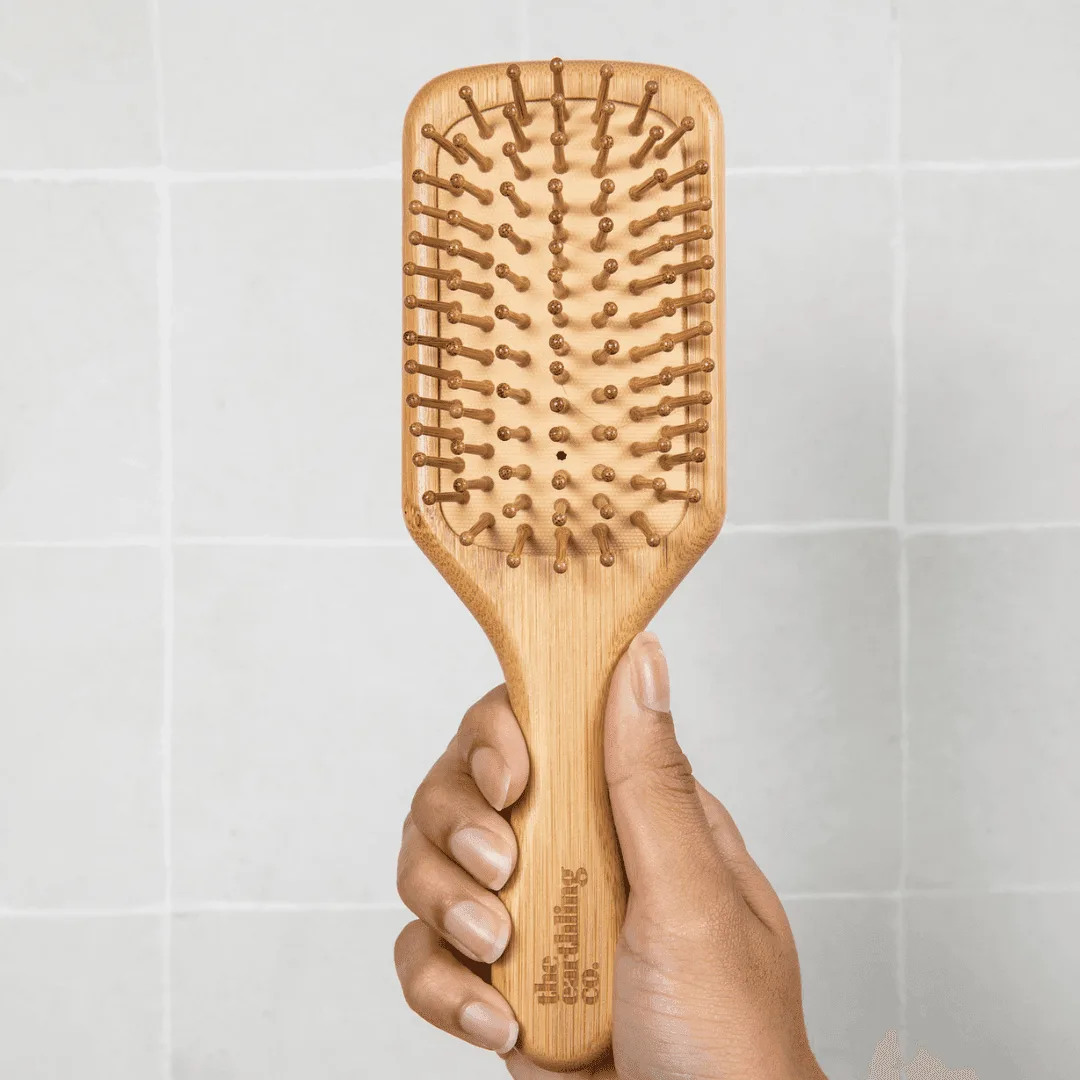
Bamboo Brush.
Which Brush Should You Choose?
Best For
- People with fine or straight hair who want to minimize static and breakage
- Those who prefer a lightweight, smooth brush for daily detangling on wet or dry hair
Not Ideal For
- Those with very thick or curly hair who need a sturdier, heavier brush for tough tangles
- Anyone who wants a brush with a traditional, dense feel and longer expected lifespan