Quick answer
For small bathrooms, place a tissue holder where it's reachable from the toilet but doesn't crowd the sink or counter. A countertop model with a phone ledge and top tray can replace a separate organizer, saving precious inches.
Why placement matters more in a small bathroom
Every inch counts when your bathroom is tight on space. A tissue box that sits on the back of the toilet may be out of reach, while one on a narrow counter can block your toothbrush holder or soap dispenser. The goal is to keep tissues accessible without adding visual clutter or stealing space you need for daily essentials.
The right placement also prevents moisture damage. If your bathroom gets steamy, a closed tissue holder with a full-coverage lid protects the tissues from dampness and keeps them clean.
Countertop vs. wall-mounted: trade-offs for small spaces
Countertop holders are easy to move and refill, but they eat up surface area. In a very small bathroom, every square inch of counter is valuable for toiletries or a toothbrush cup. Wall-mounted holders save counter space but require drilling and are fixed in place, which can be a problem if you rent or change your layout often.
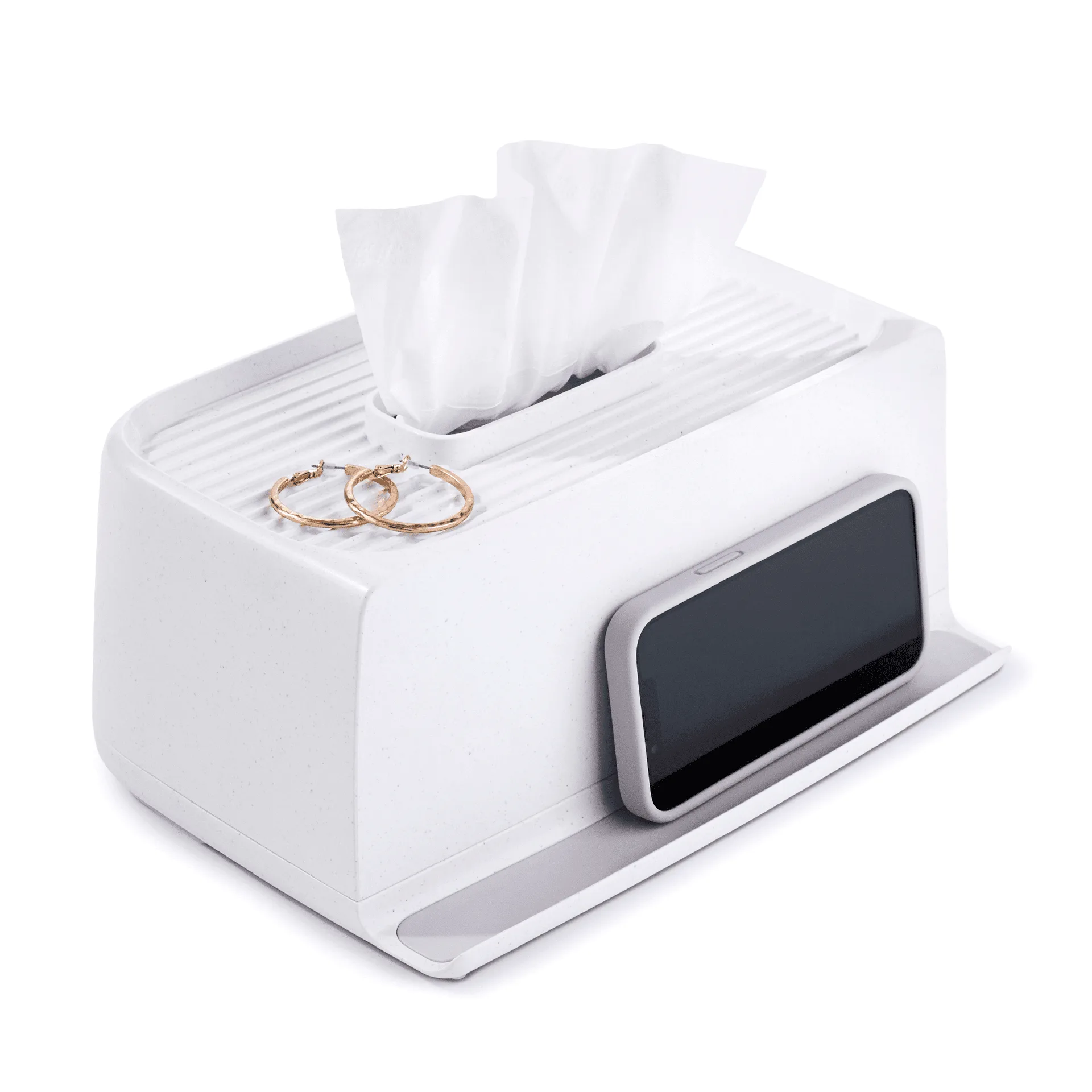
A third option is a multifunctional countertop holder that does double duty. The Ledge™ Tissue Holder, for example, includes a padded ledge for your phone and a top tray for lip balm, earbuds, or jewelry. That means you can skip a separate bathroom counter organizer and free up space.
How to choose the right placement
- If you have a small counter with no wall space: Place a countertop tissue holder near the back edge of the counter, next to the sink but not blocking the faucet or mirror. Choose a model with a small footprint and extra storage, like The Ledge Tissue Holder, so it replaces a separate organizer. Measure your counter depth first to ensure the holder won't overhang.
- If you have a wall next to the toilet but no counter: Install a wall-mounted tissue holder at arm's reach from the toilet seat, typically 26–30 inches high. Avoid placing it directly above a towel bar or toilet paper holder to prevent clutter. Use a stud finder and anchors if you can't hit a stud; avoid drilling into tile without a diamond bit.
- If you want to keep tissues on the back of the toilet: Only do this if the tank is flat and the holder has a non-slip base. A closed-lid holder like The Ledge prevents moisture from the toilet tank from reaching tissues. Keep the holder away from the flush handle so it doesn't get bumped off. Check that the holder doesn't interfere with opening the tank lid for cleaning.
Product facts
-
The Ledge™ Tissue Holder, Rectangular: The Ledge™ Tissue Holder, Rectangular has a full-coverage lid and spring base that keep boxes hidden and protect against germs and moisture. In a small bathroom that gets steamy, this protection keeps your tissues dry and clean, so you don't have to replace a damp box as often.
The Ledge™ Tissue Holder, Rectangular
-
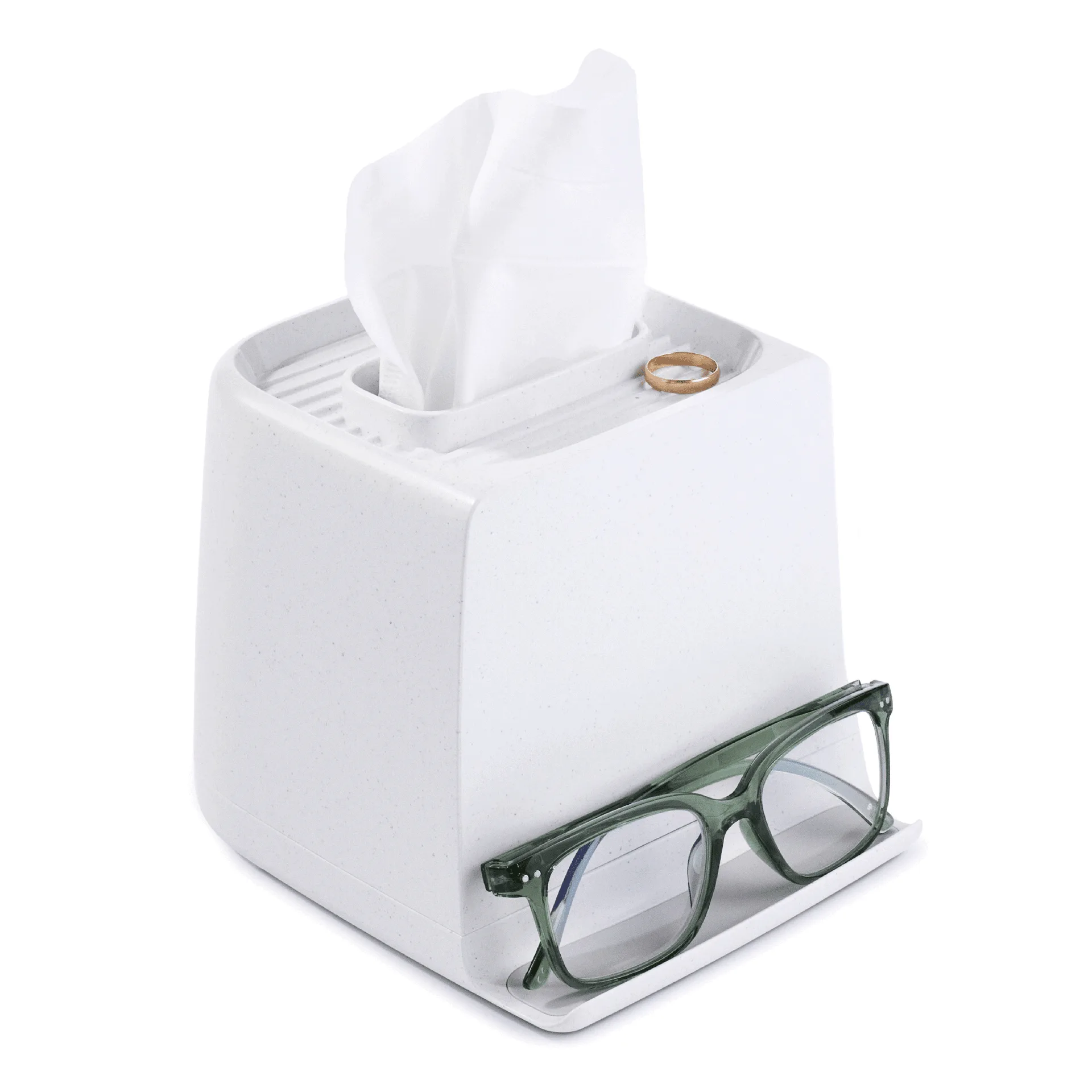
The Ledge™ Tissue Holder, Cube: The Ledge™ Tissue Holder, Cube offers the same antimicrobial treatment and padded phone ledge, but is designed to hide any size cube tissue box. If you prefer cube-shaped tissues or have a tight corner shelf, the Cube version fits where a rectangular box might not.
The Ledge™ Tissue Holder, Cube
Who this advice is for
Best for
- Bathrooms under 40 square feet where counter space is at a premium
- People who want one item to do the job of a tissue box and a small tray
Not for
- Large bathrooms with ample counter space where a separate tissue box and organizer are fine
- Renters who cannot drill holes and prefer a wall-mounted solution without permission