Quick answer
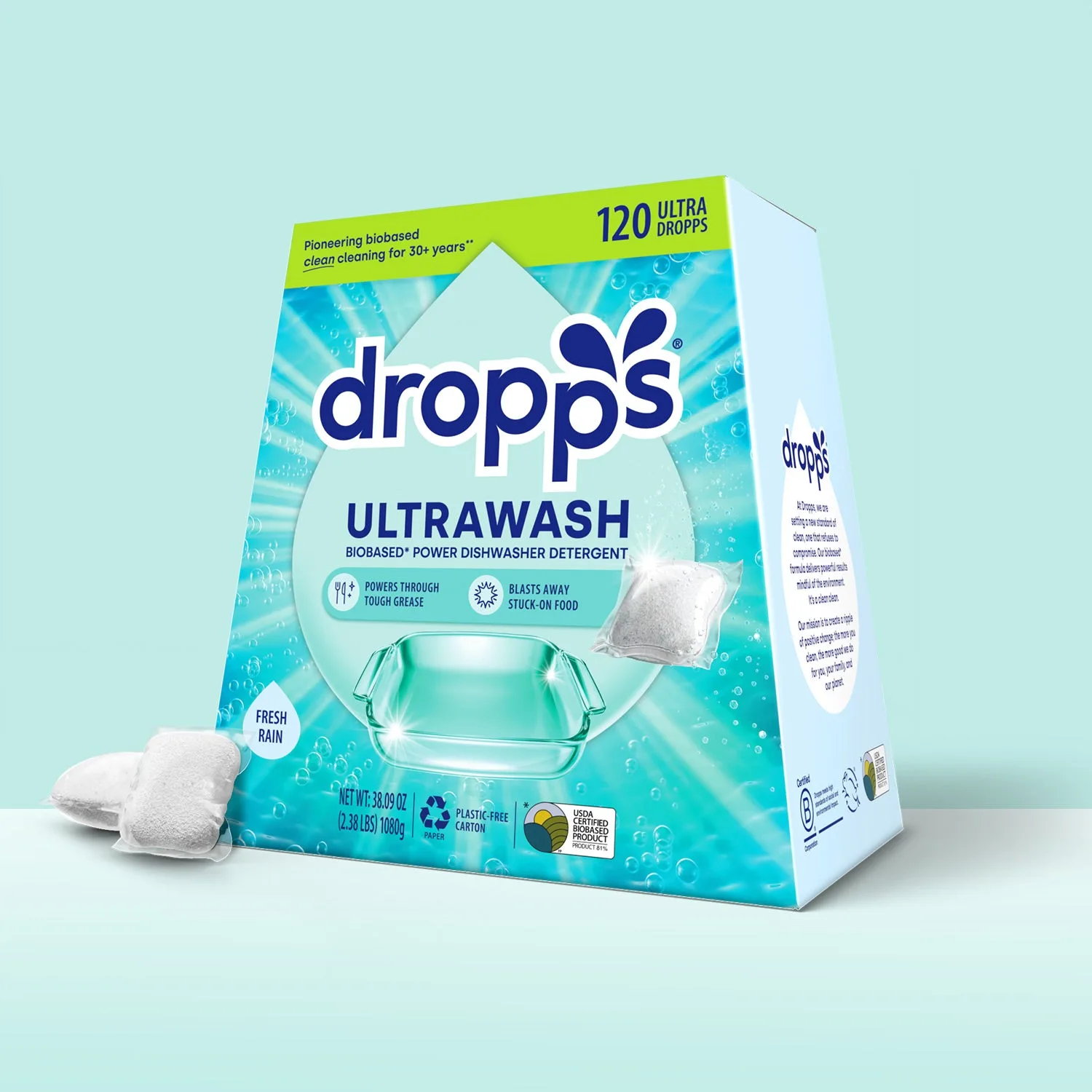
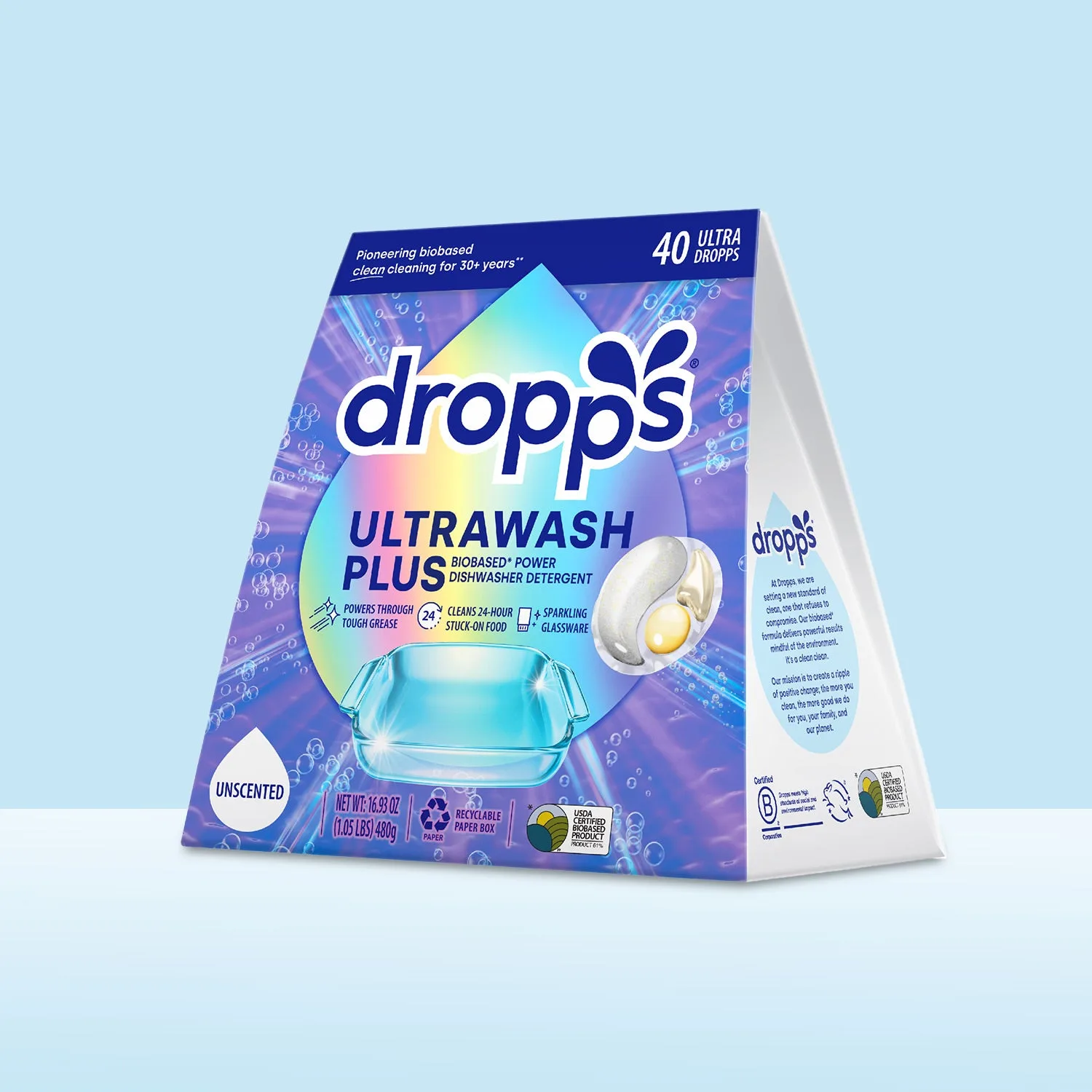
Choose biobased dishwasher detergent pods if you want plant-derived cleaning power without giving up performance on everyday grease and stuck-on food. Start with a triple-action pod like Dropps UltraWash Plus, match the pod count to how often you run your dishwasher, and adjust for hard water by checking whether the formula already includes enough cleaning action for your typical loads.
What "biobased" actually means on a pod label
Biobased means the cleaning ingredients are derived from plant or renewable sources rather than petroleum. That is the core difference from traditional pods, which often rely on synthetic surfactants and builders. It does not automatically mean a pod is gentle on every dish or safe for every machine, so treat the term as a starting point, not a guarantee.
For a beginner, the practical question is whether the plant-based formula still delivers enough grease-cutting and stain-fighting power for your normal loads. Look for pods described as triple-action or multi-action, because those terms signal the formula is built to handle food residue, not just rinse clean dishes.
How to read a biobased pod label without overthinking it
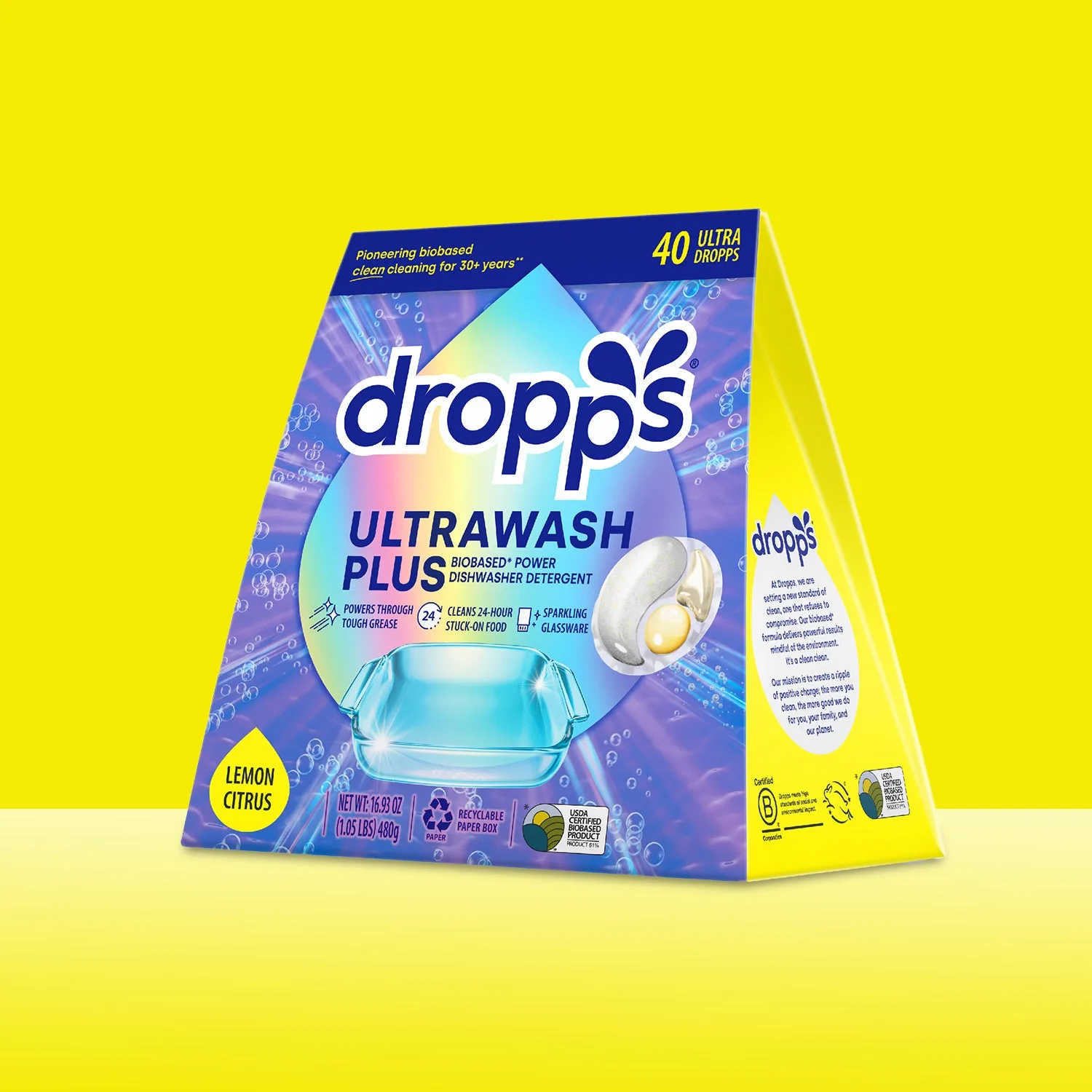
Start with the action claim. A pod described as triple-action is designed to fight food residue in more than one way, which matters if you regularly load lasagna pans or cereal bowls. Next, check the scent. Lemon citrus and unscented options both clean the same way; the difference is only what you smell when you open the dishwasher.
Finally, check the count and the size options. Pods are sold in different counts and sizes, and the right one depends on how many loads you run each week. A 40-count pack suits a household that runs the dishwasher most days, while a smaller pack makes more sense if you run it a few times a week or want to test the formula first.
Biobased pods and hard water: what to check
Hard water leaves mineral film that can make even clean dishes look cloudy. Biobased pods can still work well in hard water, but the formula needs enough cleaning action to handle those minerals alongside food grease. If your glasses come out spotted, that is a sign your current pod is not keeping up, not necessarily a sign that all biobased pods fail.
One practical move is to run a test load with your normal dishes and check for film after the cycle. If spotting persists, look for a pod with a stronger action claim rather than adding extra detergent, since overusing pods can leave residue. The goal is one pod per load with a formula that matches your water.
Matching pod count to your household
The count you buy should track your weekly dishwasher use, not the size of your cabinet. A household that runs a load every day will go through a 40-count pack in about six weeks, while a smaller household might take several months. Buying the count that matches your pace keeps pods from sitting around long enough to clump or lose effectiveness.
If you are new to biobased pods, start with a smaller count to confirm the formula works on your water and your typical dishes. Once you know it performs, moving to a larger count is a straightforward way to reduce packaging and trips to the store.
Common beginner mistakes to avoid
The most common mistake is using more than one pod per load to compensate for hard water or heavy soil. That usually backfires by leaving detergent residue on dishes. Another is skipping the rinse aid or pre-rinse entirely on baked-on food, then blaming the pod when a crusted casserole dish comes out dirty.
Also avoid storing pods in a damp spot under the sink. Moisture can make the film sticky or cause pods to fuse together. Keep them in a dry cabinet and close the container after each use. These small habits matter more than switching between brands.
Decision rules for buying biobased dishwasher pods
- If you run your dishwasher daily: Choose a larger count like the 40-count UltraWash Plus pack so you are not reordering every few weeks. Match count to weekly loads, not to shelf space.
- If your dishes come out spotted: Check whether your pod has a strong action claim before adding a second pod. Hard water film usually means the formula needs more cleaning power, not more detergent. One pod per load with the right formula beats doubling up.
- If you are new to biobased pods: Start with a smaller count to test performance on your water and your typical dishes before committing to a bulk pack. Test first, then size up once you know it works.
Product facts to know
- UltraWash Plus Biobased Power Dishwasher Detergent Pods, Lemon Citrus: UltraWash Plus Biobased Power Dishwasher Detergent Pods, Lemon Citrus, are triple-action pods designed to amp up food-fighting power for a sparkling clean. The triple-action formula is a good fit if you regularly deal with stuck-on food like last night's lasagna dish or dried cereal.
- 40 Count UltraWash Plus Biobased Power Dishwasher Detergent Pods, Lemon Citrus: The 40-count UltraWash Plus Biobased Power Dishwasher Detergent Pods, Lemon Citrus, offer the same triple-action cleaning in a larger count. A 40-count pack suits households that run the dishwasher most days and want fewer reorders.
Who biobased dishwasher pods are for
Best for
- Households that want plant-derived cleaning ingredients without giving up performance on everyday grease and stuck-on food.
- Beginners who run normal loads and want a simple, one-pod-per-load routine.
Not for
- Anyone who needs a specialized rinse aid or a separate hard-water treatment for severe mineral spotting.
- Households that prefer liquid or powder detergent they can measure and adjust per load.