Quick answer
You need both, but not in equal numbers. A bib protects clothes during and after feeding, while a burp cloth absorbs spit-up and milk drips during burping and holding. For most families, 4–6 bibs and 6–10 burp cloths cover the newborn stage; if you're short on space or budget, start with burp cloths because they can double as a lap pad or shoulder cover.
What each one actually does
A bib sits at the neck and catches food, drool, and milk before it reaches the outfit. Bibs for feeding usually have a closure at the back or side and come in fabrics from cotton to waterproof-backed styles. A burp cloth is a rectangular absorbent pad you drape over your shoulder or lap while burping, holding, or feeding. It catches spit-up and dribbles that would otherwise land on you or the baby.
The confusion starts because both are rectangles of fabric that absorb mess. The difference is where they sit and when you reach for them. Bibs stay on the baby. Burp cloths stay on the adult or the surface. That single distinction decides which one you grab at 3 a.m.
When you'll reach for a bib
Bibs earn their keep once feeding becomes a full-contact sport: bottle feeds where milk pools at the chin, early spoon-feeding, and the drool-heavy teething months. A bib that closes at the neck stays put while baby twists and grabs, which matters more than absorbency once they're mobile.
For feeding specifically, look for a bib that covers the chest, not just the collar. A collared one-piece like the Ted Chambray Collared Romper already has a collar, so a bib over it can bunch; in that case, a simple flat bib works better than a thick molded one. If you're layering, a bib under a jacket or jumper dress is impractical, so plan bibs for the top layer only.
When you'll reach for a burp cloth
Burp cloths are a newborn-stage tool. You'll use them during every burp, every hold, and every contact nap where milk might reappear. They're also useful as a quick clean-up cloth for faces and hands, and as a barrier between baby and your clothes when you're wearing something you'd rather not change.
The trade-off is that burp cloths don't stay on the baby. If your baby spits up while lying on a play mat, a burp cloth under the head helps, but a bib won't. If you're leaving the house, one burp cloth in the diaper bag covers more scenarios than one bib, because you can use it on your shoulder, your lap, or the baby.
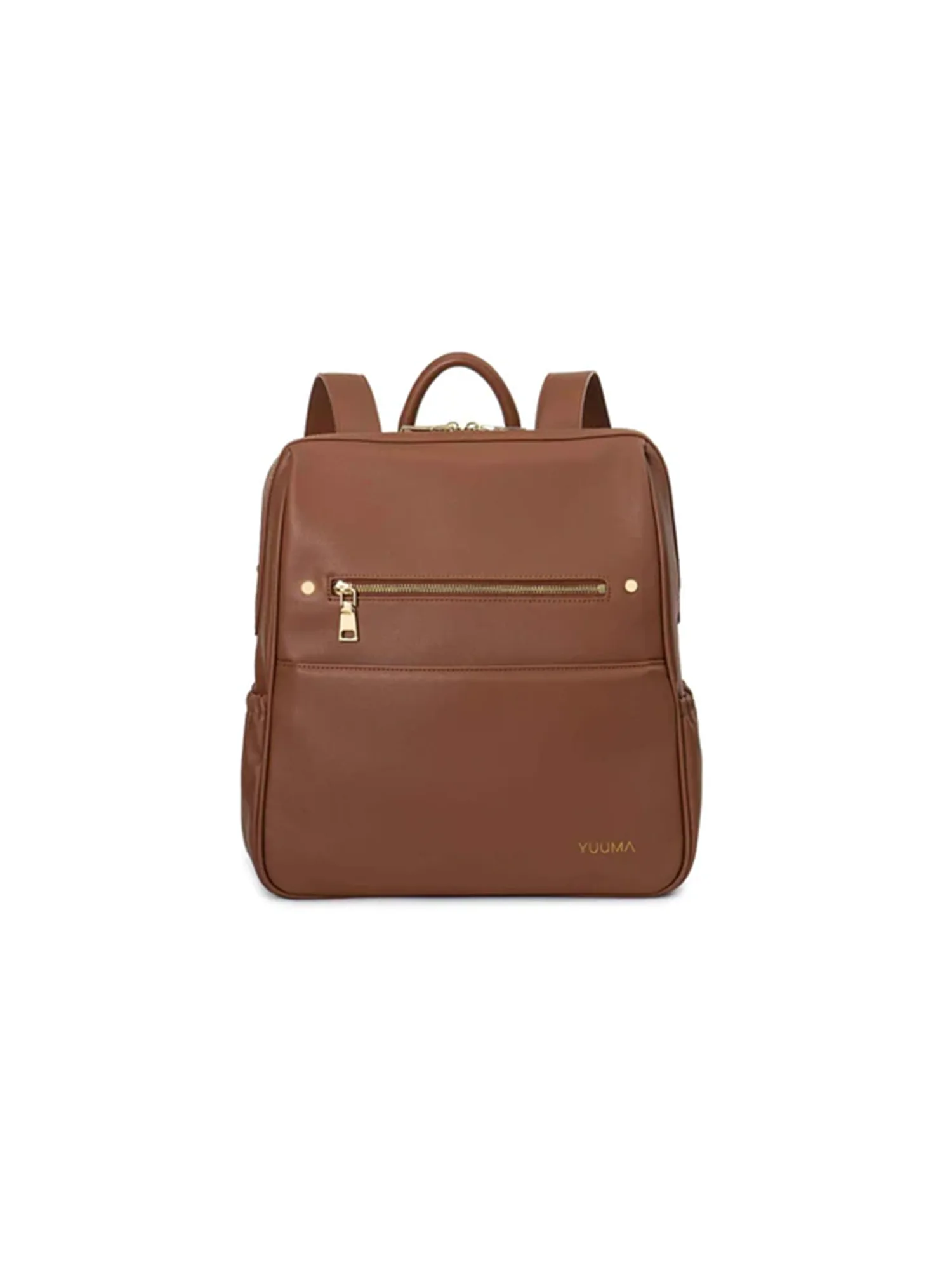
diaper bag
How many to buy without overstocking
Buy fewer than you think. Newborns go through burp cloths faster than bibs because spit-up happens around the clock, not just at meals. A workable starting count is 6–10 burp cloths and 4–6 bibs. If you do laundry every two days, you can start with 4 burp cloths and 2–3 bibs and add only if you find yourself short.
Skip the matching set if it forces you into a count you don't need. A feeding bib and burp cloth set is convenient for gifting, but you'll get more use from buying the two items in the quantities that match your baby's stage. If you're building a registry, put burp cloths on it first; bibs can wait until feeding starts.
Trade-offs to weigh
- Bib coverage vs. bulk: A bib that covers more chest catches more mess but can bunch under a collared romper or a jacket. A flat, trim bib is easier to layer but catches less. Match bib style to the outfit: flat bib under collars and jumpers, fuller coverage over plain tops.
- Burp cloth absorbency vs. portability: Thicker burp cloths absorb more per spit-up but take longer to dry and take up more diaper-bag space. Thinner ones dry fast and pack small but need changing more often. Keep two thick ones at home and two thin ones in the bag.
- Set convenience vs. exact count: A feeding bib and burp cloth set is easy to buy and gift, but the included counts rarely match your baby's actual spit-up and drool pattern. Buy the set for gifting; buy individually for your own home so you don't end up with five unused bibs.
Grounded product facts
- Ted Chambray Collared Romper: The Ted Chambray Collared Romper is made of 100% organic cotton, garment washed for softness, with a hidden snap leg opening and roomy pockets. A collared romper already covers the chest and neck, so it pairs better with a flat bib than a bulky one, and the snap leg opening makes diaper changes faster during feeding routines.
- Alma Twill Jumper Dress - Olive: The Alma Twill Jumper Dress is made of 98% organic cotton and 2% elastane twill with snap closures at the shoulders and sides. Shoulder snaps let you get the dress on and off without pulling it over the head, which is useful when you're also managing a bib and a burp cloth one-handed.
- Denver Twill Chore Jacket - Chestnut: The Denver Twill Chore Jacket is made of 98% organic cotton and 2% elastane twill, unlined, with nickel-free snap closures and roomy patch pockets. Unlined and snap-front means it layers over a bib without adding bulk at the neck, and the patch pockets give you a place to stash a folded burp cloth on the go.
Which should you buy first?
Best for
- Newborns and babies who spit up often: start with burp cloths.
- Bottle-fed babies who dribble at the chin: add bibs once feeding starts.
- Babies in collared rompers or jumper dresses: choose flat bibs that don't bunch at the neck.
Not for
- Older toddlers who only need a bib at meals: skip burp cloths entirely.
- Families with limited diaper-bag space: don't carry both; a burp cloth covers more situations.
- Anyone expecting a bib to protect an adult's clothes: that's a burp cloth's job.