Quick Answer
Start with simple setup and underhand rolling, then add scoring and creative variations to keep kids engaged and learning.
Why Bowling is Great for Kids
Bowling has been a beloved activity for centuries, and for good reason. It hones precision, enhances coordination, fosters healthy competition, and guarantees hours of wonderful fun with friends.
For young children, bowling is more than just a game—it's a way to develop motor skills, hand-eye coordination, and social skills like taking turns and cheering for others.
Setting Up the Right Playing Area
You don't need a bowling alley to enjoy this game. All you need is the right spot—a cozy room, a sunny porch, a garden path, or even a quiet corner in the park.
Ensure the surface is smooth and level to allow the ball to roll easily. For toddlers, a shorter distance is better; for older kids, you can increase the challenge by moving the pins farther away.
Step-by-Step Guide to Teach Kids Bowling
- Set Up the Pins: Place the pins in a triangle formation at the end of your playing area. For beginners, start with fewer pins (e.g., 3 or 6) to make it easier to knock them down. Common mistake: placing pins too far away. Start close and gradually increase distance as your child's accuracy improves.
- Teach the Underhand Roll: Show your child how to hold the ball with both hands and roll it underhand toward the pins. Encourage a smooth, gentle push rather than a throw. Checkpoint: Ensure your child is not throwing the ball overhead or with too much force, which can lead to frustration or injury.
- Practice Aiming: Have your child aim at the center pin or a specific pin. You can place a small marker (like a piece of tape) on the floor to help them focus their aim. Common mistake: kids often look at the ball instead of the target. Remind them to keep their eyes on the pins.
- Introduce Scoring: Once your child can roll the ball consistently, introduce simple scoring: one point per pin knocked down. For older kids, you can use traditional bowling scoring (strikes and spares). Checkpoint: Keep scoring positive and simple. Avoid complicated rules that might overwhelm younger children.
- Add Fun Variations: To keep the game exciting, try variations like rolling with the non-dominant hand, kneeling, or setting up pins in different patterns (e.g., a line or a diamond). Common mistake: making the game too competitive. Emphasize fun and participation over winning.
Product Spotlight
-
Blue Bowling set: The Blue Bowling Set is designed for kids to enjoy bowling anywhere, from a cozy room to a garden path. Its portable design means you can set up a game almost anywhere, making it easy to practice bowling basics at home or outdoors.
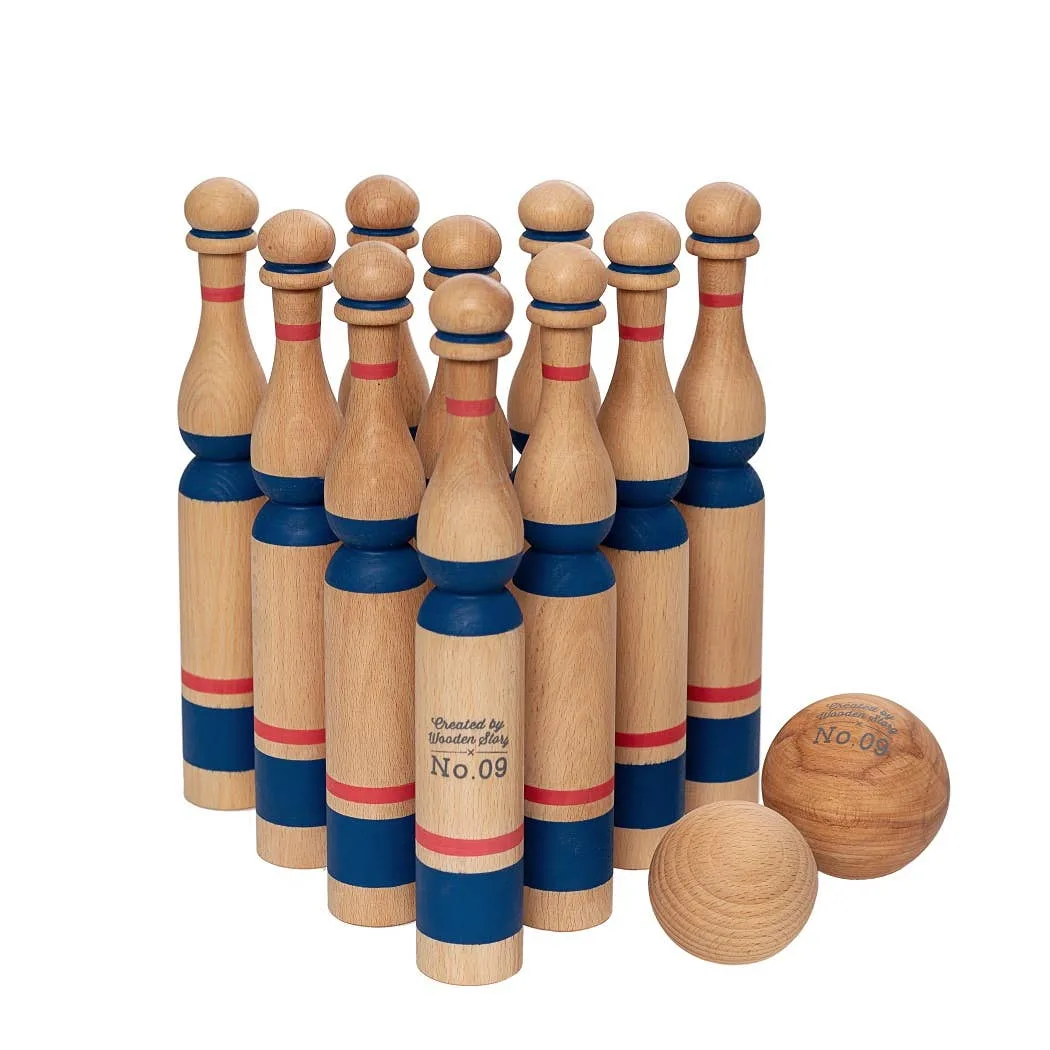
Blue Bowling set