Quick answer
Read the rulebook twice in two different ways: first skim it end to end for structure, then read only the setup and turn sequence while you physically set the game up. Play one open practice round by yourself before teaching anyone, and keep the rulebook open on the table during the first real game. That single skim-setup-practice loop is what actually makes rules stick.
Most people lose an hour to a rulebook not because the game is complicated, but because they read it like a novel. Rules are reference material: they are organized for lookup, not for narrative flow, and reading them front to back in one sitting overloads your memory before anything is on the table.
The faster approach is to use the physical game as your study aid. You skim for structure, set up while reading the setup section, then run a throwaway round so the turn sequence lives in your hands instead of your head. Here is the process, with the mistake that derails each step.
Why rulebooks feel harder than the game is
A rulebook has to serve three different readers: the person learning alone, the person teaching a group, and the person mid-game who forgot one edge case. That is why so much of a manual is reference tables, icon glossaries, and exception notes. When you read straight through, you are absorbing lookup material as if it were a tutorial, and your brain treats most of it as noise.
The fix is to separate learning passes from lookup passes. Your first pass is about knowing where things live. Your second pass is about the loop you will repeat every turn. Everything else can wait until it actually comes up in play, because most edge cases will not appear in your first game at all.
- Check the last pages first: player aids, icon keys, and quick-reference cards are often the most useful part of the manual.
- If a game ships a separate learn-to-play booklet and a rules reference, read the learn-to-play one first and leave the reference closed.
Match your reading order to the game's weight
Light card games reward a fast skim because the turn is short and the exceptions are few. Heavier games with asymmetric roles or scenario decks reward a slower pass through setup and end-game scoring, because misreading those two sections is what produces a game that has to be restarted. Judge the game by how many pages the turn sequence takes, not by the box size.
Asymmetric games are a special case worth planning for. In https://rockmanorgamesdz.com/products/lawyer-up-season-2-89095f2728794da0b64efbab-1730828Lawyer Up: Season 2, one player runs the prosecution and the other the defense, and each game opens with a Discovery phase where players draft evidence to support their case and bury evidence that might help the other side. That means you are learning two overlapping rule sets, so read the shared Discovery and trial structure once, then read your own side's section separately.
- Count the pages devoted to the turn sequence. Under two pages, skim hard. Over four, slow down and take notes.
- For team or asymmetric games, learn the shared rules first, then your own role, then your opponent's role.
Set up the game while you read the setup section
Reading setup without touching components is the most common wasted pass. Components are memory anchors: once the deck is physically in your hand and the board is laid out, the rules that reference them become concrete. Set up slowly, following the manual line by line, and say each step out loud as you do it.
This is also your first quality check. Counters that do not match the listed quantity, missing cards, or a deck that seems short are far easier to catch now than three turns into a game. If something is missing, stop and resolve it before you invest more time in learning.
- Do setup alone if you can. A helper who half-knows the rules creates more confusion than speed.
- Leave the setup page open. You will re-check it during your first teardown.
Play one practice round with no opponent
Run a single round by yourself, playing two or three seats if the game allows it. You are not trying to win; you are trying to make the rulebook's turn sequence physically true. You will discover the questions that actually matter, like what happens when a card contradicts the general rule, or which resource you keep forgetting to refresh.
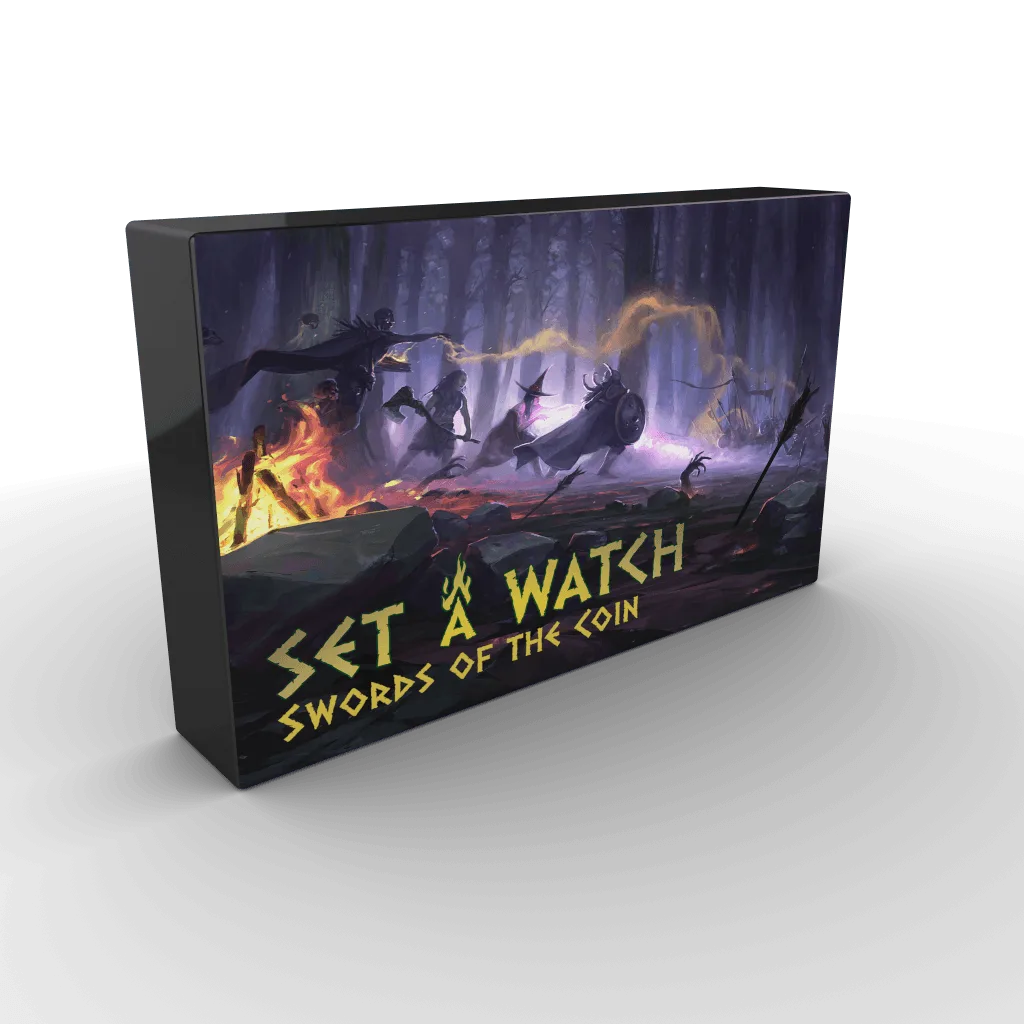
For cooperative and solo-friendly designs this step is even more valuable, because you can simply play the game as intended and learn while doing it. https://rockmanorgamesdz.com/products/set-a-watch-swords-of-the-coin-e16ad370c1b18d94fab81574-1730833Set a Watch: Swords of the Coin is a 60-90 minute cooperative adventure puzzle game for 1-4 players, and it works as a stand-alone expansion, so a solo practice run is a legitimate first play rather than a rehearsal.
- Write your open questions on a scrap of paper instead of stopping to hunt through the index each time.
- Resolve all written questions in one batch before you teach the game.
Teach the loop, not the rulebook
When you explain the game to others, describe the repeating turn and the win condition first, then add detail only when a player needs it. Nobody retains a list of twelve exceptions before their first turn. Give them the goal, the three things they can do on a turn, and how the game ends.
Keep the rulebook visible and tell the table you will look things up rather than guess. Fast, honest lookups keep the game moving and prevent house rules from quietly forming. If you do decide to house-rule something, say so out loud so everyone is playing the same game.
- Teach in under five minutes, then start. You can layer in nuance during play.
- Announce any rules you are unsure about before the first turn, not after a dispute.
Your six-step rulebook routine
- Step 1: Skim for structure: Read the table of contents, headings, and last-page reference material in one quick pass. Do not try to memorize anything. You are building a map of where answers live. Checkpoint: you can name the page or section for setup, turn sequence, and scoring without searching.
- Step 2: Read setup with components in hand: Open the box, follow the setup section line by line, and place every component as it is described. Say each step aloud. Verify listed quantities as you go. Checkpoint: the table matches the setup diagram, and nothing is missing or miscounted.
- Step 3: Read only the turn sequence and end condition: Skip strategy notes, lore, and edge-case boxes for now. Focus on what a turn consists of, how a round ends, and what triggers the end of the game. Checkpoint: you can describe one full turn and the win condition in your own words without opening the book.
- Step 4: Play one practice round alone: Run a single round, playing two or three seats if possible, or play solo if the game supports it. Write down every question instead of stopping to look it up. Checkpoint: your question list is written, and you have not restarted the round more than once.
- Step 5: Batch-resolve your questions: Go through your written questions in one sitting and find each answer in the rulebook or official FAQ. Mark the pages you needed so you can find them again mid-game. Checkpoint: every question has an answer, and you know which page it came from.
- Step 6: Teach the loop and keep the book open: Explain the goal, the turn, and the end condition in under five minutes, then start playing. Leave the rulebook on the table and look up anything uncertain rather than guessing. Checkpoint: no house rules were invented during the first game without the table agreeing to them out loud.
Games that reward this method
- Lawyer Up: Season 2: Lawyer Up: Season 2 includes 3 brand new cases — Celebrity Divorce, Private Eye, and Casino Heist — along with a robust Solo expansion, and it is an asymmetrical two-player courtroom drama card game where one player is the prosecution and the other the defense. Because the two sides play differently, learn the shared Discovery and trial structure first, then each role separately. The included solo expansion lets you practice the flow alone before teaching a second player.
- Set a Watch: Swords of the Coin: Set a Watch: Swords of the Coin is a 60-90 minute cooperative adventure puzzle game for 1-4 players, and it is a stand-alone expansion featuring the same gameplay with new twists centered on collecting coin and buying items from the merchant. A cooperative, solo-capable game is ideal for the practice-round step: you can play a real session alone, learn the merchant and coin systems hands-on, and then teach the table from experience rather than from the manual.
- Seas of Havoc: Seas of Havoc is a naval skirmish game for 1-5 players where you captain a ship and engage in battle using a deck of cards that dictate your ship's movement and cannon fire, with each player starting from a unique deck defined by their chosen ship and captain. With different ships and captains, each player has a slightly different decision space. Read the shared movement and combat rules once, then have each player review only their own ship and captain before the first turn.
Learning rules faster is less about reading speed and more about sequencing: skim for structure, set up with the book open, play one throwaway round, then teach only the loop. Do that once and the second playthrough of any game in your collection gets dramatically shorter.