Quick answer
Choose the neckline first, because it decides what you can wear the bodysuit under; then match the fabric to the occasion; and treat fit at the torso as the deciding factor, since a bodysuit that pulls at the shoulder or rides up will not be worn no matter how good it looks. If you want a smooth everyday base layer, a simple scoop or high-neck style in a soft knit works best. If you want the bodysuit to be the outfit, a statement neckline in a structured or embellished fabric is the better buy.
Start with the neckline, not the color
The neckline decides how much of the bodysuit you can show and what it layers under. A high neck or halter covers the chest and works under blazers and open shirts, but it can clash with a V-neck top. A scoop or sweetheart neckline stays hidden under most necklines, which makes it the safer choice for a base layer. A plunge or open neckline is meant to be seen, so buy it as the focal point of an outfit rather than as invisible support.
Before you add a bodysuit to your cart, hold it against the necklines you actually wear. If most of your tops are crew or V-neck, a deep plunge bodysuit will show at the edges. If you mostly wear open cardigans and blazers, a higher neckline gives you a clean finish.
How should a bodysuit fit at the torso
A bodysuit should feel snug but not tight through the torso, with the snap closure sitting flat against the body rather than pulling down. The shoulder straps should stay put when you raise your arms, and the fabric should not wrinkle into horizontal folds across the stomach, which usually means the torso length is too long. If the closure digs in or the fabric pulls at the crotch, size up or choose a style with more stretch.
Torso length matters more than your usual dress size. Two people in the same size can need different bodysuit lengths, so check the size chart and, when a style offers only one torso length, read the fit notes before buying. A bodysuit that is slightly too long is easier to live with than one that is too short, because the extra fabric can be adjusted at the closure.
Fabric guide: what each choice does
Smooth microfibre gives a clean line under clothing and usually has a silky finish, which is why it is the default for everyday bodysuits. It stretches with you and hides well under fitted dresses, but it offers less structure, so it will not hold a dramatic neckline on its own. Lace and embroidered fabrics add texture and look intentional when worn alone, but they can show through thin outer layers. If you want one bodysuit for both, choose a smooth body with a lace or embroidered neckline.
Weight matters as much as fiber. A heavier microfibre feels more substantial and tends to sit flatter, while a lighter knit is cooler but can cling. For a bodysuit you plan to wear under a slip dress, prioritize a smooth finish. For a bodysuit you plan to wear as a top, prioritize structure and detail.
Match the bodysuit to the outfit you already own
Build around your existing wardrobe rather than around a single occasion. A neutral bodysuit in a smooth fabric covers the most outfits, so it is the best first buy. A colored or embellished bodysuit is the second buy, for nights when the bodysuit is the outfit. If you wear a lot of high-waisted trousers, check that the bodysuit closure sits comfortably under the waistband instead of bunching.
For a bodysuit that has to work under a range of necklines, keep the neckline simple and let the fabric do the work. For a bodysuit that will be seen, choose the neckline you would pick in a top, because that is what people will notice first.
Decision rules for buying a bodysuit
- If it is for everyday layering: Choose a smooth microfibre bodysuit in a neutral tone with a simple scoop or high neckline, and check that the closure sits flat under your usual waistbands. One neutral, smooth bodysuit will earn more wear than three statement pieces.
- If it is meant to be seen: Choose a neckline you would wear in a top, and accept that lace, lurex or embroidery may show through thin outer layers. Buy it for the nights it is the outfit. Statement fabrics trade versatility for impact.
- If you are between sizes: Size up when the torso feels short or the closure digs in, and size down only if the fabric wrinkles across the stomach. Torso length is the fit point to check first. A bodysuit that pulls at the shoulder or rides up will stay in the drawer.
Product facts to compare
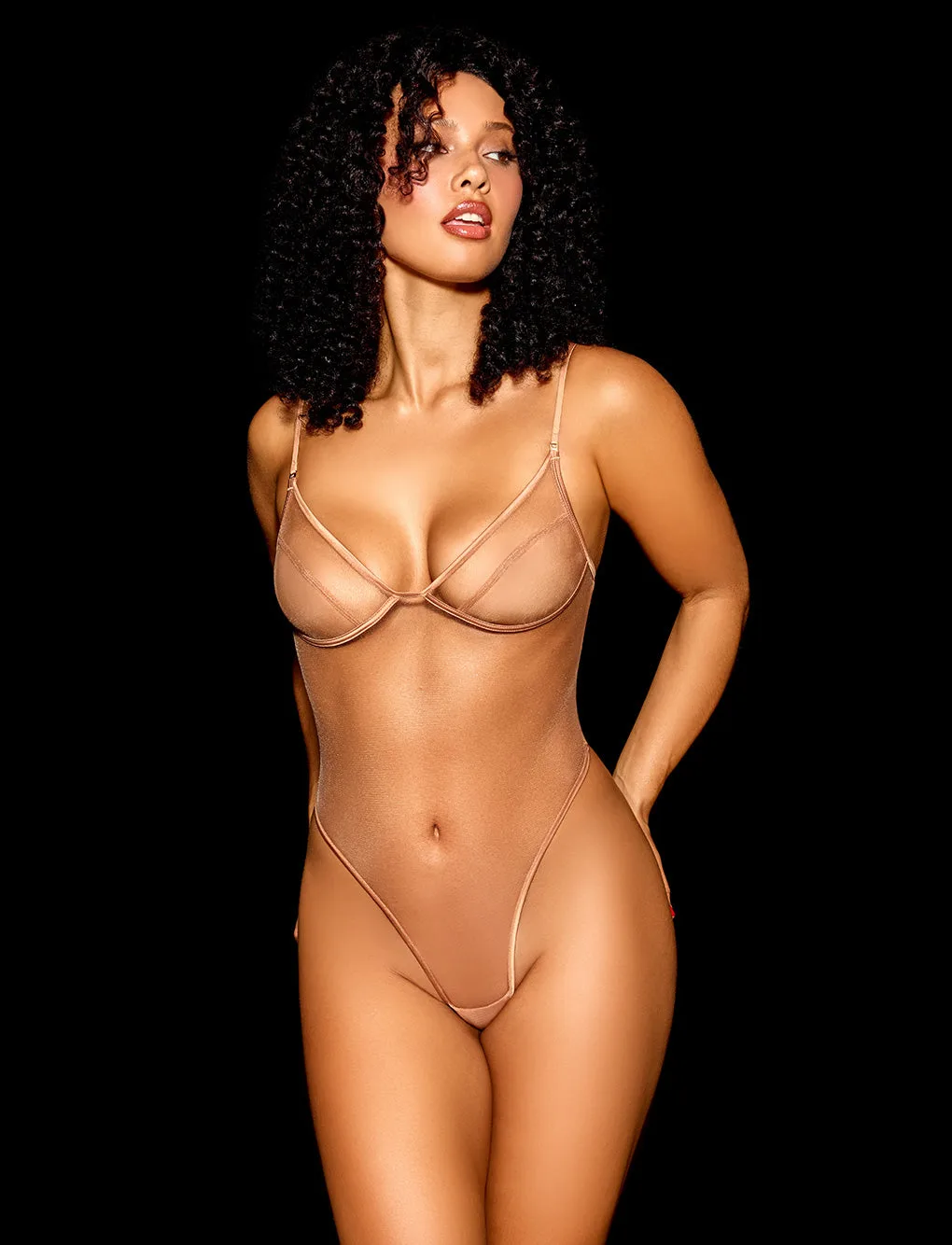
- Nakeds 2.0 Toffee Bodysuit: Nakeds 2.0 Toffee Bodysuit is part of the NAKEDS 2.0 collection and is available in a toffee colorway with size options. A neutral toffee tone is the easiest bodysuit color to layer under light and dark clothing, which makes it a practical first bodysuit if you want one piece that covers the most outfits.
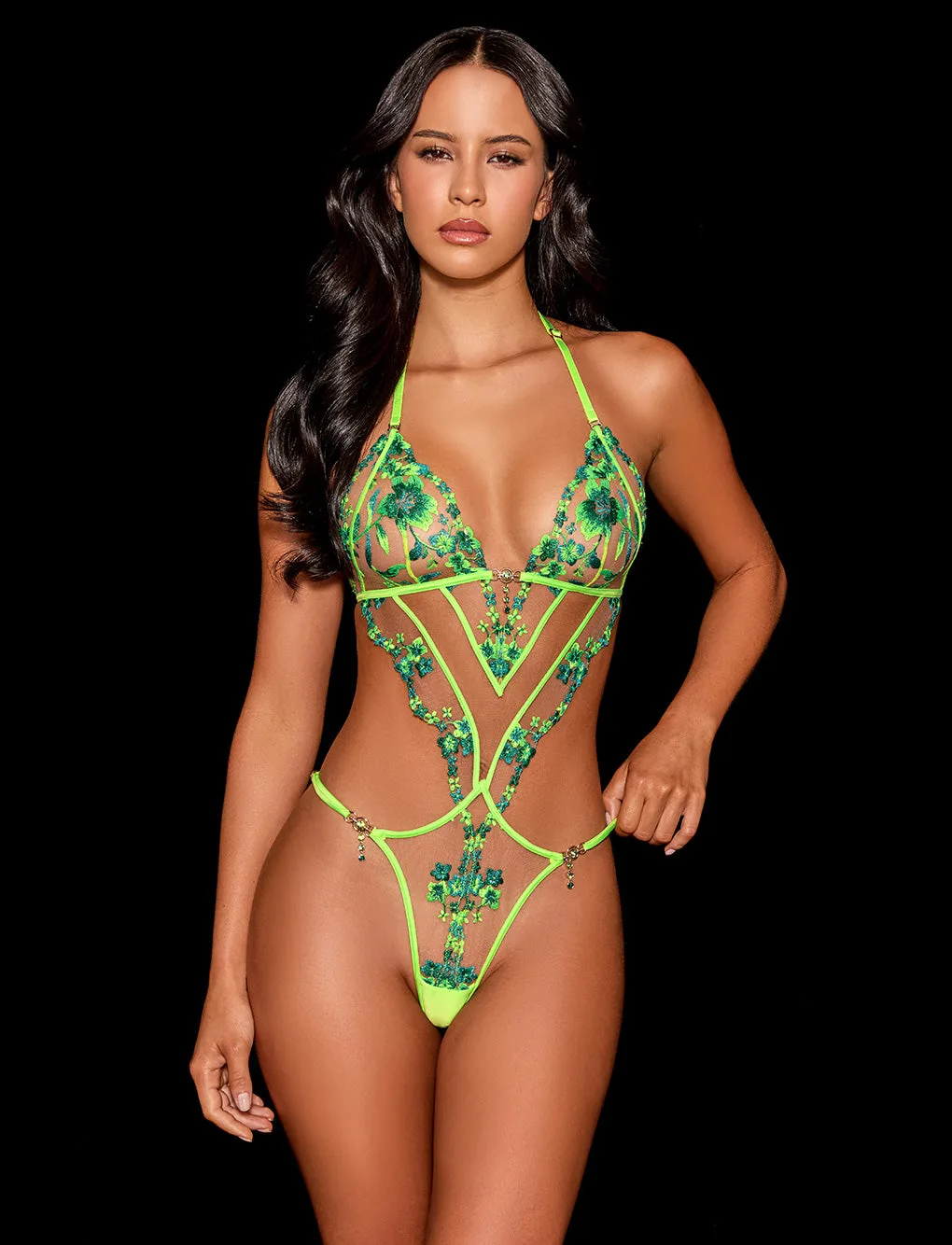
- Aluna Green Bodysuit: Aluna Green Bodysuit features hand-picked green hues, glittering lurex details and bespoke embroidery by Swiss design, and can be worn under clothing or on its own. This is the statement choice: the embellishment and green colorway are meant to be seen, so it works best when the bodysuit is the outfit rather than a hidden base layer.
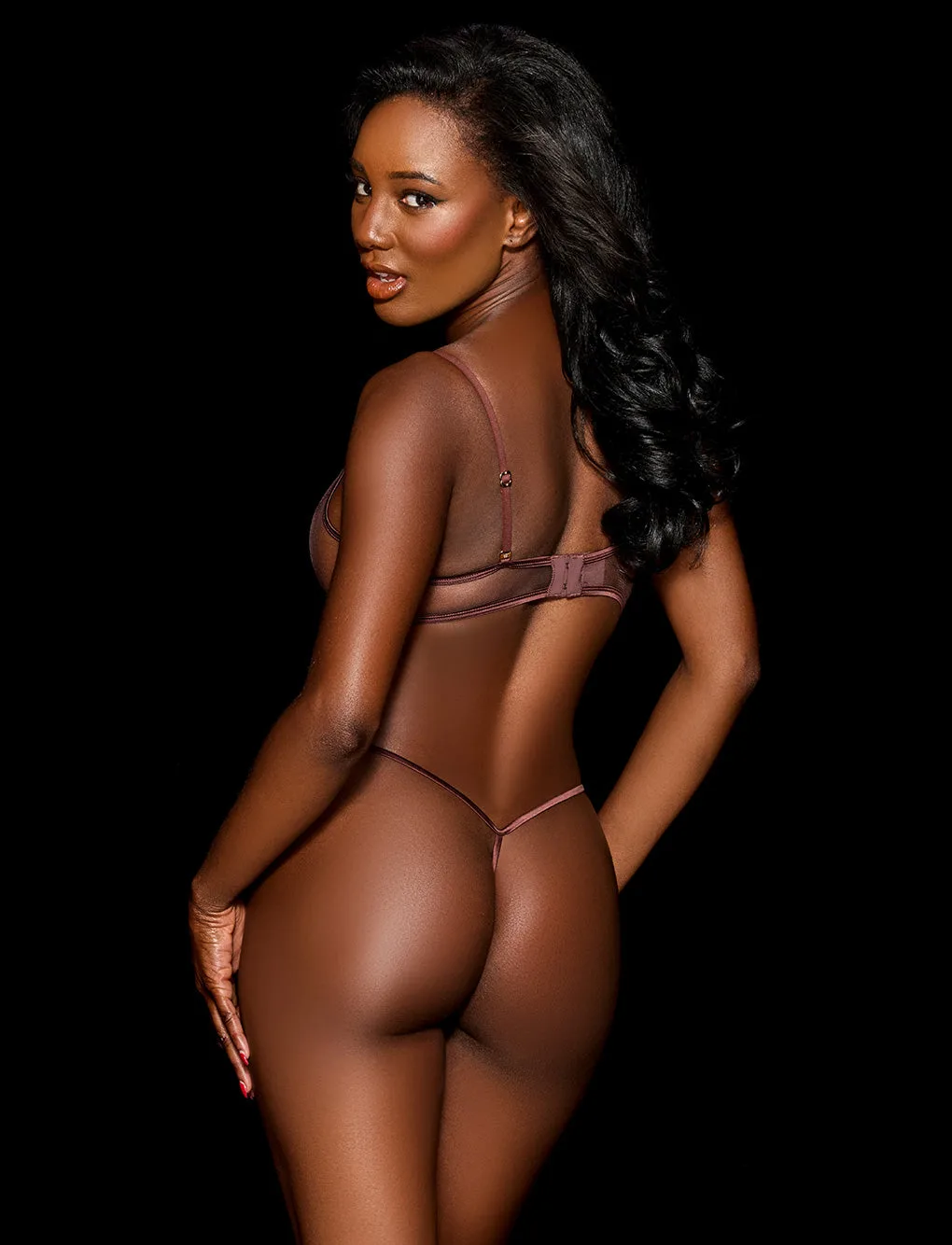
- Nakeds 2.0 Mahogany String: Nakeds 2.0 Mahogany String is a string style in the NAKEDS 2.0 collection, available in mahogany with size options. If you prefer a string cut at the hip, this gives you a matching bottom option within the same collection, which keeps the fit and color consistent.
Who each bodysuit style suits
Best for
- Shoppers who want one smooth, neutral bodysuit for layering under blazers, dresses and high-waisted trousers.
- Shoppers who want a bodysuit to be the visible focal point of an outfit and are willing to trade some layering versatility for detail.
Not for
- Shoppers who need a single bodysuit to work under every neckline in their wardrobe, since no one neckline does that.
- Shoppers who want a loose, relaxed fit, because a bodysuit is designed to sit close to the body.