Quick answer
Sister sizes are two bra sizes that hold the same cup volume but use a different band length. To find a sister bra size, go down one band size and up one cup letter, or up one band size and down one cup letter. For example, 34C sister sizes are 32D and 36B. Use them when a band feels too tight or too loose but the cup volume itself fits well.
You found a bra you like, but the band digs in or rides up. Before you give up on the style, try its sister size. Sister sizing keeps the cup volume you need while changing the band length, so a 34C can become a 32D or a 36B without starting your search from scratch.
This guide answers the questions that come up most often, from what sister size meaning actually is to how to use a sister size conversion in a real fitting room. It also covers when sister sizing will not fix a fit problem, so you know when to look at a different bra instead.
What does sister size mean?
Sister size meaning is simple: two sizes share the same cup volume but sit on different band lengths. Cup volume is not the same as cup letter. A D cup on a 32 band holds less volume than a D cup on a 38 band, so the letter alone does not tell you how much space the cup has.
That is why the band and cup always move in opposite directions. Drop one band size and go up one cup letter, and the cup volume stays roughly the same while the band gets shorter. Go the other way and the band gets longer. This is the whole logic behind a sister size chart.
- Down one band, up one cup: 36C becomes 34D.
- Up one band, down one cup: 36C becomes 38B.
- The cup letter changes, but the volume the cup holds stays close.
How do I find my sister bra size?
Start with the size that almost works. If the band is too tight but the cups fit, go up one band size and down one cup letter. If the band is too loose but the cups fit, go down one band size and up one cup letter. That single step usually solves the problem.
If one step is not enough, you can move two steps, but the fit drifts further from the original. Two steps up in band and two cups down changes the shape of the bra more noticeably, especially around the underwire and side seams. One step is the reliable move; two steps is a fallback.
- Band too tight, cups fine: up one band, down one cup.
- Band too loose, cups fine: down one band, up one cup.
- Cups gaping or spilling: sister sizing will not fix it. Change cup size instead.
What is a sister size chart?
A sister size chart lists sizes that share cup volume in a row. Read across the row to see every band length that holds the same volume. The cup letters change as the band changes, but the row stays consistent.
Use the chart as a starting point, not a guarantee. Different brands cut bands and cups differently, so a 34D in one style may feel like a 36C in another. Always check the brand's own size guidance when it is available.
- 30D, 32C, 34B, 36A share one cup volume row.
- 32DD, 34D, 36C, 38B share another row.
- 34DD, 36D, 38C, 40B share another row.
When should I size up or down a band?
Size up a band when the band leaves red marks, feels hard to breathe in, or you need to hook it on the loosest setting just to close it. A band that is too tight also pulls the cups flatter, which can make the cups look like they fit when they do not.
Size down a band when the back rides up, the band shifts when you raise your arms, or you are already on the tightest hook on a new bra. A band that is too loose lets the cups tip forward, which causes gaping at the top even when the cup volume is right.
- A new bra should close comfortably on the loosest hook.
- The band should sit level with the floor, not climb your back.
- If you start on the tightest hook, the band is too big.
Can sister sizes fix gaping or spilling cups?
No. Sister sizing changes the band length and keeps the cup volume close to the same. If the cups gape at the top or you spill over the edge, the cup volume is wrong, not the band. Moving to a sister size will not close that gap or contain that spill.
Fix cup problems with cup size first. If the cups gape, try one cup letter smaller in the same band. If you spill, try one cup letter larger. Once the cup volume is right, then adjust the band with a sister size if needed.
- Gaping cups: go down one cup letter.
- Spilling cups: go up one cup letter.
- Band tension and cup volume are separate problems. Solve them one at a time.
How do I test a sister size before buying?
Fasten the bra on the loosest hook and check the band first. It should feel snug but not painful, and it should stay level when you move. Then scoop your breast tissue into the cups and check the center gore, the piece between the cups, sits flat against your chest.
Next, check the cup edges. The top of the cup should lie smooth against your skin, with no digging and no floating fabric. Finally, raise your arms and roll your shoulders. If the band stays put and the cups stay in place, the sister size is working for you.
- Band level and snug on the loosest hook.
- Center gore flat against the chest.
- Cup edges smooth, no digging or gaping.
- Band and cups stay put when you move.
Do sister sizes work the same in every brand?
The math is the same, but the fit is not. Band firmness, cup depth, wire shape, and fabric stretch all change how a size feels. A brand with a firm band may need you to size up a band sooner than a brand with a stretchy band.
That is why a sister size conversion is a starting point, not a rule. Check the product page for fit notes and available cup sizes, and treat the first wear as a test. If the brand lists specific sizing guidance, follow it over a generic chart.
- Firm bands may need a band size up sooner.
- Stretch fabrics can make a band feel looser than its label.
- Always check the brand's own size guidance when it is listed.
Sister size FAQ quick reference
What is the sister size of 34C?
32D and 36B. Drop one band and go up one cup, or go up one band and down one cup. The cup volume stays close to the same. One step is the reliable move. Two steps changes the fit more noticeably.
Does a sister size change the cup volume?
It keeps the cup volume close, not identical. Cup volume is tied to both the band and the cup letter, so the letter changes as the band changes. Expect a close match, then verify with a fit check.
Should I sister size up or down?
Band too tight, cups fine: up one band, down one cup. Band too loose, cups fine: down one band, up one cup. Match the change to the problem you actually feel.
Will sister sizing fix gaping cups?
No. Gaping and spilling are cup volume problems. Change the cup letter first, then adjust the band if needed. Solve cup volume before band length.
How do I know a sister size fits?
The band sits level and snug on the loosest hook, the center gore lies flat, and the cup edges are smooth with no digging or floating fabric. Check the band, the gore, and the cup edge in that order.
Sister sizing in practice: two styles to compare
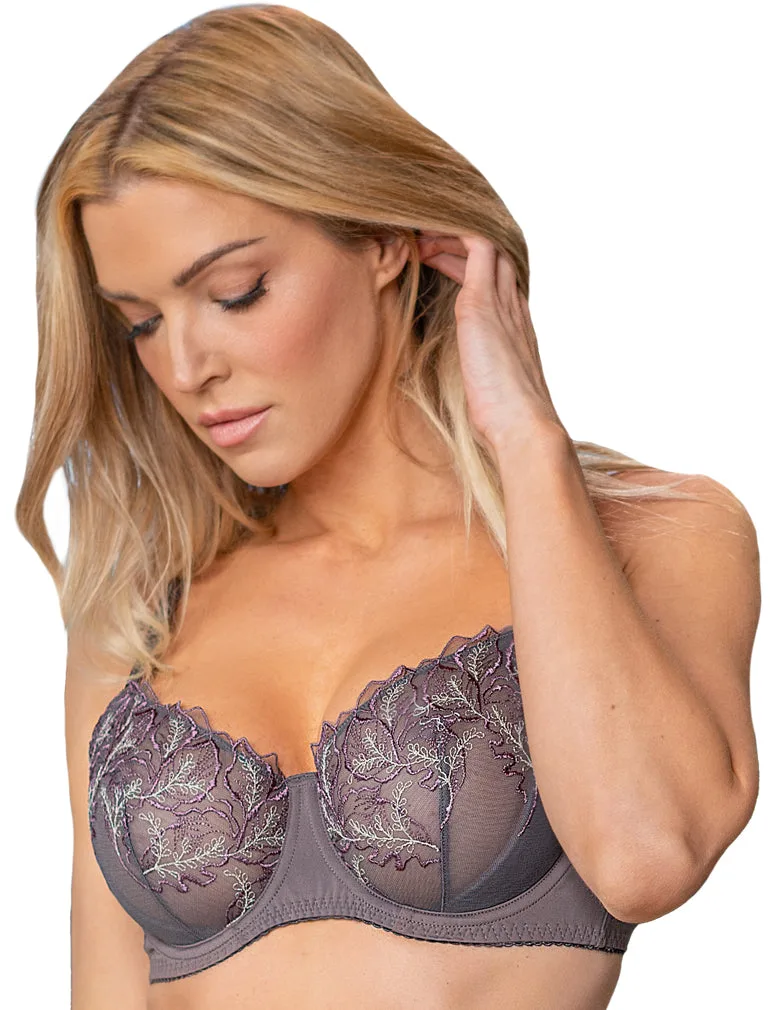
- B2645 Bridget: MAUVE PLUM: Bridget comes in a Mauve Plum color with a delicate lace design on the cups and an inside sling that gently lifts the bust for a fuller look. It is available in cup sizes. Because Bridget is sold by cup size, you can try its sister size directly in the same style. If your usual band feels tight but the cup volume is right, move one band up and one cup down and compare the two.
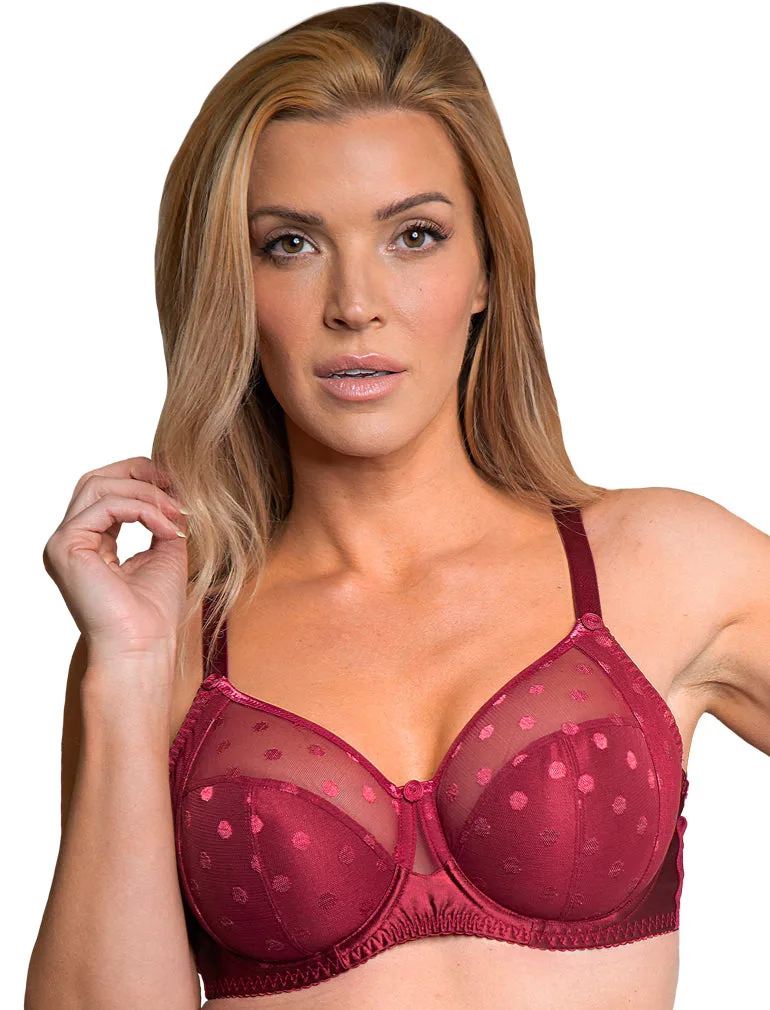
- B2498 Carmen: DEEP RED: The Carmen Collection uses polka dots knit into mesh fabric and comes fully equipped with an inside sling in all sizes for maximum support. It is available in cup sizes. A style with an inside sling in all sizes gives you a consistent support structure across the size range, which makes it easier to compare a sister size against your usual size without the fit changing for unrelated reasons.
Sister sizing is a practical shortcut, not a magic fix. Use the sister size chart to swap band and cup one step at a time, solve cup volume problems with cup letters, and test the band on the loosest hook before you commit. When a style is sold by cup size, like B2645 Bridget: MAUVE PLUM or B2498 Carmen: DEEP RED, you can compare your usual size and its sister size side by side and keep the one that stays level and smooth.