Quick answer
To measure your bra size at home, wrap a soft tape measure snugly around your ribcage just under your bust for the band size, then around the fullest part of your bust for the cup size. Subtract the band measurement from the bust measurement: a 1-inch difference is an A cup, 2 inches is a B, 3 inches is a C, and so on. Always round the band measurement to the nearest even number. Use this as a starting point, then adjust with fit checks and sister sizes.
How to measure your band size accurately
Stand straight and exhale normally. Wrap a soft tape measure around your ribcage, directly under your bust, keeping it parallel to the floor. The tape should be snug but not digging in. Round the number to the nearest even whole number: if you measure 33 inches, your band size is 34; if you measure 34 inches, it stays 34. This is your bra band size measurement.
If you are between sizes, try both the smaller and larger band. A band that rides up in the back is too big; one that leaves red marks or feels tight on the loosest hook is too small. Remember that band size provides most of the support, so getting it right matters more than the cup letter.
How to measure your bust and find your cup size
Wrap the tape around the fullest part of your bust, usually across the nipple line. Keep the tape level and not too tight. Round to the nearest whole inch. Subtract your band measurement from this bust measurement. The difference determines your cup size: 1 inch = A, 2 inches = B, 3 inches = C, 4 inches = D, 5 inches = DD/E, and so on. This is the core of any cup size guide.
Cup size is not static; it changes with band size. A 34B and a 36A can hold a similar bust volume, which is why sister sizes are useful when a specific size is unavailable or fits slightly off.
Fit checks to confirm your size
Once you have your measurements, try on a bra and check these points: the band should sit level all around and stay put when you lift your arms; the center gore should lie flat against your sternum; the cups should contain your breast tissue without gaps or spillage; and the straps should stay in place without digging in. If the band rides up, go down a band size and up a cup size. If the cups gape, go down a cup size. If the cups cut in, go up a cup size.
An accurate bra fit is not just about numbers; it is about how the bra feels and moves with you. Always test a new size by wearing it for a few minutes and moving around.
Using sister sizes when your exact size is unavailable
Sister sizes let you find a similar fit when your usual size is out of stock or when a brand runs differently. To find a sister size, go up one band size and down one cup size, or down one band size and up one cup size. For example, if you normally wear 34B, try 32C or 36A. Keep in mind that the band will feel tighter or looser, so adjust the hooks accordingly.
This is especially helpful when shopping final sale or discontinued styles, where only select sizes remain. Always check the return policy before buying, as final sale items often cannot be returned or exchanged.
When to remeasure and what changes your size
Remeasure every 6 to 12 months, or after any significant weight change, pregnancy, or hormonal shifts. Bra sizing is not permanent. Also note that different brands and styles can fit differently even if the size on the label is the same. If you are between cup sizes, choose the larger cup if you are fuller on top, and the smaller cup if you are fuller on the bottom.
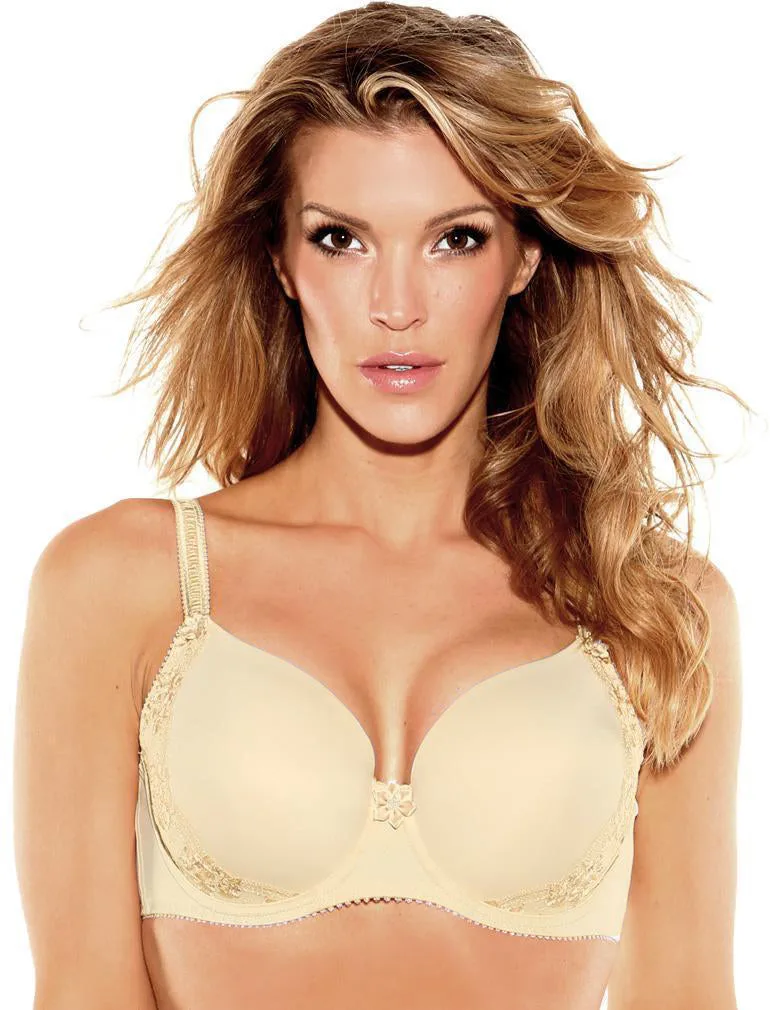
Finally, consider the bra's construction. An underwire bra with light padding, like the B1042 Gloria Smooth Lace, may fit differently from an unlined style. If you are unsure, start with your measured size and adjust based on the specific bra's fit.
Decision rules for bra sizing
- If your band rides up in the back: Your band is too large. Go down one band size and up one cup size (e.g., 36B to 34C). This keeps the cup volume similar while tightening the band. Band support comes from a snug fit.
- If the cups gap or wrinkle: Your cup is too large. Go down one cup size. If the band also feels loose, go down a band size and keep the cup the same. Gaps often mean the cup is too big, not the band.
- If the cups cut into your breast tissue: Your cup is too small. Go up one cup size. If the band feels tight, also go up a band size and down a cup size (sister size). Spillage means you need more cup volume.
- If the center gore does not lie flat: The cups may be too small or the band too large. Try going up a cup size first; if that does not help, go down a band size. A flat gore is a sign of good fit.
- If you are between band sizes: Choose the larger band if you prefer a looser feel, or the smaller band if you want more support. Use an extender if needed. Band size is about comfort and support.
Product facts
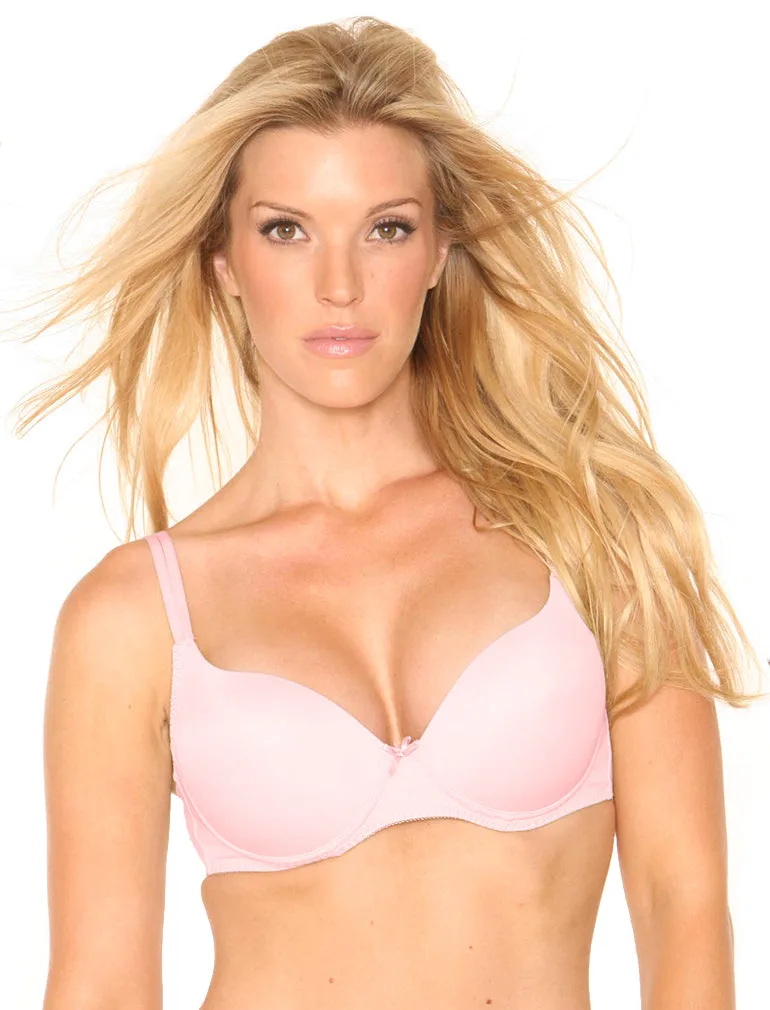
- B1008 Aisha Push-Up: FAWN: B1008 Aisha Push-Up in FAWN is available in cup sizes 34A and 36A. It is discontinued and final sale, with no returns or exchanges. If you measure into one of these sizes and want a push-up style, this is a limited opportunity. But because it is final sale, be certain of your size before buying.
- B1008 Aisha Push-Up: BLUSH: B1008 Aisha Push-Up in BLUSH is available in cup sizes 32B, 32D, 34A, 34B, 34C, 36A, and 36B. It is discontinued and final sale. This style offers more size options than the FAWN version, but still limited. Use sister sizing if your exact size is not listed, and remember final sale means no returns.
- B1042 Gloria Smooth Lace: PEARL: B1042 Gloria Smooth Lace is an underwire bra with floral lace overlay on the sides of the cups, textured straps with accent bows, and light padding for shape and support. This bra provides a different fit and aesthetic than the Aisha Push-Up. The light padding and underwire offer support, while the lace adds detail. It is not final sale, so you can return if the fit is not right.
Who this sizing method is for
Best for
- Anyone who wants to measure their bra size at home without a professional fitting
- Shoppers who need to confirm their size before buying final sale or discontinued bras
- People who have experienced weight changes and need to remeasure
Not for
- Those who prefer a professional fitting for complex fit issues like asymmetry or post-surgery needs
- Shoppers looking for a specific brand's sizing without trying on; always check brand-specific fit notes