Quick answer
Start with one anchor bracelet that fits snugly, then add two to four lighter pieces in alternating weights and finishes. Keep all bracelets on one wrist within a single warm or cool metal family, and let texture, not color, create the contrast. Check the stack by lowering your arm before you leave the house.
A good bracelet stack looks effortless, but it rarely happens by accident. The difference between a layered wrist that survives a workday and one that turns into a knotted mess comes down to three things: fit, weight order, and how deliberately you mix metals.
This guide walks you through the process in order, from choosing your anchor piece to the final fit check. Along the way you will see how specific pieces, like a slim paper clip chain or a beaded onyx bracelet, behave differently in a stack, so you can plan around real materials instead of guessing.
Why stacking works better with a plan
Stacking is really a balancing act. Every bracelet you add brings weight, width, and a finish that either echoes or competes with what is already on your wrist. When all three pieces are the same weight and shine, the stack reads as one thick band and loses the layered effect you wanted.
The fix is to assign each bracelet a job. One piece anchors the wrist, one adds texture, and one adds a small accent of color or stone. Once you think in roles rather than in individual bracelets, mixing chains, beads, and metals becomes a repeatable process instead of a daily experiment.
- Aim for odd numbers: three or five pieces usually look more intentional than two or four.
- Keep the total width of the stack under about two fingers wide so your wrist can still move freely.
Match the metal family before you mix
Mixing metal bracelets works best when you commit to either a warm family (gold tones) or a cool family (silver and steel tones), then allow one piece from the opposite family as an accent. Two gold pieces and one silver piece read as deliberate; two gold and two silver in equal measure often read as unfinished.
Finish matters as much as color. A high-polish cuff next to a matte or oxidized chain creates depth, while two high-polish pieces next to each other can blur together in photos and in person. If you are unsure, hold the bracelets side by side in daylight before fastening anything.
- Warm family: yellow gold, rose gold, bronze, brown leather.
- Cool family: sterling silver, white gold, stainless steel, grey or black beads.
Order matters: anchor, texture, accent
Fasten the heaviest or widest bracelet closest to your wrist bone, where it has the least room to slide. Lighter chains and beaded pieces go further down the forearm, where they can move without dragging the anchor out of place. This single habit prevents most tangling.
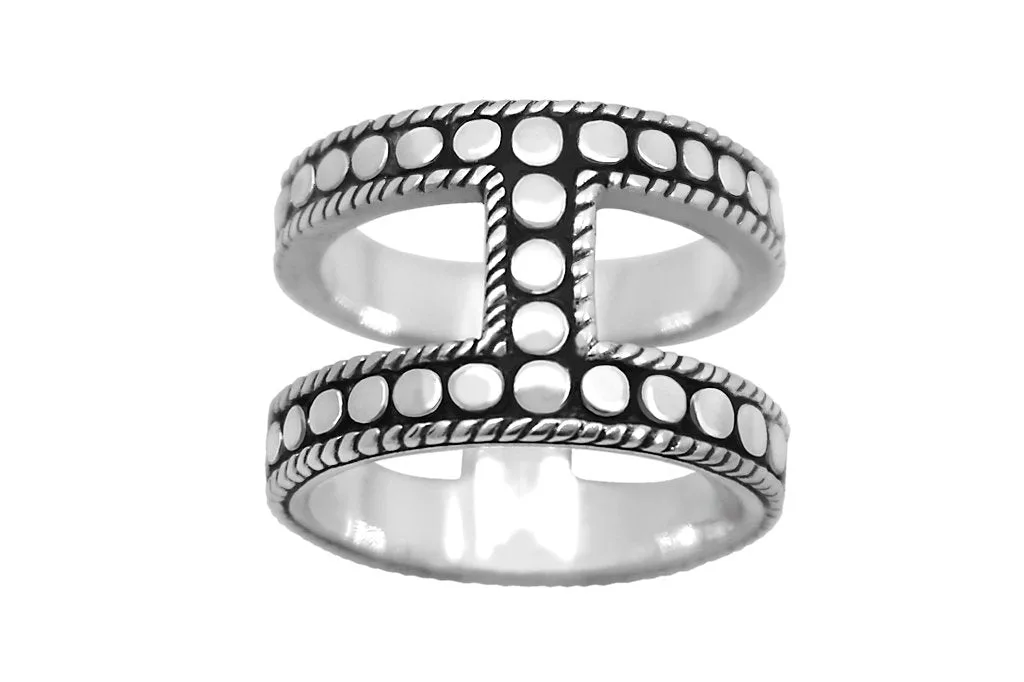
If your anchor is a cuff, wear it alone on that wrist or pair it only with very thin chains, since an open cuff can catch finer links. If your anchor is a chain, you have more freedom to add beads and a second chain without the stack collapsing into itself.
- Heaviest piece nearest the hand, lightest piece nearest the elbow.
- Never put two open cuffs on the same wrist; they will overlap and pinch.
Choose clasp types that play well together
Lobster clasps and spring rings are the easiest to fasten one-handed and the least likely to catch on neighboring links. Hook closures and open cuffs are quick to put on but can snag a fine chain, so keep them separated by at least one bracelet in the stack.
If you regularly stack four or more pieces, consider keeping one or two of them permanently clasped together as a mini-stack. Fastening a pre-built pair takes seconds and removes the most common reason people abandon a layered look on busy mornings.
- Test each clasp by tugging gently before adding the next bracelet.
- Store stacked pairs clasped on a single hook so they stay untangled between wears.
Six steps to build your stack
- 1. Measure your wrist and pick the anchor: Wrap a strip of paper or a soft tape around your wrist just below the bone. Add about 1.5 cm for a comfortable chain fit. Choose the heaviest or widest bracelet you own as the anchor and fasten it first, closest to your hand. Checkpoint: the anchor should stay put when you shake your arm gently. If it slides past your wrist bone, it is too loose.
- 2. Decide your metal family: Lay every candidate bracelet on a flat surface in daylight. Sort them into warm tones and cool tones, then remove any piece that does not belong to your chosen family unless you are keeping it as the single accent. Common mistake: treating brown leather or black onyx as neutral when they actually pull the stack warm or cool. Place them with the family they visually match.
- 3. Add one texture piece: Choose a bracelet with a different surface from the anchor: beads next to flat links, matte leather next to polish, or a twisted chain next to a smooth cuff. Fasten it second, directly beside the anchor. Checkpoint: if the two pieces look like the same bracelet doubled, swap one out. Contrast is the point.
- 4. Add a fine accent chain: Slide a thin chain on last, nearest the elbow, where it has room to move. Keep it at least one size looser than the anchor so it drapes instead of pulling tight. Common mistake: putting the finest chain closest to your hand, where it catches on the anchor clasp all day.
- 5. Test the clasp lineup: Fasten everything, then rotate your wrist slowly and watch where the clasps land. If two clasps sit on top of each other, rotate one bracelet a quarter turn so the closures are spaced apart. Checkpoint: no clasp should rest directly against another clasp or against an open cuff edge.
- 6. Do the arm-down test: Lower your arm to your side and walk a few steps. The stack should settle into place within a second and stay there. If pieces slide over your hand or bunch together, remove the loosest bracelet and re-check. Next step: photograph the stack you like so you can rebuild it in under a minute on busy mornings.
Pieces that work well in a stack
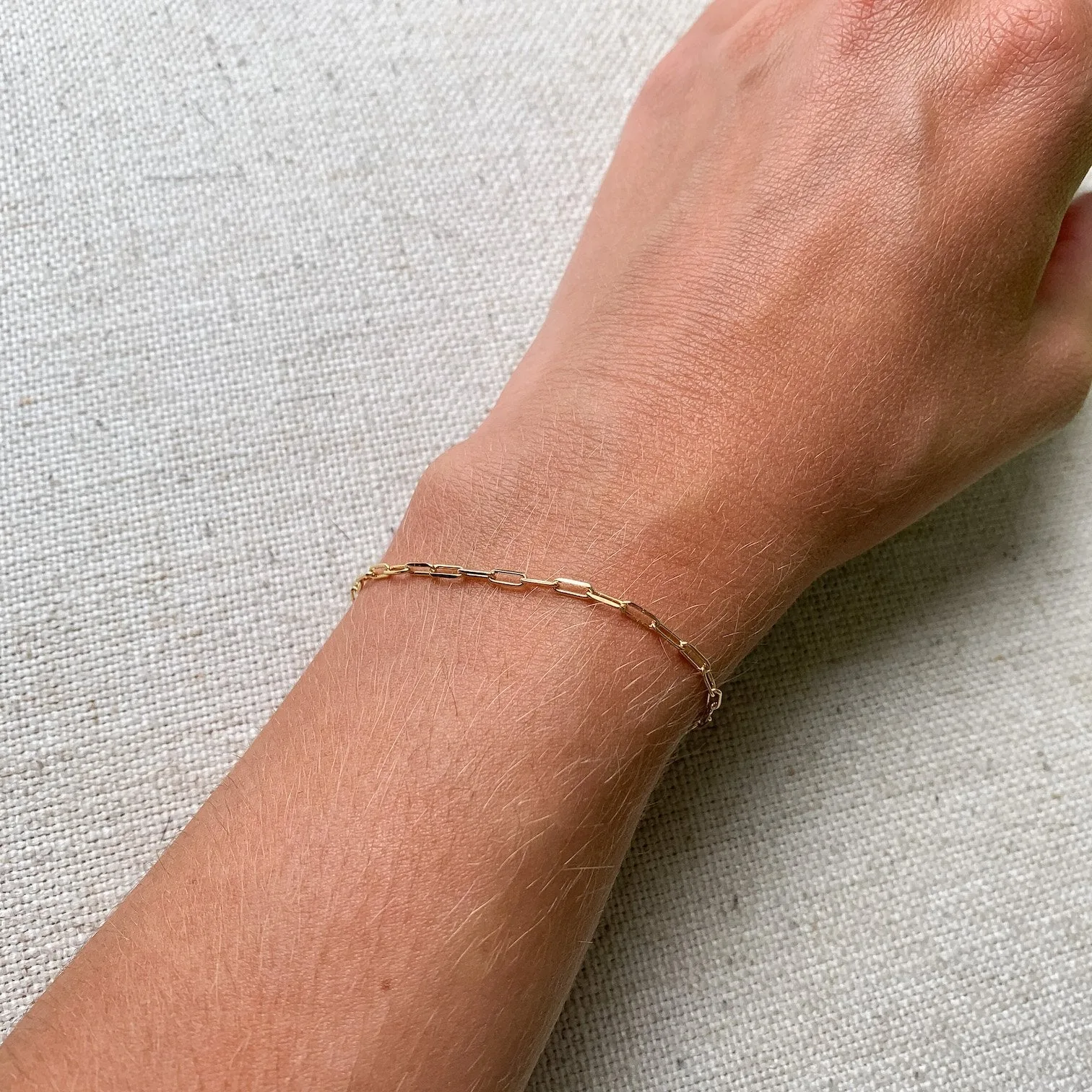
- Paper Clip Bracelet: Available in Gold and sterling silver, with a flat link shape and a polished shine. The flat links sit close to the wrist, so this piece layers neatly under a cuff or beside beads without adding bulk.
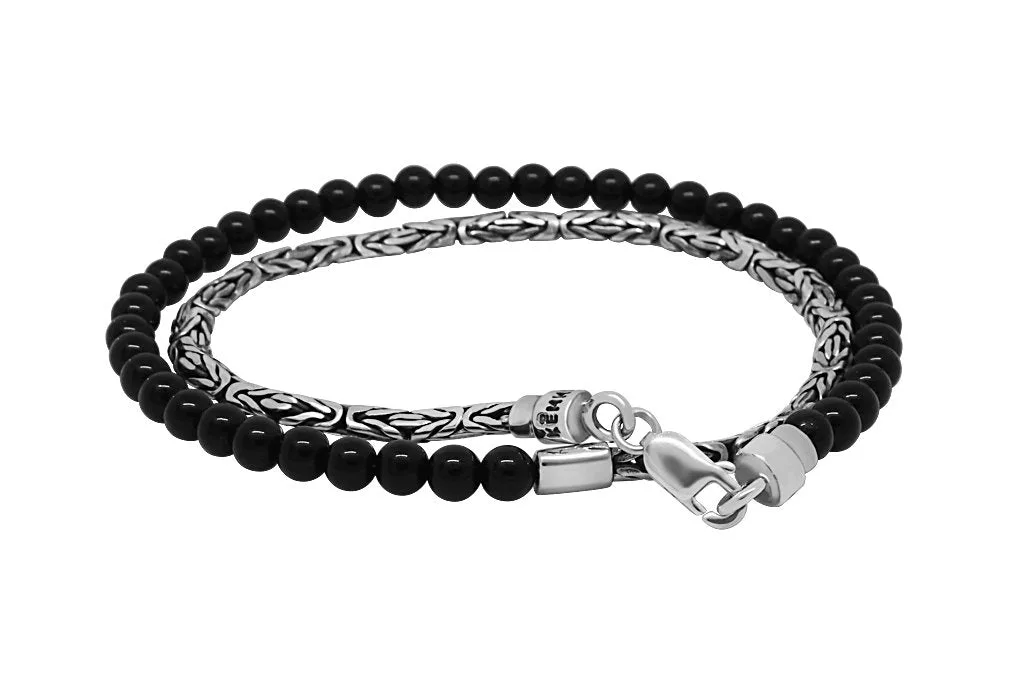
- Silver Mini Chain Bead Onyx: Handmade silver snake mini chain with onyx beads, offered in multiple sizes. The dark beads give a stack a visual anchor point, and the size options let you dial in the fit that keeps the chain from sliding over your hand.
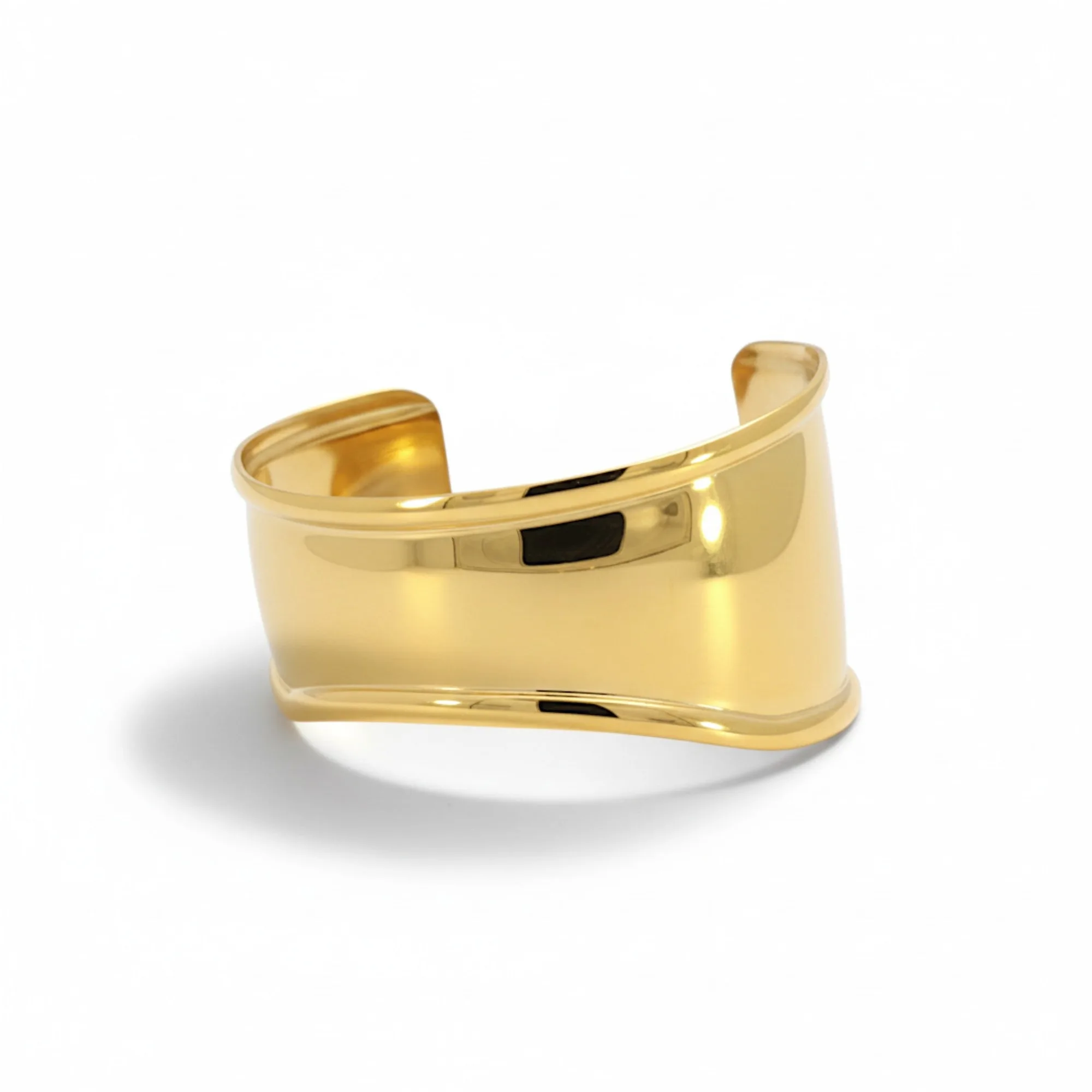
- Sculpt Gold Cuff: Made from stainless steel with a water-resistant, hypoallergenic, tarnish-free finish and an open, adjustable design. Because it is adjustable and low-maintenance, it works as the anchor piece in a stack you wear daily, including around water.
- Men's Chase Flat Brown Leather Bracelet: Handmade flat brown leather design with a modern, casual look, offered in multiple sizes. Leather adds a matte texture that breaks up a run of shiny metal, which is exactly the contrast a mixed-material stack needs.
A stack that works is one you can put on without thinking and wear without adjusting. Anchor with weight, contrast with texture, and keep one metal family in charge. Once you find the combination that passes the arm-down test, repeat it.