Quick answer
Choose a Brazilian cut when you want a rounded, lifted shape and don't mind a little less coverage at the back. Choose microfibre when comfort and invisible edges matter more, especially under fitted clothes. If you want both, look for a high-waisted Brazilian in a smooth fabric, or keep one of each and match them to the outfit.
What actually separates the two cuts
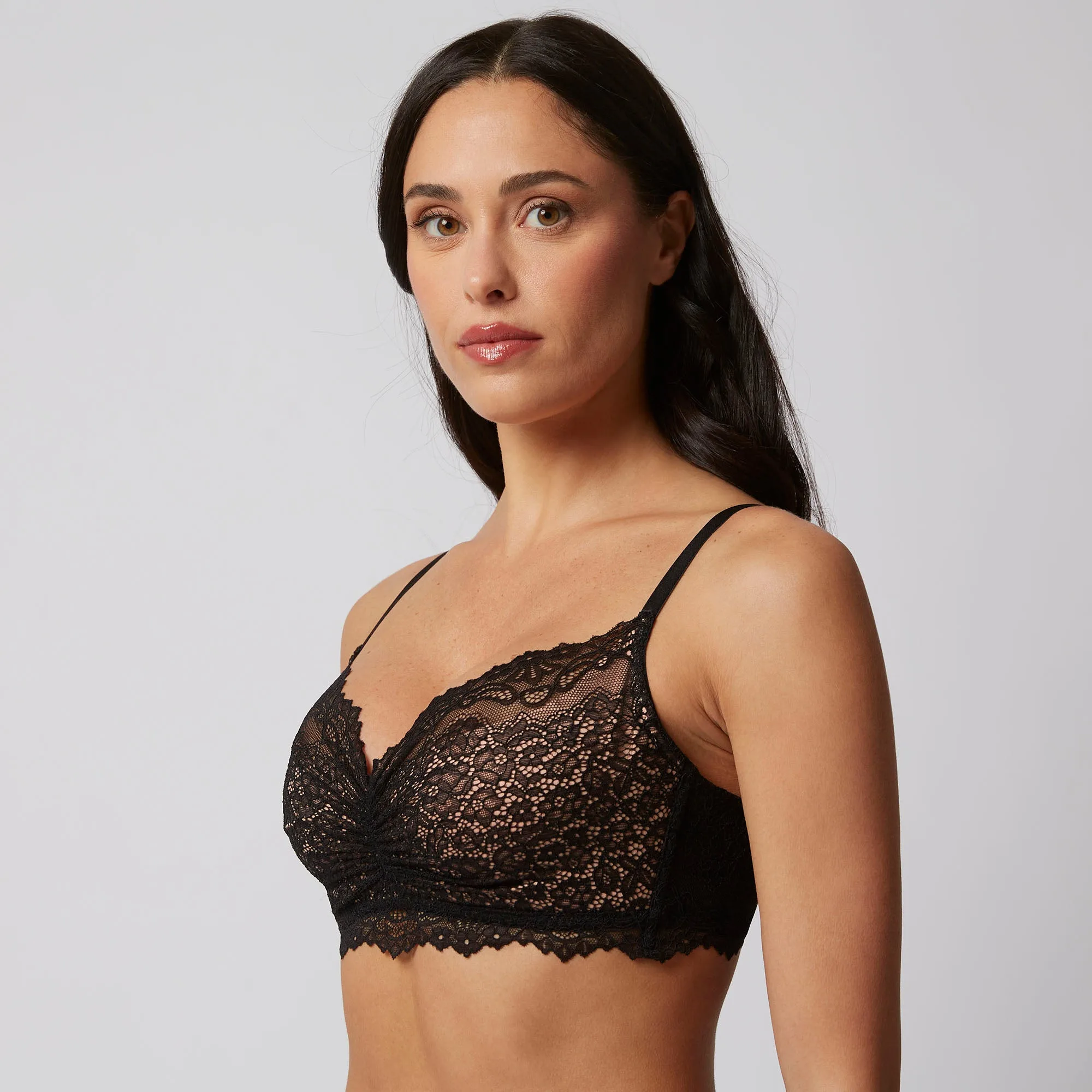
The difference is not the fabric but how much fabric sits at the back. A Brazilian cut keeps the front covered and narrows sharply toward the back, leaving part of the seat exposed. A microfibre brief usually covers more, and its smooth, flexible surface is what makes it feel barely there. In practice, that means Brazilian styles are about shape and a hint of sensuality, while microfibre styles are about a clean line under clothing.
Fabric and cut are independent choices, so you can find Brazilian shapes in tulle, lace or microfibre, and full-coverage shapes in the same materials. Decide the cut first, then the fabric. If you start with the fabric, you may end up with the right feel but the wrong coverage for the outfit you had in mind.
Coverage types, from least to most
Think of coverage as a scale rather than a category. A perizoma or thong is the most minimal, a Brazilian sits just above it with a slightly wider back, and a culotte or full brief covers the most. High-waisted versions add coverage over the stomach as well as the back, which changes how the waistband sits under jeans and skirts.
The scale matters most when you are dressing for a specific garment. Low-rise trousers and slip dresses usually suit a lower, narrower cut, while high-waisted jeans and pencil skirts tend to sit better over a culotte or high-waisted shape. If you are unsure, buy one step more coverage than you think you need; it is easier to wear a brief that covers slightly more than to adjust a cut that keeps shifting.
Laser cut and seamless edges: what they do and don't do
Laser cut edges are heat-sealed rather than stitched, so they lie flat against the skin and reduce the ridge that shows through thin fabrics. Seamless construction does something similar by removing side seams entirely. Both help with visible lines, but neither guarantees invisibility: a tight waistband, the wrong size, or a very clingy fabric can still create a line.
The practical rule is to match the edge to the outfit. For leggings, jersey dresses and light trousers, a laser cut or seamless microfibre brief is the safer choice. For denim, structured skirts and anything with a defined waistband, a stitched lace or tulle edge is less likely to matter and often looks better if it peeks out. Check the size first: an edge that digs in will show no matter how it is finished.
How to judge fit before you commit
A well-fitting brief stays put when you walk, bend and sit, without leaving deep marks. The waistband should sit flat, not roll, and the back should not ride up as you move. If a Brazilian cut keeps sliding, the size is usually the issue rather than the cut itself.
Check the gusset placement and the width of the back panel. A back panel that is too narrow for your shape will feel like it is moving constantly, while one that is too wide loses the Brazilian effect. Sizes are listed per style, so use the size range on the product page rather than assuming your usual number carries over between lines.
Decision rules for buying
- If the outfit is tight and light-coloured: Start with a seamless or laser cut microfibre brief in a shade close to your skin tone, and size up if the waistband leaves a mark. Invisible lines come from the edge and the fit together, not the fabric alone.
- If you want a rounded shape at the back: Choose a Brazilian cut, and check that the back panel is wide enough to stay in place when you move. If it keeps riding up, change the size before changing the cut.
- If you want coverage over the stomach: Look for a high-waisted Brazilian or culotte rather than a low-rise perizoma, even if the fabric is the same. Waist height changes the fit more than the back cut does.
- If you are buying for a special occasion: A lace or tulle Brazilian in a classic colour works under a dress and looks intentional if it is seen; keep a plain microfibre pair for everyday wear. One occasion pair and one everyday pair covers most weeks.
Styles that show the difference
- Brasiliana in tulle ricamato - Privè Beloved: Privè Beloved Brazilian brief in transparent embroidered tulle with a heart motif. A clear example of the Brazilian cut in a delicate fabric: romantic and light, best when you want shape and a bit of detail rather than full coverage.
- Culotte brasiliana - New Primula: New Primula Brazilian culotte with a high-waisted design, available in Seta and Nero and sizes 1 to 5. Shows how a Brazilian back can be combined with high-waisted coverage, which suits bridal wear, smoothing under high-rise trousers and anyone who wants more coverage at the front.
- Perizoma microfibra - Taglio Vivo: Taglio Vivo microfibre perizoma with a V-cut, low-rise silhouette, available in Bronze, Nero and Bianco. The microfibre option for minimal coverage: smooth and flexible, useful under fitted clothes when you want the least visible line.
- Culotte a perizoma in vinile e tulle Privè - Mystique: Privè Mystique perizoma culotte in vinyl and tulle with purple vinyl inserts and sheer, see-through panels. A reminder that coverage and fabric are separate decisions: this is a minimal cut with a bold material, so choose it for the look rather than for smoothing.
Who each cut suits
Best for
- Anyone who wants a lifted, rounded shape and is comfortable with less coverage at the back
- Wearing under structured skirts, denim and high-waisted trousers where a stitched edge is not a problem
- Occasion and bridal looks where a lace or tulle Brazilian adds detail
Not for
- Very light, clingy fabrics where any edge can show; a seamless microfibre brief is the safer choice
- Anyone who prefers full coverage and no exposed seat, who should look at a culotte or full brief instead
- Days when you want the least possible fabric; a perizoma or thong is the more minimal option