Quick answer
Freeze expressed milk as soon as it has cooled, leave headspace in the bag, and thaw it in the fridge or under lukewarm running water, never on the counter or in boiling water. Use thawed milk within 24 hours if it was thawed in the fridge, and never refreeze it. Always check your local health authority's guidance for exact time limits, because recommendations vary by country.
Set up your bags and labels before you pump
Sort your storage bags and a permanent marker before you start pumping, so milk never sits at room temperature while you hunt for supplies. Write the date and volume on the bag's write-on area first; adding a label after filling is fiddly and can puncture the bag. Pre-sterilised bags are ready to use straight from the box, so you only need clean hands and a clean pump setup.
Fill to a sensible capacity, not to the top
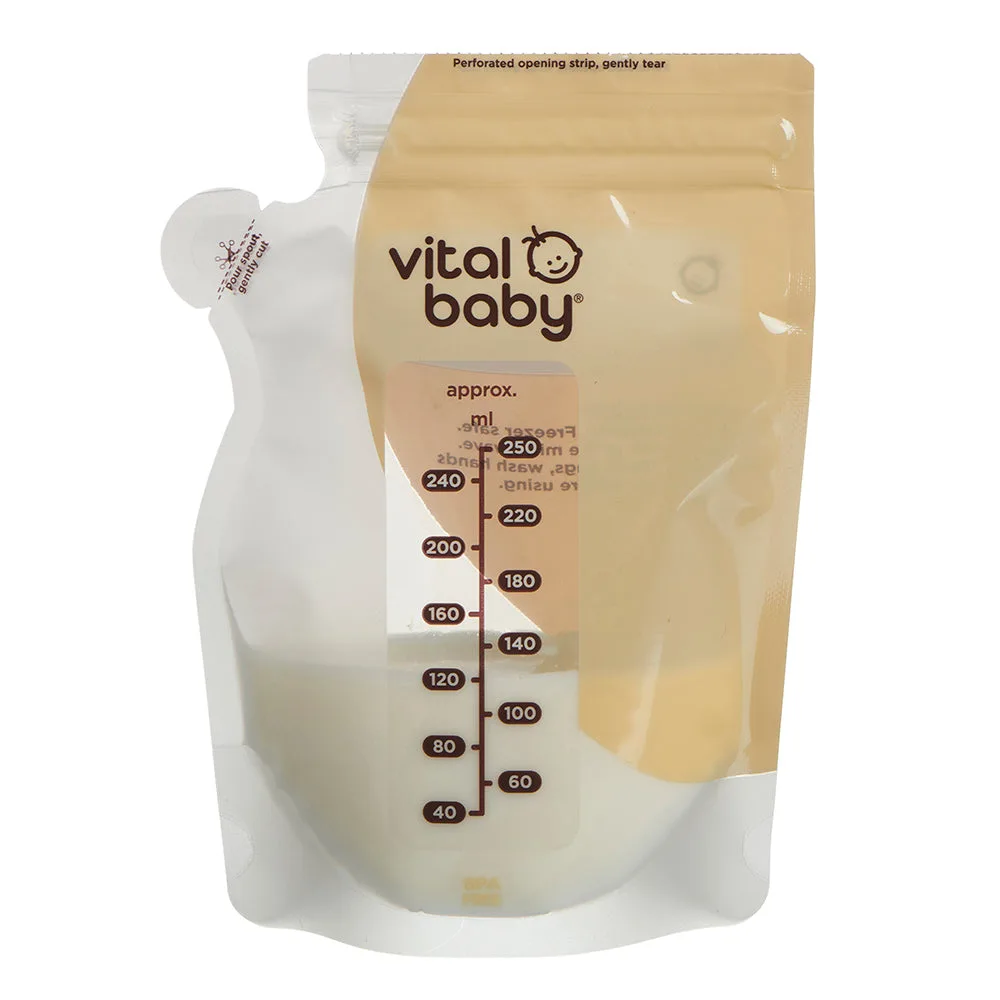
Milk expands as it freezes, so a bag filled to the brim can split or pop open. As a working rule, leave about 2.5 cm (1 inch) of headspace, or follow the bag's printed fill line. Smaller portions, around 60-120 ml (2-4 oz), thaw faster and reduce waste if your baby drinks less than expected. If you produce more than that in one session, split it across two bags rather than overfilling one.
Seal, flatten and freeze flat for faster thawing
Press out excess air, seal the bag fully, and lay it flat to freeze. Flat bags stack like files, thaw in minutes rather than hours, and take up far less freezer space than upright bags. Once frozen, stand them upright in a dated box or freezer bag so older milk gets used first. Keep bags away from the freezer door, where temperature swings are largest.
Thaw with fridge or lukewarm water, never room temperature
Move the bag to the fridge the night before you need it, or hold it under lukewarm running water if you are thawing on demand. Do not thaw on the counter, in hot water, or in a microwave; uneven heat can scald milk and microwaving destroys some of its protective properties. Swirl gently to mix separated fat back in. Do not shake vigorously.
Use thawed milk within the safe window and never refreeze
Milk thawed in the fridge should be used within 24 hours, and milk thawed under running water should be used within about two hours or moved straight to the fridge. Once a feed has started, finish the bottle within two hours and discard what is left, because bacteria from your baby's mouth enter the milk. Never refreeze thawed milk, and never top up a thawed bottle with fresh milk to stretch it.
Your freeze-to-feed routine
- Cool, then label: Let freshly expressed milk cool, then write the date and volume on the bag before filling. Checkpoint: never leave milk at room temperature while you search for a pen.
- Fill with headspace: Pour 60-120 ml portions, leaving about 2.5 cm of space at the top for expansion. Mistake to avoid: filling to the seal line causes splits and leaks.
- Seal and freeze flat: Press out air, seal fully, and lay the bag flat until solid, then file upright by date. Flat bags thaw faster and help you rotate older milk first.
- Thaw in the fridge or lukewarm water: Plan ahead with an overnight fridge thaw, or use lukewarm running water for same-day feeds. Never thaw on the counter or in hot water.
- Use within the window: Use fridge-thawed milk within 24 hours and never refreeze it. Discard any milk left in a bottle two hours after a feed begins.
Storage bag features that matter
- easy pour breast milk storage bags: Pre-sterilised and ready to use, with a leakproof secure seal, easy pour spout and gusseted base; BPA, Latex and Phthalate free. The gusseted base lets the bag stand while you pour, and the pre-sterilised format removes a cleaning step, which matters most during night pumps.