Quick answer
Set up a small world play scene by anchoring one story in one zone: place the Woodland Gnome Family in a leafy glade and stage the four Butterfly Life puzzles beside it as a life-cycle station. Keep props low, loose, and few. Then let your child rearrange the pieces; the setup is a starting point, not a display.
Choose a base and a single story
A small world works best when it has one clear setting. A shallow tray, a low box lid, or a patch of floor with a play mat gives the scene an edge, which helps children contain the story. Pick one theme for the first setup: a forest glade for the gnomes, or a garden bed for the butterfly. Mixing both stories on day one usually scatters attention.
Use one or two textures only. A felt square, a piece of fabric, or a shallow tray of clean play sand is enough. More than three textures starts to look like storage rather than a scene.
Place the figures first, then add the puzzle station
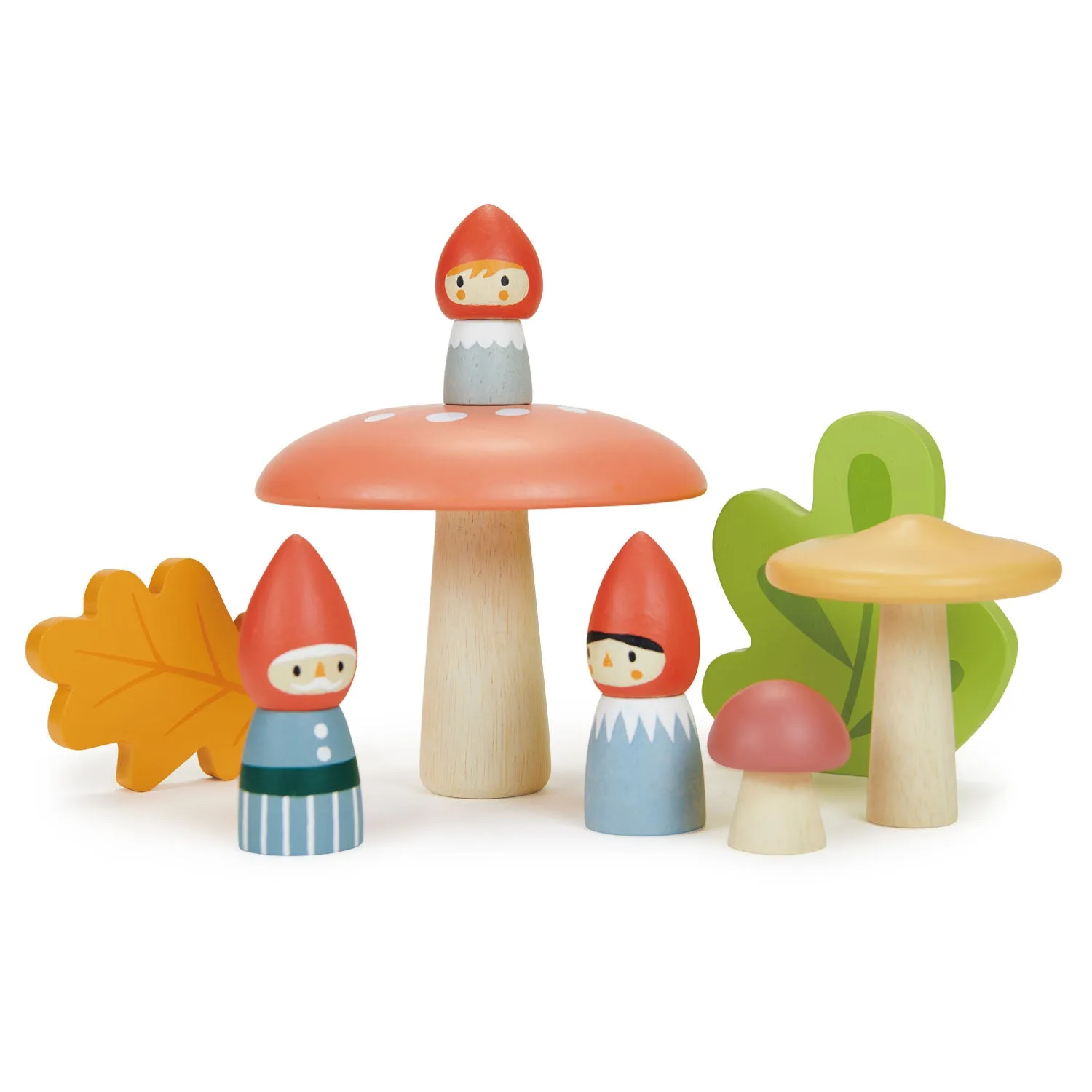
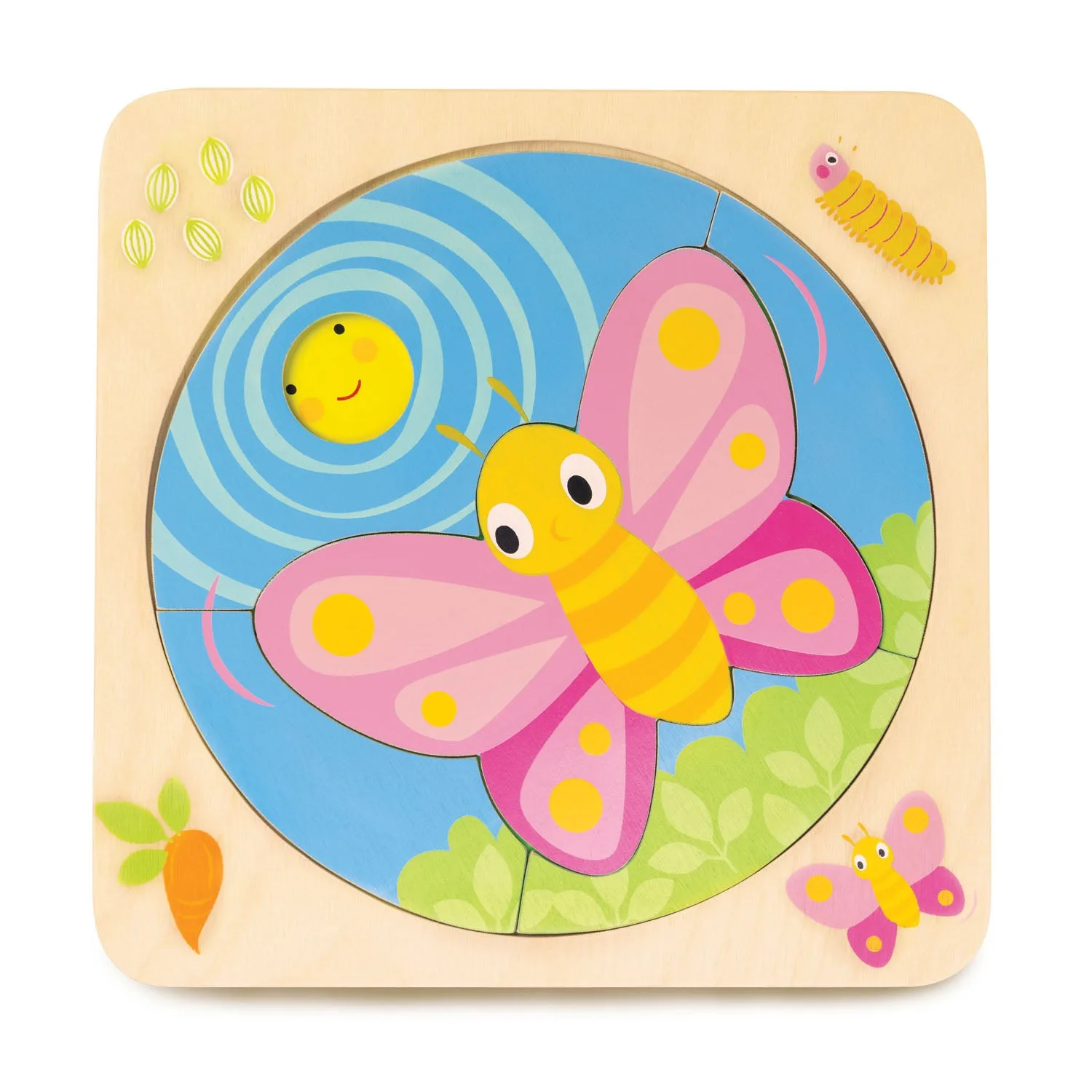
Put the Woodland Gnome Family in the center of the base and leave open space around them. Freya, Olga, and Erik are scaled to the Merrywood Tales collection, so they sit comfortably together in a small footprint. Then set the Butterfly Life puzzles just outside the glade as a separate station. Because Butterfly Life is four puzzles in one, you can lay out only the stage your child is working on and keep the rest in the box.
Resist filling every gap. Empty ground is where children add their own sticks, stones, or drawings.
Add loose parts that invite handling
Loose parts should be safe, natural, and easy to move. Good options are smooth pebbles, wooden discs, small fabric leaves, or a few real leaves from outside. Keep pieces large enough to avoid a choking risk and check them before each play session.
Avoid tiny accessories that only fit one way. If a piece cannot be picked up by a three-year-old hand, it will frustrate rather than extend play.
Set the scene, then step back
Narrate once, briefly, and then stop. Something like "The gnomes are looking after the glade while the butterfly changes" gives a starting point without taking over. After that, let your child move the figures and puzzles wherever they want.
If your child asks you to play, follow their lead rather than directing the story. Adult-led scenes tend to freeze into a diorama.
Reset and rotate, don't rebuild
At the end of a session, sort the pieces back into their boxes with your child. Then change one thing for next time: swap the base fabric, move the puzzle station, or add a new loose part. Rotating one element keeps the scene fresh without turning setup into a chore.
If a scene has not been touched for a week, pack it away rather than leaving it out. A stale setup stops inviting play.
Six steps to build the scene
- Step 1: Pick one base and one story: Choose a shallow tray, box lid, or mat, and decide whether this scene is a forest glade or a garden bed. Lay down one or two textures only. Checkpoint: if you have more than three textures on the base, remove one before you start.
- Step 2: Place the gnome family in the center: Set Freya, Olga, and Erik together in the middle of the base and leave open ground around them. Their Merrywood Tales scale means they need only a small footprint. Checkpoint: the figures should be reachable from every side of the tray.
- Step 3: Add the Butterfly Life station beside the glade: Lay out only the life-cycle stage your child is working on and keep the remaining puzzles in the box. Move to the next stage in a later session. Checkpoint: if all four puzzles are out at once, the scene has become a puzzle table rather than a small world.
- Step 4: Add two or three loose parts: Use smooth pebbles, wooden discs, fabric leaves, or a few real leaves. Keep every piece large enough for a young child to pick up safely. Checkpoint: inspect loose parts for damage before each session and remove anything small or broken.
- Step 5: Offer one sentence of story, then step back: Give a single opening idea, such as the gnomes tending the glade while the butterfly changes, then let your child move everything. Follow their lead if they ask you to join. Checkpoint: if you are still narrating after a minute, you are directing rather than playing.
- Step 6: Reset together and rotate one element: Sort pieces back into their boxes with your child, then change one thing next time: the base fabric, the puzzle stage, or a single loose part. Checkpoint: if the scene has sat untouched for a week, pack it away instead of leaving it out.
Product facts
- Woodland Gnome Family: Living deep in the forest, amongst the toadstools and leaves, are our Nordic gnome family. Freya the mother looks after Olga and Erik in their leafy glade. All scaled to our Merrywood Tales collection. Three figures with a clear family relationship give the scene a ready-made story, and the shared Merrywood Tales scale means they sit together naturally in a small glade zone.
- Butterfly Life: 4 puzzles in one! Encourages children to develop their problem solving skills and explains the life cycle of a butterfly from chrysalis to butterfly. Because it is four puzzles in one, you can stage just one life-cycle stage at a time, which keeps the small world focused and gives the scene a reason to change over several sessions.