Quick answer
Start by feeding the portion printed on the Calibra Cat Verve GF Indoor & Weight Chicken pack for your cat's current weight, then weigh your cat every two weeks and adjust by about 10% up or down. If you are switching from another food, mix the new kibble in over 7 to 10 days rather than changing overnight.
What makes this food suited to indoor and overweight cats
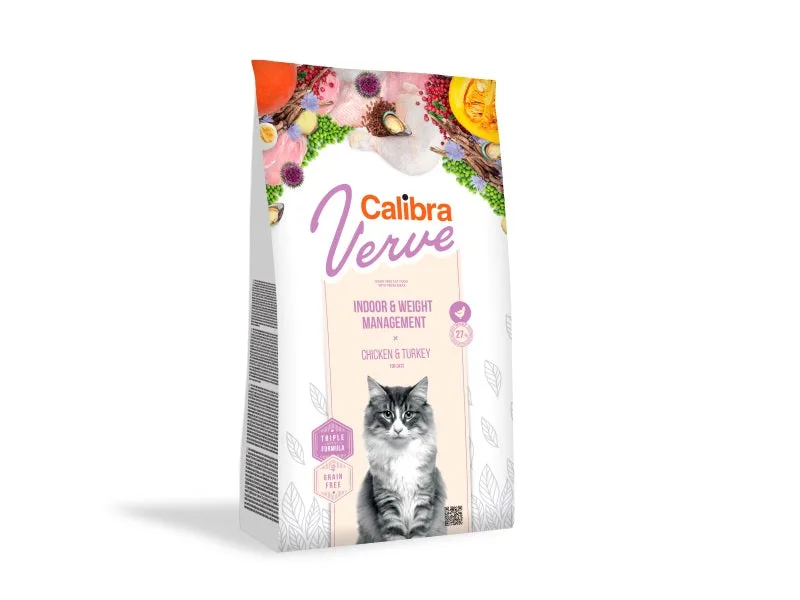
Calibra Cat Verve GF Indoor & Weight Chicken is a complete grain-free dry food for adult cats that live permanently or primarily indoors, and for cats carrying extra weight. It uses 27% fresh meat, and the recipe is built around the higher protein needs of cats as carnivores while keeping carbohydrate and fibre content balanced. That combination supports digestion in cats that move less and burn fewer calories than outdoor cats.
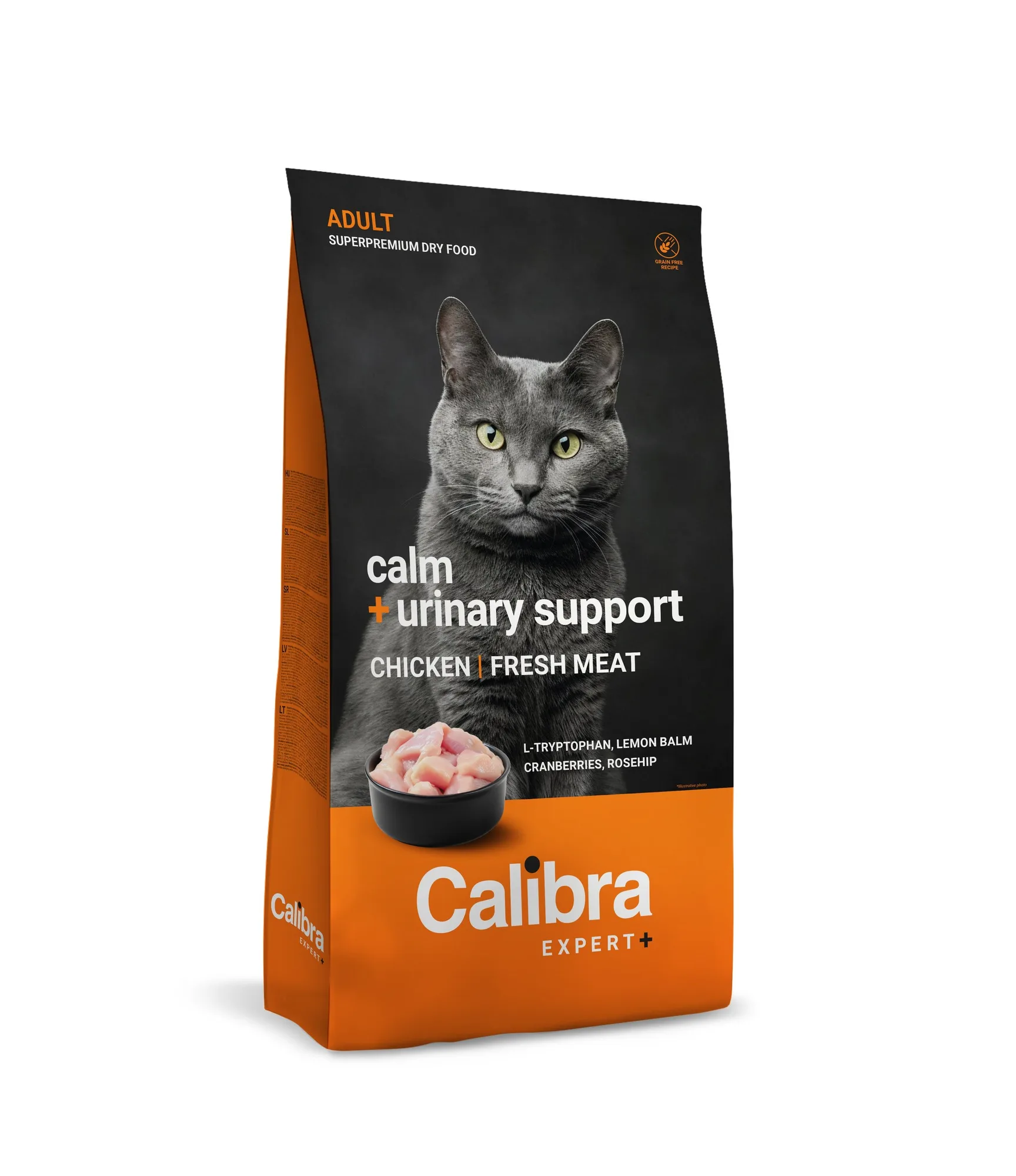
Indoor cats often gain weight slowly because their daily activity is predictable and low. A food designed for that lifestyle, rather than a general adult recipe, makes portion control easier to manage. If your cat also shows urinary or stress-related signs, a targeted formula such as Calibra Cat EXPERT+ Adult Calm & Urinary Support addresses a different need and is not a substitute for weight management.
How to read the feeding table without guessing
Use the feeding table on the pack as your starting point, based on your cat's current weight, not its ideal weight. If your cat is between two weight rows, start at the lower figure and monitor. The table is a starting point, not a fixed rule, because indoor activity, age, and neuter status all change how many calories a cat actually uses.
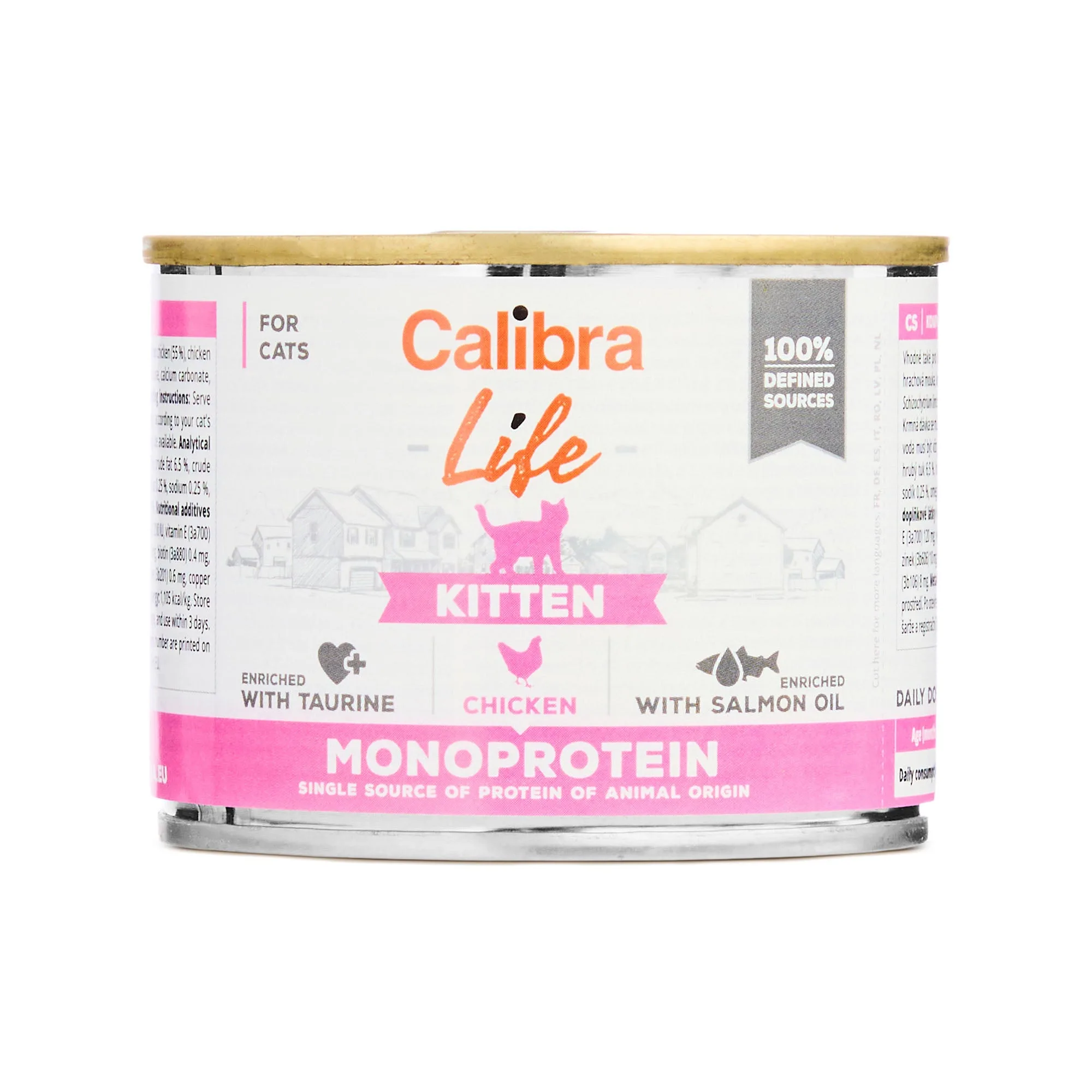
Weigh the food for at least the first two weeks. A standard kitchen scale is more accurate than a measuring cup, and it stops portions from drifting upward. If you feed wet food as well, such as Calibra Cat Life Can Kitten Chicken for a kitten or nursing mother in the same household, subtract those calories from the daily dry allowance instead of adding them on top.
Set a realistic target and track it
For an overweight cat, aim for slow loss of roughly 1% of body weight per week, which is safer than a steep cut. Weigh your cat on the same scale, at the same time of day, every two weeks. If the weight is unchanged after three weeks on the correct portion, reduce the daily amount by about 10% rather than skipping meals.
Never free-feed this food while trying to reduce weight. A measured portion twice a day gives you control and lets you see quickly whether the plan is working. If your cat loses weight faster than expected, or stops eating, return to the previous portion and speak to your vet.
Transition and daily routine
Switch foods gradually over 7 to 10 days: start with about 25% new food mixed into the old, increase every two to three days, and finish on 100% new food. Grain-free recipes can cause loose stools if the change is too fast, even in cats that tolerate grain. Keep fresh water available at all times, especially on a dry-only diet.
Feed at consistent times and pick up uneaten food after about 20 minutes if your cat grazes. If you use puzzle feeders or split meals into three or four smaller servings, count the total daily amount, not the amount per bowl. Treats should come out of the daily allowance, not be added to it.
Step-by-step feeding routine
- Weigh your cat and note the number: Use the same scale at the same time of day. This is your baseline for every portion decision that follows. Checkpoint: record the weight and the date before you open the bag.
- Start at the pack portion for current weight: Find your cat's current weight on the Calibra Cat Verve GF Indoor & Weight Chicken feeding table. If it sits between two rows, start at the lower figure. Mistake to avoid: feeding for the ideal weight from day one, which can underfeed a cat that is still overweight.
- Measure by weight, not by eye: Weigh the daily ration on a kitchen scale and split it into two or more meals. Cups and scoops vary too much to track change reliably. Checkpoint: the daily total should match the table, including anything used in puzzle feeders.
- Transition over 7 to 10 days: Mix 25% new food with 75% old, then shift the ratio every two to three days until the bowl is fully the new recipe. Mistake to avoid: a sudden switch, which often causes loose stools even in cats that handle grain-free food well.
- Re-weigh every two weeks and adjust by 10%: If weight is stable after three weeks and loss is the goal, cut the daily portion by about 10%. If your cat is losing faster than 1% of body weight per week, increase slightly. Next step: keep the same food and adjust the amount before considering a change of recipe.
- Count every extra calorie: Treats, wet food toppers, and food stolen from other pets all count. Subtract them from the daily dry allowance rather than adding them. Mistake to avoid: topping up the bowl because it looks empty, which quietly cancels the deficit.
Product facts
- Calibra Cat Verve GF Indoor & Weight Chicken: Complete grain-free dry food for adult cats living permanently or primarily indoors, and for overweight cats, with 27% fresh meat. Matches the two most common reasons indoor cats need portion control: low activity and existing excess weight.
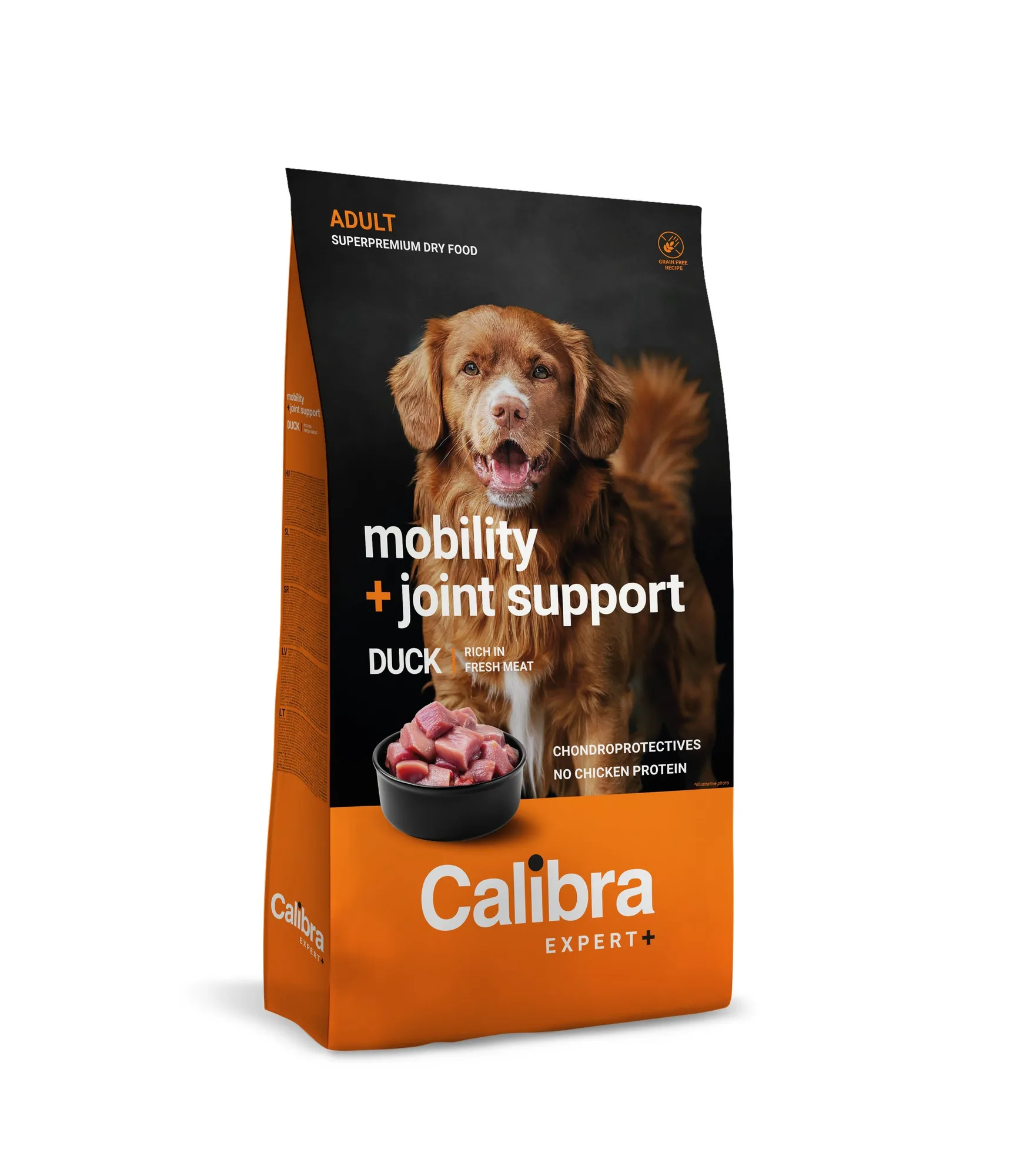
- Calibra Cat EXPERT+ Adult Calm & Urinary Support: Complete superpremium dry food for adult cats needing urinary tract, calm behaviour, digestion, immune and vitality support, with chicken and salmon oil. A targeted option when urinary or stress signs are the priority, so it should not replace a weight-management plan.
- Calibra Cat Life Can Kitten Chicken 6x200g: Balanced complete wet food for kittens and pregnant or nursing females, grain- and gluten-free, with chicken, chicken hearts and taurine. Useful if a kitten or nursing mother shares the household, so their calories are counted separately from the adult cat's dry portion.