Quick answer
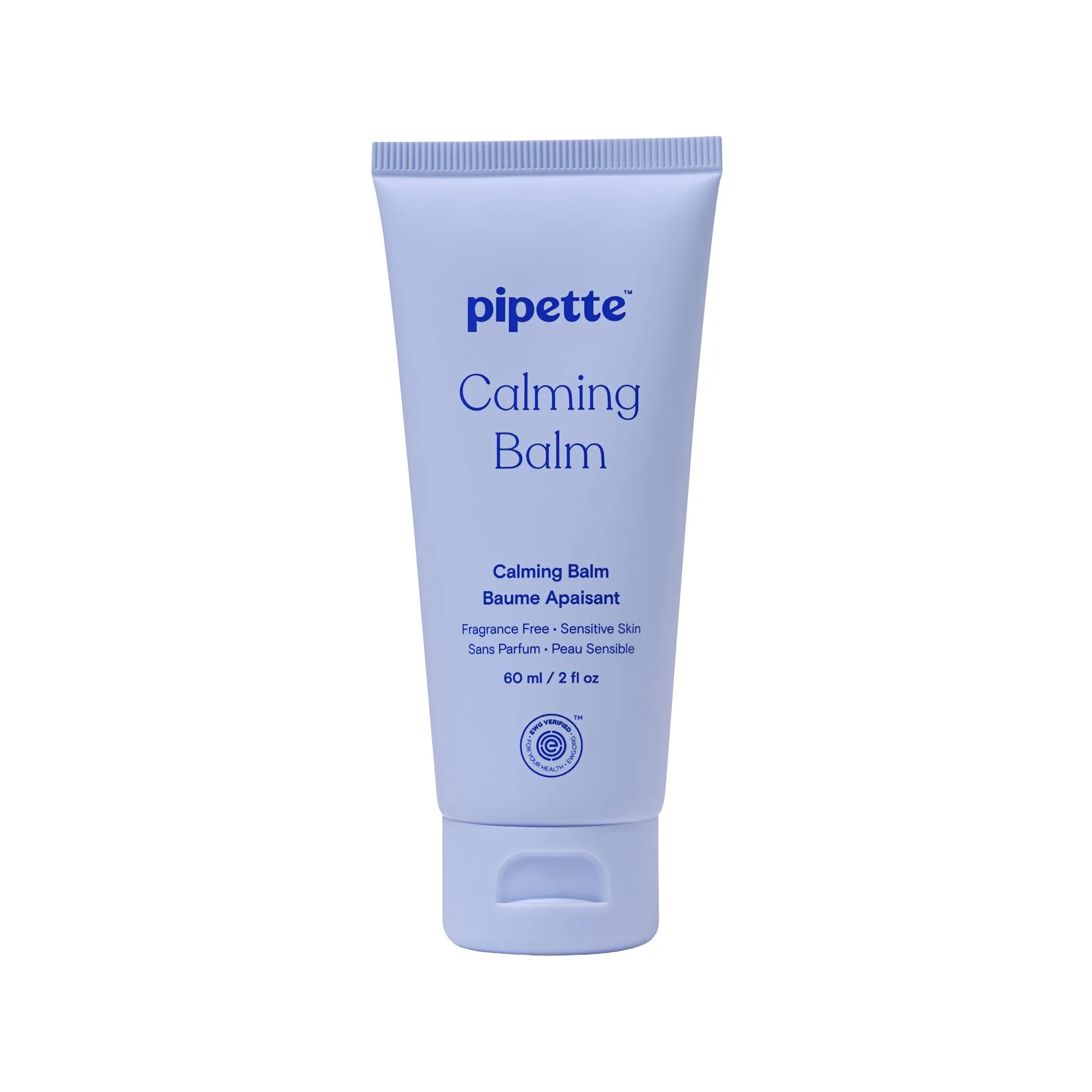
Reach for a balm when skin is cracked, raw, or constantly wet — chapped cheeks, drool rash, diaper rash — because a petrolatum-free balm like Pipette Calming Balm locks in hydration and creates a protective barrier. Reach for a lotion when skin is dry but intact and you need spreadable, all-over hydration, such as Pipette Baby Lotion with sugarcane-derived squalane. You can layer them: lotion first, balm on top for stubborn patches.
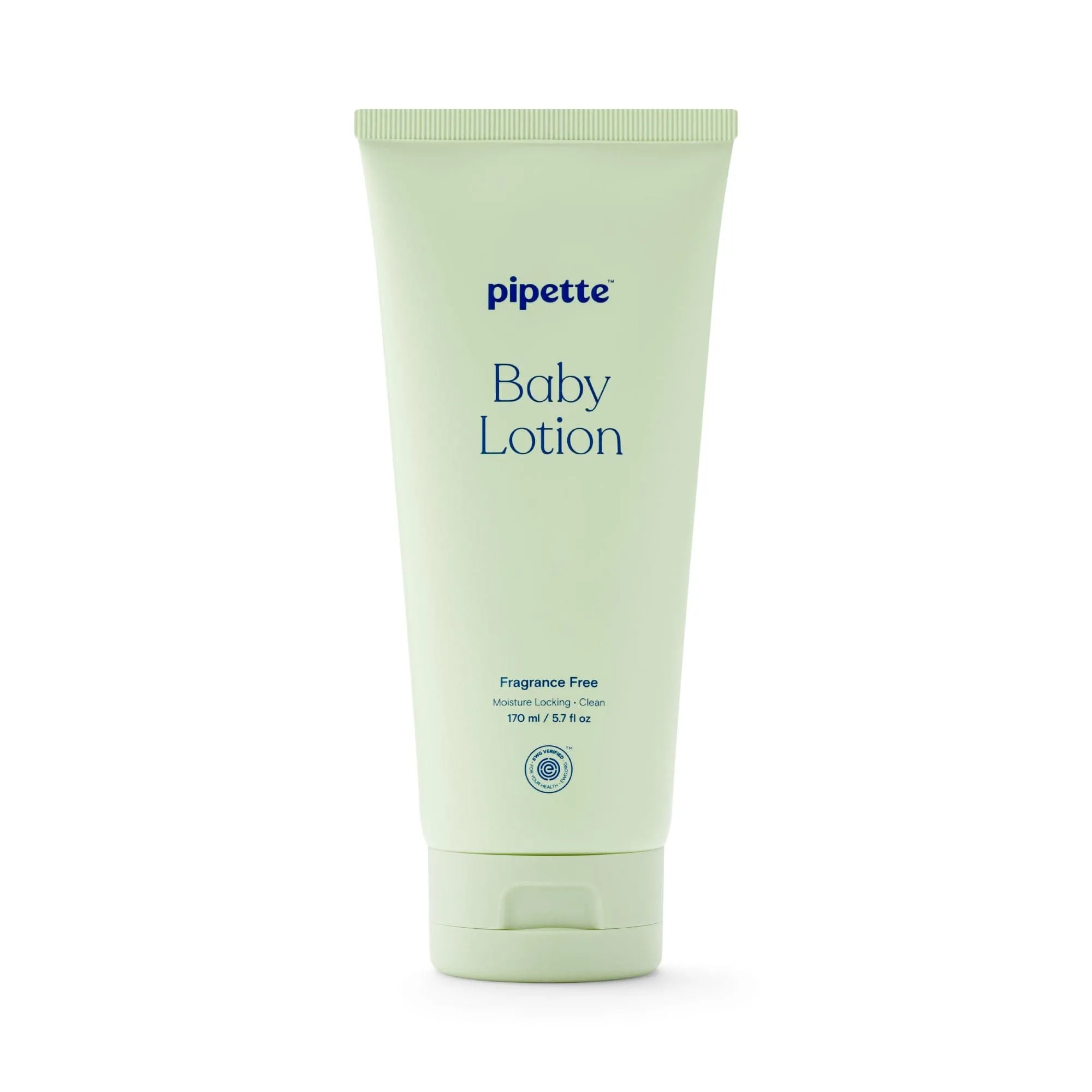
Baby Lotion
The real difference: barrier vs. hydration
A balm is a seal. Pipette Calming Balm is petrolatum-free and designed as a head-to-toe ointment that locks in deep hydration and creates a protective barrier, which is why it stays put on chapped cheeks, drool rash, and diaper rash. A lotion is a drink. Pipette Baby Lotion delivers instant, long-lasting hydration from head to toe with sugarcane-derived squalane, and it spreads easily over arms, legs, and torso. The trade-off is simple: balms protect better but feel heavier and cover less area per pump; lotions hydrate and absorb faster but need more frequent reapplication on wet or broken skin.
Match the product to the moment, not the label
Use a balm when the problem is exposure, not just dryness. Drool and teething rash, diaper rash, and wind-chapped cheeks all involve moisture or friction sitting against the skin, so a barrier is the priority. Use a lotion when the problem is dehydration on intact skin — after a bath, before pajamas, or on dry arms and legs. If you are unsure, start with lotion everywhere, then add balm only where skin looks cracked, shiny, or angry. That keeps the routine light while still protecting the spots that need it.
How to layer balm and lotion without overdoing it
Apply lotion first on damp skin after a bath, let it absorb for a minute, then press a thin layer of balm over the driest or most exposed areas. On the face, a small dab of balm on cheeks and around the mouth is usually enough. For diaper changes, clean and dry the area, then use balm as the barrier layer. You do not need both products at every change — using balm alone on a rash, and lotion alone on ordinary dry legs, is often the better call.
Fragrance-free matters more than texture for sensitive skin
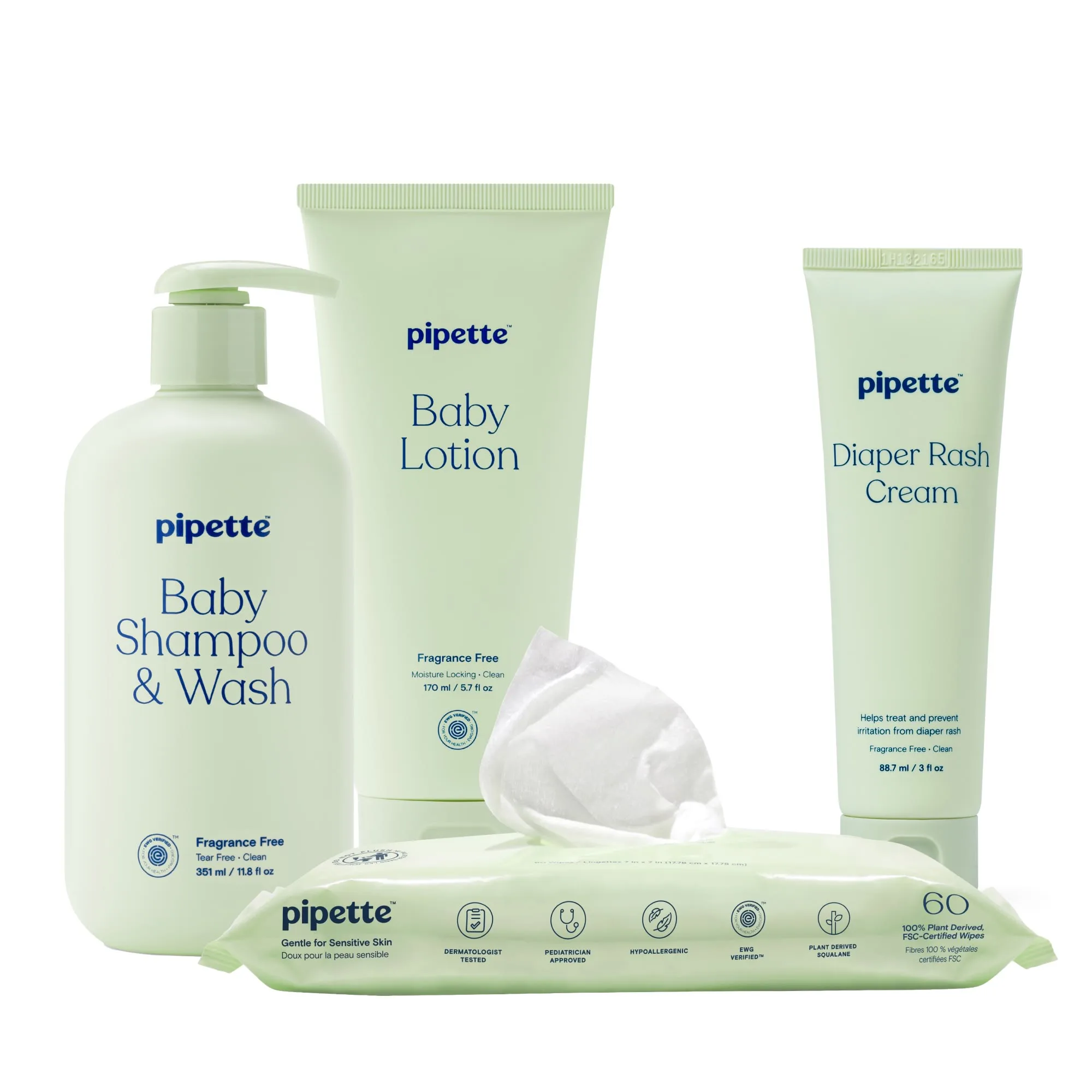
Texture decides where a product works; fragrance decides whether sensitive skin tolerates it. Pipette's Calming Balm is fragrance-free, and the Baby Shampoo + Wash line includes a Fragrance Free option for sensitive skin. If your child reacts to scented products, keep the whole routine fragrance-free rather than mixing scented lotion with unscented balm. Also check the label on any new product before using it on broken or rashy skin.
What to do when neither seems to help
If dry patches persist after consistent balm or lotion use, the issue may be frequency, not product choice. Balm needs to be reapplied after every diaper change and after wiping the face; lotion may need a second application later in the day. If skin is still cracked, bleeding, or spreading, stop experimenting and talk to your pediatrician — that is beyond what a barrier or moisturizer should be expected to fix.
Trade-offs at a glance
- Balm: protection vs. spreadability: Calming Balm creates a protective barrier and stays on chapped cheeks, drool rash, and diaper rash, but it is thicker and covers less area per application than a lotion. Best for targeted, exposed, or rashy areas — not for a quick all-over body rub.
- Lotion: hydration vs. staying power: Baby Lotion with sugarcane-derived squalane gives instant, long-lasting hydration and spreads easily head to toe, but it absorbs rather than shields, so wet or friction-heavy areas may need a balm on top. Best for everyday dryness on intact skin and for large areas like arms, legs, and back.
- Layering: more coverage vs. more steps: Using lotion first and balm on top covers both hydration and protection, but it adds a step and can feel heavy if you apply balm everywhere. Reserve layering for stubborn patches; use one product elsewhere.
Product facts
- Calming Balm: Pipette Calming Balm is a petrolatum-free, head-to-toe ointment that locks in deep hydration and creates a protective barrier on the skin, with uses including dry chapped cheeks, diaper rash, and drool rash. This is the barrier option: choose it when skin is exposed to moisture, friction, or wind, and when you need the product to stay in place rather than absorb quickly.
- Baby Shampoo + Wash: Pipette Baby Shampoo + Wash is tear-free, clinically shown to moisturize skin, made with sugarcane-derived squalane, and available in a Fragrance Free version for sensitive skin. Bath time is where dryness often starts, so a wash that does not strip skin makes the lotion-or-balm decision easier afterward — and the fragrance-free option keeps the routine consistent for reactive skin.
- Baby Lotion Discovery Bundle: The Baby Lotion Discovery Bundle includes Pipette Baby Lotion in three 100% naturally-derived aromas, with a Fragrance Free option for sensitive littles and lightweight, long-lasting hydration from sugarcane-derived squalane. If you are choosing between balm and lotion, this bundle lets you test lotion textures and scents across the family before committing to a full-size routine.
Which should you choose?
Choose a balm if
- Your baby has chapped cheeks, drool rash, or diaper rash that needs a protective barrier.
- You need a petrolatum-free ointment for cracked or raw-looking patches.
- You want a fragrance-free option that can also be used on dry adult hands.
Choose a lotion instead if
- Skin is dry but intact and you want fast, spreadable hydration over the whole body.
- You are establishing a daily after-bath routine and want something lightweight.
- You prefer a product that absorbs quickly rather than leaving a protective film.