Quick answer
Choose a neck strap if you carry a mirrorless camera for more than an hour at a time, need both hands free, or shoot events and travel where the camera stays out. Choose a wrist strap if you shoot in short bursts, prefer a compact setup, or want the camera locked to your hand for street and candid work. Many photographers end up with both and switch based on the day.
Neck straps: comfort and accessibility for longer sessions
A neck strap distributes the camera's weight across your shoulders and upper back, which matters more as mirrorless bodies and lenses get heavier. The trade-off is swing: a loose strap lets the camera bounce against your chest or hip, and a long strap can catch on door handles, chairs, and tripod legs. Look for an adjustable length so you can cinch it short for walking and let it out for shooting from the hip.
Material affects how the strap feels after two hours. Leather molds to your shoulder and looks appropriate in formal settings, but it can feel warm in humid weather. Woven or ripstop fabrics are lighter and breathe better, which suits long outdoor days. Neither is universally better; match the material to your climate and the kind of shoot you do most.
Wrist straps: security and compactness for active shooting
A wrist strap keeps the camera physically attached to your hand, which reduces the chance of a drop when you are moving through crowds, leaning over a railing, or shooting one-handed. It also packs down smaller, so it disappears into a bag instead of tangling with other gear. The limitation is endurance: holding a camera in one hand for hours is tiring, and you lose the ability to let the camera hang while you use both hands.
Wrist straps work best when the camera is light. On a small mirrorless body with a compact prime, the combination feels like an extension of your arm. On a heavier body with a zoom, the same strap can dig into your wrist and encourage you to set the camera down more often than you would like.
How to decide in under a minute
Ask three questions: How long will the camera be out of the bag? Do I need both hands free? How heavy is the body and lens combination? If the camera will be out for more than an hour or you need both hands, a neck strap is the practical choice. If you shoot in short, intense bursts and value a small footprint, a wrist strap wins. If you are between the two, an adjustable neck strap that can be shortened to sit high on your chest gives you some of the security of a wrist strap without giving up hands-free carrying.
Decision rules for your setup
- Shoot longer than one hour at a time: Use a neck strap. Your shoulders can carry weight far longer than your wrist can hold a camera steady. Adjust the length so the camera sits at hip or lower-chest level, and shorten it when you walk through tight spaces. Neck strap for endurance.
- Shoot in short bursts and value mobility: Use a wrist strap. It keeps the camera attached to your hand, packs small, and reduces the chance of a drop when you are moving. Accept that you will need to put the camera down between bursts. Wrist strap for agility.
- Shoot in hot or humid weather: Choose a ripstop or woven fabric strap over leather. Fabric breathes and dries faster, so you stay comfortable on long outdoor days. Leather is still fine for cooler climates and formal events. Match material to climate.
- Carry a heavy body and lens: Prioritize a wide, adjustable neck strap over a thin wrist strap. A wider strap spreads the load, and adjustability lets you change the carry position as the weight starts to tell. If you must use a wrist strap, keep sessions short. Weight favors a neck strap.
Product facts
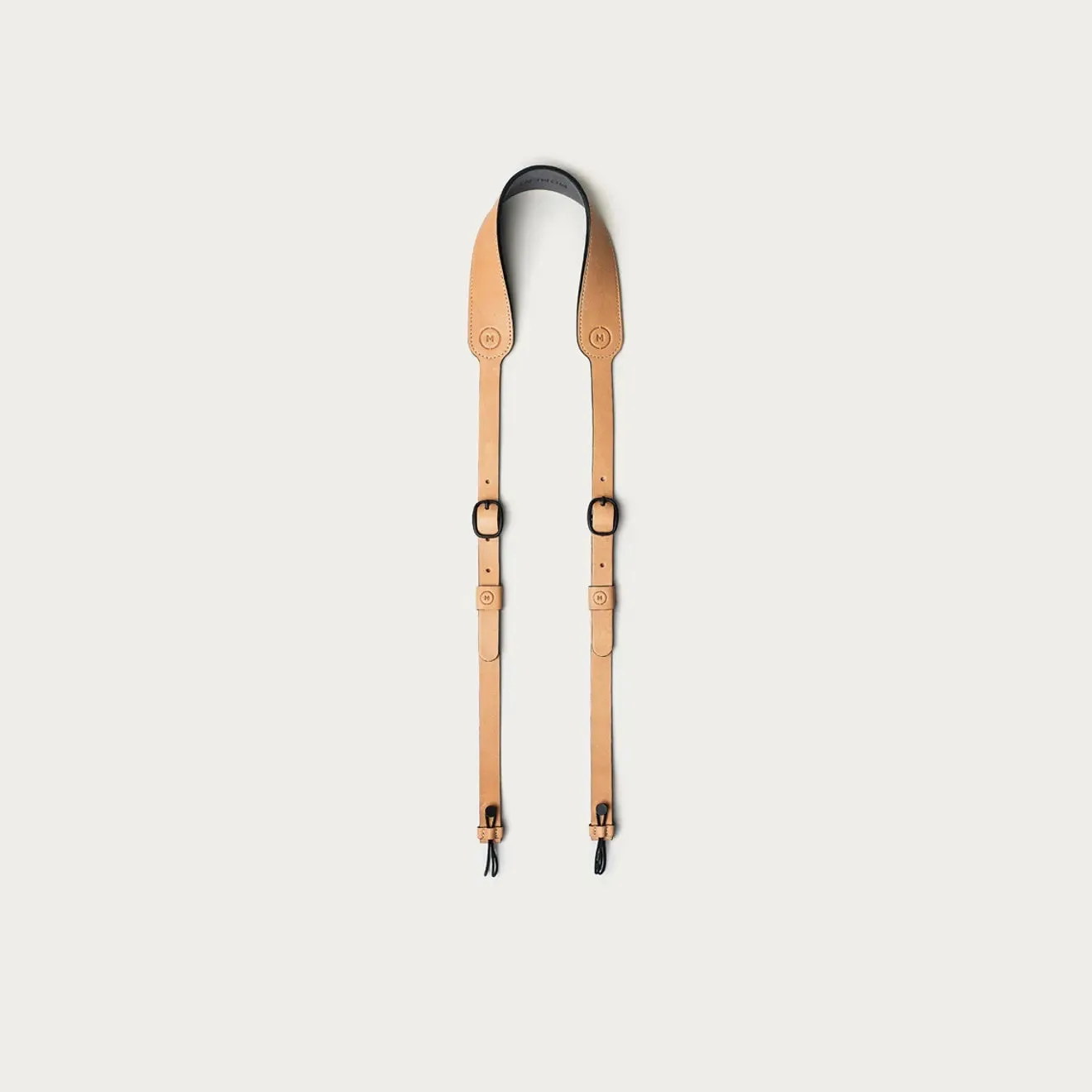
- Moment Adjustable Leather Camera Strap: The Moment Adjustable Leather Camera Neck Strap is made from Ecco leather and is described as tough and durable, suitable for everything from a hike in the woods to a wedding or dinner party. If you want one strap that works for both outdoor and formal shooting, a leather neck strap like this covers more situations than a sporty fabric strap. The leather construction also means it will develop character over time, but you should keep it dry and condition it occasionally.
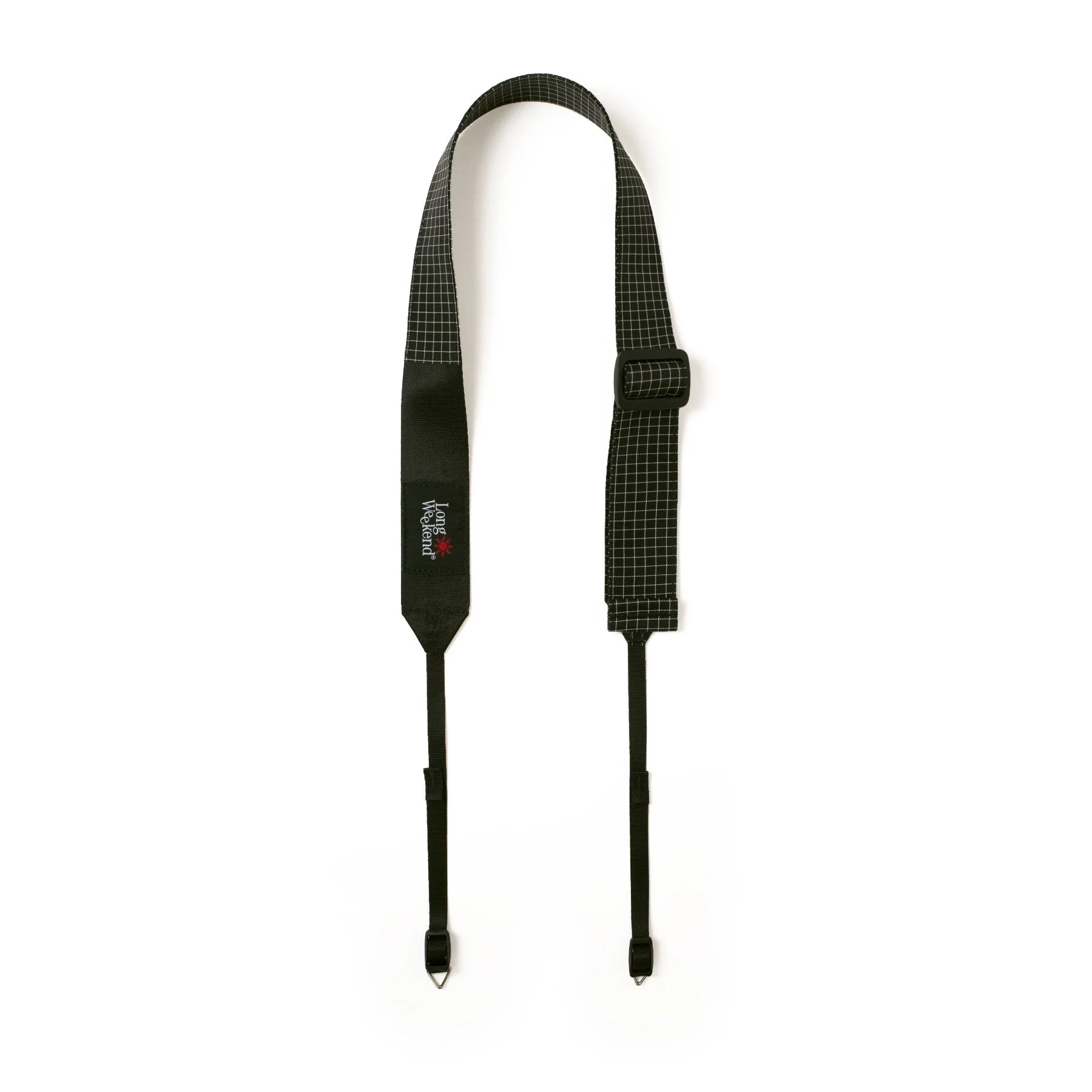
- Long Weekend Adjustable Camera Neck Strap: The Long Weekend Adjustable Camera Neck Strap can be worn around the neck or crossbody, and its ripstop material is described as comfortable and less sweaty than leather, which the catalog notes is well suited to the Australian climate. If you shoot in hot or humid conditions, a ripstop strap is the more comfortable choice for all-day wear. The crossbody option also helps distribute weight and keeps the camera from swinging in front of you when you walk.
Who should choose which
Best for
- Travel and event photographers who keep the camera out for hours
- Photographers who need both hands free to adjust settings or carry other gear
- Shooters in hot climates who want a breathable fabric strap
- Anyone who wants one strap that works for both outdoor and formal situations
Not for
- Street photographers who shoot in short bursts and prefer a compact setup
- Photographers who want the camera locked to their hand for security
- Shooters who mostly work from a tripod and rarely carry the camera on their body