Quick answer
For most backpackers, a single 750–900 ml titanium or hard-anodized aluminum pot, a lid that doubles as a skillet, a folding spork, and a collapsible bowl or cup cover 90% of meals. Car campers can add a larger nesting set, a separate frying pan, and durable plates. Buy for the meals you actually cook, not the ones you imagine.
Walk into any outdoor store and you'll see cookware sets with eight pieces, nonstick coatings, and folding handles. Most of that stays in the car. The right camping cookware is the smallest set that still lets you cook the food you actually eat on trail or at camp.
This guide breaks down camping cookware essentials by trip type, explains material trade-offs, and covers the dinnerware most people forget until they're eating rehydrated chili out of a pot lid. It also shows how a few dry sack accessories can protect your sleep system from kitchen mess.
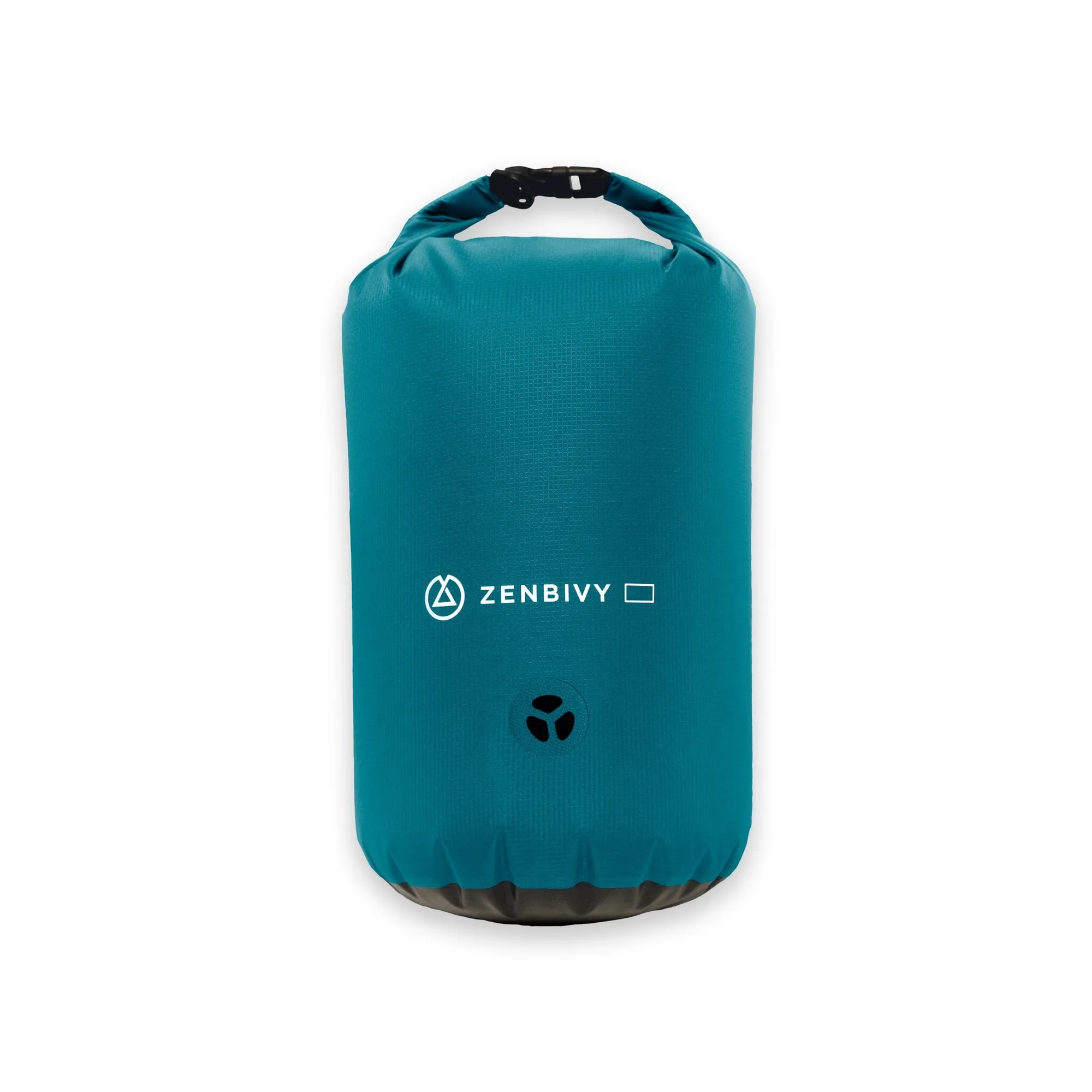
dry sack
Start with your meals, not the gear
Before comparing pots, write down three dinners you'll realistically make. If they're all boil-water meals, you need one pot and a long spoon. If you're simmering rice, searing fish, or making pancakes, you need a wider pan and a lid that fits. The gear list follows the menu.
Backpackers typically need 600–900 ml of volume per person for boiling. Car campers cooking for four often want a 2–3 liter pot plus a 10-inch skillet. Couples who split cooking can carry one 1.5 liter pot and one pan instead of two full sets.
- Boil-only meals: one pot, one lid, one long-handled spoon.
- Simmer-and-saute meals: add a wide pan and a spatula.
- Group car camping: one large pot, one skillet, one mixing bowl.
Material trade-offs that actually matter
Titanium is the lightest and most durable for its weight, but it conducts heat unevenly and scorches food easily. Hard-anodized aluminum heats evenly and costs less, but the coating can wear if you scrub it with abrasive pads. Stainless steel is tough and cheap but heavy for backpacking.
Nonstick coatings make cleanup easier at camp, where water is scarce. The trade-off is that metal utensils scratch the coating, so bring silicone or wooden tools. If you mostly boil water, skip nonstick and save the weight and money.
- Titanium: best for ultralight backpacking and boil-only meals.
- Hard-anodized aluminum: best all-around for even heating and value.
- Stainless steel: best for car camping where weight doesn't matter.
Camping dinnerware: plates, bowls, and cups
Dinnerware is where people overpack. A deep bowl handles soup, cereal, and pasta; a flat plate is only useful if you're eating steak or pancakes. For backpacking, one collapsible bowl and one insulated mug per person is enough. Car campers can bring real plates and a small wash basin.
Insulated mugs keep coffee warm and double as a bowl in a pinch. Collapsible silicone bowls pack flat but can be floppy when full; rigid plastic bowls are easier to eat from but take more space. Choose based on how much you value packability versus stability.
- One deep bowl per person beats a plate-and-bowl combo for most meals.
- Bring a small scraper or bandana to wipe dishes before washing.
- A dedicated dry sack for dirty dishes keeps food smells out of your sleeping bag.
Utensils and small tools
A long-handled titanium spork reaches the bottom of a rehydrated meal pouch and weighs almost nothing. Add a small folding knife or multi-tool, a lighter or ferro rod, and a tiny bottle of biodegradable soap. A pot grab or bandana protects your hands from hot handles.
If you cook real food, bring a small cutting board or use a clean lid as a surface. A stuff sack for your cook kit keeps soot off other gear. These small items cost little and prevent the most common camp kitchen frustrations.
- Long-handled spork: one per person, not a full cutlery set.
- Pot grab or bandana: prevents burns from metal handles.
- Small stuff sack: contains soot and keeps your pack clean.
Protecting your sleep gear from kitchen mess
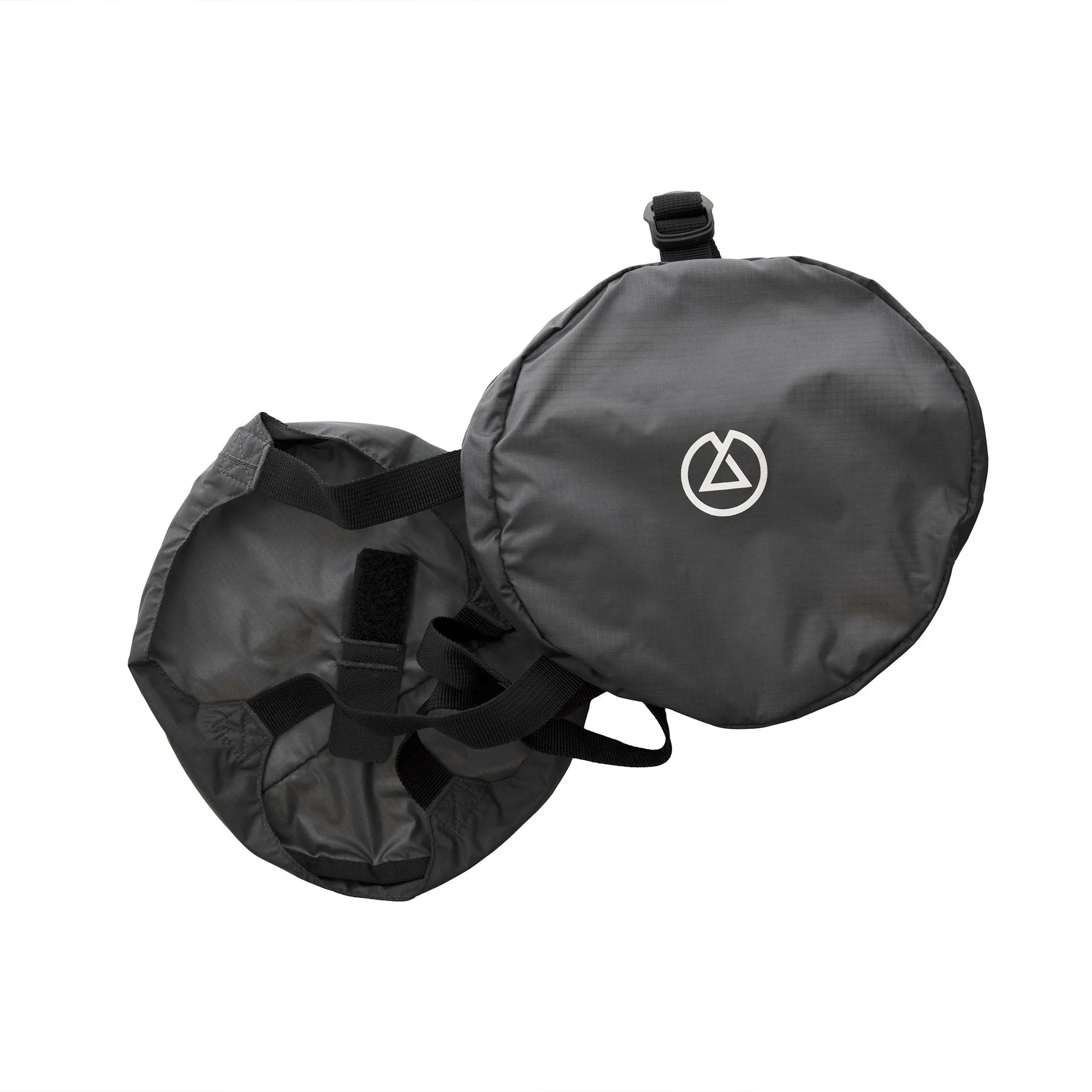
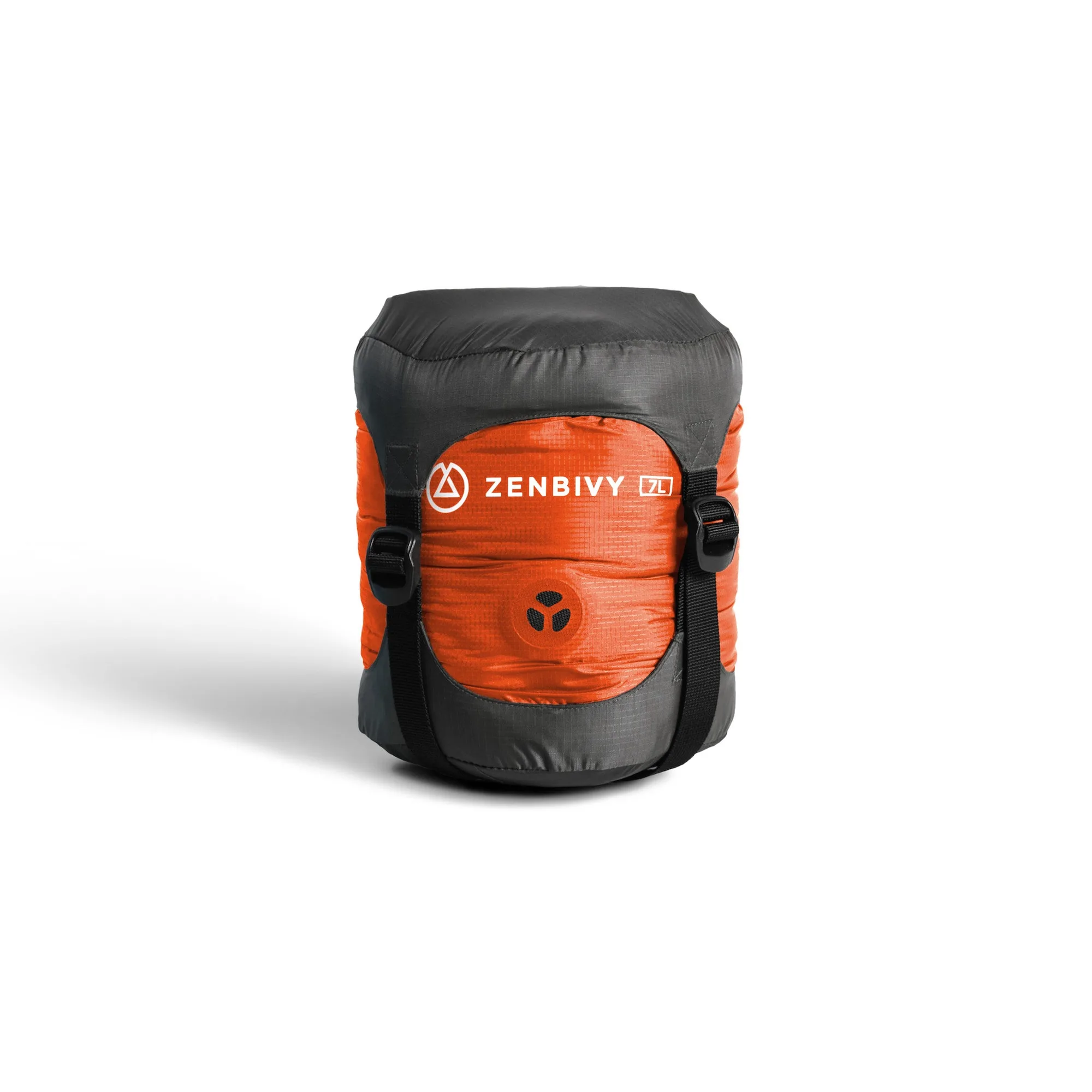
Cookware and food smells attract animals, and spilled food or water can soak your sleeping bag. A dedicated dry sack for your cook kit and another for trash keeps odors contained and your sleep system dry. The Dry Sack + Compression Caps is a lightweight, fully welded, water-tight storage option with separate compression caps that never stress seams — useful for compressing a bulky cook kit or keeping a wet pot separate from your quilt.
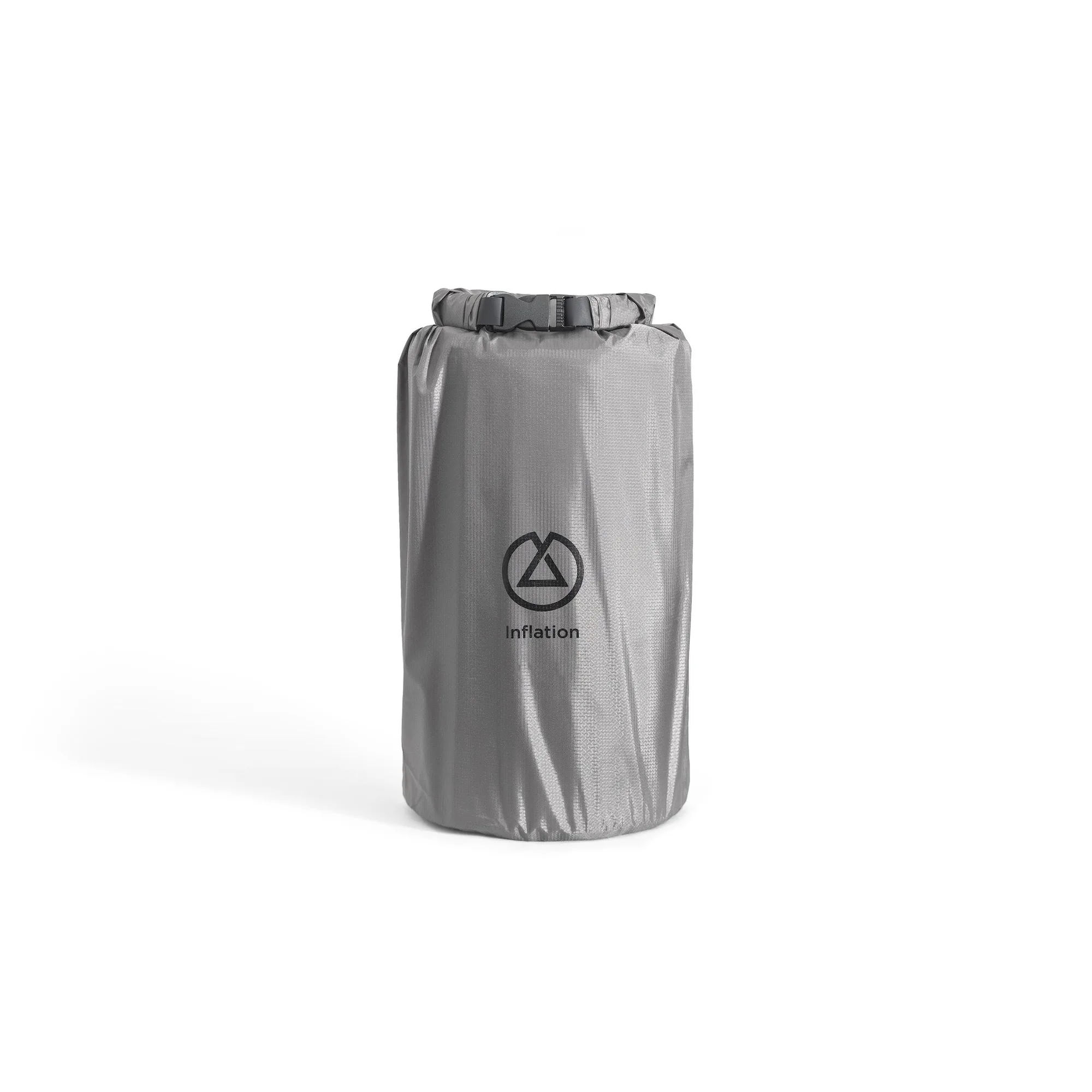
If you inflate your mattress by breath, the Inflation Dry Sack snaps to the mattress valve for easy manual inflation in under a minute and doubles as a waterproof storage sack. That means one less item to carry and one more layer of protection for your sleep setup.
- Keep a separate dry sack for dirty dishes and trash.
- Never store food in your sleeping bag or quilt.
- Use a compression cap only on an already-compressed dry sack to avoid seam stress.
Decision rules for buying camping cookware
- Match pot size to group size: Allow 600–900 ml per person for boiling. A solo backpacker needs one 750 ml pot; a couple needs 1.5 L; a family of four car camping needs 2–3 L. If you're between sizes, size up for group cooking and down for solo boil-only trips.
- Choose material by cooking style: Titanium for ultralight boil-only; hard-anodized aluminum for even heating and sauteing; stainless steel for car camping durability. Nonstick only pays off if you actually fry and want easier cleanup.
- Limit dinnerware to one bowl and one mug per person: A deep bowl handles more meals than a flat plate. Collapsible bowls save space but can be less stable; rigid bowls are easier to eat from. Add a plate only if you regularly eat foods that need a flat surface.
- Protect your sleep system with dedicated dry sacks: Use one dry sack for the cook kit and one for trash. The Dry Sack + Compression Caps and Inflation Dry Sack both offer fully welded, water-tight storage. Never let food or dirty dishes share space with your sleeping bag or quilt.
Product facts that matter for camp kitchens
- Dry Sack + Compression Caps: Lightweight, fully welded, water-tight storage for your sleeping bag with separate compression caps that never stress seams. You can compress a bulky cook kit or wet items without risking seam failure, and the water-tight construction keeps food odors and moisture away from your sleep gear.
- Inflation Dry Sack: The fully welded Inflation Dry Sack snaps to the mattress valve for easy manual inflation in under a minute and doubles as a waterproof storage sack. It replaces breath inflation for your mattress and then serves as a waterproof sack for camp kitchen items, so you carry less and protect more.
Who this cookware approach fits
Best for
- Backpackers who cook simple boil-in-bag or one-pot meals
- Car campers who want a compact but capable kitchen for two to four people
- Campers who want to keep food smells and moisture away from their sleeping gear
Not for
- Backpackers who need a full nonstick cook set for gourmet trail cooking
- Groups larger than four who need multiple large pots and a full wash station
- Anyone who wants a single integrated stove-and-cookware system with no separate dry sacks
Buy the smallest cookware set that lets you cook the meals you actually eat, then protect it — and your sleep gear — with a dedicated dry sack. That's the difference between a camp kitchen that works and one that just adds weight.