Why camp cloths need their own care rhythm
A camping Swedish dishcloth set works hard: it wipes plates, mops the table, and absorbs spills that would otherwise take a fistful of paper towels. The Mixed Camping Set of 3 gives you one cloth per design, so you can rotate them between trips and let each one dry fully before it goes back in the pack.
The care routine is simple, but the timing matters. Wash a cloth before it gets stiff or smelly, dry it completely between uses, and retire it when the fibers stop bouncing back. The supplied product facts give you clear limits for each step.
What the Mixed Camping Set is made of
-
Eco-Friendly Swedish Dishcloths - Mixed Camping Set of 3 (Paper Towel Replacements, One of Each Design): Each cloth measures 180x200mm and is made from a blend of all-natural wood pulp cellulose from sustainable forests and renewable cotton fibers. The cellulose-cotton blend is what makes the cloth absorbent and quick to dry, but it also means you should treat it more like a sponge than a cotton rag.
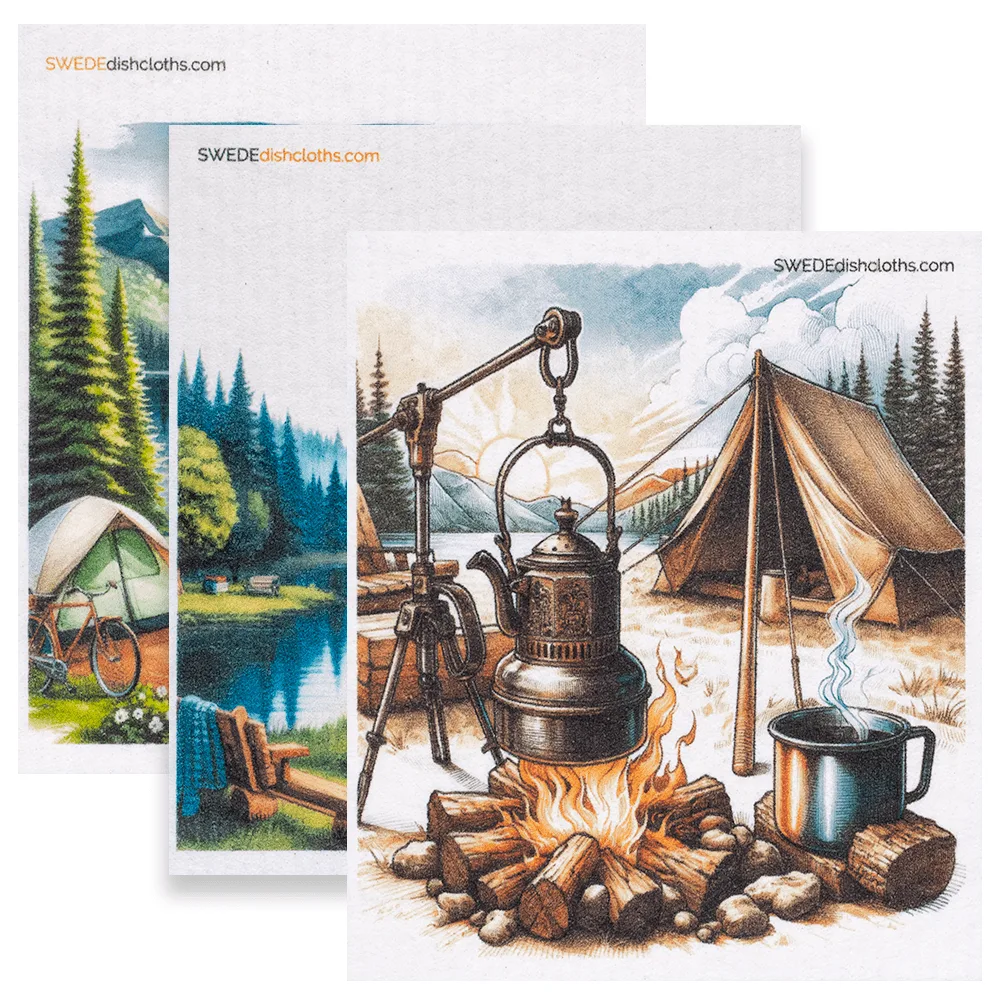
Eco-Friendly Swedish Dishcloths - Mixed Camping Set of 3 (Paper Towel Replacements, One of Each Design)
-
Eco-Friendly Swedish Dishcloths - Mixed Camping Set of 3 (Paper Towel Replacements, One of Each Design): Each cloth absorbs 20 times its weight in liquid. That absorbency is the reason one cloth can replace up to 17 rolls of paper towels, but it only holds up if you wash and dry the cloth properly between trips.
The wash-and-dry routine for mixed camping dishcloths
Follow these steps in order. The supplied product record confirms the cloth is machine washable and can go in the dishwasher, but it does not give a specific temperature, detergent, or cycle setting, so use the gentlest option your machine offers and check the cloth afterward.
- Shake off crumbs and rinse loose food: Before washing, rinse the cloth under running water to remove food residue. This keeps the wash water cleaner and helps the cloth come out fresh.
- Wash with your regular laundry or in the dishwasher: The record states the cloth is machine washable and can be washed in your clothes or dishwasher. No specific temperature or detergent is supplied, so choose a mild setting and avoid anything labeled as a harsh bleach or fabric softener unless the label on your machine or detergent says otherwise.
- Dry completely before packing: The record does not specify a drying method. Air-drying flat or hanging is the safest default for a cellulose-cotton cloth; make sure it is fully dry before it goes back in your camping kit so it does not sit damp between trips.
- Rotate the three designs: The set includes one cloth of each design. Use one for dishes, one for surfaces, and keep the third as a spare or for a different trip. Rotating spreads the wear and gives each cloth time to dry.
Checkpoints that tell you when a cloth is done
The supplied record gives a lifespan figure you can use as a checkpoint rather than a guarantee.
- Wash count: The record says the cloths are washable up to 200 times. If you camp often, that is a long runway, but track roughly how many washes each cloth has had so you know when to expect the fibers to start breaking down.
- Stiffness or lingering smell: If a cloth stays stiff after washing and drying, or holds a smell, it is a sign to retire it. The record does not give a specific replacement interval beyond the 200-wash figure.
- Thinning or holes: A cloth that has worn thin or developed holes will not absorb as well. At that point, move it to the compost rather than back into the camping bin.
Composting a retired camping cloth
The record states the cloths are compostable and can be recycled with old newspapers. If you do not have a compost pile, the record notes that is not a problem, though it does not give an alternative disposal method. Check whether your local composting program accepts cellulose-cotton blends before adding the cloth to a municipal bin.
The print is made with non-toxic, water-based ink, and the packaging is described as environmentally friendly, so the end-of-life story is consistent with the eco-friendly pitch of the set.
The eco-friendly case for caring for your cloths
- Eco-Friendly Swedish Dishcloths - Mixed Camping Set of 3 (Paper Towel Replacements, One of Each Design): One Swedish dishcloth can replace up to 17 rolls of paper towels, and 17 rolls generate about ten pounds of waste plus plastic packaging that can take 100 years to biodegrade. The longer you keep each cloth in rotation, the more of that waste you avoid, which is why washing and drying properly is the core of eco friendly dishcloth care.
- Eco-Friendly Swedish Dishcloths - Mixed Camping Set of 3 (Paper Towel Replacements, One of Each Design): Each cloth is made from just half an ounce of sustainable fibers. A cloth that light is easy to pack and easy to wash, but it also means you should not wring it aggressively or leave it soaking, which can break down the fibers faster.
Packing and storing the set between trips
The record does not supply a storage bag or case, so use what you have. A small mesh pouch or a zip-top bag with the corner open lets the cloth breathe while keeping it separate from food. Never pack a damp cloth; a wet cloth sealed in a bag is the fastest way to get a musty smell that washing may not remove.
Because the set is three cloths, you can leave one at home to dry while the other two travel. That rotation is the simplest way to keep mixed camping dishcloths fresh without adding gear.