Quick answer
A happy canary needs a spacious cage with horizontal bars, placed in a quiet, draft-free spot, and equipped with natural perches, separate food and water dishes, and a few safe toys.
Why cage shape matters for canaries
Canaries fly side to side, not up and down, so a wide rectangular cage is better than a tall narrow one. Rounded or domed roofs, like on the Ferplast Gala cage, give extra headroom without sacrificing floor space. Avoid round cages — they can disorient birds and don't offer a safe corner to retreat to.
Choosing the right cage size
A single canary needs a minimum cage width of 60 cm (24 inches). The bigger the cage, the more room for flight, which is essential for muscle health. A cage that's too small can lead to obesity and feather plucking. Always prioritise width over height.
Step-by-step canary cage setup
- 1. Choose the right cage and location: Select a cage at least 60 cm wide with horizontal bars for climbing. Place it in a quiet room away from direct sunlight, drafts, and kitchen fumes. Keep it at eye level so your canary feels secure. Common mistake: placing the cage in a busy hallway or near a TV, which can stress the bird.
- 2. Set up perches and feeding stations: Install two or three natural wood perches of varying thickness at different heights. Position them away from food and water dishes to prevent contamination. Use separate bowls for seed, fresh food, and water. Checkpoint: avoid sandpaper perches — they can hurt a canary's feet.
- 3. Add toys and enrichment: Hang one or two small toys like bells, swings, or shreddable toys. Rotate them every week to prevent boredom. Do not overcrowd the cage; leave plenty of flight space. Common mistake: adding too many toys at once, which can overwhelm a new canary.
- 4. Line the tray and clean regularly: Line the pull-out tray with paper or a safe liner. Change it every two days. Wash perches and dishes weekly with hot water and mild soap. Deep-clean the cage monthly. Checkpoint: never use bleach or harsh chemicals near your canary.
- 5. Introduce your canary gradually: Leave the bird in its new cage for at least 24 hours before interacting. Speak softly and move slowly. Let it adjust to its surroundings before opening the cage door. Common mistake: trying to handle the bird too soon, which can cause lasting fear.
Product fact
-
GALA: Gala is a birdcage for cockatiels and is also ideal for budgies. Its special rounded roof ensures great comfort, space and freedom of movement for your feathered friends. The rounded roof design gives canaries extra vertical space without wasting floor area, and the cage's width supports healthy side-to-side flight.
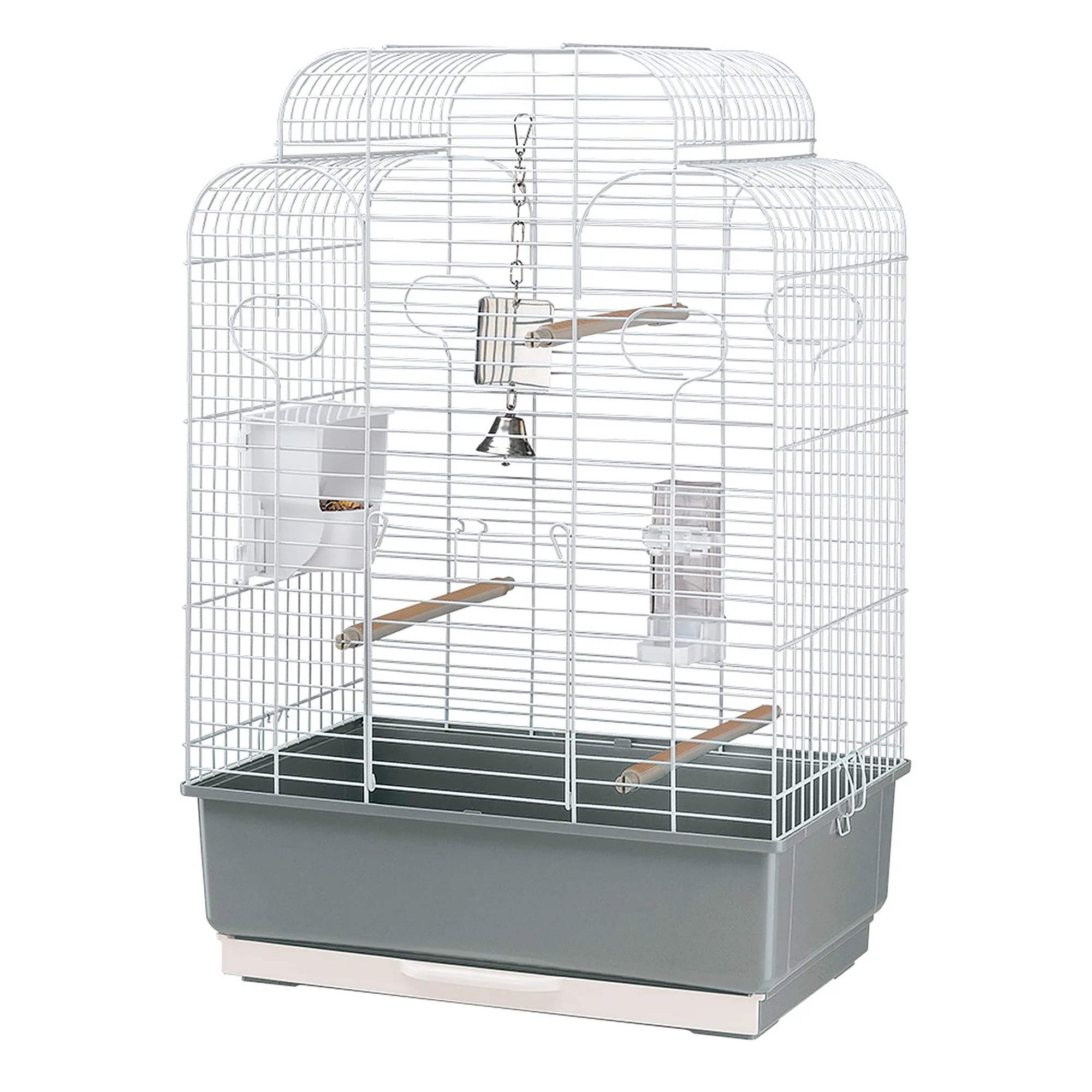
GALA