Quick answer
Replace your captive screw set when you notice persistent wobble, stripped threads, or visible corrosion that a simple retorque or cleaning can't fix.
Why captive screws wear out faster than you think
Captive screws in sim racing endure constant vibration from force feedback and rapid direction changes. Even high-grade 12.9 carbon steel, like the material used in GSI captive screws, can fatigue over time. The 360 Loctite pre-applied to these screws provides maximum hold, but repeated removal and reinstallation eventually degrade the thread-locking compound, reducing clamp force.
The trade-off between cost and safety
A single captive screw set costs a fraction of a wheel replacement, yet many racers delay the swap until a failure mid-race. The risk isn't just lost performance—a loose screw can damage the threaded insert in your wheel hub, turning a $11 fix into a much larger repair. On the other hand, replacing screws unnecessarily adds waste and minor expense. The diagnosis below helps you decide when replacement is genuinely needed.
Diagnosis: When to replace your captive screw set
- Symptom: Wobble or play in the wheel rim: Grip the rim at 3 and 9 o'clock and try to rock it. If you feel movement at the screw interface rather than the bearing, the screw is no longer clamping fully. If wobble persists after retorquing to spec, the screw has likely stretched or the Loctite has failed.
- Symptom: Stripped or damaged threads: Inspect the threaded portion of the screw (the 5mm section on GSI screws). If the threads appear flattened, galled, or have metal filings, the screw can no longer engage properly. Do not reuse a screw with visible thread damage. Replace immediately to avoid hub thread damage.
- Symptom: Corrosion or rust spots: Even 12.9 carbon steel can corrode in humid environments. Look for red rust or pitting on the shaft and threads. Surface rust may clean off, but pitting compromises strength. If rust is deeper than surface level, replace the set. If only one screw is affected, replace the full set to maintain even clamping force.
- Corrective action: Replacement procedure: Remove the old screw with a hex key, clean the threaded hole in the hub with compressed air, and hand-thread the new GSI captive screw until snug. Torque to the manufacturer's specification (typically 4-6 Nm). Do not over-torque—the 360 Loctite provides the hold, not brute force. After installation, do a wobble check before racing. If the screw still feels loose, stop and verify hub compatibility.
- Stop point: When to choose another option: If the threaded insert in your wheel hub is damaged (cross-threaded or stripped), a new screw will not fix the problem. In that case, replace the hub insert or the entire wheel hub assembly.
Product fact
-
Captive Screw Set: GSI captive screws are custom made from high grade 12.9 carbon steel black with custom 360 Loctite for maximum hold and strength, featuring an 8mm smooth shaft and a 5mm threaded portion. The 360 Loctite ensures the screw stays locked under heavy vibration, but once that coating wears thin after multiple installations, the screw's grip weakens and replacement becomes the reliable fix.
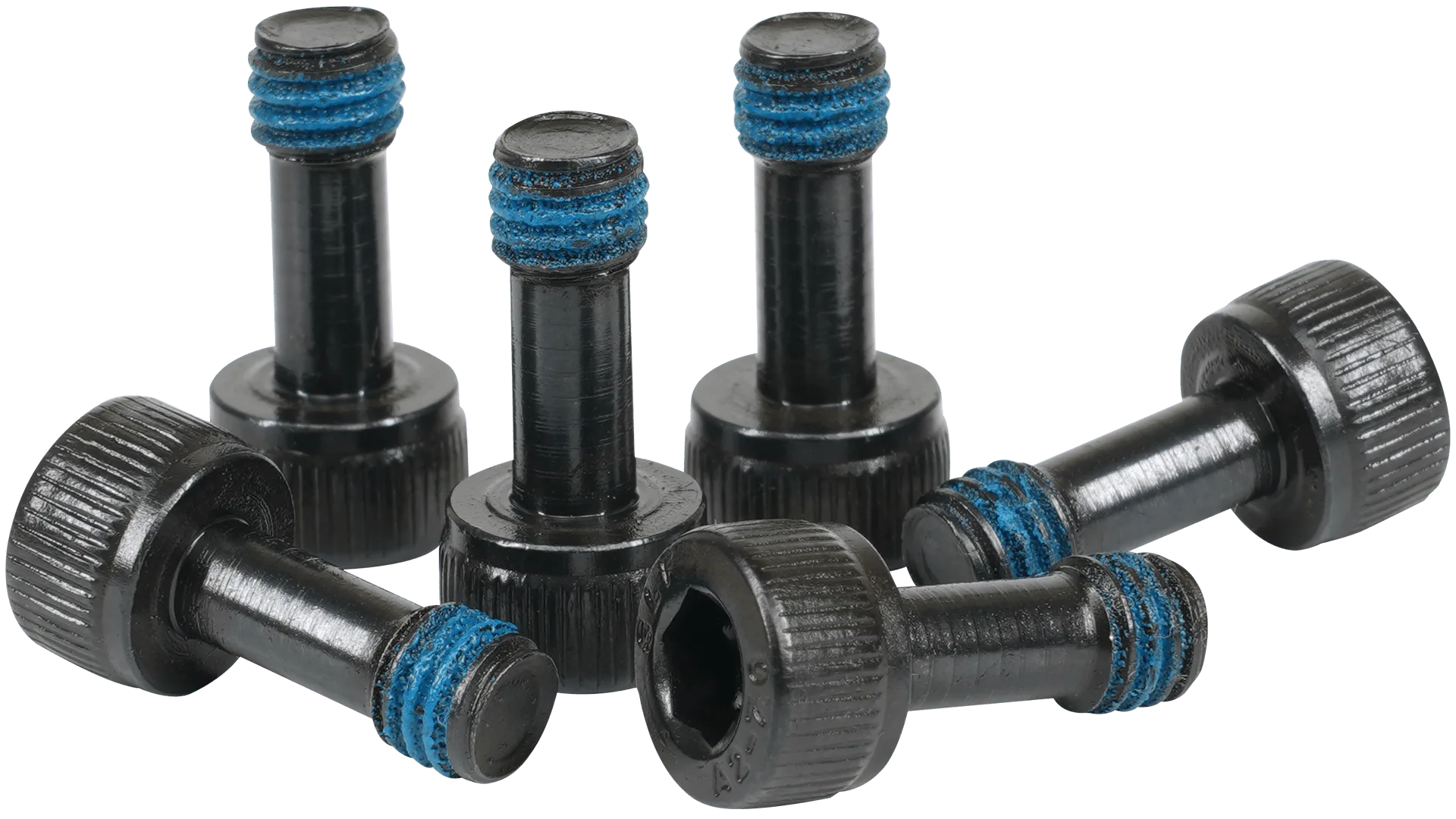
Captive Screw Set