Quick answer
Choose castile liquid soap if you want one product for hands, dishes, floors, and laundry, and you do not mind diluting it. Choose bar soap if you want the simplest, lowest-waste option for washing your body and hands. If you want a ready-to-use liquid option without mixing, a https://groveujh.com/products/concentrated-laundry-detergent-67-71a767b7ad4ccdfacb73e8df-1894784concentrated https://groveujh.com/products/laundry-unscented-512c806ffae84494cb3645f0-1894778laundry detergent like Grove Collaborative's Concentrated Laundry Detergent is a practical alternative for laundry, though it is not a castile soap.
What castile soap actually is (and what it is not)
Castile soap is traditionally made from plant oils, most often olive oil, and it comes in both liquid and bar form. It is not the same as a synthetic detergent. That distinction matters because castile soap reacts with hard water minerals and can leave a film if you do not rinse well or if you use too much. It also means castile soap is not automatically the right choice for every cleaning job. For example, it can leave streaks on glass and can build up in washing machines over time if used incorrectly. If you want a laundry product that is already formulated for stains and machines, a dedicated detergent is the better tool.
How dilution changes the real cost of liquid castile soap
Liquid castile soap is usually sold as a concentrate. You dilute it with water for different jobs: a few drops for handwashing, a small splash per quart for all-purpose spray, and a larger ratio for mopping. This is where the cost advantage appears. A single bottle can last months because you are mostly adding your own water. But dilution also introduces variability. If you mix too strong, you may get residue. If you mix too weak, it may not clean well. Bar soap skips this step entirely. You rub it on a cloth or your hands and use it directly. There is no measuring, no mixing bottle, and no risk of a batch going bad if you leave it sitting too long.
Packaging, waste, and travel
Bar soap typically wins on packaging waste. It often comes in a paper wrapper or a small cardboard box, and there is no plastic pump or jug to deal with. Liquid castile soap almost always comes in a plastic bottle, though you can buy refill sizes or use a reusable dispenser to reduce that impact. For travel, bar soap is easier to carry through airport security because it is not a liquid. Liquid castile soap needs to fit in your quart-sized bag and can leak if the cap is not tight. If you are trying to cut single-use plastic, bar soap is the simpler starting point. If you want one liquid product that can be diluted for many rooms, castile liquid soap still reduces waste compared with buying several different specialty cleaners.
Cleaning performance: where each form struggles
Bar soap is excellent for body washing and handwashing. It can also work as a spot cleaner for stains if you rub it directly into fabric before laundering. However, bar soap is awkward for large surfaces like floors or countertops because you have to create a lather first. Liquid castile soap is easier to apply to a sponge, mop, or spray bottle. That said, neither castile form is a disinfectant. They clean by lifting oils and dirt, not by killing germs. If you need sanitizing, you still need a separate product. Also, castile soap can leave a dull film on some sealed stone counters if used too strong. Test a small area first.
When a dedicated product makes more sense than either soap
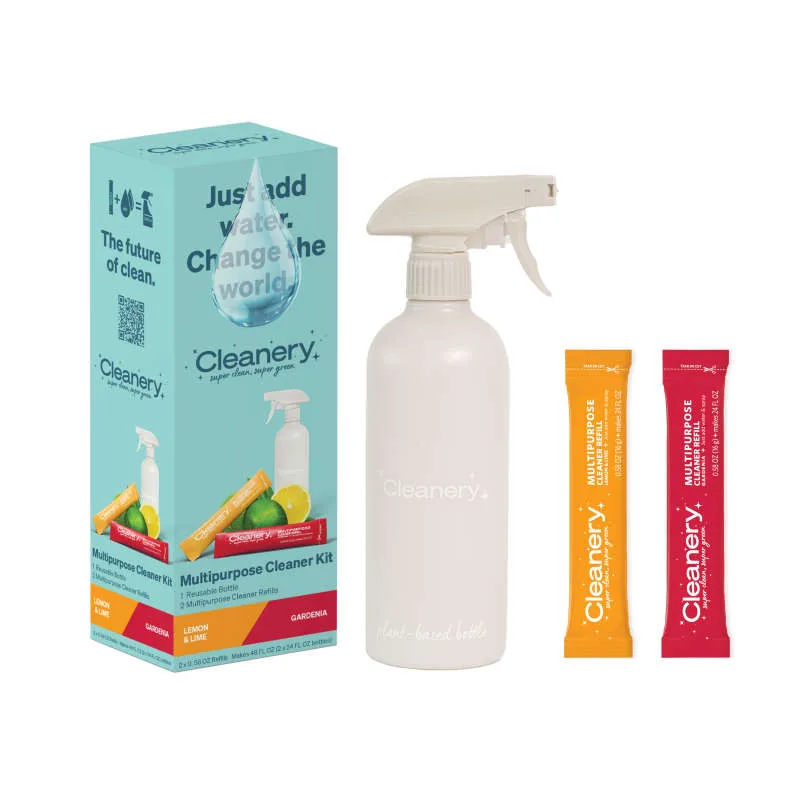
If your main goal is laundry, a dedicated detergent is usually more reliable than castile soap. For example, Grove Collaborative's Concentrated Laundry Detergent uses a triple-enzyme formula with protease and amylase to fight stains, and it is free of synthetic fragrances, dyes, and artificial brighteners. It is also hypoallergenic and fragrance-free, which matters if you have sensitive skin. That does not make castile soap useless for laundry—some people use it as a pre-treatment or for gentle hand-washing—but for everyday machine washing, a formulated detergent is the safer bet. Similarly, for multi-surface cleaning, a product like the Multipurpose Starter Kit gives you a reusable bottle and two refills that you mix with water, cutting waste without the guesswork of diluting castile soap from scratch.
Trade-offs at a glance
- Convenience: Bar soap is ready to use with no mixing or measuring. Liquid castile soap requires dilution for most jobs, which adds a step but lets you customize strength. If you want zero fuss, choose bar soap. If you want one product for many tasks, choose liquid castile.
- Cost per use: Liquid castile soap is concentrated, so a bottle can last a long time when diluted. Bar soap is inexpensive per bar but may dissolve faster if left in water. Store bar soap on a draining dish to make it last. Pre-mix only as much liquid castile as you will use in a week or two.
- Packaging and waste: Bar soap usually comes in paper or cardboard with no plastic. Liquid castile soap typically comes in plastic, though refill sizes and reusable dispensers reduce the impact. For the lowest waste, bar soap wins. For a refillable liquid routine, look for a concentrate and a reusable bottle.
- Best use cases: Bar soap excels for hands, body, and spot-treating fabric. Liquid castile soap is easier for floors, counters, dishes, and DIY sprays. Many households keep both: bar soap at the sink and shower, liquid castile for cleaning.
Product facts
- Concentrated Laundry Detergent: Concentrated Laundry Detergent features a triple-enzyme formula with protease and amylase to fight tough stains, and it contains no synthetic fragrances, dyes, or artificial brighteners. It is hypoallergenic and fragrance-free. If you want a ready-to-use laundry option that is gentle on sensitive skin and does not require dilution, this is a practical alternative to castile soap for machine washing.
- Multipurpose Starter Kit: Multipurpose Starter Kit includes one 24 fl oz reusable bottle plus two 0.58 oz refills (lemon & lime and gardenia). You add water and shake. The refills are designed to cut through grease and stuck-on dirt while producing 99% less waste and 99% less emissions than traditional cleaners. This kit offers a low-waste way to clean multiple surfaces without mixing castile soap from concentrate, and the reusable bottle reduces plastic compared with buying new spray bottles each time.
Which should you buy?
Best for
- Anyone who wants a single plant-based soap to dilute for hands, dishes, floors, and more
- Households trying to reduce plastic by using refillable or concentrated liquid products
- People who prefer a liquid format for cleaning large surfaces
Not for
- Anyone who wants a no-mix, ready-to-use soap for the sink or shower
- Travelers who want to avoid liquid restrictions and leaks
- People who need a disinfectant or a heavy-duty laundry detergent for tough stains