Quick answer
Feed adult cats two measured meals a day and keep treats to no more than 10% of their daily calories. Weigh or scoop the food, subtract treat calories from the total, and keep the schedule consistent. This balance prevents weight gain and keeps mealtimes predictable.
Why a routine beats free-feeding
Cats are creatures of habit. A consistent cat meal schedule helps regulate digestion, reduces begging, and makes it easier to spot changes in appetite that can signal illness. Free-feeding dry food all day makes it nearly impossible to track how much your cat actually eats, especially in multi-cat homes. Measured meals give you control and let you adjust portions as your cat ages or activity changes.
Treats are food, not extras
The biggest mistake cat owners make is treating treats as outside the daily diet. Treats add calories, so they must come out of the meal total. If your cat gets 20 calories of treats, that is 20 fewer calories from the bowl. For most adult cats eating around 200 to 250 calories a day, the 10% treat limit means roughly 20 to 25 calories, or about 4 to 6 small soft treats. Always check the treat package for calorie content, because sizes vary widely.
Adjusting for life stage and body condition
Kittens need more frequent meals and more calories per pound than adults. Senior cats may need fewer calories but more protein to maintain muscle. Pregnant or nursing cats have very different needs. Weigh your cat monthly and use a body condition score to decide if portions need tweaking. If ribs are hard to feel, reduce portions slightly; if they are too visible, increase. Always transition to a new food over 7 to 10 days to avoid stomach upset.
7 steps to a balanced daily routine
- 1. Set meal times: Choose two consistent times, about 10 to 12 hours apart, and stick to them daily. Cats learn the schedule quickly and stop begging between meals. Mistake to avoid: feeding at random times teaches your cat to demand food constantly.
- 2. Measure meals accurately: Use a kitchen scale or a standard measuring cup. Start with the amount recommended on the food label for your cat's weight, then adjust based on body condition. Checkpoint: if you are not measuring, you are probably overfeeding.
- 3. Calculate treat allowance: Treats should be no more than 10% of daily calories. For a 10-pound adult cat eating 220 calories, that is 22 calories of treats, roughly 4 to 6 small treats. Mistake to avoid: guessing treat calories. Read the label.
- 4. Subtract treats from meals: If you give 20 calories of treats, reduce the meal by 20 calories. Do this at the meal closest to treat time to keep total intake steady. Checkpoint: total daily calories should not change just because treats were added.
- 5. Use treats for training, not boredom: Reserve treats for rewarding desired behavior, not for filling time. Break larger treats into smaller pieces so you can reward more often with fewer calories. Mistake to avoid: leaving a full treat bag out where anyone can grab from it.
- 6. Monitor weight and adjust: Weigh your cat every 4 weeks. If weight is creeping up, cut treat calories first, then reduce meal portions slightly. If weight drops, increase meals, not treats. Checkpoint: a healthy cat should have a visible waist and ribs you can feel but not see.
- 7. Keep water fresh and separate: Wash water bowls daily and place them away from food. Many cats prefer drinking away from their meal area, which supports urinary health. Next step: if your cat ignores water, try a fountain or multiple bowls.
A food that fits a routine
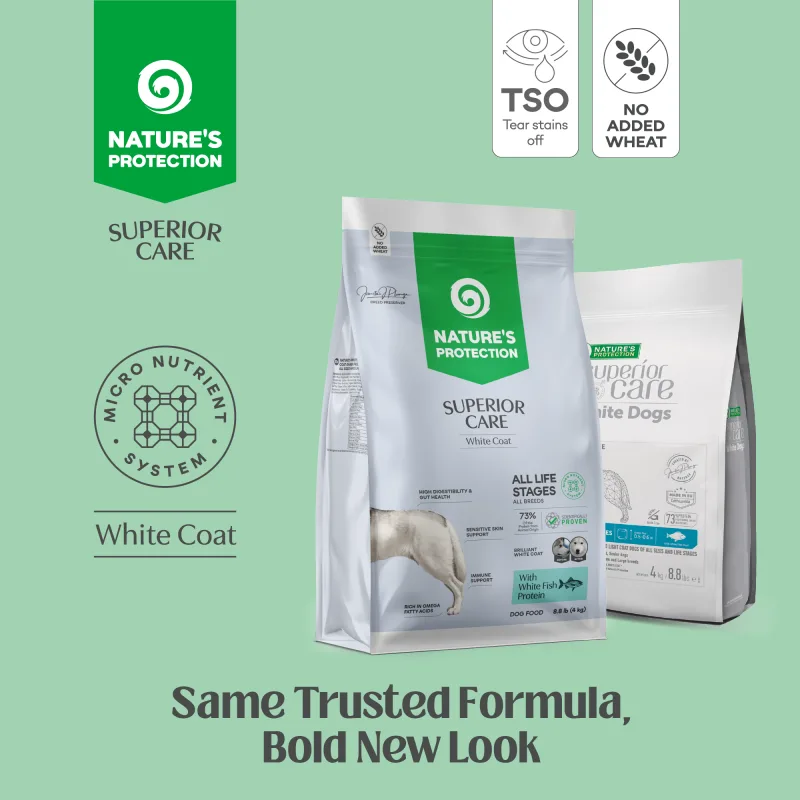
- All Life Stages Dogs Food for Light Coat All Breeds with White Fish: Nature's Protection Superior Care Grain-Free Dog Food with White Fish is formulated for dogs of all sizes and life stages with white and light-colored coats. It is hypoallergenic, highly digestible, and helps reduce brown tear stains while promoting healthy skin and coat. If you also have a dog, this single formula can simplify feeding across life stages, and its coat-supporting ingredients address a common concern for light-coated breeds.