Start with the simplest suspect: the bulb
A sconce that will not turn on is usually a bulb, a switch, or a connection issue, in roughly that order of ease. Before you touch anything else, turn the wall switch off and let the bulb cool. Then reseat the bulb firmly in its socket. A bulb that is loose can look installed and still fail to make contact.
If reseating does not help, swap in a bulb you know works. If the new bulb lights, the original bulb was the problem and you are done. If the new bulb stays dark, put the original bulb back and move to the next check. This one substitution tells you whether you are chasing a bulb issue or a wall lamp wiring problem.
The Centric Petite Glass record does not list a bulb type, wattage, or base size, so match any replacement to the bulb already in the fixture rather than guessing. If the fixture came with no bulb and the packaging does not specify one, confirm the requirement with Blueprint Lighting before buying a replacement.
Checks to run before you remove the fixture
Work through these in order. Each one is quick, and each rules out a different part of the circuit.
- The wall switch: Flip the switch firmly and listen for a click. If the sconce is on a dimmer, turn the dimmer to full brightness. A dimmer set very low can make a working sconce appear dead.
- Other fixtures on the same circuit: Turn on a nearby light or plug a lamp into a nearby outlet. If nothing on that circuit works, the problem is upstream of the sconce, not inside it.
- The breaker or GFCI: Check your panel for a tripped breaker and any GFCI outlet on the circuit for a reset button that has popped. Reset once. If it trips again immediately, stop and call an electrician.
- The bulb, one more time: If you skipped the bulb swap earlier, do it now. It is still the most common cause of a sconce not turning on.
When the problem points to the wiring
If the switch, circuit, and bulb all check out, the remaining suspects are the connections behind the fixture: the splice between the house wiring and the sconce leads, or a wire that worked loose. This is where you should stop doing your own wall sconce troubleshooting and hand off to a licensed electrician unless you are confident working safely at the panel.
To inspect the connections safely, switch off the breaker that feeds the sconce, not just the wall switch, and confirm the power is off with a tester before removing the fixture. Look for a wire nut that has slipped off, a lead that pulled loose, or a connection that was never tightened. Re-terminate only if you know the correct method for your wiring; otherwise, photograph what you see and call an electrician.
A glass sconce bulb issue and a wiring problem can look identical from across the room: both leave the fixture dark. The bulb swap is what separates them, which is why it belongs first.
What the Centric Petite Glass record confirms
-
Centric Petite Glass: The Centric Petite Glass pairs a white pressed glass shade with solid brass construction. The glass shade sits over the bulb, so when you reseat or swap a bulb, handle the shade carefully and support it rather than pulling on it.
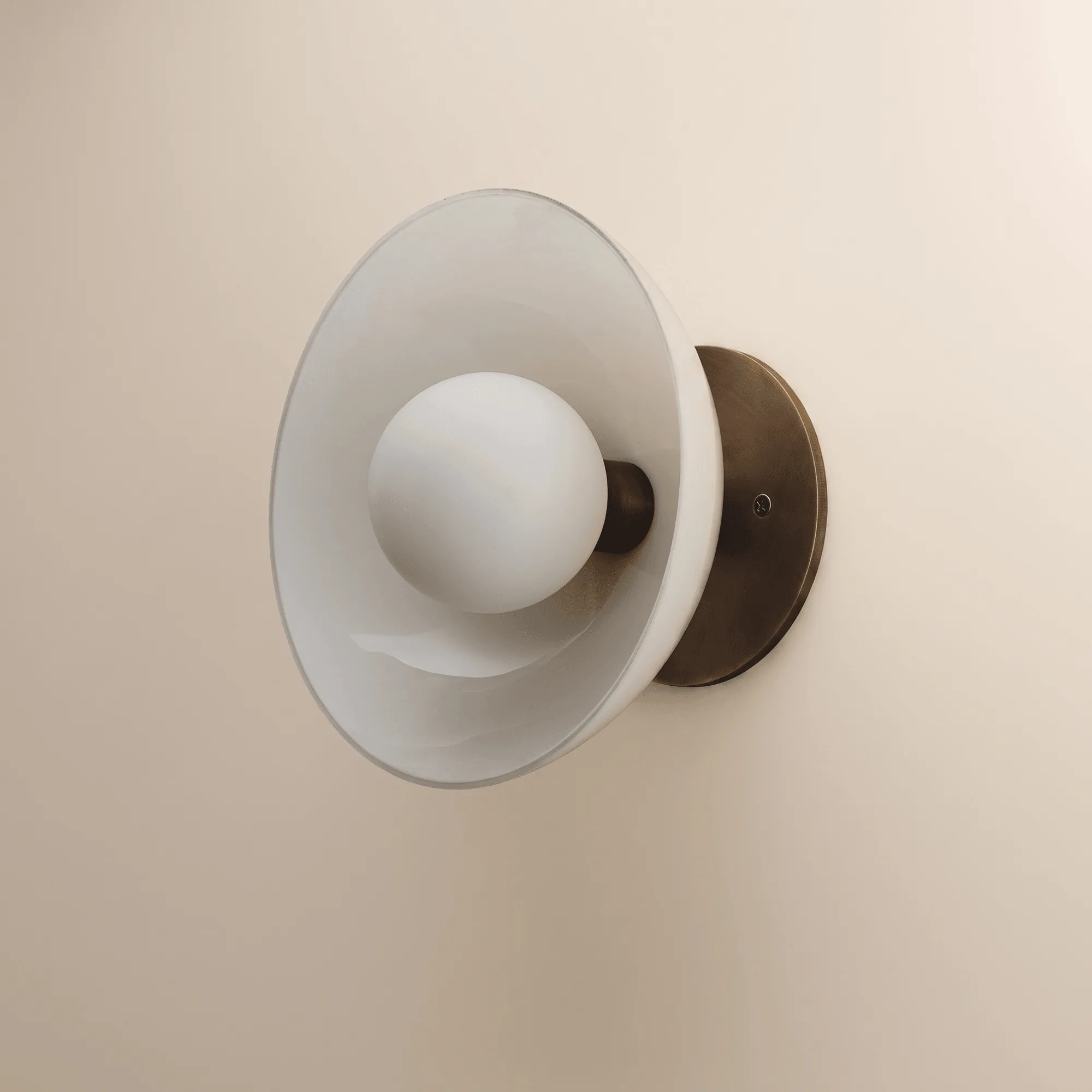
Centric Petite Glass
-
Centric Petite Glass: The fixture is described as refined and substantial, balancing clean geometry with warmth for modern, transitional, and classic interiors. That description tells you how the sconce is meant to look in a room, not how it is wired. It does not confirm bulb type, wattage, dimming compatibility, or installation method, so those details need to come from the fixture itself or from Blueprint Lighting.
What the catalog does not tell you, and why it matters here
The supplied Centric Petite Glass record lists no specifications, no bulb requirement, and no installation or operating instructions. That is a limit of the information available to this article, not a statement about the fixture itself. It means you should not treat any bulb wattage, base type, or dimmer recommendation as confirmed for this sconce.
Practically, that changes your troubleshooting sequence in one way: do not buy a replacement bulb based on a guess. Use the bulb already in the fixture as your reference, or ask Blueprint Lighting to confirm the requirement. If a new bulb of the same type fixes the problem, you have your answer. If it does not, the issue is almost certainly in the switch, the circuit, or the connections, and the steps above still apply.
A safe order of operations for a dark sconce
Follow this sequence so you do not remove a fixture before you have ruled out the easy causes.
- Step 1: Switch the wall light off, let the bulb cool, and reseat it firmly.
- Step 2: Swap in a known-working bulb of the same type. If it lights, replace the old bulb and stop.
- Step 3: Test the switch at full brightness and check other fixtures on the same circuit.
- Step 4: Check the breaker panel and any GFCI outlet on the circuit, resetting once only.
- Step 5: If the sconce is still dark, switch off the breaker, confirm power is off, and inspect the connections behind the fixture or call an electrician.
The honest trade-off: DIY versus an electrician
Bulb swaps, switch checks, and breaker resets are reasonable DIY steps and cost nothing but a few minutes. Anything past that, especially opening the fixture or working inside the wall, carries real risk and is worth an electrician's time. A sconce that trips a breaker the moment you reset it is not a bulb problem, and it should not be tested repeatedly.
If you are still within a return or warranty window, check with Blueprint Lighting before you or an electrician modify the fixture. The supplied record does not include warranty terms, so confirm them directly rather than assuming.