Quick answer
Use a chef's knife for prep on the cutting board—chopping, slicing, and dicing—and a steak knife at the table for cooked meat on the plate. If you want clean, precise cuts that keep juices in the meat, choose straight-edge steak knives; if you want effortless slicing through steak, chicken, and chops without sawing, choose serrated. A 6.5-inch chef's knife is the more controllable prep blade, while steak knives are not designed for board work.
What a steak knife is actually used for
A steak knife is a table knife for cooked meat—steak, chicken, chops—not a prep tool. Its job is to separate bite-sized pieces on the plate without tearing the crust or pressing juices out onto the plate. That is why steak knife edges are either straight or serrated: each solves a different table problem. A chef's knife, by contrast, is built for the cutting board, where you need a long, stable blade and a comfortable grip for repetitive chopping and slicing.
Straight edge vs serrated steak knives
Straight-edge steak knives glide through steak and chops with a clean, precise cut. The trade-off is that a straight edge needs a sharpening plan and can struggle with very crusty or fibrous edges if it dulls. Serrated steak knives slice through meat cleanly without sawing or shredding, and the teeth keep working even when the points wear—but they are harder to sharpen at home and leave a slightly different cut surface. Neither is universally better; the right choice depends on what you serve most and how much maintenance you want.
- Choose straight-edge if you want clean cuts and are willing to maintain the edge.
- Choose serrated if you want low-effort slicing through steak, chicken, and chops.
- Do not use either steak knife for board prep—use a chef's knife instead.
Chef's knife uses: the prep workhorse
A chef's knife handles the board work that steak knives cannot: chopping onions, slicing vegetables, dicing proteins, and portioning. A 6.5-inch chef's knife is easier to control than a larger classic chef's knife while remaining versatile for everyday chopping, slicing, and dicing. If you already own a full-size chef's knife, a smaller one is a useful second blade for smaller hands, tighter kitchens, or detail work. Steak knives should stay at the table; using them on a board is awkward and can damage the edge.
German steel and set size: what the catalog tells you
The Misen 8-Piece Serrated Steak Knives are made with German steel, which the catalog describes as durable performance with a classic look that suits any table setting. That matters if you want a set that can go from weeknight dinners to entertaining without looking out of place. Set size is the other practical decision: four knives suit a small household or a couple, while eight covers family meals and guests. The 4-Piece Straight-Edge Steak Knives come in a range of colors, which helps if you want the table to match your setting; the 8-Piece Straight-Edge set in Green is a fixed-color option. The catalog does not list blade length or handle material for these steak knives, so check those details if they matter to you.
Trade-offs to weigh before you buy
- Serrated vs straight edge: Serrated edges slice through meat cleanly without sawing and keep working as points wear, but they are harder to sharpen at home. Straight edges give clean, precise cuts that help keep juices in the meat, but they need more attentive maintenance. Pick serrated for low-effort slicing; pick straight-edge for precise cuts and juice retention.
- 4-piece vs 8-piece set: A 4-piece set suits couples or small households and leaves less drawer clutter. An 8-piece set covers family meals and entertaining without pulling out extra knives mid-dinner. Match set size to your usual guest count, not your maximum.
- Chef's knife vs steak knife: A 6.5-inch chef's knife is easier to control than a classic chef's knife and handles board prep; steak knives are table tools only. Buying one without the other leaves either prep or the table underserved. Own at least one chef's knife for prep and one steak knife per regular diner.
Product facts at a glance
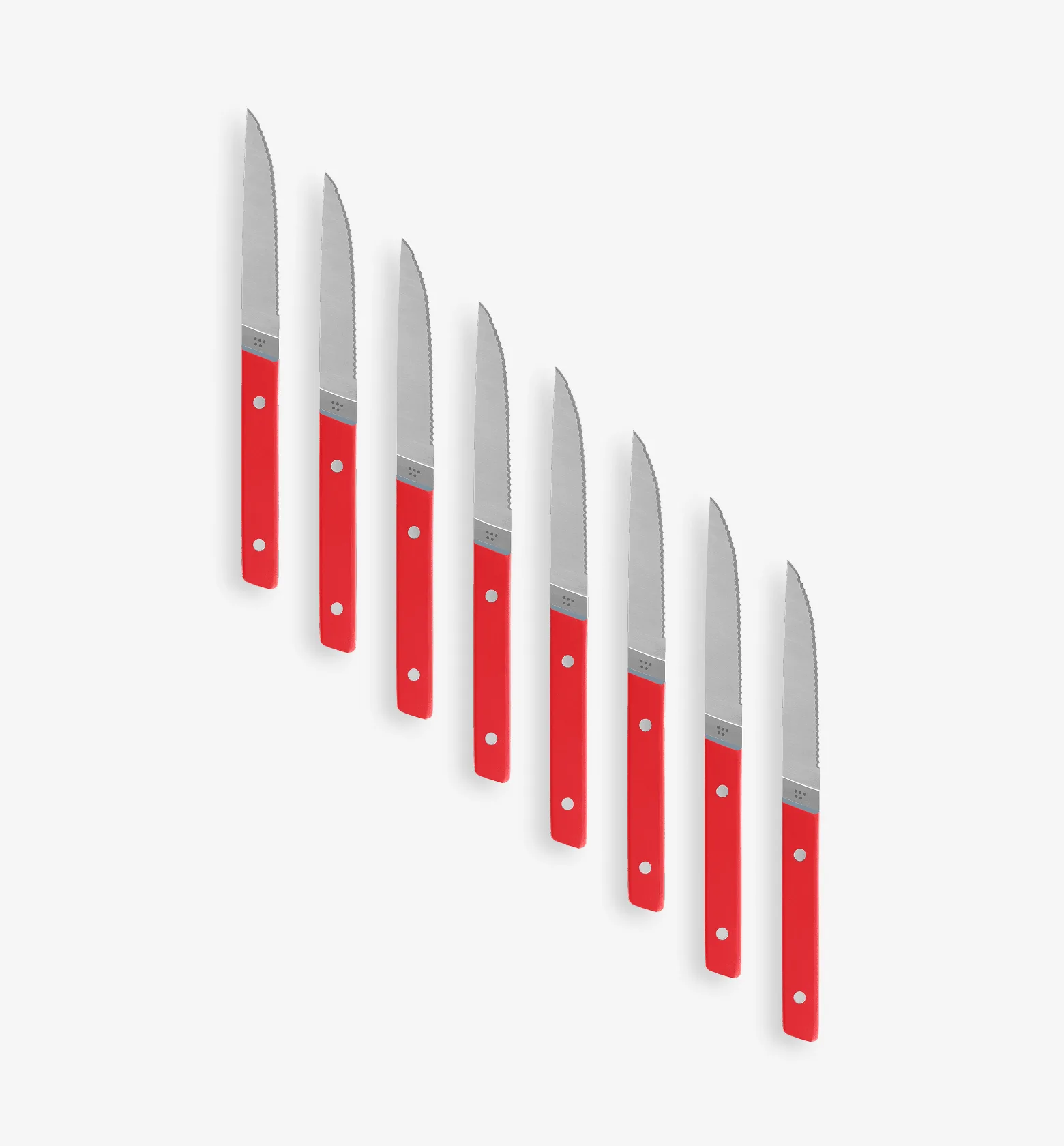
- 8-Piece Serrated Steak Knives (German Steel) - Final Sale - Red: 8-piece set of serrated steak knives with German steel construction, designed for clean, effortless cutting through steak, chicken, and chops—no sawing or shredding required. A good fit if you regularly serve meat to a full table and want a low-effort slice without maintaining a straight edge.
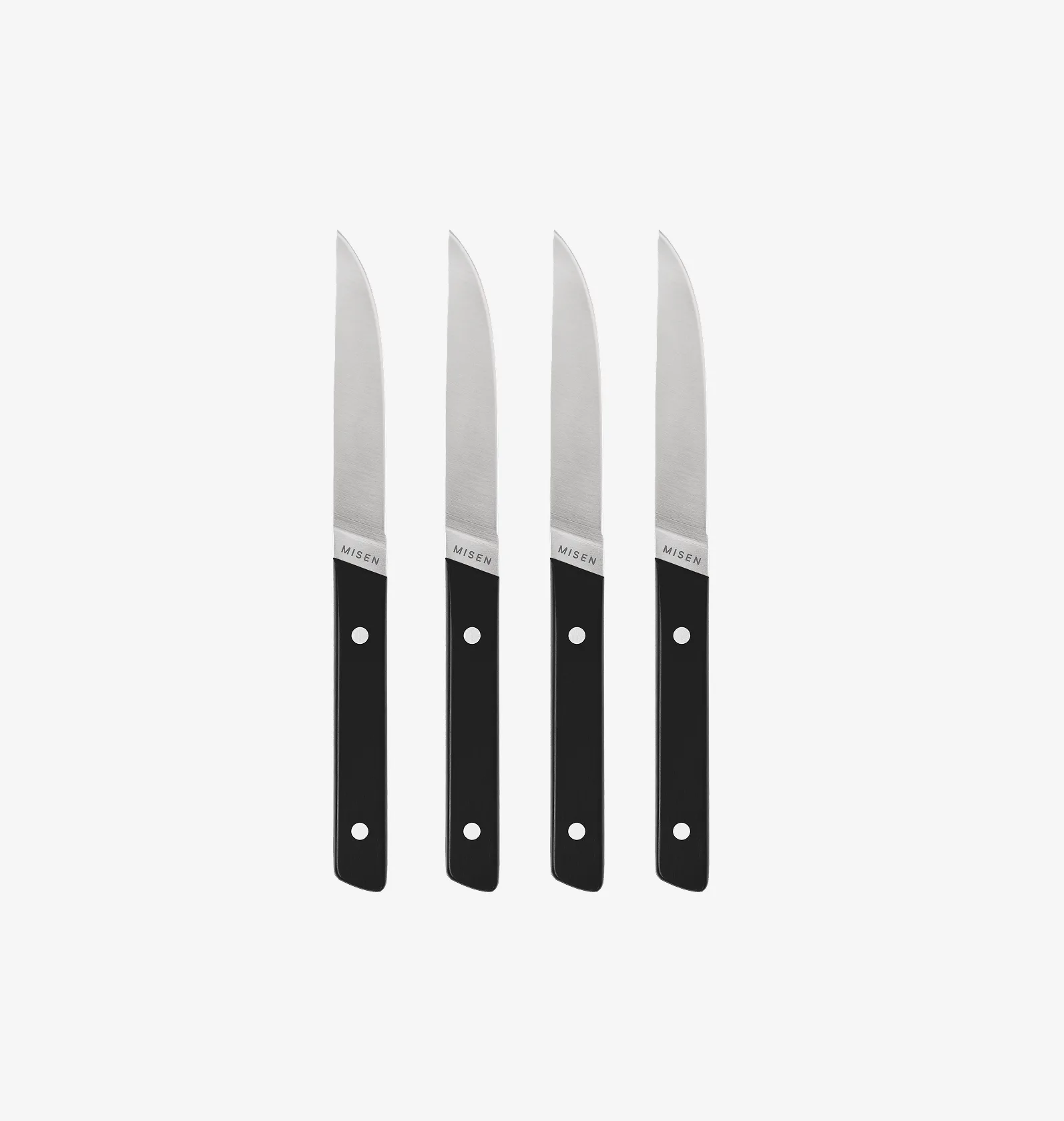
- 4-Piece Straight-Edge Steak Knives (ACUTO440: 4-piece straight-edge steak knives designed to glide through steak and chops and help keep juices in the meat; available in a range of colors including Black, Blue, and Green. Best for smaller households or couples who want precise cuts and a color choice that suits their table.
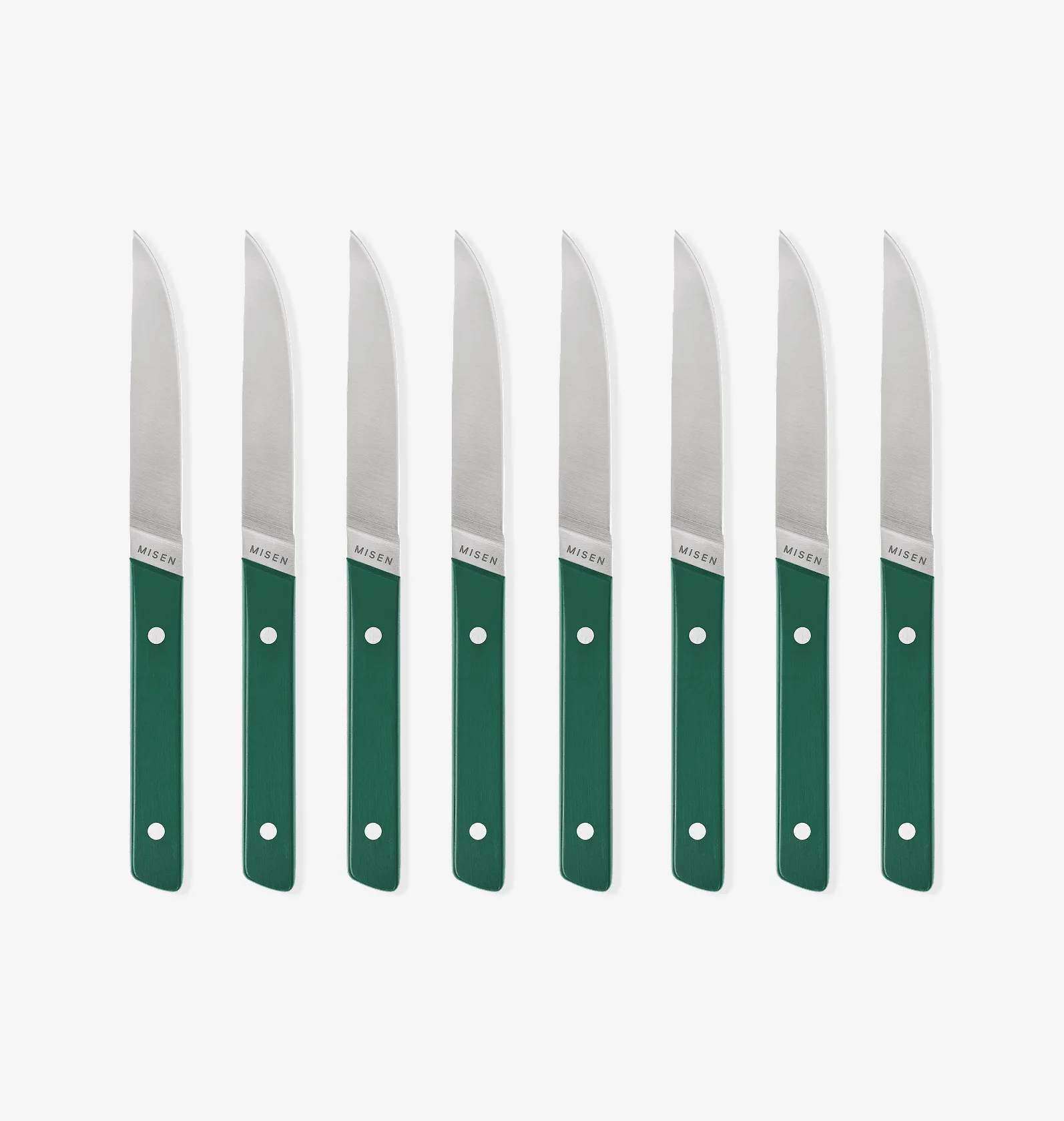
- 8-Piece Straight-Edge Steak Knives (ACUTO440) - Green: 8-piece straight-edge steak knife set in Green, designed to glide through steak and chops with ease and help keep juices in the meat. A practical choice for entertaining when you want straight-edge cuts for eight people and prefer a fixed green color.
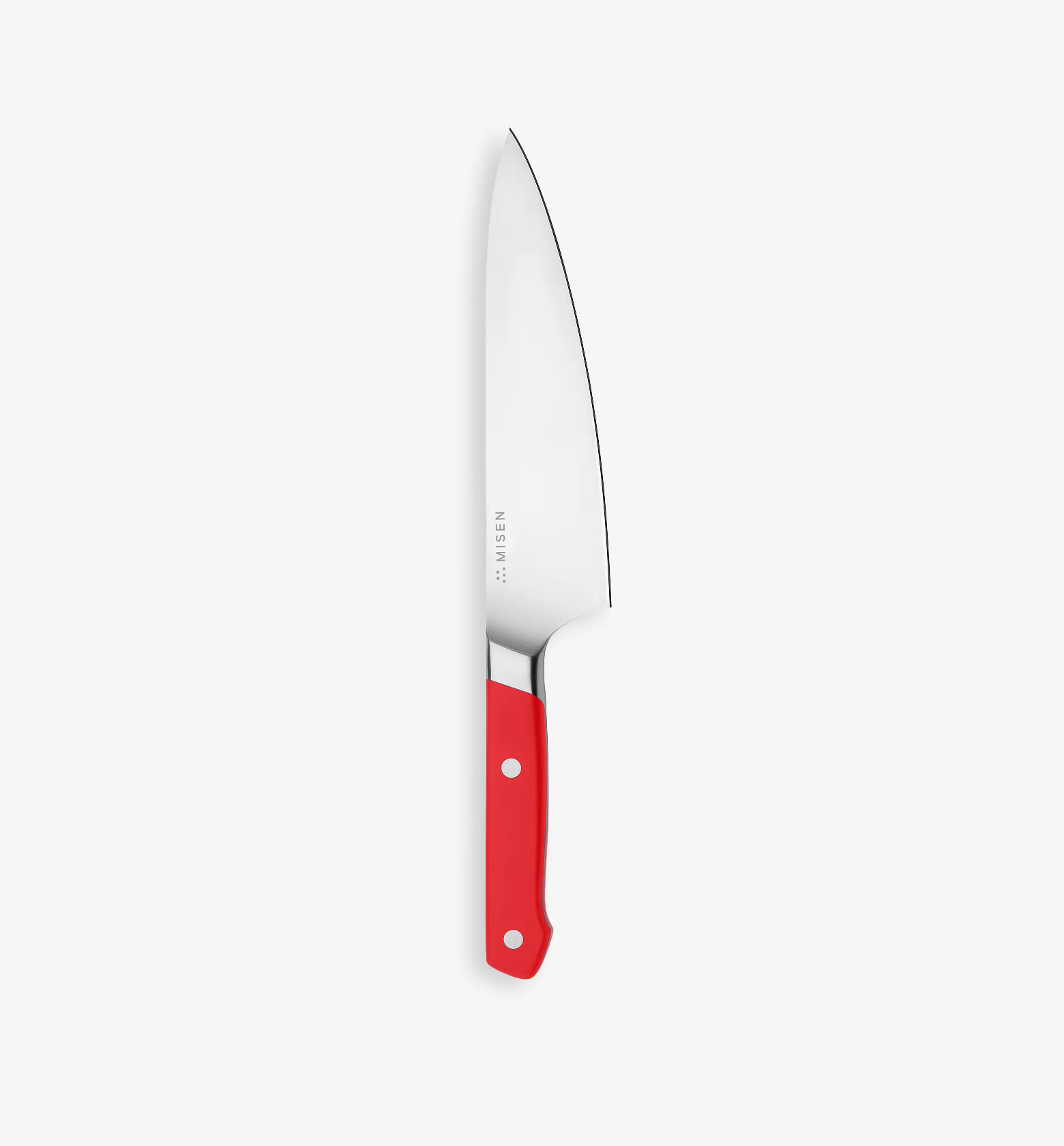
- 6.5" Chef's Knife (AUS-10) - Final Sale - Red: 6.5-inch chef's knife for everyday chopping, slicing, and dicing; easier to control than the classic chef's knife but just as versatile. The right prep partner for steak dinners—use it on the board so your steak knives stay sharp for the table.
Which should you choose?
Best for
- Shoppers who serve steak, chicken, or chops regularly and want a dedicated table knife set.
- Buyers choosing between straight-edge precision and serrated low-effort slicing.
- Home cooks who also need a smaller, controllable chef's knife for everyday prep.
Not for
- Anyone looking for a single knife to handle both board prep and table service—buy a chef's knife and steak knives separately.
- Shoppers who need boning, filleting, or bread-slicing performance; these steak knives are not designed for those tasks.
- Buyers who require a listed blade length or handle material before purchasing; the catalog does not supply those specs for these steak knives.