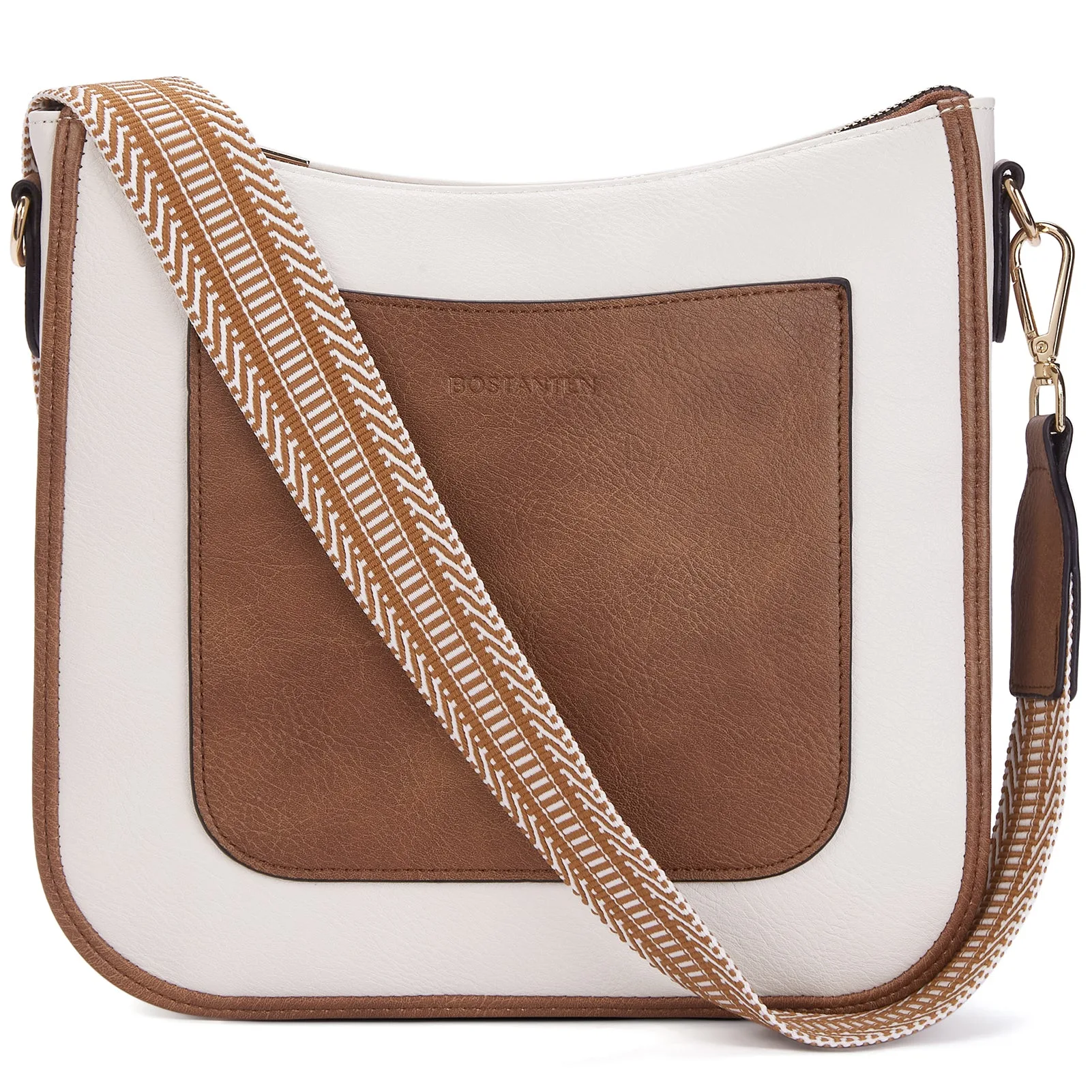
Quick answer
Match a chevron pattern strap by checking hardware first, then measuring the strap width and length, and finally choosing a color from the bag's existing palette. One patterned strap per bag is enough: let it be the loudest element and keep the bag itself simple.
A chevron pattern strap is the fastest way to change how a plain bag reads. The zigzag repeats, so it draws the eye upward and outward, which means it changes the bag's proportions as much as its color.
The catch is that a patterned bag strap can also fight the bag it is on. This guide walks through a five-step method for matching a strap to your bag, from hardware and width to color and length, using real examples from the BOSTANTEN catalog.
Why a chevron strap changes a bag more than a solid one
A solid strap reads as part of the bag. A chevron pattern strap reads as a separate accessory, so the eye treats it as a stripe of color and movement across your body. That is useful when the bag is plain, but it can look busy when the bag already has quilting, contrast stitching, or a printed surface.
The pattern also affects perceived width. Dense, high-contrast chevrons make a narrow strap look wider and more casual, while low-contrast chevrons in similar tones keep the strap looking slimmer. If you want a strap to feel like part of the bag rather than a statement, choose a chevron in two tones that already appear on the bag.
- Keep one patterned element per outfit: chevron strap or patterned bag, not both.
- Low-contrast chevrons read as texture; high-contrast chevrons read as a graphic.
Check the hardware before you buy any replacement strap
Most strap swaps fail at the attachment point, not the color. Look at whether your bag uses D-rings, swivel clips, or a sewn-in strap. A replacement strap needs clips that open wide enough for the ring, and the metal finish should sit close to the bag's existing hardware.
Mixed metals are a deliberate choice, not an accident. Gold clips on a bag with silver zippers can look intentional if you repeat the gold elsewhere, but if you want a seamless match, stay within one finish. If the bag has no attachment rings at all, a clip-on strap is not an option and you should treat the strap as fixed.
- Measure the D-ring opening, not the strap, when checking clip compatibility.
- If the bag has no rings, a detachable strap cannot be added without altering the bag.
Measure width and length before choosing a pattern
Width decides how the chevron reads. A strap much wider than the bag's original looks heavy on a small crossbody, while a very thin strap can dig into the shoulder on a loaded tote. Compare the new strap to the old one at the attachment point, and check that the clips still sit flat against the bag.
Length matters just as much. A crossbody strap should let the bag rest at your hip without pulling across your chest, and an adjustable range gives you room to layer over a coat in winter. If the listing does not state a length range, treat that as a real limitation and ask before buying rather than guessing.
- Test length over the thickest layer you actually wear, not a t-shirt.
- If length is not listed, assume you cannot confirm the fit.
Pull colors from the bag, not from the pattern
The easiest way to match a patterned bag strap is to pick one chevron color that already exists on the bag, then let the second color be neutral. A bag with brown trim and gold hardware, for example, works with a brown-and-cream chevron because both tones already appear on the bag.
If you want the strap to be the focal point, choose a chevron that contrasts with the bag but repeats a color you wear often, such as denim, black, or olive. That keeps the strap usable across more outfits instead of tying it to one look.
- Two colors from the bag: subtle. One bag color plus one contrast color: statement.
- Hold the strap against the bag in daylight before deciding.
Match the strap style to how you carry the bag
A chevron strap on a crossbody is worn across the body, so the pattern is visible from the front and the back. On a shoulder bag, the strap often folds or twists, which can break the chevron line and make the pattern look messy. On a sling bag worn high on the back, the strap is the main visible element.
Think about where the strap sits when the bag is loaded. A structured bucket bag keeps its shape, so the strap stays straight, while a soft hobo may let the strap bunch at the shoulder. If you carry a bag on one shoulder most of the time, a slightly wider patterned strap distributes weight better than a thin one.
- Crossbody and sling: the chevron is always on display, so contrast matters most.
- Shoulder carry: choose a lower-contrast chevron so folding does not look accidental.
Five steps to match a chevron strap to your bag
- Step 1: Check the attachment hardware: Confirm your bag has D-rings or loops that accept clips, and note the metal finish. Common mistake: buying a strap with clips that are too small for the ring. Checkpoint: the clip should close fully around the ring with no gap.
- Step 2: Measure strap width at the attachment: Compare the new strap width to the old one where it meets the bag. Common mistake: choosing a much wider strap for a small crossbody, which makes the bag look weighed down. Checkpoint: the clips still sit flat against the bag when attached.
- Step 3: Confirm the length range: Use the listed adjustable range, such as the 17.7 to 24.8 inches on the Clear Stadium Crossbody Shoulder Bag, and test it over your heaviest layer. Common mistake: assuming a strap will fit without a stated length. Checkpoint: the bag rests at your hip without pulling across the chest.
- Step 4: Choose chevron colors from the bag: Pick one color that already appears on the bag and one neutral or repeat color you wear often. Common mistake: matching the chevron to your outfit instead of the bag, which limits the strap to one look. Checkpoint: the strap should look intentional next to the bag in daylight.
- Step 5: Wear it once before committing: Load the bag as you normally would and carry it for an hour. Common mistake: judging the pattern only in a mirror instead of in motion. Checkpoint: if the chevron twists or bunches, switch to a lower-contrast pattern or a solid strap.
Catalog examples that make strap matching concrete
- Nola Reversible Boho Straps Vegan Leather Hobo Handbags: Vegan leather crossbody with a zipper closure and a reversible boho strap, sized 10.2 inches long at the base. A reversible strap gives you two pattern options on one bag, so you can test a chevron look without buying a second strap.
- Clear Stadium Crossbody Shoulder Bag — Concert & Festival Approved: Measures 9.1 x 4.3 x 9.1 inches and includes a detachable, adjustable guitar strap from 17.7 to 24.8 inches. The stated length range shows how much adjustment you get, which is the number to compare when swapping in a chevron strap.
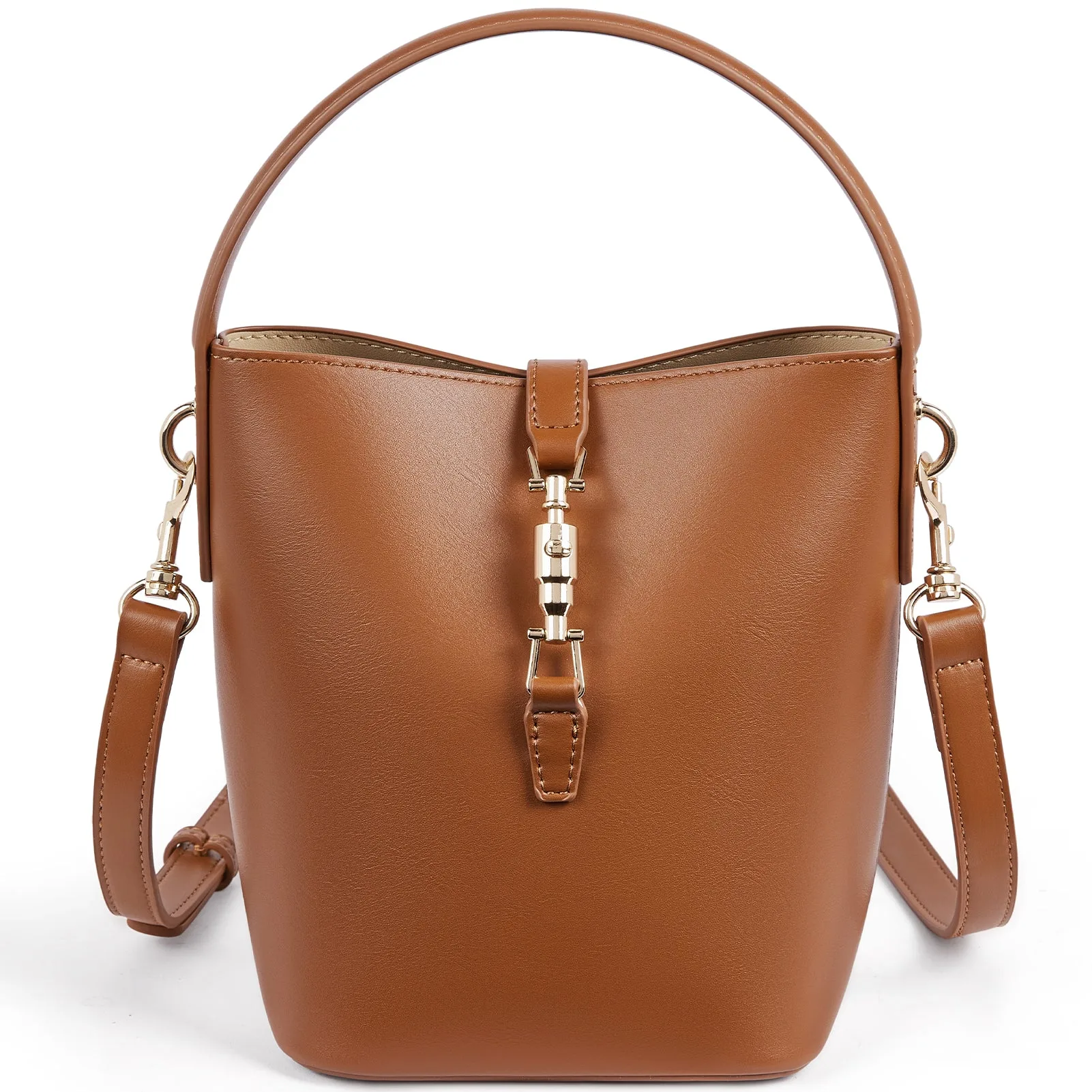
- Harper Jones Bucket Shoulder Bag – Gold Clasp Crossbody: Structured bucket bag with a removable strap, a main compartment, a zippered pouch, and a metal clasp closure. A removable strap plus gold hardware makes this an easy candidate for a patterned replacement strap in a matching metal finish.
- Arrio Reversible Strap Women's Leather Leather Sling Bag: Measures 5.39 x 8.07 x 1.57 inches with 4 pockets, including 1 lined zip pocket, and a reversible strap. On a small sling, the strap is a large share of the visible surface, so a chevron pattern reads strongly and should stay low-contrast.
Matching a chevron pattern strap comes down to hardware, width, length, and one or two colors pulled from the bag. Get those four right and the strap looks like it was made for the bag, not added to it.