Quick answer
Buy two things first: a separate calcium source such as Flaked Chicken Oyster Shell, and one boredom-busting treat such as Peck 'N Play Hanging Treat. Keep both as extras on top of a complete layer feed, not replacements for it. If you only have pullets that have not started laying, skip the oyster shell until the first egg appears.
Treats vs. Supplements: Two Different Jobs
A treat is for enrichment or training; a supplement is for filling a specific nutritional gap. Oyster shell is a supplement because it provides calcium that supports strong eggshells, while a hanging treat is enrichment that encourages natural foraging and pecking. Mixing the two jobs leads to overfeeding treats and underdosing calcium.
A practical rule: measure treats by the handful, not the bowl. For a small flock, one hanging treat shared between three to five hens lasts several days. Oyster shell should be offered free-choice in a separate dish so each hen takes only what she needs.
When Oyster Shell Belongs in the Coop
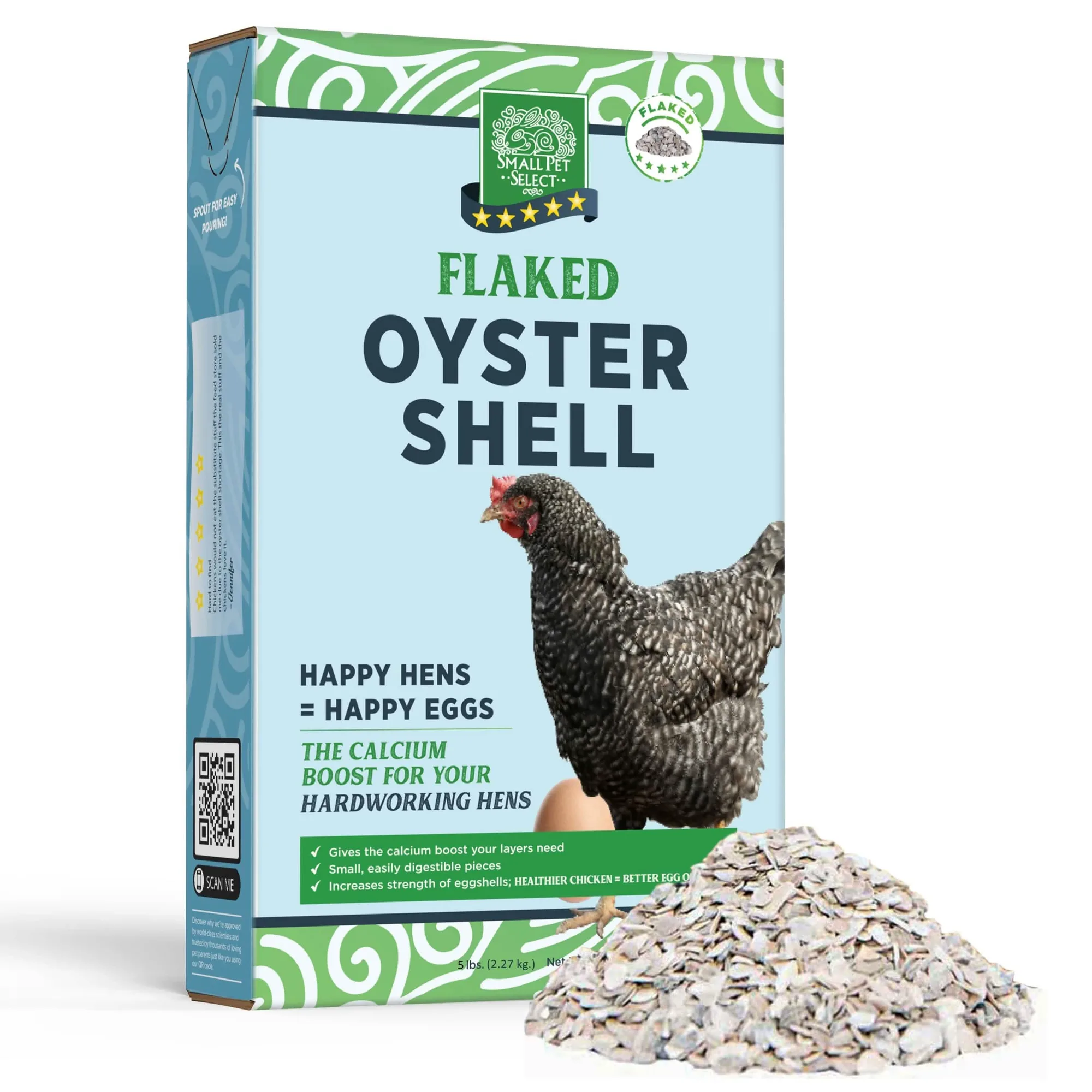
Offer oyster shell only to actively laying hens, or from around 16 to 18 weeks before laying begins. The catalog notes that layer feed calcium is fast-release, which means it is used quickly; oyster shell provides a slower, steady source that a hen can draw on when her body needs it. That is why the two work together rather than replacing each other.
If you feed a complete layer pellet, you do not need to mix oyster shell into the feed. Put it in a small separate feeder and let the hens choose. If you feed a lower-calcium diet, or your hens are producing thin-shelled eggs, the separate dish becomes more important, not less.
Choosing Treats That Do Not Dilute the Diet
The best treats for hens are low in sugar, easy to peck, and do not crowd out the balanced ration. Hanging treats are useful because they slow eating down and add movement. Loose snack mixes can be scattered on the ground, but keep the total treat portion small enough that the main feed is still the majority of what the flock eats.
If you keep small pets as well as chickens, do not swap snacks between species. A cilantro and pear snack made for small animals is not a chicken treat, and poultry oyster shell is not appropriate for rabbits or guinea pigs.
How to Introduce a New Treat or Supplement
Change one item at a time and give the flock a few days to adjust. Put the new item in a clean dish or hang it at beak height, then watch for a day or two. Hens are curious, but a sudden pile of unfamiliar food can be ignored or overeaten.
If you are also changing feed, do that separately. Introducing a new feed and a new treat in the same week makes it hard to tell which change caused any drop in laying or appetite.
Decision Rules for Buying Chicken Treats and Supplements
- If your hens are actively laying: Buy a separate calcium source such as flaked oyster shell and keep it available in its own dish alongside layer feed. Checkpoint: thin or soft shells are a signal to review calcium, not to add more treats.
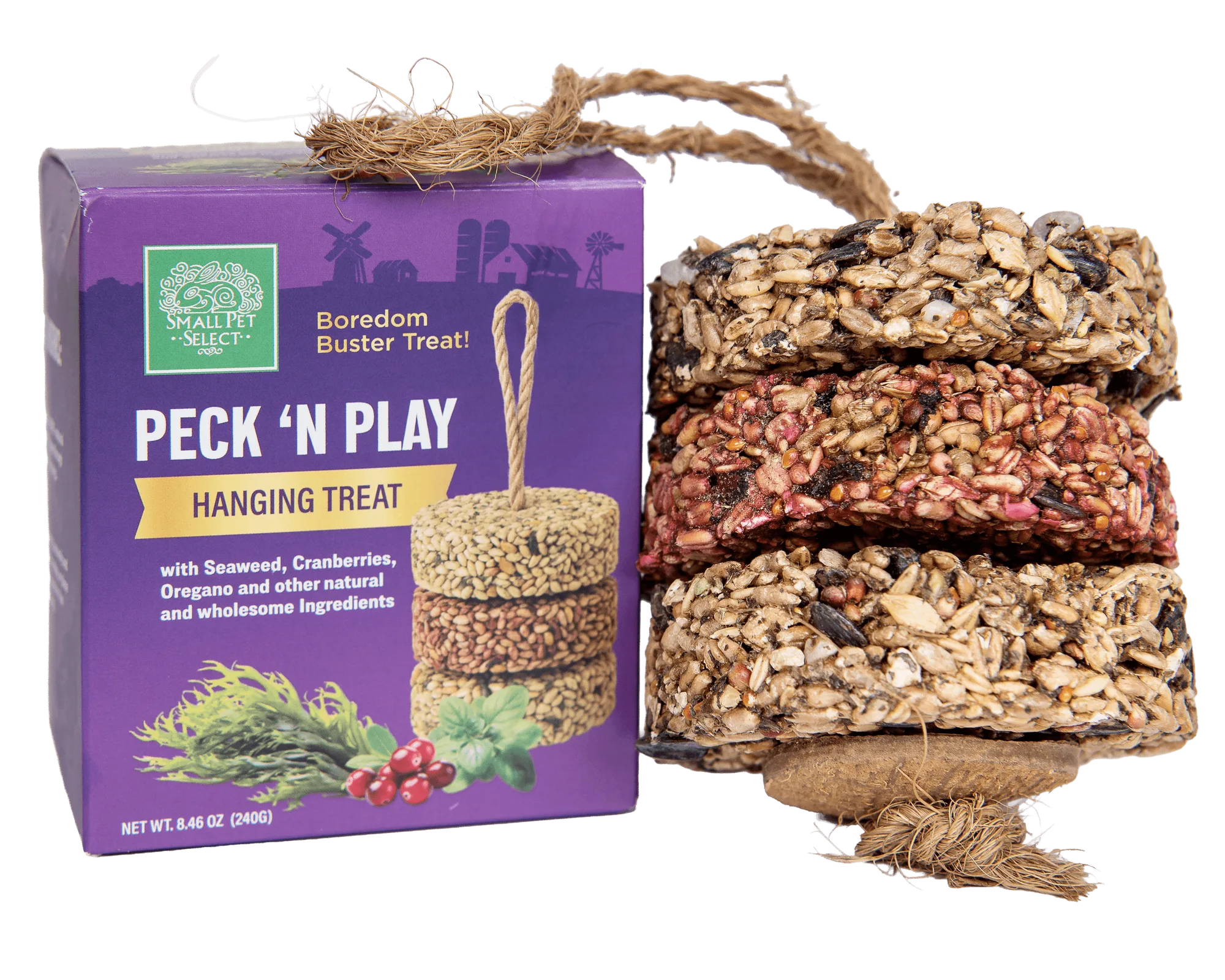
- If your hens are confined to a run: Choose a hanging treat that encourages movement and foraging, then rotate it with other enrichment so it stays interesting. One hanging treat per small flock is usually enough at a time.
- If you are buying for a mixed smallholding: Keep poultry supplements and small-animal snacks separate; a small-animal snack is not formulated as chicken feed. Do not cross-feed between species just because the packaging looks similar.
Product Facts
- Flaked Chicken Oyster Shell: Flaked Chicken Oyster Shell provides a good source of calcium that builds strong eggshells, and the catalog notes it should be added in addition to standard chicken feed. It is a supplement for laying hens, not a feed replacement, so offer it free-choice in a separate dish.
- Peck 'N Play Hanging Treat: Peck 'N Play Hanging Treat is a boredom-busting treat with 100% natural coconut bangles that can be threaded through perches, hung securely, or placed on grass for a pecking party. It promotes natural foraging and pecking, which makes it a better choice than a scatter-and-gone snack when hens are confined.
Who This Buying Approach Fits
Best for
- Backyard keepers with laying hens who want a simple calcium and enrichment setup
- Small flocks that need boredom relief during wet weather or limited free-range time
Not for
- Owners of pullets that have not started laying and do not need extra calcium yet
- Keepers looking for a single product to replace a complete layer feed