Quick answer
Choose a wheel cleaner by the type of buildup you face: color-changing gel for routine brake dust, thick cling gel for heavy road grime, dedicated iron remover for embedded metal particles, and tire-specific cleaner for rubber sidewalls.
Why a one-size-fits-all wheel cleaner doesn't work
Wheels collect three distinct kinds of dirt: loose dust and brake dust, oily road film and tar, and embedded iron particles from brake pads and industrial fallout. A single cleaner that handles one type well may struggle with the others. Matching the formula to the dominant grime saves time and avoids repeated passes.
Gel vs. liquid vs. color-change: what the texture tells you
Thick gel cleaners cling to vertical wheel faces and intricate spoke designs, keeping the product in contact long enough to dissolve grime. Thinner liquids run off quickly and work best on flat, horizontal surfaces. Color-changing formulas add a visual cue: they shift color as they neutralize dirt, so you know exactly when to rinse. That feedback is helpful if you're new to detailing or tend to overwork an area.
Tire rubber needs a separate cleaner from the wheel face
Wheel-face cleaners are formulated for metal, clear coat, or painted surfaces. They can strip protective coatings or discolor rubber. A dedicated tire and rubber cleaner is gentler on the sidewall and targets blooming, old dressing, and oxidation that wheel cleaners ignore. If you dress your tires afterward, starting with a clean, residue-free rubber surface gives the dressing a better bond.
How to pick your wheel cleaner: decision rules
- Routine brake dust and light dirt: Choose a color-changing gel like Two Face Color Changing Wheel Cleaner. Spray on, let it turn color, and rinse. No scrubbing needed. Works on painted and clear-coated wheel faces.
- Heavy road grime, caked-on mud, or old dressing: Pick a thick cling gel like Sticky Citrus Wheel Cleaner Gel. The gel stays in place on vertical surfaces and needs only minimal scrubbing. Best for heavily soiled wheels that see off-road or winter driving.
- Embedded iron particles or industrial fallout: Use a dedicated iron remover like Decon Pro Iron & Fallout Remover. It turns purple as it dissolves metal particles. Do not use on bare aluminum or unsealed wheels – it's a chemical reaction, not a cleaner. After using an iron remover, rinse thoroughly and apply a sealant or wax to protect the wheel surface.
- Rubber tires and trim only: Grab a tire-specific cleaner like Total Extract Tire & Rubber Cleaner. It removes blooming, old dressing, and discoloration without harming the rubber. Use it before applying any tire dressing.
Product facts at a glance
-
Two Face Color Changing Wheel Cleaner: Two Face Color Changing Wheel Cleaner uses a gel that shifts color as it breaks down dirt, brake dust, and metallic buildup. No scrubbing required – just spray, wait, and rinse. The color-change feedback takes the guesswork out of dwell time, so you don't rinse too early or let the product dry on the wheel.
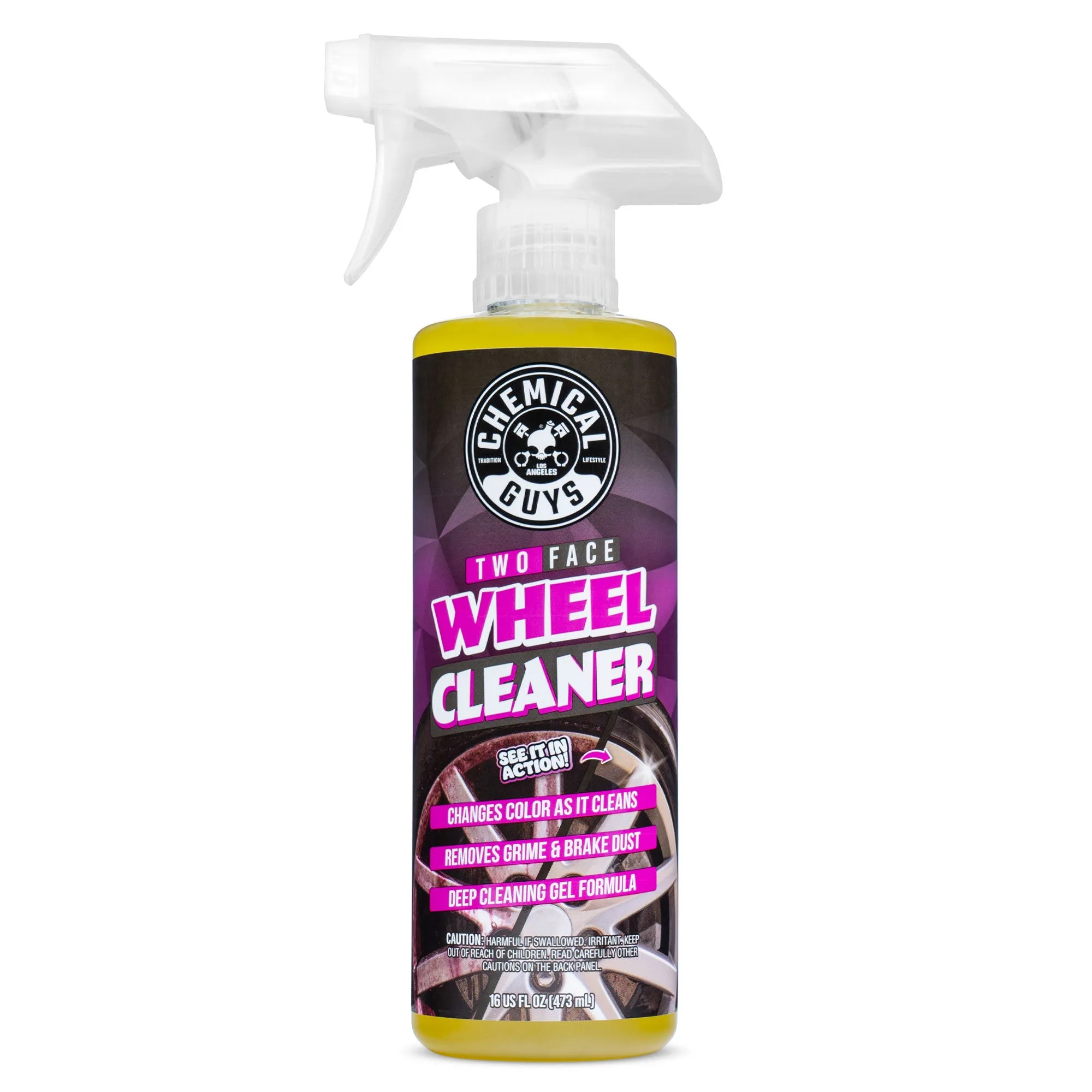
Two Face Color Changing Wheel Cleaner
-
Sticky Citrus Wheel Cleaner Gel: Sticky Citrus Wheel Cleaner Gel is a thick, all-natural formula that clings to wheels and rims to battle tough grime with minimal scrubbing. The thick gel stays put on intricate spoke designs and vertical surfaces, making it ideal for detailed or multi-spoke wheels that are hard to reach with a brush.
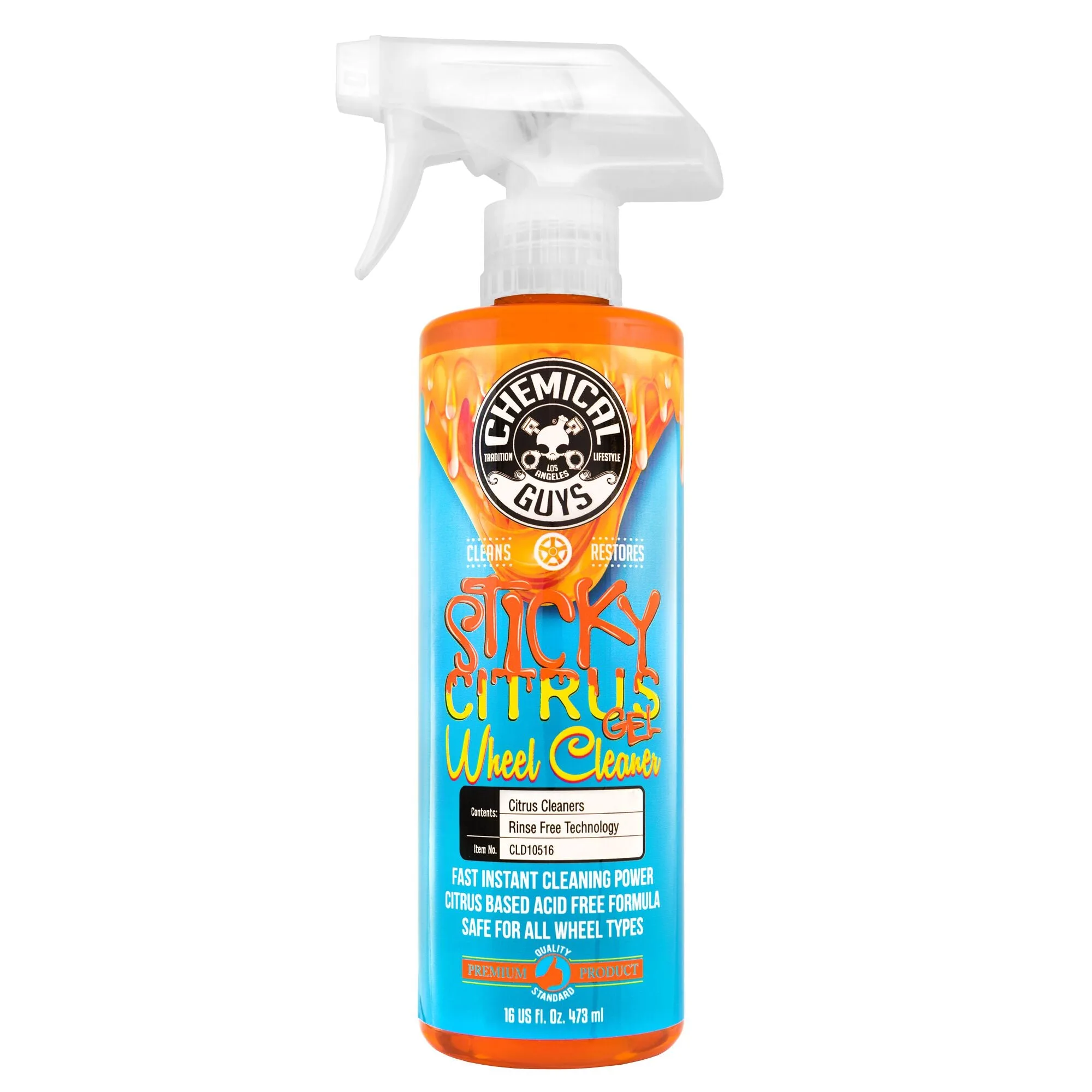
Sticky Citrus Wheel Cleaner Gel
Who should choose what
Best for
- Home detailers who want a no-scrub, visual-cue cleaner for regular maintenance
- Owners of painted or clear-coated wheels who need a gentle but effective daily driver cleaner
Not for
- Bare metal or unsealed wheel surfaces that can react with acidic or iron-removing formulas
- Anyone who wants one product for both wheel face and rubber tire – you still need a dedicated tire cleaner for sidewalls