Quick answer
For home sewing, prioritize a steam iron with adjustable temperature settings covering low to high heat (e.g., 140–428°F), a non-stick soleplate, and a compact size for easy maneuvering around seams and small projects.
Why temperature control matters for fabric safety
Different fabrics require different heat levels. Delicate synthetics, silk, and some blends need low heat, while cotton and linen need high heat. An iron with a wide temperature range lets you safely press any fabric in your stash.
A variable thermostat (not just fixed settings) gives you precise control. Look for an iron that heats quickly and maintains a consistent temperature to avoid scorching or melting your project.
Soleplate material and design
Non-stick soleplates are the most common choice for home sewing. They glide smoothly over fabric and resist buildup of fusible adhesives or starch. Some irons also offer stainless steel or ceramic, but non-stick is the most practical for everyday use.
Also consider the shape: a pointed tip helps you get into tight corners and around buttons, while a wider soleplate covers more area for large pieces.
Size and portability for sewing spaces
If you sew in a small space or frequently travel to classes, a compact travel iron can be a smart choice. It takes up less room on your cutting table and is easier to store. Full-size irons offer larger water tanks and more steam, but they are heavier and bulkier.
Think about how you sew: if you mostly work on small projects like appliqué or bias tape, a smaller iron may be more agile. For large quilts or garments, a standard size might be better.
Decision rules for choosing a steam iron
- Check the temperature range: Make sure the iron can go low enough for synthetics (around 200°F) and high enough for cotton/linen (above 400°F). A range like 140–428°F covers all bases. If you sew with many fabric types, a wide temperature range is non-negotiable.
- Choose the right soleplate: Non-stick is best for sewing because it glides easily and resists adhesive residue. Avoid stainless steel if you use fusible web or spray starch often. Non-stick saves cleanup time and protects your fabric.
- Decide on size based on your projects: For small projects, appliqué, and travel, a compact iron is easier to handle. For large quilts or garments, a full-size iron covers more area and holds more water. Match the iron size to your typical project scale.
- Consider dual voltage if you travel: If you take your iron to classes or retreats, dual voltage ensures it works internationally. Check if the iron includes a storage bag for safe transport. Dual voltage adds flexibility for traveling sewists.
Product highlight
-
Mighty Steam Iron: The Mighty Steam Iron heats quickly to a selected temperature between 140 and 428°F and has a non-stick sole plate. This wide temperature range covers everything from delicate synthetics to heavy cotton, and the non-stick soleplate prevents buildup from fusible products.
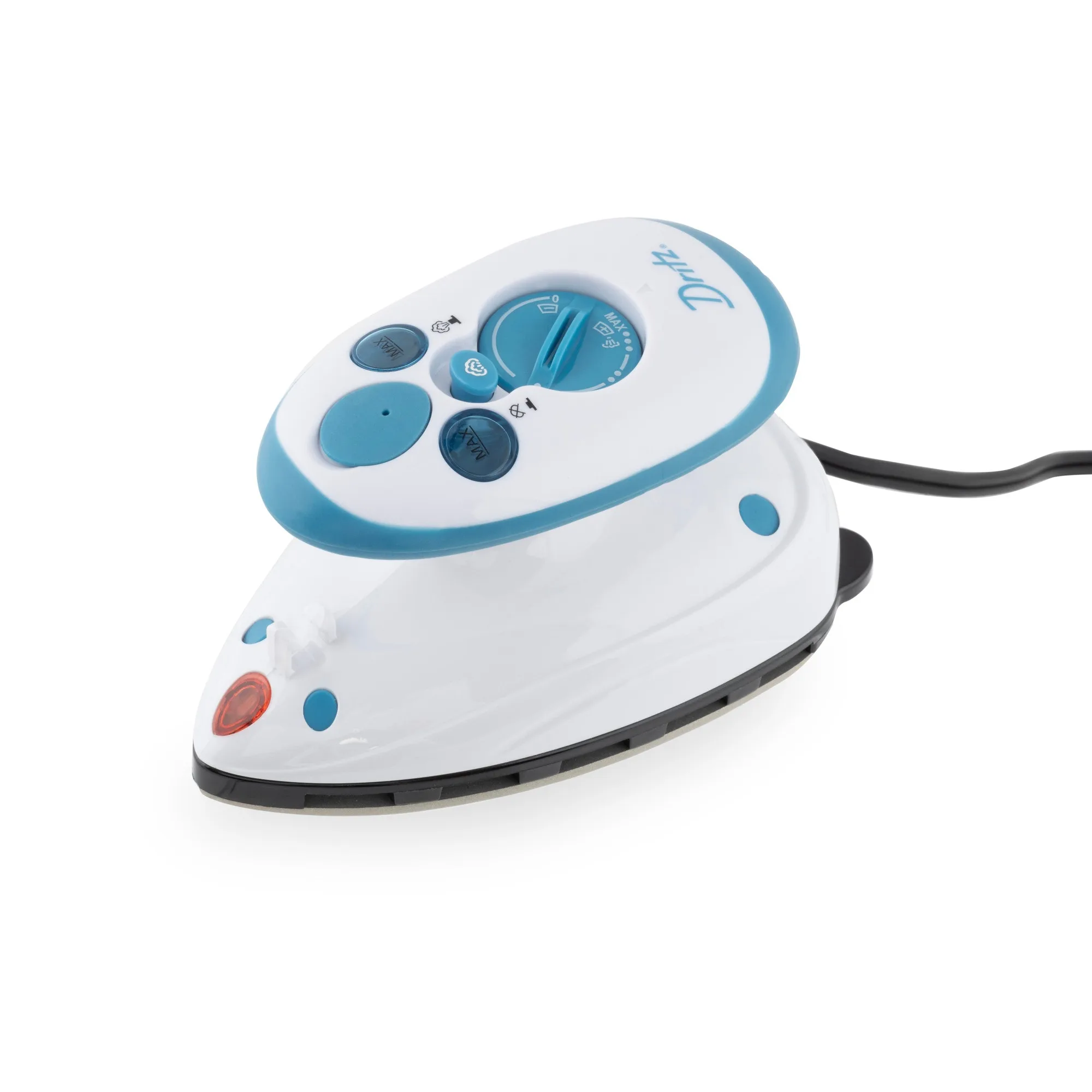
Mighty Steam Iron
Who should buy what
Best for
- Home sewists who work with a variety of fabrics and need precise temperature control
- Sewists who use fusible products and want a non-stick soleplate for easy cleaning
- Crafters who sew in small spaces or travel to classes
Not ideal for
- Professional dressmakers who need a heavy-duty iron with continuous steam for hours of pressing
- Quilters who prefer a larger soleplate for pressing large quilt tops quickly