Quick Answer
For outdoor shoots, prioritize a video field monitor with at least 2000 nits of brightness, robust connectivity (SDI and HDMI), and flexible power options. The SmallHD 703 UltraBright is a strong choice thanks to its 2500+ nit display and cross-conversion features.
Brightness Is Non-Negotiable Outdoors
Sunlight washes out most standard monitors, making it nearly impossible to judge exposure or focus. A monitor rated at 2500 nits or higher stays visible even in direct sunlight, which is why the SmallHD 703 UltraBright’s 2500+ nit panel is a standout spec for location work.
If you shoot mostly in overcast conditions or shade, a 1500-nit monitor might suffice, but you’ll still struggle in bright midday sun. The trade-off is cost: higher brightness monitors are more expensive and may consume more power.
Connectivity: SDI vs. HDMI
Outdoor rigs often mix cameras, recorders, and wireless transmitters. A monitor with both SDI and HDMI inputs and outputs gives you flexibility. The SmallHD 703 UltraBright supports SDI/HDMI cross-conversion, meaning you can take an HDMI signal from a mirrorless camera and output SDI to a wireless transmitter without an extra adapter.
If you only use one type of camera, a single-format monitor may save money, but it limits future compatibility. For multi-camera or rental workflows, dual-format is worth the investment.
Power Options for Long Days
Field monitors drain batteries quickly, especially at high brightness. Look for a monitor that accepts standard Sony L-series batteries or has a 12V Lemo power input for external battery packs. The SmallHD 703 UltraBright supports 12V Lemo power, which lets you run it from a V-mount battery via a D-Tap cable.
The trade-off: monitors with built-in battery plates add weight. If you’re on a gimbal, a lighter monitor with external power might be better. For tripod work, the extra weight is negligible.
Decision Rules for Choosing a Video Field Monitor
- Brightness: Choose a monitor with at least 2000 nits for sunny outdoor use. 2500+ nits is ideal for full-sun conditions.
- Connectivity: Get a monitor with both SDI and HDMI if you switch between cameras or use wireless transmitters. Cross-conversion saves you from buying extra gear.
- Power: Prefer a monitor that accepts standard batteries and has a 12V DC input for external power. This gives you flexibility between gimbal and tripod setups. Check whether the monitor includes a battery plate or requires an accessory.
Product Facts
-
SmallHD 703 UltraBright On-Camera Monitor: 2500+ nits brightness This level of brightness keeps the screen viewable in direct sunlight, so you don't have to guess exposure or focus.
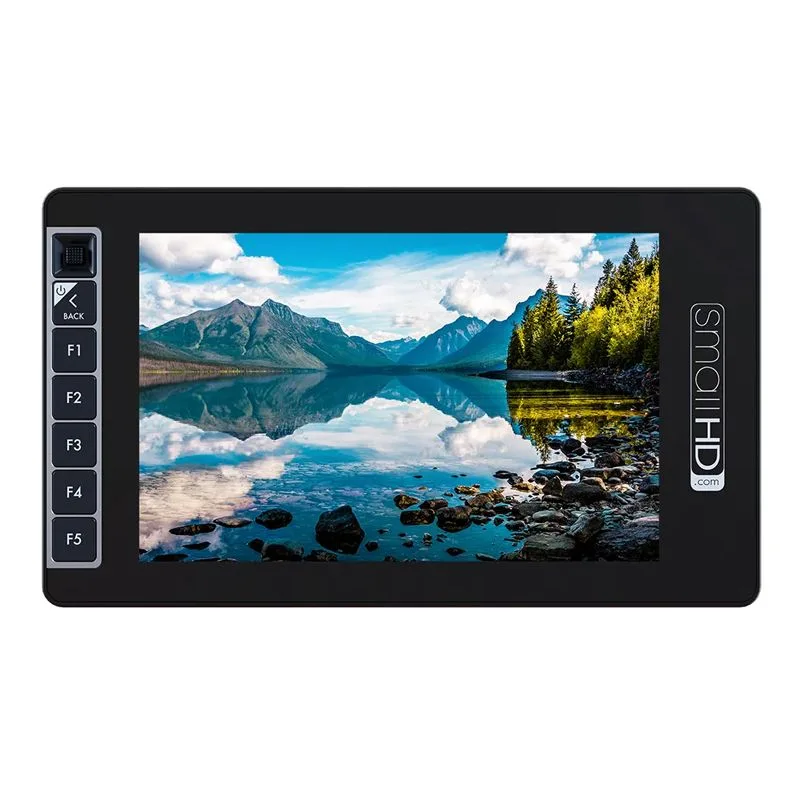
SmallHD 703 UltraBright On-Camera Monitor
-
SmallHD 703 UltraBright On-Camera Monitor: SDI/HDMI cross-conversion It lets you connect different camera types and output to multiple devices without extra adapters, simplifying your rig.
-
SmallHD 703 UltraBright On-Camera Monitor: Supports 12V Lemo power You can power the monitor from a professional battery system, extending run time for all-day shoots.
Who Should Buy This Type of Monitor
Best For
- Videographers who shoot outdoors in direct sunlight and need a bright, readable display
- Crews that work with mixed camera formats (HDMI and SDI) and want a single monitor that handles both
Not For
- Budget-conscious shooters who only work in controlled indoor lighting and can use a standard 1000-nit monitor
- Gimbal operators who prioritize ultra-lightweight gear and don’t need high brightness