Quick answer
A circular polarizer is essential for cutting reflections and deepening skies. Start by matching the filter thread size of your lens, then decide between standard and slim profiles based on your lens's focal length and hood design.
Why filter size matters first
Every lens has a thread diameter printed on the barrel or under the lens cap (e.g., 67mm, 72mm). Buying the wrong size means the filter won't screw on, or you'll need a step-up ring that can add vignetting on wide-angle lenses.
Standard vs. slim polarizers
Standard polarizers have a thicker metal ring and often include front threads for a lens cap. Slim or 'thin' polarizers reduce the risk of vignetting on wide-angle lenses but may lack front threads, making it harder to attach a cap or a second filter.
Coating and build quality
Multi-coated polarizers reduce flare and internal reflections. A brass ring is less likely to bind or stick to your lens than an aluminum one. These details affect durability and image quality more than the brand name alone.
Decision rules for choosing a circular polarizer
- Check your lens thread size: Look for the Ø symbol followed by a number (e.g., Ø67mm) on the lens barrel or under the front cap. That number is the filter size you need.
- Decide between standard and slim: Use a slim polarizer if your lens is wider than 24mm (full-frame) or 16mm (APS-C) to avoid dark corners. Stick with a standard polarizer for longer lenses where vignetting isn't an issue. Slim filters often lose front threads; check before buying if you plan to use a lens cap.
- Match the filter to your shooting style: If you shoot landscapes or architecture, a circular polarizer helps deepen skies and remove reflections from water or glass. For indoor or low-light work, skip it because it reduces light by about 1–2 stops.
- Consider multi-coating: A multi-coated polarizer reduces flare and ghosting, especially useful when shooting toward the sun or with bright highlights in the frame.
Product facts
-
Hoya Circular Polarizer Filter - Select Size: Hoya Circular Polarizer Filters are available in multiple thread sizes to fit different lenses. You can select the exact size for your lens without needing a step-up ring, keeping the setup simple and reducing the chance of vignetting.
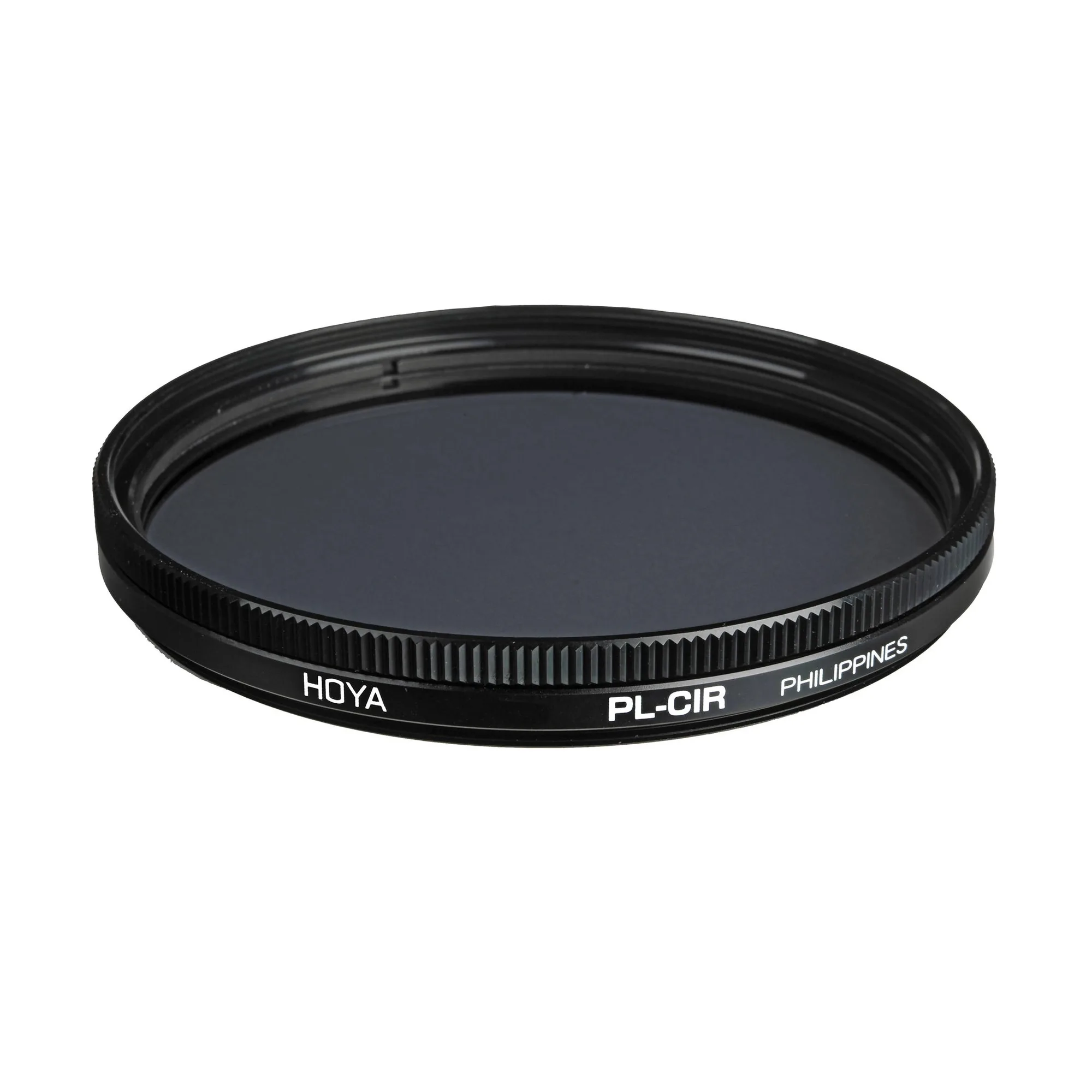
Hoya Circular Polarizer Filter - Select Size
Who should buy a circular polarizer
Best for
- Landscape photographers who want richer skies and less haze
- Outdoor shooters who need to cut glare from water, glass, or wet foliage
Not ideal for
- Low-light or indoor photographers who cannot afford the 1–2 stop light loss
- Macro shooters who rely on precise focus and often prefer a polarizer that can be adjusted separately