Quick answer
Start with the slowest flow nipple available, especially for newborns and any breastfed baby, and let your baby's feeding behavior—not the calendar—tell you when to move up. If a feed takes longer than about 20–30 minutes with visible effort, or your baby fusses and gulps, try the next flow. If milk dribbles, coughing, or fast finishes happen, step back down. Lansinoh NaturalWave Nipples come in multiple flow options so you can adjust without changing bottles.
Why flow rate matters more than age alone
Age gives you a starting point, but flow rate is really about your baby's sucking pattern and stamina. A 3-month-old who is still learning to coordinate suck-swallow-breathe may do better on a slower flow than a 2-month-old who drains a bottle in 10 minutes. Bottle-fed babies also tend to get milk faster than at the breast, which can lead to overfeeding and a preference for the bottle. Choosing a flow that mimics the breast—slow, with pauses—helps protect that back-and-forth transition.
The three main flow stages and typical age ranges
Most nipple systems use numbered flows: slow (often labeled 1 or S), medium (2 or M), and fast (3 or L). As a rough guide, slow flow suits newborns and established breastfed babies; medium flow fits many babies around 3–6 months; fast flow is for older, efficient feeders around 6 months and up. These are not deadlines. A baby who was premature or has feeding challenges may stay on slow flow much longer, and that is fine. What matters is a calm, steady feed with no signs of distress.
How to read your baby's cues during a feed
Watch the first two minutes. A good match looks like rhythmic sucking with occasional pauses, no milk pooling at the corners of the mouth, and a baby who stays relaxed. Signs the flow is too slow: frantic rooting after the bottle is empty, falling asleep from exhaustion before finishing, or feeding longer than 30 minutes with obvious frustration. Signs the flow is too fast: gulping, coughing, milk spilling out, arching away, or a feed that ends in under 10 minutes with a very wet baby. Adjust one flow step at a time and give it two or three feeds before deciding.
Paced bottle feeding: the technique that makes any flow safer
Paced feeding puts your baby in charge of the pace, which is especially important for breastfed babies. Hold your baby semi-upright, support the head, and keep the bottle nearly horizontal so milk rests at the nipple rather than pouring in. Let your baby actively pull the nipple in, and tilt the bottle just enough to keep milk in the tip. Every 20–30 seconds, or when you see a pause, lower the bottle or gently remove the nipple to let your baby breathe and decide whether to continue. This mimics the natural pauses at the breast and reduces the risk of overfeeding, regardless of which flow you use.
When and how to size up without causing nipple confusion
Move up only when your baby shows consistent frustration with the current flow across several feeds—not just once. If you are breastfeeding, try to keep the bottle flow slower than or equal to your breast flow; a bottle that is too fast can make the breast feel like hard work. When you do size up, use paced feeding for the first few days to help your baby adjust. If you see signs of flow being too fast, go back down. There is no benefit to rushing to a faster nipple. Your baby's efficiency will increase naturally, and the right flow will feel almost boring—calm, quiet, and steady.
Step-by-step: finding your baby's flow
- Start with the slowest flow: Begin with a slow-flow nipple, even if your baby is older than the typical newborn range. It is easier to speed up than to slow down a feed that is already too fast. Checkpoint: if your baby finishes a feed in under 10 minutes with gulping or spilling, you may need to drop down a flow or use paced feeding.
- Feed semi-upright with the bottle nearly horizontal: Hold your baby upright and keep the bottle level so milk stays at the nipple tip. This lets your baby control the pace and reduces the rush of milk. Checkpoint: if milk drips from the corner of the mouth or your baby arches away, the flow or angle is too fast.
- Watch for cues across two or three feeds: Look for consistent signs: frustration, falling asleep before finishing, or feeds lasting over 30 minutes suggest too slow. Gulping, coughing, or feeds under 10 minutes suggest too fast. Checkpoint: one odd feed is not a pattern. Give any change two or three feeds before deciding.
- Step up one flow at a time: When you see a consistent pattern of frustration, move to the next flow number. Keep using paced feeding for the first few days to help your baby adjust. Checkpoint: if signs of too-fast flow appear, go back down. There is no rush to size up.
- Recheck after growth spurts or illness: A baby who was happy on medium flow may need slow flow again during a cold or after a growth spurt changes their feeding pattern. Reassess rather than assuming the flow is still right. Checkpoint: flow needs can change. Keep a couple of different flow nipples on hand so you can adjust without a store run.
Product facts that help you choose
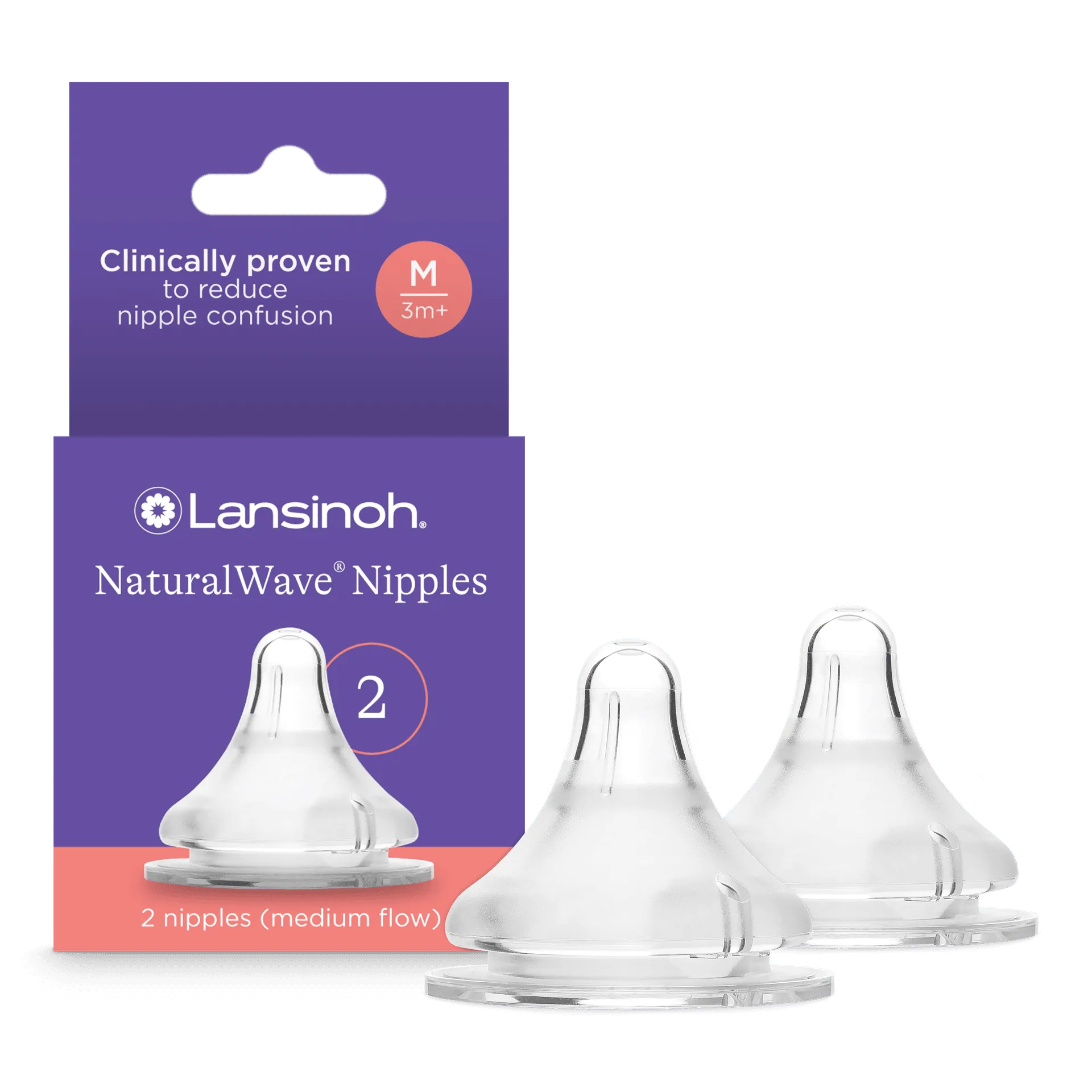
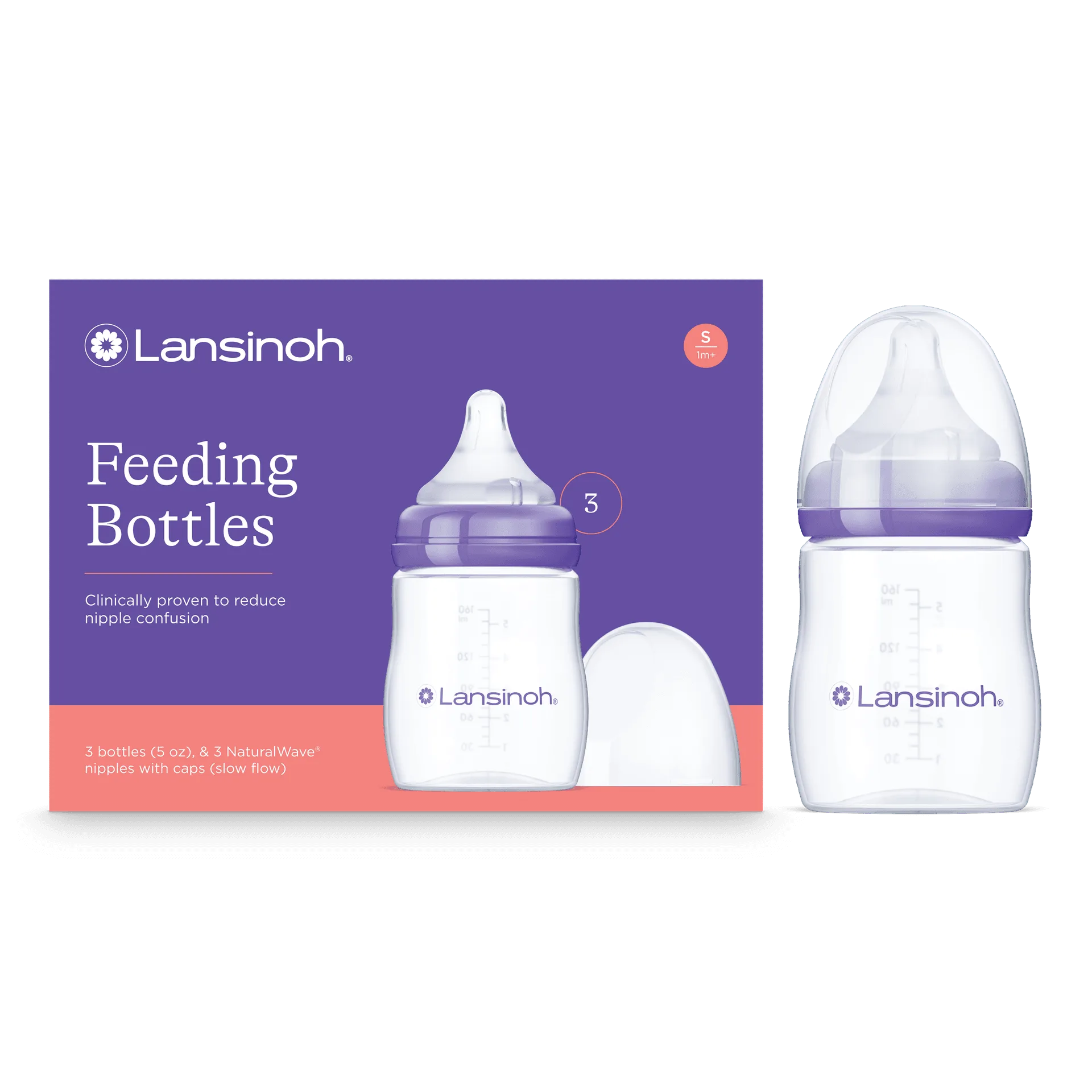
- NaturalWave® Nipples - 2 count: NaturalWave® Nipples - 2 count are clinically proven to reduce nipple preference in established breastfed babies and encourage natural oral development. If you are breastfeeding and want to minimize nipple confusion, this two-pack lets you test a flow before committing to a larger set.
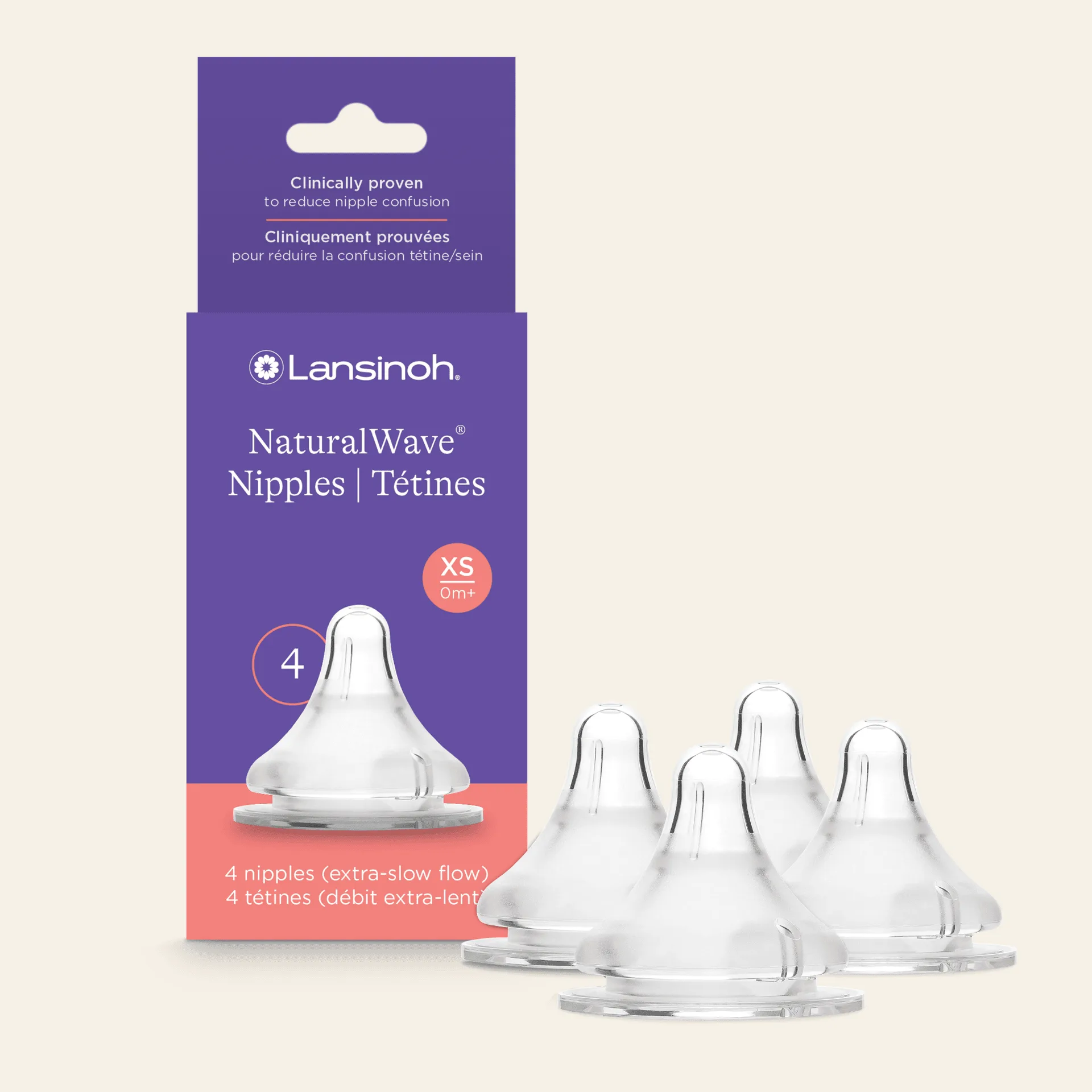
- NaturalWave® Nipples - 4 count: NaturalWave® Nipples - 4 count are clinically proven to reduce nipple confusion and feature advanced airflow. The four-pack is practical if you already know your baby's flow and want spares on hand; advanced airflow helps reduce vacuum buildup that can make feeding uncomfortable.
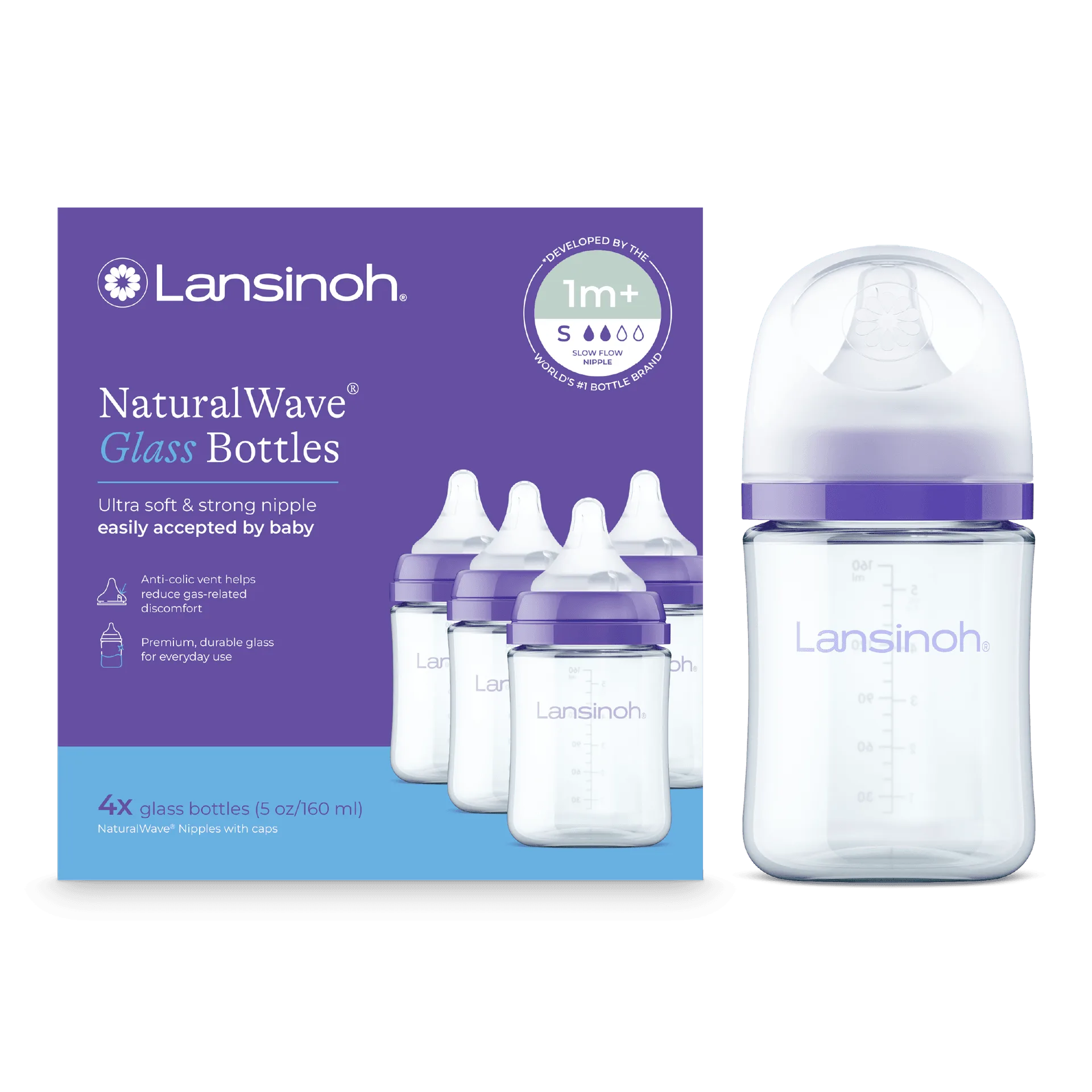
- Baby Bottles 5oz: Baby Bottles 5oz come with Lansinoh's NaturalWave® Nipple, which is clinically proven to reduce nipple confusion and enables baby to use the same natural sucking actions learned at the breast. If you are starting from scratch, this bottle includes the nipple, so you can begin with a breast-like feed and only buy separate nipples when you need a different flow.