Quick answer
For most VS4-10 builds, start with a molded skid plate that matches your transmission and chassis kit, then add bracing only where your driving style causes flex or repeated impacts. If you run a VFD Transmission Kit or VS4-10 Pro Kit, the VFD Skid Plate Set is the direct replacement. Upgrade axles and hardware only after the chassis is protected.
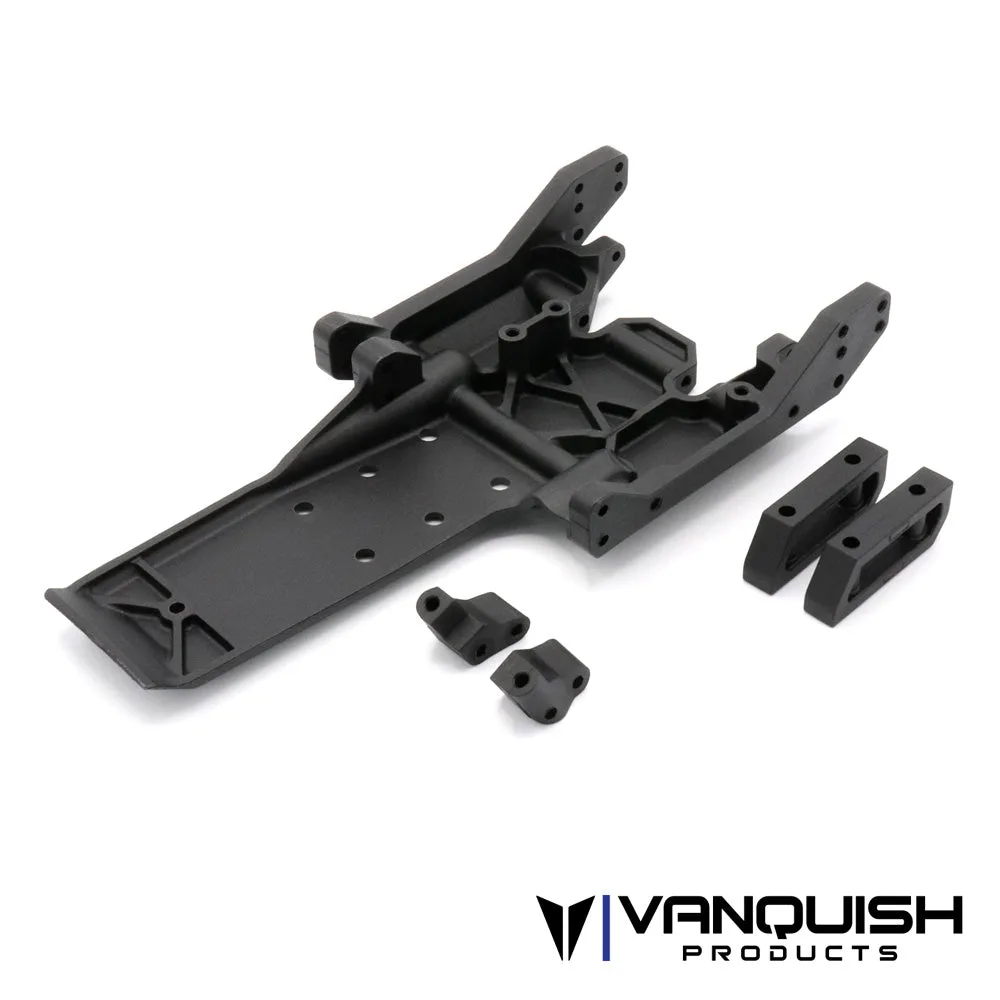
VFD Skid Plate Set
Your VS4-10 takes a beating on every rock, ledge, and drop. The parts that touch down first—skid plate, chassis braces, and axle housings—decide whether a hard hit costs you a scratched surface or a bent chassis. This guide gives you concrete rules for choosing skid plates and braces based on fit, material, and how you actually drive.
You do not need every upgrade at once. The right order is protection first, then weight and strength where they matter. Below are the trade-offs that separate a smart buy from a shelf full of parts that do not fit your kit.
Start with fit, not material
A skid plate that does not bolt to your exact transmission and chassis combination will not protect anything. Vanquish lists the VFD Skid Plate Set as a replacement for the VFD Transmission Kit and VS4-10 Pro Kit, and the package includes the molded skid plate, two motor plate chassis mounting tabs, and two battery tray spacers. Hardware is not included, so plan to reuse or source fasteners.
Before buying any brace or plate, identify your kit by name and check the compatibility line in the product description. If a product does not state your kit, treat that as a decision limitation rather than assuming it fits. A few minutes confirming compatibility saves a return and a stripped mounting hole.
- Write down your exact kit name (for example, VS4-10 Pro) before shopping.
- Check whether hardware is included; many replacement plates ship without it.
Skid plate material guide: molded plastic vs aluminum
Molded plastic skid plates slide over rock well, absorb impacts, and keep weight low. They also wear down over time, which is normal—the plate is doing its job. Vanquish molded parts like the VFD Skid Plate Set follow this approach and keep the cost low, which makes them a sensible first replacement.
Aluminum plates resist gouging and stay flatter across hard hits, but they add weight up high and can transfer more shock into the chassis. For a trail truck that sees occasional ledges, molded plastic is usually enough. For a heavy build that drags its belly constantly, aluminum can be worth the weight penalty.
- Choose molded plastic for low weight, smooth sliding, and low replacement cost.
- Choose aluminum when repeated hard impacts are flattening or cracking your plate.
When chassis braces actually help
Braces matter when your chassis flexes enough to change suspension geometry or loosen fasteners. The F10 Portal Rear Axle Set shows how Vanquish approaches rigidity: the molded axle uses an integrated truss that ties both ends together, plus brass inner reinforcement tubes that add strength and put weight down low. That is the same logic you apply to chassis bracing—stiffen the structure and place weight low.
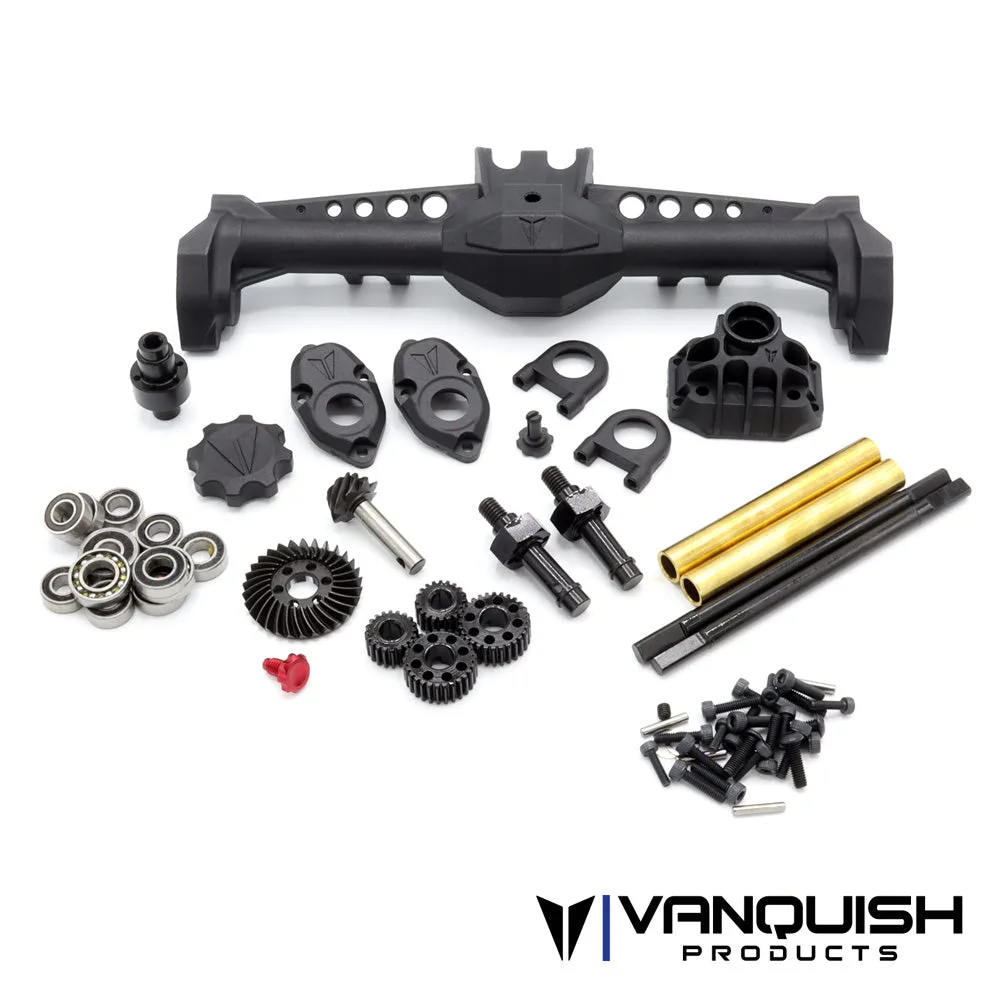
F10 Portal Rear Axle Set
Add braces after you notice a specific symptom: a chassis that twists under power, a skid plate that rocks, or hardware that keeps backing out. Bracing without a symptom just adds weight. If your truck already feels planted and fasteners stay tight, spend the money on tires or shocks instead.
- Brace only when you can name the flex or impact problem it solves.
- Weight added low on the vehicle hurts handling less than weight added high.
Hardware and axles: upgrade after protection
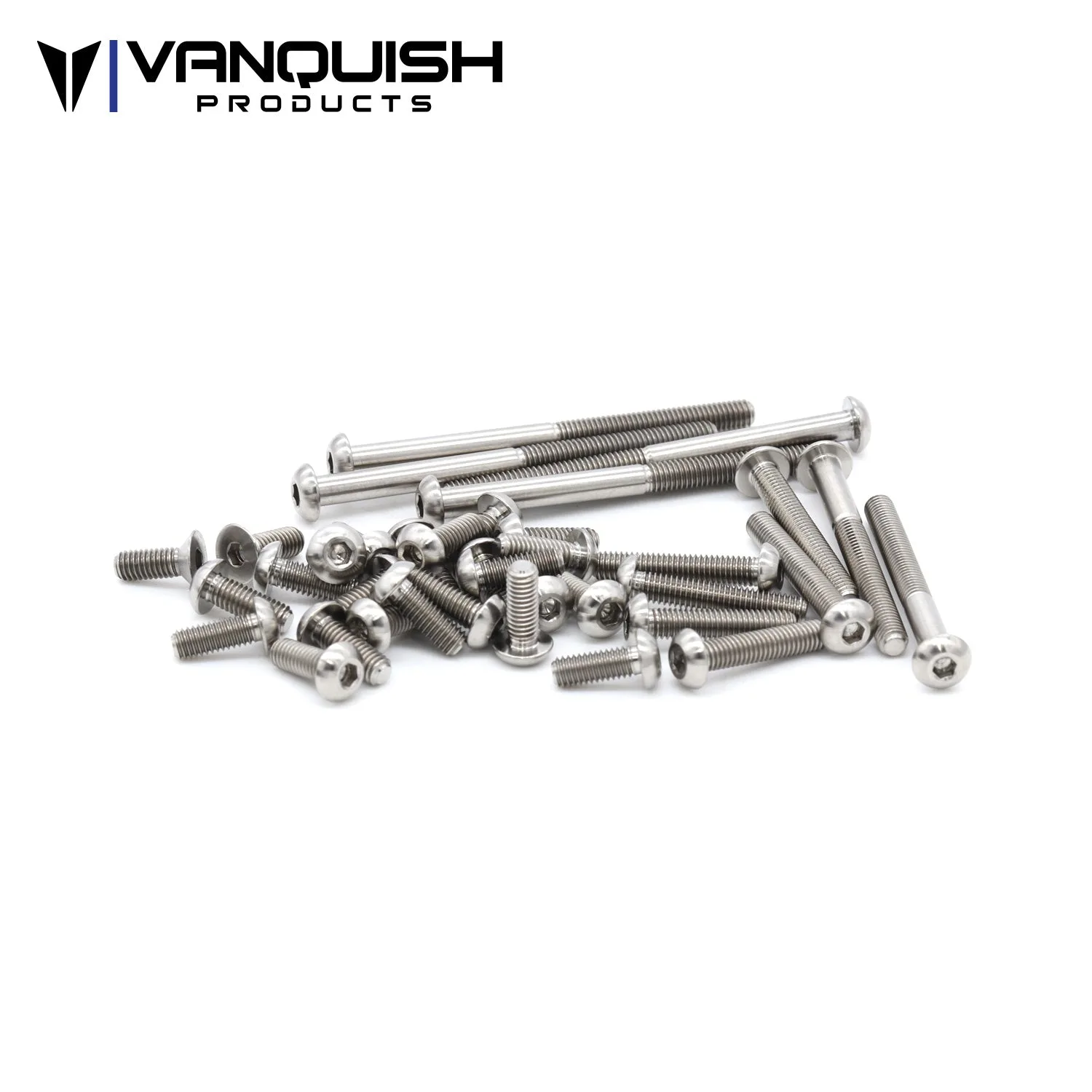
Once the chassis is protected, hardware is the next cheap win. The Titanium Hardware VRD Chassis Kit replaces standard screws with lightweight, high-strength titanium that resists corrosion—useful for performance builds. Note that M3 nylock nuts are not included, and Vanquish does not recommend titanium nylocks with titanium screws, so keep standard nuts where specified.
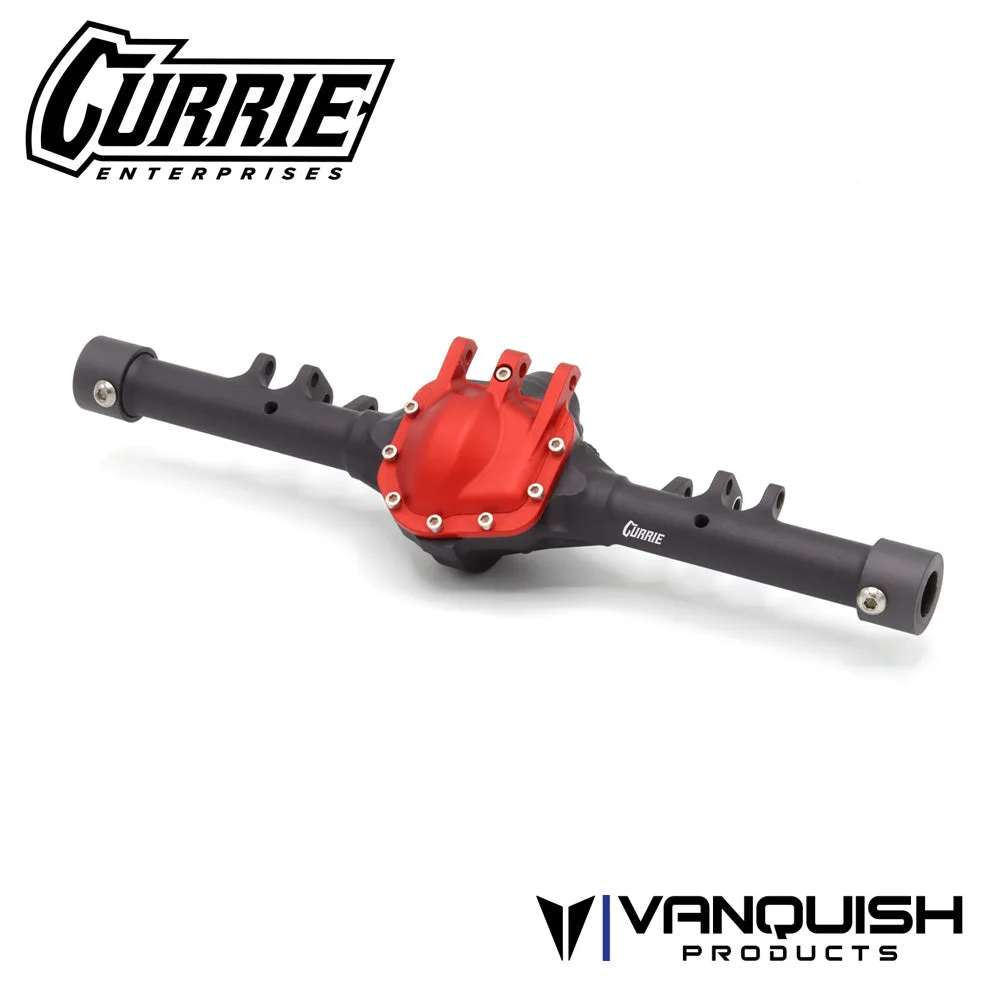
Axles come later. The Currie HD44 VS4-10 Rear Axle Black Anodized is a fully licensed aluminum axle with one-piece bearing retainers, axle end caps, upper link mounts built into the differential cover, and double shear shock mounts. It is compatible with factory VS4-10 links. That compatibility is the reason to upgrade an axle only after your chassis and skid protection are sorted—otherwise you are adding strength to a weak foundation.
- Replace hardware before axles; it is cheaper and affects every joint.
- Confirm link compatibility before buying any axle housing.
Decision rules for skid plates and braces
- Rule 1: Match the kit before the material: Confirm your transmission and chassis kit name against the product compatibility line. If the listing does not name your kit, do not assume it fits. Direct fit beats any material advantage.
- Rule 2: Let symptoms choose the brace: Buy bracing only when you can point to chassis twist, a rocking skid plate, or fasteners that keep loosening. Otherwise the weight is not earning its place. No symptom, no brace.
- Rule 3: Protect, then strengthen, then lighten: Order your spending as skid plate, then hardware, then axles. Each step builds on a chassis that is already protected and known to fit. Protection first, performance second.
- Rule 4: Plan for missing hardware: Replacement plates often ship without fasteners, and titanium kits exclude M3 nylock nuts. Check what is in the box before you start the install. Read the includes list twice.
Parts that fit this decision
- VFD Skid Plate Set: Molded replacement skid plate for the VFD Transmission Kit and VS4-10 Pro Kit; includes one skid plate, two motor plate chassis mounting tabs, and two battery tray spacers. Hardware not included. This is the direct-fit starting point for VS4-10 Pro and VFD builds, so you protect the chassis without guessing at compatibility.
- F10 Portal Rear Axle Set: Molded portal axle with an integrated truss tying both ends together and brass inner reinforcement tubes for strength and low weight placement. Shows the rigidity-and-low-weight approach you should look for when deciding whether a brace or axle upgrade is worth it.
- Titanium Hardware VRD Chassis Kit: Titanium screws for the VRD Chassis with high strength-to-weight ratio and corrosion resistance. M3 nylock nuts not included; titanium nylocks are not recommended with titanium screws. A low-cost strength upgrade after your skid plate and braces are sorted, with a clear hardware caveat to plan around.
- Currie HD44 VS4-10 Rear Axle Black Anodized: Aluminum axle with one-piece bearing retainers, axle end caps, upper link mounts in the diff cover, double shear shock mounts, and compatibility with factory VS4-10 links. A later-stage upgrade that preserves factory link geometry, so it fits a build that already has chassis protection in place.
Who should buy which
Best for
- VS4-10 Pro and VFD Transmission Kit owners who need a direct-fit replacement skid plate
- Trail and crawler drivers who want low-weight protection before adding axles or hardware
- Builders who can name a specific flex or impact problem they want to solve
Not for
- Drivers whose kit is not listed as compatible with the part they are considering
- Builders looking for cosmetic upgrades rather than chassis protection
- Anyone who has not yet confirmed what hardware is included in the box
Protect the belly first, brace only where you feel flex, and upgrade hardware and axles once the chassis is sorted. That order keeps your VS4-10 running straight and your budget pointed at parts that actually fit.